Baked Salmon
Baked Salmon With a Lemon Garlic Butter Glaze
Baked salmon turns out dry more often than any other mistake in a home kitchen, usually because the fish stays in the oven a few minutes past the point it’s actually done. This method fixes that with a short, hot bake and a visual doneness cue instead of a guessed timer. A lemon garlic butter glaze goes on twice, once before baking and once right after, so the fish comes out moist with a glossy, tangy finish.
The whole dish needs one pan, five main ingredients beyond pantry staples, and 20 minutes in the oven. Butter carries the garlic and lemon flavor into every bite, and a quick broil at the end gives the glaze a light caramelized edge without drying out the fish underneath it.
This serves four and works equally well for a fast Tuesday dinner or a dinner party where the oven needs to stay mostly hands off.
Why This Baked Salmon Stays Moist Every Time
- The fish comes out of the oven at 125°F internal, well before the USDA’s 145°F reference point, because carryover heat finishes the cooking during a 5 minute rest.
- Butter melted with garlic and lemon zest goes under the fillets before baking and over them after, so the glaze never has a chance to dry out on contact with hot metal.
- A 450°F oven cooks the salmon fast enough that the outside doesn’t overcook while the center catches up, unlike a low, slow roast that dries the edges first.
- Skin left on the bottom acts as a barrier between the delicate flesh and the hot pan, so even a slightly overcooked spot stays contained to the skin side.
- One sheet pan handles the entire dish, including the lemon slices that roast underneath and release juice straight into the glaze.
- The whole thing fits inside a 20 minute window, oven heating time included.
Quick Recipe Snapshot
- Prep time: 10 minutes
- Cook time: 12 minutes
- Rest time: 5 minutes
- Total time: 27 minutes
- Servings: 4
- Difficulty: Easy
- Calories: About 380 per serving
- Most important tool: An instant read thermometer
- Best for: Weeknight dinners, low carb meals, dinner parties
Ingredients
The Salmon
Center cut fillets of even thickness bake more evenly than tail pieces, which taper to a thin point that overcooks before the thick end finishes.
- 4 salmon fillets (6 ounces each), skin on, center cut
- 1 tablespoon olive oil
- ½ teaspoon fine salt
- ¼ teaspoon black pepper
The Lemon Garlic Butter Glaze
Splitting the glaze into two additions, one before baking and one after, keeps the garlic from scorching in the hot oven while still coating the fish twice.
- 4 tablespoons unsalted butter, melted
- 4 garlic cloves, minced
- 1 tablespoon lemon zest
- 3 tablespoons fresh lemon juice
- 1 tablespoon honey
- 1 teaspoon fresh thyme leaves, or ½ teaspoon dried
- 1 lemon, thinly sliced
To Finish
- 2 tablespoons chopped fresh parsley
- 1 tablespoon chopped fresh dill
Substitutions that hold up: Ghee or a neutral oil replaces the butter for a dairy free version, though the glaze will taste less rich. Maple syrup swaps in for the honey at the same amount. Skinless fillets work fine but need 2 minutes less in the oven, since there’s no skin layer to insulate the flesh from the pan’s heat.
Recipe Timing
- Prep: 10 minutes
- Cook: 12 minutes
- Rest: 5 minutes
- Total: 27 minutes
- Servings: 4
- Difficulty: Easy
- Cuisine: American
- Course: Dinner
Want another seafood dinner that comes together just as fast? Shrimp tacos use a similar citrus forward approach in a handheld format.
Allergen and Dietary Disclosure
This dish contains dairy (butter) and fish (salmon). Honey is not suitable for anyone following a strict vegan diet, though that’s a dietary choice rather than an allergen.
- Dairy: Swap the butter for the same amount of ghee or a neutral oil like avocado oil. The glaze will taste slightly less rich but still coats the fish well.
- Fish: There’s no substitute within this recipe, since salmon is the dish itself. A firm white fish like halibut can follow the same method, but the cook time will be shorter.
Equipment Needed
- Rimmed sheet pan. The rim catches the butter glaze and lemon juice that would otherwise run off a flat tray.
- Instant read thermometer. The single most useful tool here, since it replaces guessing and pulls the fish at exactly the right moment.
- Small saucepan. Melts the butter and blooms the garlic before it goes anywhere near the fish.
- Pastry brush. Spreads the glaze evenly over each fillet without pooling it all in one spot.
Nutrition Information
Per serving (1 fillet, 4 servings per recipe):
- Calories: 380
- Protein: 34 g
- Carbohydrates: 6 g
- Fat: 24 g
- Fiber: 0 g
- Sugar: 5 g
- Sodium: 320 mg
Salmon brings a notable amount of omega-3 fatty acids per serving, which is part of why the USDA’s dietary guidelines list fatty fish as a recommended protein source twice a week. These figures are estimates built from USDA FoodData Central data and shift with the fillet’s fat content and the exact amount of butter used.
How Baked Salmon Stays Juicy at High Heat
Fish muscle fibers are shorter and more fragile than those in beef or chicken, so they squeeze out moisture fast once the proteins tighten past a certain temperature. That’s why salmon dries out within a narrow window, often just a few degrees past done. Pulling the fillets at 125°F internal, rather than waiting for them to look fully opaque in the oven, leaves room for the carryover heat during the rest to finish the job without pushing past it.
A hot oven matters as much as the pull temperature. At 450°F, the outside of the fillet sets quickly while the heat has less time to travel to the center and overcook it, the same principle behind searing a steak hot and fast rather than low and slow. A cooler oven stretches out the cooking time and gives heat more opportunity to dry out the edges before the middle catches up.
The glaze does double duty. Butter coats the surface and slows moisture loss, while the lemon juice and zest add acidity that balances the richness of the fat, similar to the way a squeeze of lemon cuts through a cream sauce.
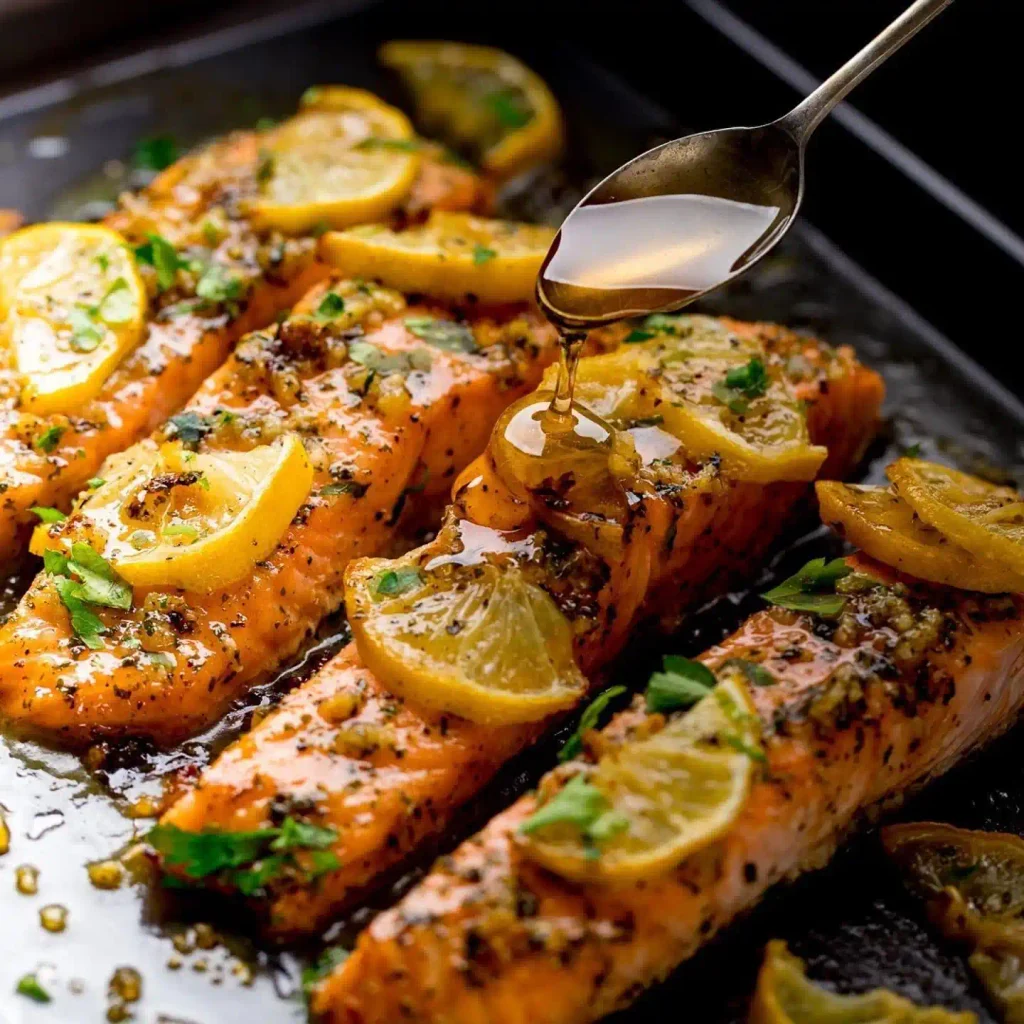
What is baked salmon with lemon garlic butter? Baked salmon with lemon garlic butter is oven roasted salmon fillets coated in a glaze of melted butter, garlic, lemon juice, and honey, baked at high heat until just cooked through and finished with a second glaze and fresh herbs.
Preparation
Take the salmon out of the refrigerator about 15 minutes before cooking so it isn’t ice cold when it hits the hot oven. Pat each fillet dry with a paper towel, since a wet surface steams instead of browning. Zest and juice the lemon, slice a second lemon thin for the pan, and mince the garlic. Preheat the oven to 450°F with the rack in the center position.
Step by Step Method
Melt the butter in a small saucepan over medium low heat, then add the garlic and stir for 30 seconds, just until it turns fragrant but before it takes on any color.
Chef’s Note: Garlic left in the pan past 30 seconds turns bitter fast. Pull it off the heat the moment the smell changes from raw to toasty.
Off the heat, whisk in the lemon zest, lemon juice, honey, and thyme. Set the glaze aside.
Lay the salmon fillets skin side down on the sheet pan, spaced apart so steam escapes rather than building up between them. Brush each fillet lightly with olive oil, then season with salt and pepper.
Arrange the lemon slices around and partly under the fillets, then brush about half the glaze over the fish, letting any extra pool onto the lemon slices beneath.
Bake at 450°F for 10 to 12 minutes. Pull a fillet out and check with the thermometer at the thickest point: 125°F means it’s ready to come out, since the temperature will climb another 10 to 15 degrees while it rests.
Chef’s Note: Flaking the fish apart with a fork to check doneness is the step most people rely on, but it also lets juices escape. The thermometer gives you the same answer without losing moisture.
Brush the remaining glaze over the hot fillets as soon as they come out of the oven, while the surface is still warm enough to absorb it.
Let the salmon rest for 5 minutes directly on the pan. This is where the internal temperature finishes climbing and the juices redistribute through the fillet instead of running out onto the plate.
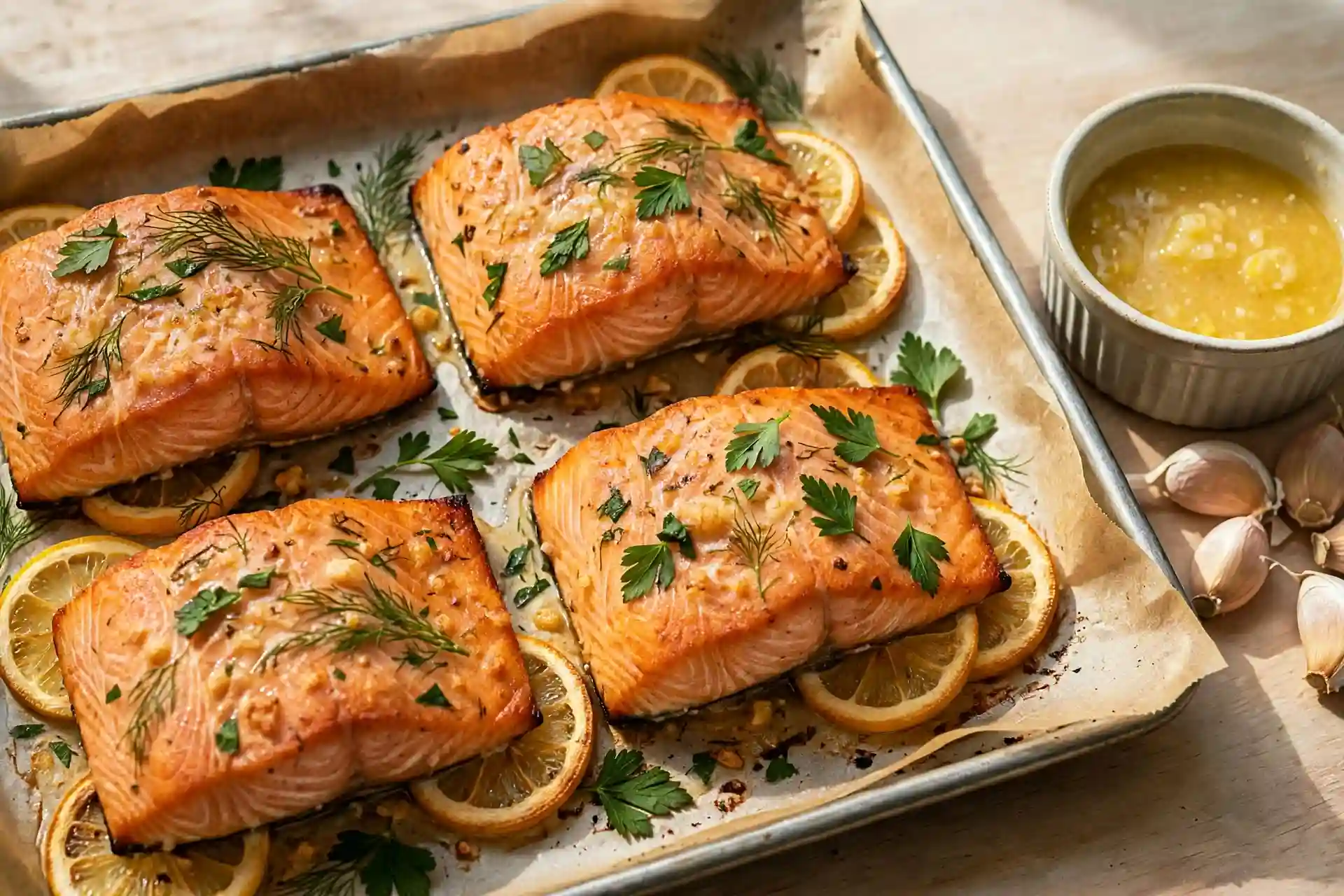
Scatter the parsley and dill over the top just before serving, along with a squeeze of juice from the roasted lemon slices if you’d like extra brightness.
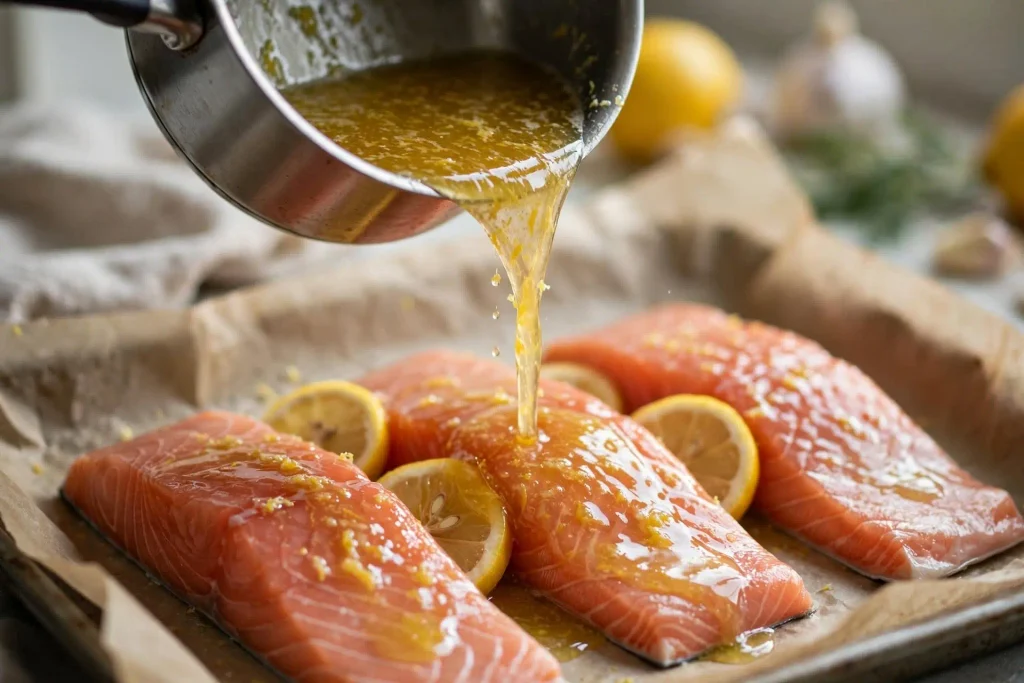
Callout: Save a spoonful of the glaze before it ever touches raw fish, and drizzle it over the plated salmon at the table. It arrives fully clean and gives each serving an extra glossy finish without any risk of cross contamination.
Expert Tips and Tricks
- Make ahead: Mix the glaze up to 2 days ahead and refrigerate it in a covered container. Warm it gently before brushing it onto the fish so it spreads evenly instead of sitting in cold clumps.
- Storage: Move leftovers into a shallow container within 2 hours of cooking so they cool quickly and safely.
- Buy even thickness: Center cut fillets of the same thickness cook at the same rate, while a batch of mixed cuts forces you to pull thinner pieces early.
- Dry the fish before seasoning: A dry surface browns and holds the glaze, while a damp one steams and lets the glaze slide off.
- Don’t skip the rest: Cutting into the fillet straight out of the oven releases juices that would otherwise redistribute during those 5 minutes.
- Roast extra lemon: A few additional slices under the fish season the pan drippings, which make a simple sauce if you deglaze the pan afterward.
- Keep a thermometer by the oven: This single tool does more for texture than any other step in the recipe.
For a creamier, oven based dinner that shares the same quick weeknight timeline, chicken pot pie casserole is worth adding to the rotation.
Common Mistakes and Troubleshooting
The salmon came out dry. It likely stayed in the oven until it looked fully opaque rather than being pulled at 125°F internal. Use a thermometer next time and trust the rest period to finish the cooking.
The glaze burned in spots. The oven ran hotter than 450°F, or the fillets sat too close to the top element. Check your oven’s actual temperature with a separate thermometer and move the rack down if needed.
The fish stuck to the pan. The skin wasn’t fully dry before baking, or the pan wasn’t lined. Pat the skin thoroughly dry and use parchment paper for an easy release.
The garlic tasted bitter. It cooked too long in the hot butter before the lemon juice went in. Pull the garlic off the heat the moment it turns fragrant, well before any color change.
The center stayed underdone while the edges overcooked. The fillets were uneven in thickness. Buy center cut pieces of similar size, or fold thin tail ends under themselves to even out the thickness before baking.
Honest Trade-Off
Baking at high heat gives up the deep char and crisp skin that a hot cast iron sear produces, since the oven’s dry heat browns more gently than direct contact with a hot pan. Anyone chasing crackly, blistered skin should pan sear the fillets instead and finish them in the oven only briefly. This method suits anyone who wants a hands off, foolproof result without standing over a hot skillet.
Storage and Make Ahead
Refrigerator: Store in an airtight container for up to 3 days.
Reheating: Warm gently in a 300°F oven for about 10 minutes, or in short 20 second microwave bursts, since high heat on reheat dries the fish out the same way overcooking does the first time.
Freezer: Cooked salmon freezes for up to 2 months, though the texture turns slightly softer on thawing. Thaw overnight in the fridge and reheat gently rather than from frozen.
Variations and Substitutions
- Spicy: Add ¼ teaspoon red pepper flakes to the glaze, or finish the baked fillets with a drizzle of chili oil.
- Herb forward: Swap the thyme for rosemary, or add a tablespoon of chopped chives along with the parsley and dill.
- Maple mustard: Replace the honey with maple syrup and whisk in a teaspoon of Dijon mustard for a sharper glaze.
- Garlic forward: Double the garlic for a more assertive flavor, adding it in two batches so none of it scorches.
- Sheet pan dinner: Add asparagus spears or halved cherry tomatoes to the pan during the last 8 minutes of baking for a complete one pan meal.
Serving Suggestions
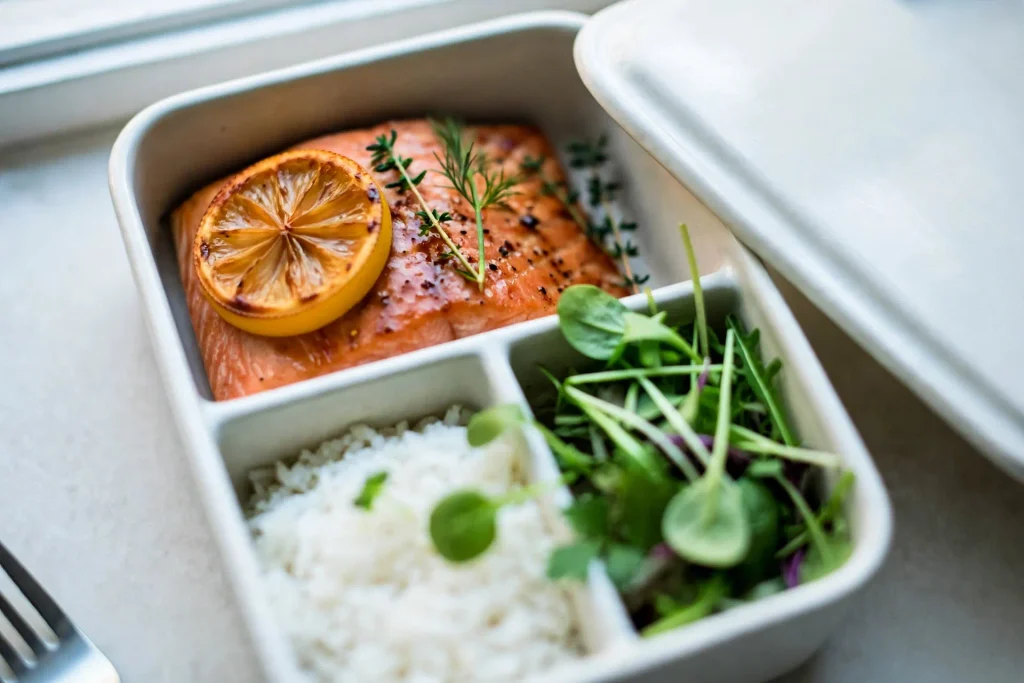
Baked salmon pairs naturally with simple sides that don’t compete with the glaze, like steamed rice, roasted asparagus, or a crisp green salad with a light vinaigrette. A spoonful of the pan drippings over mashed potatoes makes good use of every bit of the glaze. For something with a similar comforting, cheesy profile to round out the table, white chicken enchiladas work well as a second main for a bigger gathering with mixed tastes. A chilled glass of white wine or sparkling water with lemon suits the citrus in the glaze.
Callout: Pour any leftover pan juices through a fine mesh strainer and whisk in a cold pat of butter. The result is a quick pan sauce that elevates the dish well past what the glaze alone provides.
Frequently Asked Questions
Can I make baked salmon ahead of time?
The glaze can be mixed up to 2 days ahead and refrigerated, then warmed gently before use. The salmon itself is best cooked fresh, since reheated fish never matches the texture of a fillet straight out of the oven. If you do need to cook ahead, slightly undercook the fish and finish it with a brief reheat.
Why did my salmon turn out dry?
The most common cause is pulling the fish after it looks fully opaque rather than at a measured internal temperature. Check with a thermometer and remove the fillets at 125°F, since the temperature continues climbing during the rest period. A hotter, shorter bake also helps, since it limits how long heat has to travel through the fillet.
What can I use instead of butter in the glaze?
Ghee works at the same amount and holds up well to the oven’s heat. A neutral oil like avocado oil also works, though the glaze will taste less rich and won’t set into the same glossy coating once it cools slightly.
How do I know when salmon is done without a thermometer?
Press gently on the thickest part of the fillet. It should flake apart easily but still look slightly translucent at the very center, since that center will finish cooking during the rest. A thermometer removes the guesswork entirely and is worth the small investment.
Is baked salmon safe for someone with a fish or dairy allergy?
Salmon is itself a fish, so there’s no way to adapt this specific recipe for a fish allergy, though the same glaze and method work on a firm white fish like halibut if the allergy is salmon specific rather than fish wide. For a dairy allergy, ghee or a neutral oil replaces the butter in the glaze without much change to the result.
Conclusion
A thermometer does more for this dish than any amount of experience standing over a hot oven. Pull the salmon at 125°F, let it rest the full 5 minutes, and the carryover heat handles the rest without any guessing. Keep the extra lemon slices from the pan, since the juices they release make a simple sauce worth spooning over rice the next time you make this.
Baked Salmon With Lemon Garlic Butter Glaze
Ingredients
Method
- Melt the butter, add the garlic, and stir for 30 seconds until fragrant.
- Off the heat, whisk in the lemon zest, lemon juice, honey, and thyme.
- Arrange salmon skin side down on a sheet pan, brush with oil, and season with salt and pepper.
- Tuck lemon slices around the fillets and brush with half the glaze.
- Bake at 450°F for 10 to 12 minutes, pulling at 125°F internal.
- Brush the remaining glaze over the hot fillets.
- Rest 5 minutes on the pan before serving.
- Top with parsley and dill.
Notes
Allergens: Contains dairy and fish.
Notes: Nutrition values are estimates based on USDA FoodData Central data.