Taco Pasta
One Pan Taco Pasta With Ground Beef and Melted Cheese
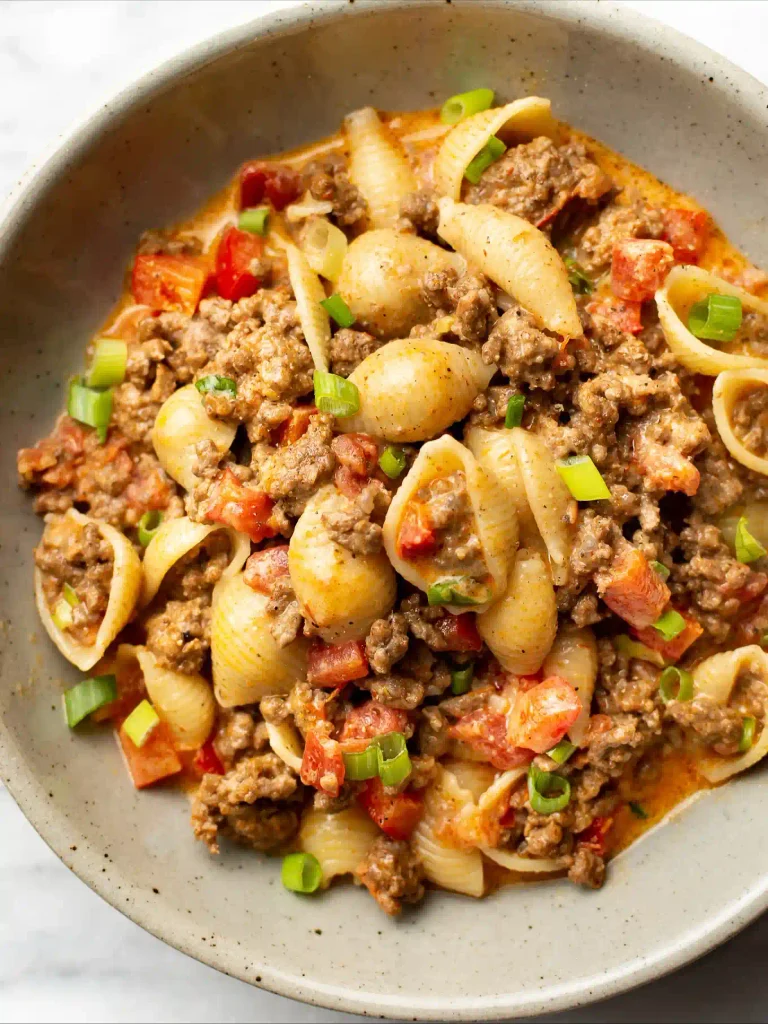
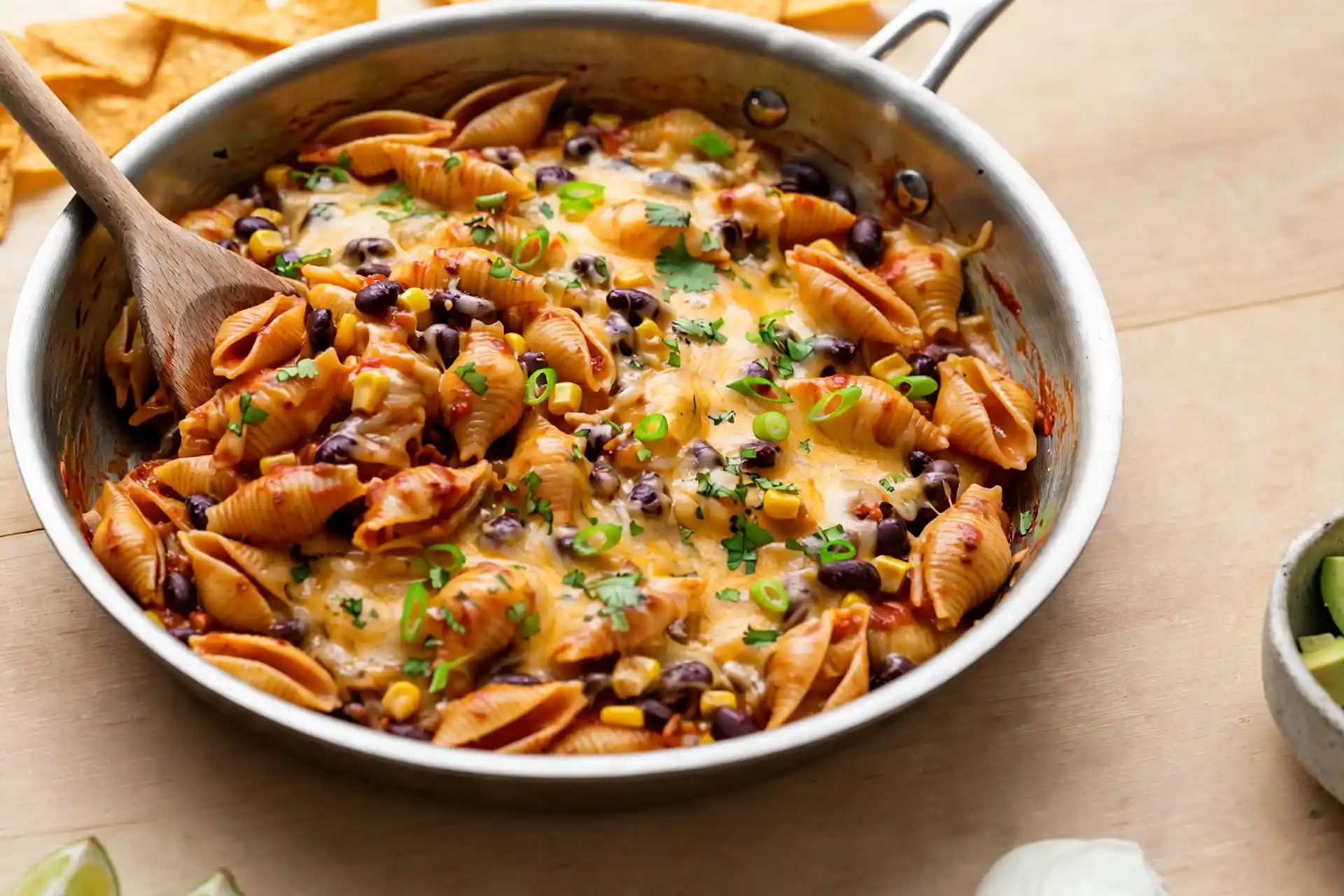
Taco pasta gives you the flavor of a taco night without warming tortillas, chopping six toppings, or washing a stack of bowls. Seasoned beef, tomatoes, black beans, and corn simmer together with dry shells in a single skillet. Starch leaching out of the noodles thickens the liquid into a sauce that coats each piece. Cheese goes in at the very end and melts through the pasta instead of sitting on top as a separate layer.
Many versions of this dish go wrong in one of two directions. The pan ends up soupy, or the shells stay chalky in the center while the sauce has already vanished. The fix is a measured liquid ratio and a lid that comes off for the last few minutes. Twelve ounces of pasta, two cups of broth, and two cans of tomato product give you a sauce that clings without turning into paste. The recipe feeds six and reheats well for lunches.
Why This Taco Pasta Works So Well
- Everything cooks in one 12 inch skillet, so the only dishes afterward are the pan, a spoon, and a grater.
- Medium shells trap the seasoned sauce and bits of beef in their cups, so each forkful carries filling rather than plain pasta.
- Tomato paste cooked in the beef fat for a full minute turns from bright red to brick colored, which gives the sauce a roasted depth that canned tomatoes alone can’t reach.
- A packet of store bought seasoning works, but the homemade blend below lets you control the salt, which matters because broth and canned beans already carry plenty.
- Black beans and corn stretch one pound of beef across six plates and add 9 grams of fiber per serving.
- Leftovers firm up in the fridge and reheat with a splash of water, which is not true of most cream based pasta dishes.
Quick Recipe Snapshot
- Prep time: 10 minutes
- Cook time: 25 minutes
- Rest time: 5 minutes
- Total time: 40 minutes
- Servings: 6
- Difficulty: Easy
- Calories: About 570 per serving
- Most important tool: A deep 12 inch skillet with a lid
- Best for: Weeknight dinners, family meals, packed lunches
Ingredients
The Beef and Aromatics
- 1 pound ground beef (80/20 gives enough fat to bloom the spices)
- 1 tablespoon neutral oil, only if your beef is very lean
- 1 medium yellow onion, diced small
- 3 garlic cloves, minced
- 1 tablespoon tomato paste
Fat in the beef carries the spice flavor. If you use 93% lean beef or ground turkey, the added oil keeps the seasoning from scorching against a dry pan.
The Taco Seasoning
- 2 teaspoons chili powder
- 1 teaspoon ground cumin
- 1 teaspoon smoked paprika
- ½ teaspoon garlic powder
- ½ teaspoon onion powder
- ½ teaspoon dried oregano
- ¾ teaspoon fine salt
- ¼ teaspoon black pepper
Mixed together, these equal about 3 tablespoons, the same as roughly 1½ store packets. Smoked paprika stands in for the charred note that a taco shell gets from a hot comal, and the cumin supplies the earthy base. If you buy packets instead, use 2 tablespoons and hold back on additional salt until the final taste.
The Pasta and Sauce
- 12 ounces medium pasta shells (about 3½ cups dry)
- 2 cups low sodium beef broth, plus up to ½ cup water for adjusting
- 1 can (8 ounces) tomato sauce
- 1 can (10 ounces) diced tomatoes with green chiles, undrained
- 1 can (15 ounces) black beans, drained and rinsed
- 1 cup frozen or canned corn
Shells and rotini hold sauce best. Penne works but leaves more sauce in the pan, and thin spaghetti cooks unevenly in a skillet. Low sodium broth gives you room to season the dish yourself, since canned tomatoes and beans already contribute salt.
The Finish
- 1½ cups shredded cheddar and Monterey Jack blend (about 6 ounces)
- ¼ cup sour cream, optional
- Lime wedges, chopped cilantro, sliced scallions, diced avocado for topping
Shred the cheese yourself from a block. Bagged shreds are coated with starch to prevent clumping, and that coating keeps the cheese from melting smoothly into the sauce.
Substitutions that hold up: Ground chicken or turkey replace the beef at the same weight. For a milder pan, swap the canned tomatoes with green chiles for plain diced tomatoes. Pinto beans work in place of black beans with a slightly creamier bite. Chicken broth is fine if beef broth isn’t on hand, though the sauce will taste a little lighter.
You may also like: chicken stir fry
Recipe Timing
- Prep: 10 minutes
- Cook: 25 minutes
- Rest: 5 minutes
- Total: 40 minutes
- Servings: 6
- Difficulty: Easy
- Cuisine: Tex Mex inspired American
- Course: Dinner
Allergen and Dietary Disclosure
This dish contains dairy (cheese, optional sour cream) and wheat/gluten (pasta). Some store bought taco seasoning and broth also include wheat derivatives or soy, so check labels if you avoid them.
- Dairy: Skip the sour cream and use a dairy free shredded cheese, which melts less smoothly, so stir it in while the pan is still on the burner.
- Gluten: Use a gluten free pasta made from corn and rice, and shorten the simmer by 2 to 3 minutes since these brands soften faster.
Equipment Needed
- Deep 12 inch skillet or braiser with a lid. Sides at least 2.5 inches tall keep the simmering liquid from slopping over. A thin pan creates hot spots, so pick a heavy bottomed one if you have it.
- Flat edged wooden spoon. The straight edge scrapes browned bits off the pan floor and breaks beef into small crumbles.
- Box grater. Needed for the cheese, as explained above.
- Instant read thermometer. Confirms the beef has reached 160°F, the temperature the USDA lists as safe for ground beef.
Nutrition Information
Per serving (1⅔ cups, 6 servings per recipe):
- Calories: 570
- Protein: 31 g
- Carbohydrates: 60 g
- Fat: 22 g
- Fiber: 9 g
- Sugar: 8 g
- Sodium: 1,100 mg
Beans and beef together put protein above 30 grams per plate, which is high for a pasta dinner. These figures are estimates calculated from ingredient data in the USDA FoodData Central database and will shift with brands, beef fat percentage, and portion size.
Why the Method Works: How Taco Pasta Cooks in One Pan
Dry pasta simmered directly in sauce behaves differently from pasta boiled in water. Water boiling off gradually concentrates the liquid, and the starch that escapes from the noodle surfaces suspends in it, thickening the sauce without any flour or cream. That’s the same principle behind risotto, scaled down to a 20 minute job.
The liquid ratio decides everything. Roughly 3¾ cups of total liquid (broth plus both cans) sits just above what 12 ounces of shells will absorb. Pasta swells to about double its dry weight, so the pan needs a little extra to account for evaporation. Too little and the shells stay hard at the core. Too much and you get soup.
Think of the pan as two stages. The first is a sauce stage where the beef, spices, and tomato paste build flavor. The second is a hydration stage where the shells absorb it. Skipping flavor work in stage one can’t be rescued in stage two, because pasta only takes up what’s in the liquid. Seasoning a pale sauce gives a pale dinner.
What is taco pasta? Taco pasta is a skillet dish of ground beef cooked with taco spices, tomatoes, and beans, then simmered with dry pasta until the noodles absorb the liquid and finish with melted cheese. It combines taco filling flavors with the texture of a cheesy pasta bake in one pan.
Preparation
Dice the onion into pieces about the size of a pea so they dissolve into the sauce instead of showing up as chunks. Mince the garlic. Drain and rinse the beans, then measure the broth into a jug so it can go in all at once. Shred the cheese and set it near the stove. Once the beef starts browning there’s no pause button, so everything should be within arm’s reach.
Step by Step Method
Warm the skillet until a drop of water skitters across the surface, then add the beef. Press it flat and leave it alone for 3 minutes, long enough for the underside to turn deep brown.
Break the meat into pea sized crumbles with the flat spoon. Keep stirring until no pink remains and the thermometer reads 160°F, usually another 4 minutes. Tilt the pan and spoon off all but about 2 tablespoons of fat if the beef released more than that.
Drop the onion into the beef fat. Once the pieces turn translucent and soft at the edges, about 3 minutes, stir in the garlic for 30 seconds.
If the spice blend had a name, this step would be “the one people skip.” Sprinkle the seasoning and the tomato paste directly over the meat and stir for a full minute until the paste darkens from bright red to rust. Cooking the spices in fat releases oil soluble flavor compounds that stay locked up if the spices only ever meet liquid.
Chef’s Note: A scorched smell means the pan is too hot. Pull it off the burner for 10 seconds and splash in 2 tablespoons of broth to cool it.
Pour in the broth, tomato sauce, and diced tomatoes with chiles. Scrape the pan floor with the spoon until nothing sticks, because those browned patches are concentrated beef flavor.
Stir in the beans, corn, and dry shells, pushing the pasta down until it sits under the liquid. When the surface bubbles steadily, drop the heat to low and cover the pan.
Chef’s Note: Shells float and cook unevenly if they stick up above the sauce. A quick stir halfway through fixes that.
Cook covered for 10 minutes, then stir, scraping the bottom as you go. The shells should look swollen but still firm when you bite one.
Remove the lid and keep cooking for 5 to 8 minutes. Done looks like this: when you drag the spoon across the pan floor, the trail stays open for a second before the sauce slowly closes it. Pasta should be tender with the faintest resistance at the center.
Chef’s Note: If the pan looks dry before the shells soften, add ¼ cup water at a time. If it looks loose after the shells are tender, let it bubble uncovered for 2 more minutes.
Switch off the burner. Scatter the cheese across the surface and stir until strands are fully melted into the sauce, then fold in the sour cream if using.
Let the skillet stand for 5 minutes with the lid back on. The sauce tightens during this time, and the cheese settles into a creamy coating instead of a loose pool.
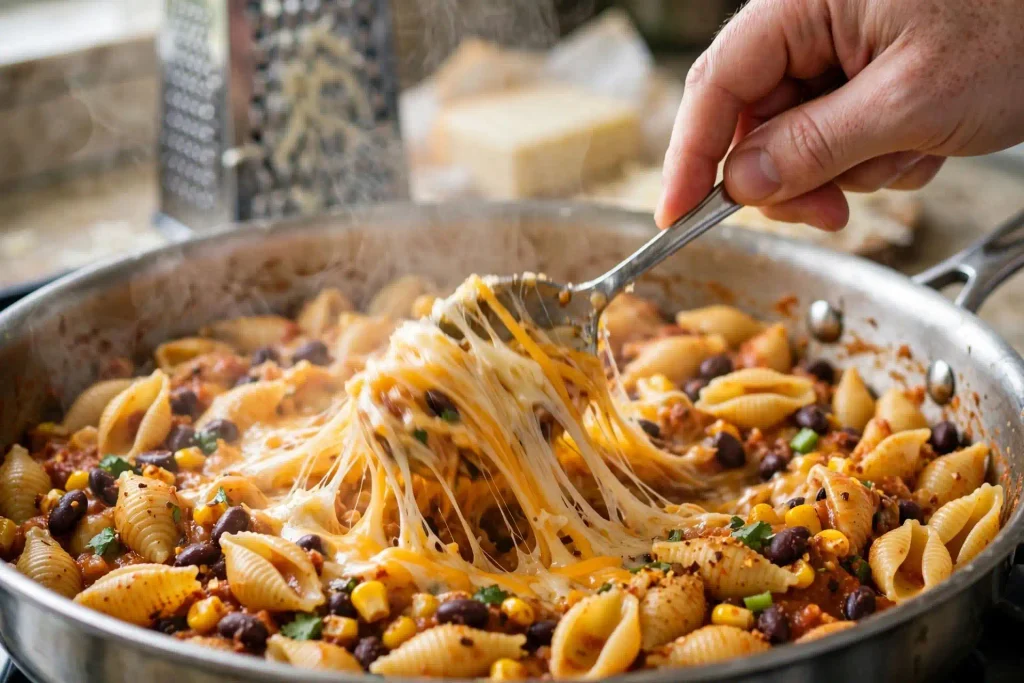
Callout: Taste the sauce at step 8 before adding cheese. Cheese adds salt and fat that mute acidity, so a sauce that tastes slightly sharp at this point will balance perfectly after the cheese goes in.
You may also like: cajun chicken pasta
Expert Tips and Tricks
- Make ahead: Brown the beef with the spices through step 4, cool it, and refrigerate for up to 3 days. On cooking night, reheat the beef and begin at step 5, which cuts active time to about 20 minutes.
- Storage shortcut: Spread leftovers in a shallow container rather than a deep one so they cool within 2 hours, the window the USDA recommends for refrigerating cooked food.
- Toast the dry pasta: Tossing the shells into the hot spiced beef for 60 seconds before adding liquid gives them a faint nutty edge and helps them hold shape.
- Use a lid that fits: A tight lid traps steam and cuts the covered stage’s liquid loss to almost nothing. A loose lid or foil lets the pan run dry before the pasta softens.
- Salt in layers: Season the beef lightly, taste after the broth goes in, and finish after the cheese melts. Canned goods vary so widely that no single measurement is reliable.
- Brighten it at the end: A squeeze of lime over each bowl cuts through the richness of the cheese the way pickled jalapeños cut through a loaded taco.
- Heat control: Medium low for the covered stage prevents the bottom layer from welding itself to the pan, which happens quickly once the starch thickens.
Common Mistakes and Troubleshooting
The pasta is crunchy but the pan is dry. Liquid evaporated faster than the shells could drink it, usually from a loose lid or a burner running too hot. Add ¼ cup water, cover again, and cook another 3 minutes. Next time, lower the flame earlier.
The sauce is watery. The shells weren’t given enough uncovered time to release starch and reduce. Simmer with the lid off for 3 to 5 minutes, stirring often, and the starch will do the thickening.
The cheese turned stringy or grainy. Boiling cheese tightens its proteins and squeezes out fat. Always switch off the burner first, and use freshly shredded cheese.
The bottom scorched. Starch settles and burns when stirring is skipped. Scrape the pan floor at every check, and pour the contents into a fresh pan if black flecks appear, leaving the burnt layer behind.
Everything tastes flat. The sauce likely needs salt or acid, not more spice. Add a pinch of salt, then a squeeze of lime, and taste between each.
The shells are mushy. They simmered covered too long or the pan sat on the heat after the burner was off. Pull the skillet early and rely on the rest period to finish softening.
Honest Trade-Off
Taco pasta won’t give you the crisp shell, the cold crunch of lettuce, or the contrast of hot meat and cool toppings that a real taco has. Everything softens into one cohesive texture. If you love those contrasts, taco bowls or loaded tacos serve you better. Taco pasta suits people who want comfort food with a taco accent, not a stand in for the handheld original.
Storage and Make Ahead
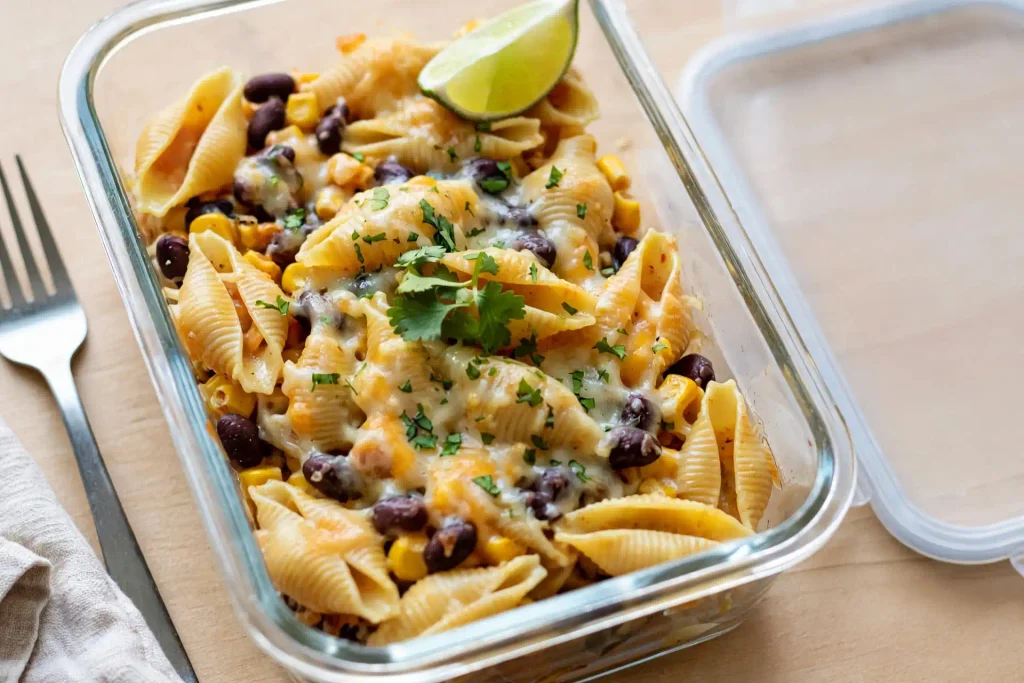
Refrigerator: Store in an airtight container for up to 4 days. The pasta keeps absorbing sauce, so the texture tightens each day.
Reheating: Add 2 tablespoons of water per serving and warm covered until steaming. Microwave in 60 second bursts with a stir between.
Freezer: Not ideal. Cooked pasta turns soft and a bit grainy after thawing. If you must freeze, undercook the shells by 2 minutes and use within 2 months. Freeze the beef sauce without pasta for a far better result.
Variations and Substitutions
- Spicy: Add 1 minced chipotle in adobo with the tomato paste, or stir in a diced jalapeño with the onion.
- Mild and kid friendly: Use plain diced tomatoes, cut the chili powder to 1 teaspoon, and skip the green chiles.
- Vegetarian: Replace the beef with a second can of beans and 8 ounces of chopped mushrooms cooked until their liquid evaporates. Use vegetable broth.
- Poultry version: Ground chicken or turkey works at the same weight with 1 tablespoon of oil for browning.
- Gluten free: Use gluten free shells and shorten the simmer slightly.
- Extra vegetables: Stir in a diced bell pepper with the onion or 2 cups of baby spinach when the heat goes off.
Serving Suggestions
Bring the skillet straight to the table so the dish stays hot. A bowl of crushed tortilla chips lets everyone add crunch to their own plate. Cool toppings such as diced avocado, sour cream, and chopped cilantro offset the heat and richness. A crisp romaine salad with lime dressing balances the heavy dish, and a pot of Mexican rice works if you’re feeding a bigger crowd. Sparkling water with lime or a pitcher of iced tea keeps the drink side simple. For a second side, toss cucumbers and red onion in lime juice and serve them cold.
Callout: Save a handful of shredded cheese and sprinkle it over the pan during the 5 minute rest. The residual heat melts it into a golden top layer without any broiler.
You may also like: chicken spaghetti
Frequently Asked Questions
Can I make taco pasta ahead of time?
Yes. Brown the beef with the spices and refrigerate it for up to 3 days, then finish the pasta the day you serve. Fully cooked taco pasta also keeps 4 days in the fridge. Reheat with a splash of water, since the noodles continue to absorb sauce as they sit.
Why is my taco pasta watery?
Too much liquid or too little uncovered simmering is the usual cause. Remove the lid and let the pan bubble for 3 to 5 minutes while stirring, and the pasta starch will thicken the sauce. Letting the finished skillet rest for 5 minutes tightens it further.
What can I use instead of beef broth?
Chicken or vegetable broth both work at the same quantity. Plain water works in an emergency, but add an extra ½ teaspoon of salt and a spoonful of tomato paste to replace the depth. The sauce will taste lighter than it does with beef broth.
How do I know when the pasta is done?
Bite a shell. It should be tender with a barely firm center, and the sauce should leave an open trail behind your spoon for a second before closing. If the middle is still chalky, add ¼ cup water and cook 3 more minutes covered.
Is taco pasta okay for someone with a dairy or gluten allergy?
The standard recipe contains both. Dairy free shredded cheese replaces the cheese, and gluten free pasta replaces the shells, though each changes the texture slightly. Check broth and seasoning labels as well, since some contain hidden wheat or milk ingredients.
Conclusion
A good pot of taco pasta comes down to three small decisions: bloom the spices in the beef fat, keep the liquid at about 3¾ cups for 12 ounces of shells, and add the cheese only after the burner is off. Get those right and the skillet delivers a sauce that holds to the pasta from the first bowl to the last reheated lunch. Next time, try swapping half the beef for mushrooms or doubling the beans, and see how far one pan can stretch.
One Pan Taco Pasta
Ingredients
Method
- Brown the beef in a hot skillet, undisturbed for 3 minutes.
- Crumble until no pink remains and it reaches 160°F, about 4 minutes. Spoon off fat beyond 2 tablespoons.
- Cook the onion until translucent, about 3 minutes. Add garlic for 30 seconds.
- Stir in the seasoning and tomato paste for 1 minute until the paste turns rust colored.
- Add broth, tomato sauce, and diced tomatoes. Scrape the pan floor.
- Stir in beans, corn, and shells, submerging the pasta. Bring to a bubble, lower the heat, and cover.
- Cook covered 10 minutes, stirring once.
- Uncover and cook 5 to 8 minutes until the shells are tender and the sauce leaves an open trail behind a spoon.
- Turn off the heat, stir in the cheese and sour cream.
- Rest covered for 5 minutes, then top and serve.