Shepherd’s Pie
Shepherd’s Pie With Ground Lamb, Peas, and Creamy Mashed Potato Topping
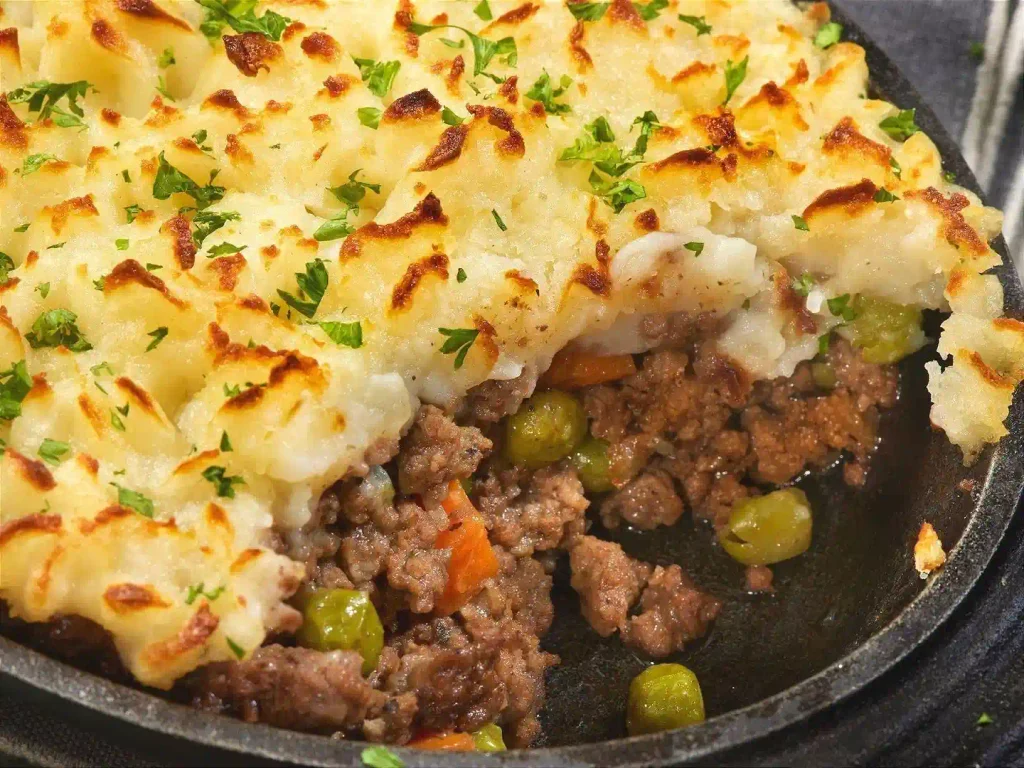
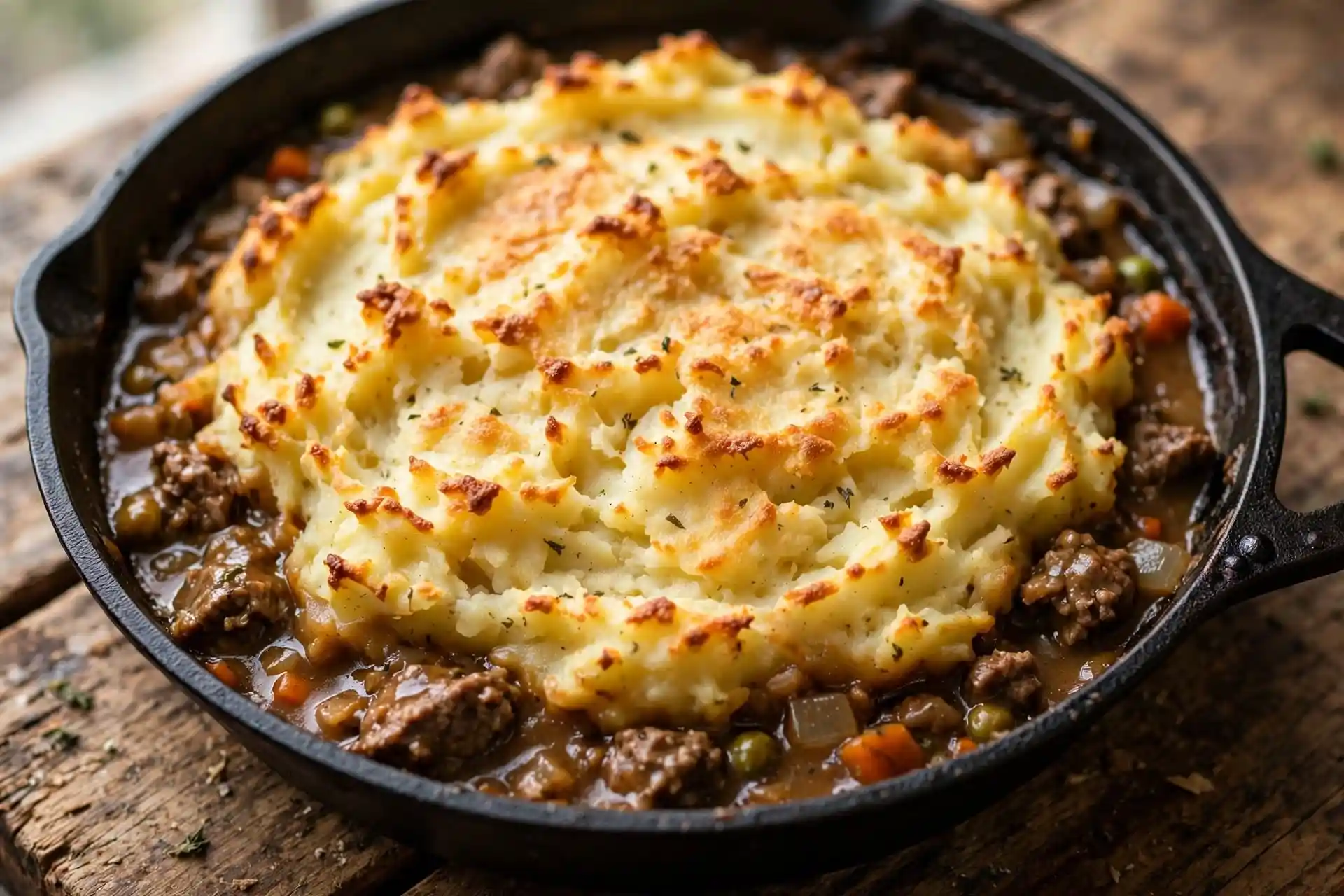
Shepherd’s pie is ground lamb cooked down with vegetables in a rich gravy, topped with mashed potatoes, and baked until the edges turn golden and the filling bubbles up at the sides. The dish gets its name from the meat inside: lamb makes it a shepherd’s pie, and beef makes it a cottage pie, though most home cooks use the names interchangeably.
The common failure point is a filling that turns watery once it’s cut into at the table, with the mash sliding off the top instead of staying put. That happens when the gravy never reduces enough before the potatoes go on, or when the mash is too loose to hold its shape under the broiler. This version solves both: the filling simmers uncovered until a spoon dragged across the pan leaves a clear trail, and the mash is piped or spread thick enough to seal in the filling like a lid.
The recipe serves six, takes about an hour and 15 minutes start to finish, and reheats into an even better second dinner.
Why This Shepherd’s Pie Holds Together on the Plate
- The filling reduces uncovered for the last 10 minutes of simmering, so the gravy clings to the lamb instead of pooling under the mash.
- Worcestershire sauce and tomato paste build a deep savory base that tastes like it simmered for hours, even though it only needs 25 minutes on the stove.
- Carrots and peas go in at different times, since carrots need the full simmer to soften while peas only need the last few minutes to stay bright and not turn gray.
- A double butter and egg yolk mash holds its ridges under the broiler instead of melting flat into the filling.
- One skillet goes from stovetop to oven, so there’s no transferring hot filling into a separate baking dish.
- The whole pie cuts into clean wedges once it rests, rather than collapsing into a puddle on the plate.
Quick Recipe Snapshot
- Prep time: 25 minutes
- Cook time: 40 minutes
- Rest time: 10 minutes
- Total time: 75 minutes
- Servings: 6
- Difficulty: Moderate
- Calories: About 480 per serving
- Most important tool: An oven safe 12 inch skillet
- Best for: Sunday dinners, cold weather meals, make ahead freezer dinners
Ingredients
The Filling
Lamb fat is where the savory depth of this dish starts, so render it slowly rather than rushing the browning stage.
- 1½ pounds ground lamb
- 1 medium yellow onion, diced
- 2 medium carrots, diced small
- 3 garlic cloves, minced
- 2 tablespoons tomato paste
- 2 tablespoons all purpose flour
- 1½ cups beef or lamb broth
- 1 tablespoon Worcestershire sauce
- 1 teaspoon dried thyme
- 1 teaspoon dried rosemary, crushed
- 1 cup frozen peas
- Salt and black pepper to taste
The Mashed Potato Topping
Starchy potatoes break down into a fluffy mash, while waxy ones stay gluey no matter how long you beat them.
- 2½ pounds russet potatoes, peeled and quartered
- 6 tablespoons unsalted butter
- ½ cup whole milk, warmed
- 1 large egg yolk
- ¾ teaspoon fine salt
- ¼ teaspoon white pepper
Substitutions that hold up: Ground beef swaps in for the lamb at the same weight, turning this into a cottage pie. Frozen pearl onions can stand in for a third of the diced onion for a sweeter bite. Sweet potato mash replaces half the russets for a different topping, though it bakes slightly faster, so check it 5 minutes early. Vegetable broth works for a lighter gravy if beef or lamb broth isn’t on hand.
Recipe Timing
- Prep: 25 minutes
- Cook: 40 minutes
- Rest: 10 minutes
- Total: 75 minutes
- Servings: 6
- Difficulty: Moderate
- Cuisine: British
- Course: Dinner
Craving something with a similar savory depth but a different shape? Swedish meatballs use many of the same seasonings in a creamier, faster weeknight format.
Allergen and Dietary Disclosure
This dish contains dairy (butter, milk), egg (egg yolk in the mash), and gluten (flour in the gravy). Worcestershire sauce sometimes contains fish or soy, so check the label if you avoid either.
- Dairy: Swap the butter for a plant based stick and the milk for unsweetened oat milk. The mash will taste slightly less rich, so add an extra tablespoon of fat.
- Egg: Leave the yolk out. The mash will be a touch less glossy but still holds its shape.
- Gluten: Replace the flour with the same amount of cornstarch mixed into a slurry with a splash of cold broth before stirring it in, and check your Worcestershire sauce for a gluten free label.
Equipment Needed
- 12 inch oven safe skillet. Cast iron or an ovenproof stainless pan lets the filling cook and bake in the same vessel, which keeps the layers from shifting when you transfer the dish.
- Potato masher or ricer. A ricer produces the smoothest mash with the least risk of gluey, overworked potatoes.
- Large pot for boiling potatoes. Needs enough room for the quartered potatoes to move freely in rolling water.
- Piping bag or large spoon. A piping bag creates defined ridges that brown more evenly under the broiler, though a spoon dragged into peaks works almost as well.
Nutrition Information
Per serving (about 1½ cups, 6 servings per recipe):
- Calories: 480
- Protein: 24 g
- Carbohydrates: 38 g
- Fat: 26 g
- Fiber: 5 g
- Sugar: 5 g
- Sodium: 650 mg
Lamb brings more saturated fat than beef does per pound, so swapping to 90% lean ground beef trims the fat column by roughly 8 grams a serving. These figures are estimates built from USDA FoodData Central data and shift with the lamb’s fat content and how much butter goes into the mash.
How Shepherd’s Pie Builds a Filling That Holds Its Shape
A loose gravy under a heavy mash topping separates under its own weight once the pie is cut. Flour cooked into the lamb fat for a minute before the broth goes in thickens the liquid from the inside, the same technique a roux based sauce relies on. Reducing the filling uncovered afterward drives off the extra water that broth and canned tomato paste bring in, concentrating the gravy until it coats the meat rather than running off it.
Potatoes behave differently depending on starch content. Russets break apart into light, fluffy cells when boiled and mashed, while waxy potatoes like red skinned ones stay dense and can turn gummy if overworked. A potato ricer forces the flesh through small holes without the shearing action a hand masher applies, which is why a riced mash often comes out smoother with less effort.
The broiler stage is a balance of timing, not just heat. A few minutes browns the peaks of the mash while the filling beneath, already fully cooked, only needs to come back up to a bubbling temperature.
What is shepherd’s pie? Shepherd’s pie is a British dish made of ground lamb cooked in a savory gravy with vegetables, topped with mashed potatoes, and baked until the top turns golden and the filling bubbles at the edges.
Preparation
Peel and quarter the potatoes and set them in cold water so they don’t discolor while you prep the filling. Dice the onion and carrots to a similar small size so they cook at the same rate. Mince the garlic, measure the broth and Worcestershire sauce, and set the oven rack in the upper third position ahead of the broiling step.
Step by Step Method
Put the quartered potatoes in a large pot, cover with cold water by 2 inches, and add a generous pinch of salt. Bring to a boil, then simmer until a knife slides in with no resistance, about 15 to 18 minutes.
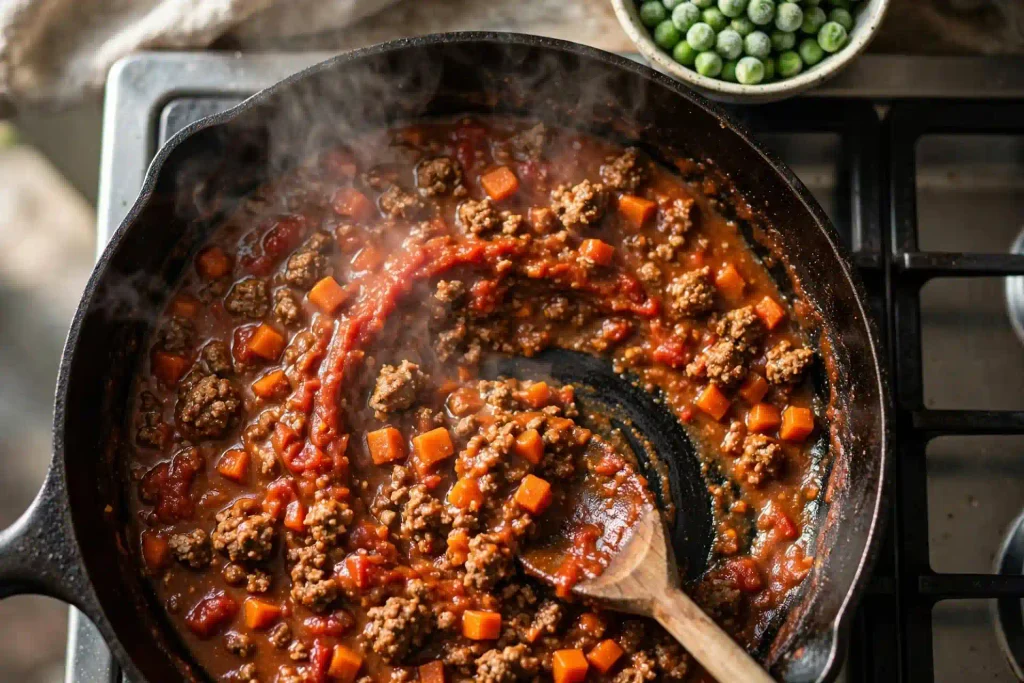
While the potatoes cook, warm the skillet over medium high heat and add the lamb. Break it into small crumbles and cook until no pink remains and it reaches 160°F, about 6 minutes, then spoon off all but 2 tablespoons of fat.
Add the onion and carrots to the fat left in the pan. Stir every minute for 6 minutes, until the onion turns translucent and the carrot edges just start to soften.
Push the vegetables to one side, add the garlic and tomato paste to the cleared space, and stir for 60 seconds until the paste darkens from bright red to brick. Sprinkle the flour over everything and stir for another minute so it loses its raw, chalky smell.
Chef’s Note: Skipping the flour’s cooking time leaves a starchy taste in the finished gravy. A full minute of stirring cooks that off.
Pour in the broth and Worcestershire sauce, scraping the pan floor until nothing sticks. Stir in the thyme, rosemary, salt, and pepper, then bring the mixture to a steady simmer.
Simmer uncovered for 10 minutes, stirring occasionally, until a spoon dragged across the pan floor leaves a trail that stays open for a second before closing. Stir in the frozen peas during the final 2 minutes so they heat through without losing their color.
Chef’s Note: If the gravy still looks thin after 10 minutes, keep simmering in 2 minute increments rather than adding more flour, which can leave a pasty texture.
Drain the potatoes well and return them to the dry pot for 1 minute over low heat, shaking gently, to cook off excess moisture. Mash with the butter, warm milk, egg yolk, salt, and white pepper until smooth and no lumps remain.
Spread the lamb filling evenly across the skillet, then spoon or pipe the mash over the top, pushing it to the edges so it seals against the pan sides. Drag a fork across the surface to create ridges that will catch color under the broiler.
Chef’s Note: Sealing the mash all the way to the pan edge is the step most cooks skip, and the filling bubbles up through any gap left open.
Broil for 5 to 8 minutes, watching closely, until the ridges turn deep golden brown in spots and the filling bubbles visibly at the edges.
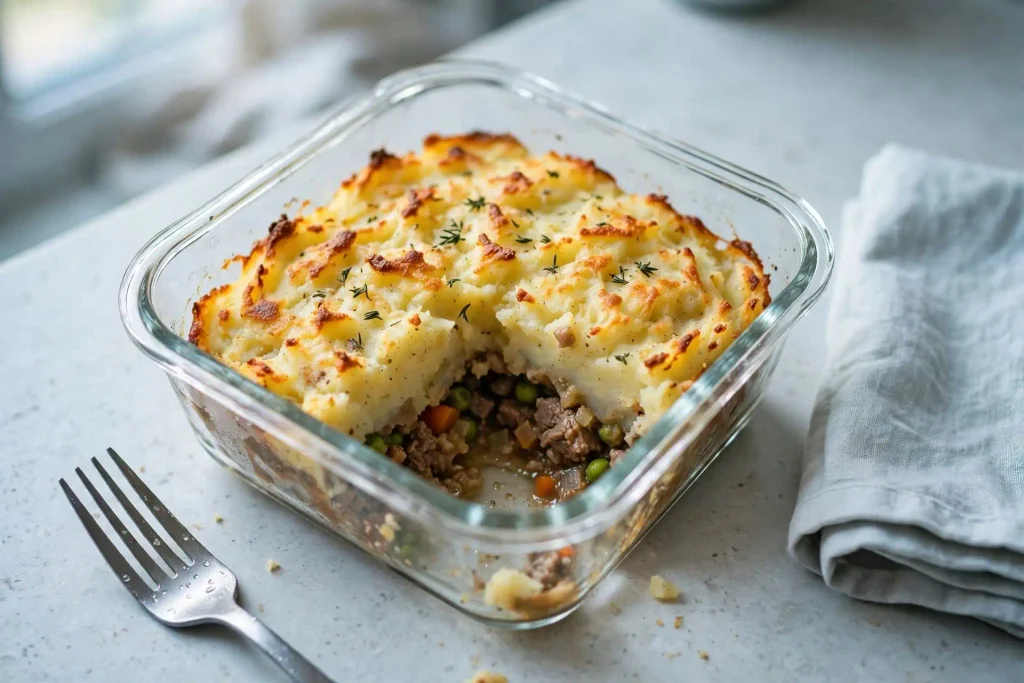
Let the pie rest for 10 minutes before cutting. The filling continues to set during this time, so a wedge cut too early will run.
Callout: Rub a little melted butter over the ridged mash before broiling. It browns faster and more evenly than dry potato alone, so you get color in under 6 minutes instead of risking the filling drying out while you wait.
Expert Tips and Tricks
- Make ahead: Assemble the full pie up to the broiling step, cool completely, cover, and refrigerate for up to 2 days. Broil straight from the fridge, adding 2 to 3 extra minutes since it starts out cold.
- Storage: Cool leftovers to room temperature within 2 hours, then refrigerate in an airtight container.
- Rice the potatoes for the smoothest mash: A ricer avoids the gluey texture that overworking with a hand masher can cause.
- Reduce before you top: A filling that still looks loose after simmering will turn the whole pie watery. Give it the full uncovered simmer time.
- Season the mash separately: The filling below is already well seasoned, so the mash needs its own pinch of salt to avoid tasting flat by comparison.
- Watch the broiler closely: The gap between golden and burnt is under a minute with most broilers, so stay at the oven door rather than walking away.
- Double the filling for the freezer: The lamb gravy freezes well on its own, so a double batch lets you build a second pie with fresh mash another night.
Want a dish with the same make ahead convenience in a creamier form? Loaded baked potato soup turns the same potato comfort into a spoonable bowl.
Common Mistakes and Troubleshooting
The filling is watery once cut. The gravy wasn’t reduced enough before the mash went on. Simmer the filling longer next time, uncovered, until a spoon trail stays open for a second.
The mash slid off the sides. The potato layer wasn’t sealed against the pan edge. Push the mash all the way to the skillet wall with a spoon or spatula before ridging the top.
The top didn’t brown. The broiler wasn’t hot enough, or the pie sat too far from the heat. Move the rack to the upper third and brush the ridges with melted butter before broiling.
The gravy tastes flat. The flour wasn’t cooked long enough, or the dish needs more salt. Stir the flour into the fat for a full minute before adding liquid, and taste the gravy before it goes under the mash.
The peas turned gray and mushy. They simmered the whole 10 minutes instead of going in at the end. Add frozen peas only in the last 2 minutes of the filling’s simmer.
Honest Trade-Off
This version leans on broth and a quick simmer rather than the long braised lamb shoulder some traditional recipes call for, which means the meat stays in loose crumbles rather than breaking down into shreds over hours. Anyone chasing that deeply braised texture should look for a slow cooked version instead. This recipe suits a weeknight or Sunday dinner where an hour and 15 minutes, not an afternoon, is the budget.
Storage and Make Ahead
Refrigerator: Store covered in the baking dish or an airtight container for up to 4 days.
Reheating: Cover with foil and warm in a 350°F oven for 20 to 25 minutes, removing the foil for the last 5 minutes to recrisp the top. Microwaving works for single portions but softens the ridges.
Freezer: Freezes well for up to 3 months, either fully assembled and unbaked or already baked. Thaw overnight in the fridge before reheating, and add 10 extra minutes in the oven if reheating from frozen.
Variations and Substitutions
- Cottage pie: Swap the lamb for ground beef at the same weight, which is the traditional distinction between the two dishes.
- Extra vegetables: Stir in a cup of diced parsnip or a handful of corn kernels alongside the carrots.
- Cheesy topping: Fold ½ cup of shredded sharp cheddar into the mash, or sprinkle it over the ridges before broiling.
- Sweet potato topping: Replace half the russets with peeled, cubed sweet potato for a sweeter, more colorful crust.
- Individual portions: Divide the filling and mash among six small ramekins instead of one skillet, and broil for 4 to 5 minutes.
Serving Suggestions
Shepherd’s pie is hearty enough to serve with nothing more than a simple green salad or steamed green beans on the side. A glass of robust red wine suits the richness of the lamb if that fits your table. Crusty bread works well for anyone who wants to mop up extra gravy from the plate. For a lighter finish, a small bowl of applesauce or pickled red cabbage cuts through the richness the way a tart side often does with braised meats.
Callout: Let the pie sit for the full 10 minutes before serving, even though it smells ready sooner. The filling firms up during that rest, and a wedge cut too soon collapses instead of holding its shape.
Want something equally comforting to rotate into the week? Tuna noodle casserole gives you a lighter, creamier bake with the same make ahead ease.
Frequently Asked Questions
Can I make shepherd’s pie ahead of time?
Yes. Assemble the full pie through the ridging step, then cover and refrigerate for up to 2 days before broiling. Broil straight from the fridge, adding 2 to 3 extra minutes since the dish starts cold. Fully baked pie also keeps well and reheats in the oven.
Why is my shepherd’s pie watery?
The gravy usually wasn’t reduced enough before the mash went on top. Simmer the filling uncovered until a spoon dragged across the pan floor leaves an open trail for a second. Letting the baked pie rest for the full 10 minutes before cutting also helps the filling set.
Can I use ground beef instead of lamb?
Yes, and that version is technically called cottage pie rather than shepherd’s pie. Use the same weight of ground beef and follow the recipe exactly as written, since the seasoning and gravy work the same way with either meat.
How do I know when the potatoes are ready to mash?
A knife inserted into a quartered potato should slide in with no resistance, usually after 15 to 18 minutes of simmering. Potatoes that still resist the knife will leave lumps in the mash no matter how long you beat them.
Is shepherd’s pie safe for someone with a dairy or gluten allergy?
The standard recipe contains dairy in the mash and gluten in the flour used for the gravy. A plant based butter and milk substitute handles the dairy, and cornstarch mixed into a slurry replaces the flour. Check your Worcestershire sauce label too, since some brands include gluten or fish derivatives.
Conclusion
The difference between a shepherd’s pie that holds its shape and one that turns into soup on the plate comes down to patience at the stove, not any special ingredient. Give the filling its full uncovered simmer, seal the mash to the pan edge, and let the baked pie rest before the first cut. Try swapping in sweet potato for half the mash next time, or build individual ramekins for a dinner party that needs portion control built in from the start.
Shepherd’s Pie
Ingredients
Method
- Boil the potatoes until a knife slides in with no resistance, 15 to 18 minutes.
- Brown the lamb, breaking it into crumbles, until it reaches 160°F. Spoon off excess fat.
- Cook the onion and carrots for 6 minutes until softened.
- Stir in the garlic and tomato paste for 60 seconds, then the flour for another minute.
- Add the broth, Worcestershire sauce, and herbs, then bring to a simmer.
- Simmer uncovered 10 minutes until the gravy thickens, stirring in the peas for the last 2 minutes.
- Mash the drained potatoes with butter, milk, egg yolk, salt, and pepper.
- Spread the filling in the skillet, top with mash sealed to the edges, and ridge with a fork.
- Broil 5 to 8 minutes until golden and bubbling.
- Rest 10 minutes before cutting and serving.