Tuna Noodle Casserole
Tuna Noodle Casserole That Actually Tastes Homemade
Tuna noodle casserole earned its bad reputation honestly. Most versions rely on a can of condensed soup, and the result tastes thin, oversalted, and forgettable by the second bite. This tuna noodle casserole skips the shortcut entirely. The sauce comes from butter and flour cooked into a proper roux, the cheese melts directly into that sauce instead of sitting on top, and the noodles come out of the pot slightly underdone so they finish cooking in the oven instead of turning to mush. If your only experience with this dish involves a can opener, this recipe changes that completely.
What Makes This Tuna Noodle Casserole Different
The sauce holds its structure through a full bake because butter and flour form a stable base, unlike the starches in canned soup that were engineered for shelf life, not reheating.
Freshly grated sharp cheddar melts into every bite instead of clumping on the surface, since pre-shredded bags are coated with a starch that resists smooth melting.
Pulling the egg noodles from the water two minutes early stops the double cooking that wrecks most baked pasta dishes. They finish absorbing flavor from the sauce rather than absorbing plain water twice.
A spoonful of Dijon mustard in the sauce cuts the richness without tasting like mustard at all.
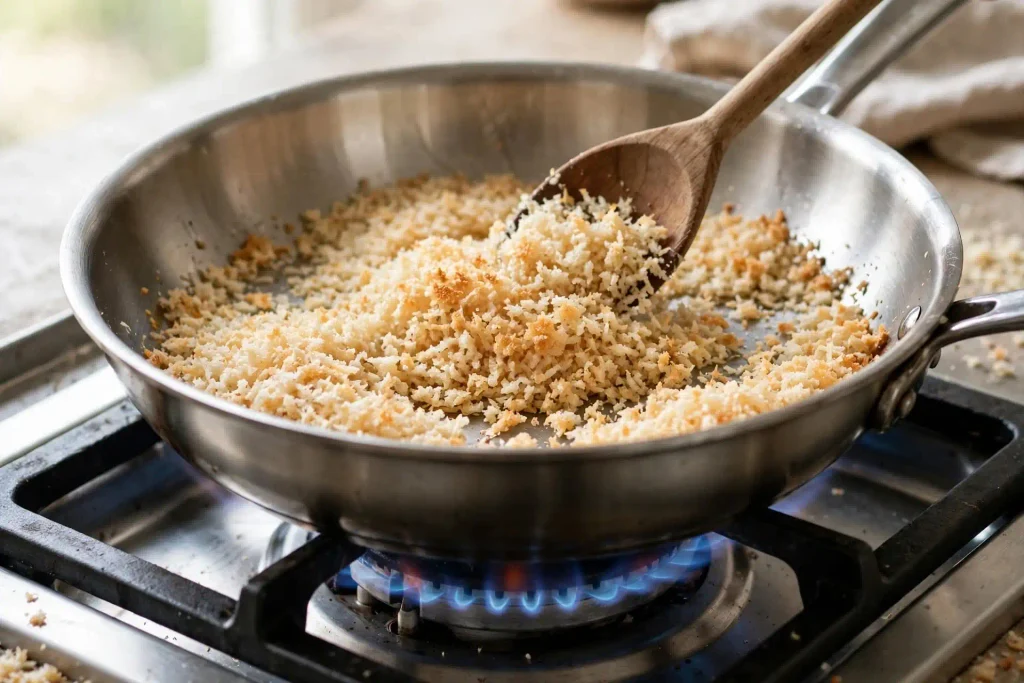
Toasting the panko topping in a dry skillet before it meets any butter is the one step almost everyone skips, and it’s the reason this casserole doesn’t turn into a soft, pale mess after twenty minutes under foil.
Peas go in frozen and raw right at assembly, so they keep their color and a bit of snap instead of turning that dull, overcooked shade of green.
Quick Information
Prep time: 20 minutes. Cook time: 30 minutes. Total time: 50 minutes. Servings: 6. Difficulty: easy. Calories: approximately 420 per serving. The ingredient that matters most is the cheese, since a bland pre-shredded blend flattens the whole sauce. Good for weeknight dinners or a dish you assemble the night before a busy week.
Ingredients
For the pasta and protein
- 12 oz wide egg noodles (ridges grip sauce better than penne or elbows)
- Two 5-oz cans solid white albacore tuna, drained well
For the sauce
- 4 tbsp unsalted butter
- 1/4 cup all-purpose flour
- 3 cups whole milk
- 1 cup chicken or vegetable broth
- 2 cups sharp white cheddar, grated fresh (pre-shredded won’t melt as smoothly)
- 1 tbsp Dijon mustard
- 1/2 tsp onion powder
For the vegetables
- 1 cup frozen peas, added raw at assembly
- 1 cup sliced button mushrooms, sauteed ahead of time
- 1/2 cup diced celery
For the topping
- 1/4 cup grated parmesan
- 1 1/2 cups panko breadcrumbs
- 3 tbsp melted butter
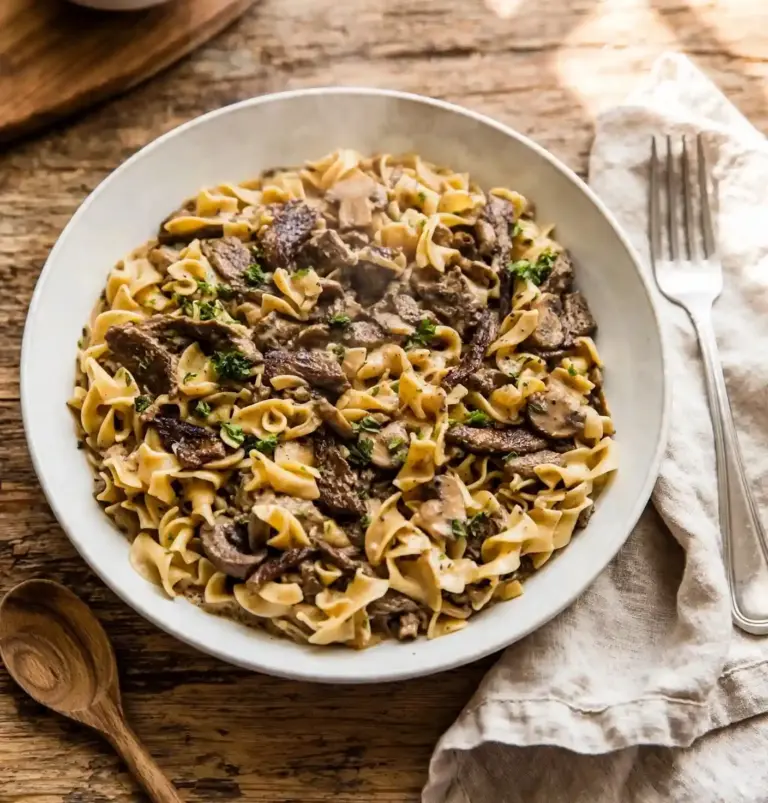
You may also like: beef stroganoff
Recipe Timing
Prep: 20 minutes. Cook: 30 minutes. Rest: 5 minutes. Total: 55 minutes. Servings: 6. Difficulty: easy. Course: dinner. Cuisine: American.
Allergen and Dietary Disclosure
This recipe contains dairy, gluten, and fish. For a dairy-free version, use a plant-based butter and unsweetened oat milk, though expect a noticeably thinner sauce. For gluten-free, swap in a 1:1 gluten-free flour blend for the roux, use gluten-free pasta, and confirm your broth carries a gluten-free label.
Equipment Needed
A heavy-bottomed saucepan keeps the roux from scorching the way a thin pan would. A 9×13 baking dish gives the topping enough surface area to crisp evenly rather than steaming in a crowded pan. A box grater matters here, since pre-shredded cheese won’t melt as smoothly into the sauce. A fine mesh strainer for the tuna catches more liquid than people expect, and that liquid, left in, waters down the whole sauce.
Nutrition Information
Per serving, based on 6 servings: 420 calories, 24 grams protein, 38 grams carbohydrates, 19 grams fat, 2 grams fiber, 6 grams sugar, 640 milligrams sodium. The tuna and dairy make this a solid protein source for a weeknight meal. These numbers are estimates calculated from standard USDA nutrient values and will shift depending on the exact brands used.
Why the Sauce Technique Changes Everything
Most tuna casserole recipes go wrong at the sauce, not the assembly. Canned condensed soup is built for shelf stability, and the modified starches that thicken it were never designed to survive a second cooking. Thirty minutes in a hot oven breaks that structure back down, which is why soup based versions turn watery by the time they hit the table.
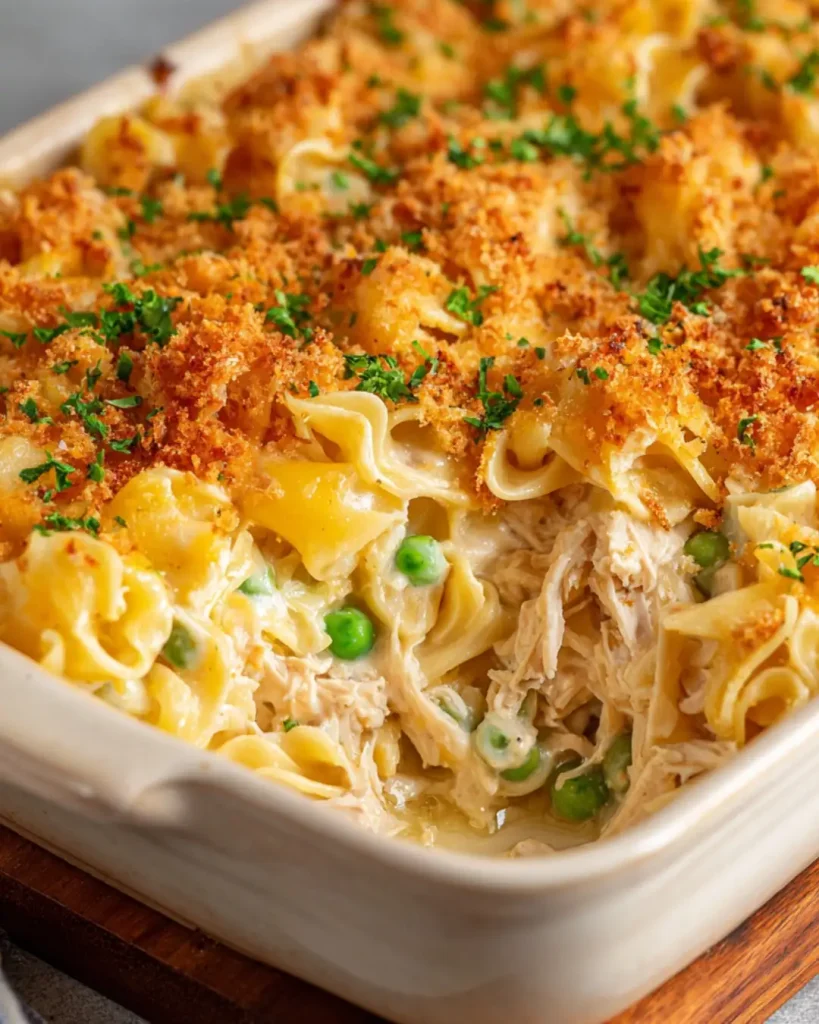
A roux made properly holds up because the flour and butter form a stable bond with the milk. That bond doesn’t rely on starch that breaks under heat the second time around.
Pasta timing causes the second most common failure. Noodles boiled to full doneness keep drinking up liquid once they’re in the oven, and by the time the casserole finishes baking, they’ve gone soft past the point of no return. Stopping the boil two minutes early means the noodles finish cooking inside the sauce, picking up flavor instead of just water.
Preparation
Heat the oven to 375°F. Butter a 9×13 dish so the edges release cleanly during serving. Get a large pot of salted water boiling for the noodles. Grate the cheddar while the water heats, since the roux won’t give you time to stop and grate once it’s underway.
Step by Step Method
- Boil the wide egg noodles for two minutes less than the package suggests, checking for a noodle that still resists slightly at the center. Drain without rinsing, since the surface starch is what helps the sauce cling later.
- Melt the butter in a large saucepan over medium heat until the foam rises and settles again, roughly ninety seconds. Once it settles, whisk in the flour right away and stir for a full minute, until the raw flour smell fades into something closer to toasted nuts.
- Pour in the milk in three separate additions, whisking the whole time, since dumping it all in at once is how lumps form in a roux. Once the milk disappears into the mixture, whisk in the broth.
- Bump the heat up slightly and let the sauce simmer, whisking every thirty seconds or so, until it coats the back of a spoon and holds a line when you drag a finger through it. Expect this to take six to eight minutes, not less.
- Pull the pan off the heat and stir in the cheddar a handful at a time, waiting for each addition to melt before adding more. Dropping all the cheese in together causes it to seize into clumps instead of melting smoothly.
- Add the Dijon mustard and onion powder next, whisking to combine. Taste the sauce right here, because this is the last point where adjusting the seasoning is simple.
- Meanwhile, in a small skillet over medium heat, cook the mushrooms in a teaspoon of oil for four to five minutes. They’re ready once the liquid they release has evaporated and the edges have taken on some color.
- Fold the noodles, drained tuna, mushrooms, celery, and peas into the sauce. Food safety note: run the tuna through a strainer first, since leftover liquid thins the sauce and adds unnecessary sodium.
- Spread the mixture into the prepared dish with a spatula, smoothing it into an even layer so the topping bakes at the same rate across the whole pan.
- Toast the panko in a dry skillet over medium heat, stirring the whole time, until it turns a light gold color after about ninety seconds. Most home cooks skip this step, and it’s the single biggest reason store bought casseroles end up with soft, wet toppings.
- Toss the toasted panko with the melted butter and parmesan, then scatter it evenly across the top of the casserole.
- Bake at 375°F for twenty to twenty five minutes. Look for visible bubbling around the edges and a topping that’s turned solidly golden brown. Let the dish rest five minutes before serving so the sauce firms up instead of running across the plate.
Chef’s Note: If the sauce seems thinner than you expected right after the cheese goes in, leave it alone. It thickens further in the oven, and adding more flour at this point usually overcorrects.
Chef’s Note: The crunch only comes from toasting the panko separately before mixing it with butter. Raw panko tossed straight into butter and baked tends to go chewy instead of crisp.
Chef’s Note: Doubling the recipe works better in two separate dishes than one oversized one. A single large casserole takes longer to heat through the middle, and the edges dry out waiting for the center to catch up.
You may also like: shrimp tacos
Expert Tips and Tricks
Make the sauce the day before and store it apart from the noodles, then combine everything on baking day. This keeps the noodles from soaking in liquid overnight and going mushy before the oven even gets involved.
Leftovers keep in an airtight container for up to four days. The topping loses some crunch, but a two minute pass under the broiler mostly brings it back.
If the sauce breaks or turns grainy after the cheese goes in, the pan was too hot. Pull it off the burner right away and whisk in a tablespoon of cold milk to smooth it out again.
A splash of diluted rice vinegar added right after the roux stage brightens the richness without introducing any sweetness.
Tuna packed in olive oil instead of water gives the finished sauce a slightly richer texture with zero extra steps.
Grate the cheese before starting the roux. Once the flour and butter are cooking, there’s no window to stop and shred a block of cheddar.
Undersalt the pasta water slightly if your broth runs salty, since the sodium stacks quickly between the broth, cheese, and parmesan topping.
Common Mistakes and Troubleshooting
A soggy topping almost always traces back to raw, untoasted breadcrumbs that soak up moisture during the bake instead of resisting it. Toast them first, without exception.
Watery casserole usually means the noodles got rinsed after draining, which strips away the starch responsible for thickening the whole dish. Skip the rinse entirely, every time.
Bland sauce often comes from adding the cheese too early, before the roux had its full minute to develop flavor on its own. Give the flour that full sixty seconds before the milk goes in.
Rubbery peas come from cooking them alongside the mushrooms instead of folding them in raw at the very end. They only need the residual heat of the bake.
A casserole that won’t set after resting typically needed a few extra minutes in the oven. Sauce keeps firming as it cools, but an underbaked batch never reaches that point no matter how long it sits.
Honest Trade Off
This version takes about fifteen minutes longer than the canned soup shortcut, since building a roux from scratch means active whisking time that opening a can skips entirely. Anyone feeding a crowd on a genuinely rushed weeknight, and willing to accept a thinner, saltier sauce, still has a place for the shortcut version. This recipe is built for the fifteen extra minutes in exchange for noticeably better texture and flavor.
Storage and Make Ahead
Refrigerate leftovers in an airtight container for up to four days. For longer storage, this casserole freezes well unbaked. Assemble everything except the topping, wrap it tightly, and freeze for up to two months. Add the panko fresh after thawing overnight in the fridge, then bake as directed with five to ten extra minutes since the dish starts out cold in the center.
Freezing the finished, baked casserole with the topping already on tends to leave the panko soft after thawing, so hold it back until baking day if freezing ahead.
Variations and Substitutions
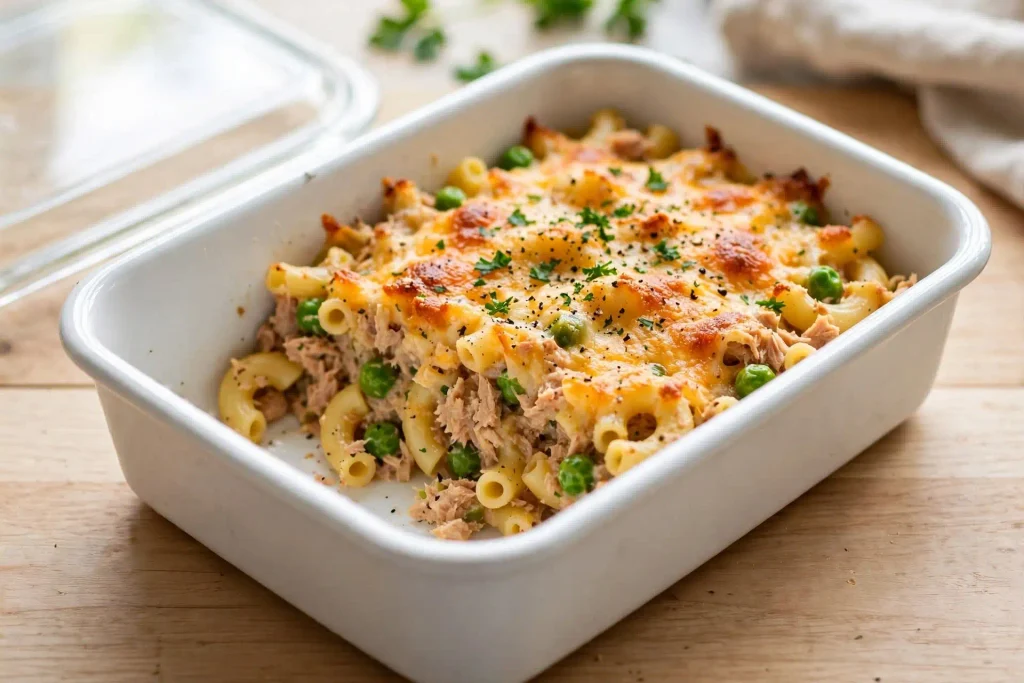
For a spicier version, stir a half teaspoon of red pepper flakes into the sauce alongside the mustard. For a milder, kid-friendly batch, leave out the mushrooms and Dijon and keep it to peas and celery. A vegetarian version works by swapping the tuna for two cups of cooked white beans, which take on the sauce’s flavor well even with a different texture. For gluten-free, use a 1:1 gluten-free flour blend in the roux, gluten-free pasta, and a panko brand labeled certified gluten-free.
Serving Suggestions
A green salad with a sharp vinaigrette cuts through the richness of the casserole well. A crusty loaf of bread works for scooping up any leftover sauce on the plate. [internal link: easy weeknight dinner recipes] Roasted broccoli or green beans add color and a slight bitterness that balances the cream in the dish. Sparkling water with lemon rounds out the meal without competing against the richness.
You may also like: cheeseburger soup
FAQ
Can I make tuna noodle casserole ahead of time?
Yes, assemble the full casserole a day ahead and refrigerate it unbaked, saving the topping for right before it goes in the oven. This keeps the panko from softening early. Bake straight from the fridge with about ten extra minutes added to the covered portion of the bake.
Why did my casserole turn out watery?
This almost always comes down to rinsing the noodles after draining, which strips the starch that helps the sauce thicken and cling to the pasta. It can also happen if the tuna wasn’t drained well before mixing it in. Skip the rinse and press the tuna dry through a strainer.
Can I use a different pasta if I don’t have egg noodles?
Rotini or penne both work, though the sauce won’t grip quite as well since egg noodles offer more surface texture. Pull whatever pasta you use two minutes early, the same as the egg noodles, to avoid mush. Very thin shapes tend to disappear into the sauce and are worth avoiding.
How do I know when the casserole is fully done baking?
Watch for visible bubbling around the edges of the dish and a topping that’s turned deep gold, generally somewhere between twenty and twenty five minutes at 375°F. The center should feel firm rather than liquid when pressed gently with a spoon. If the top browns before the center sets, tent it loosely with foil and keep baking.
Does this tuna noodle casserole work without the mushrooms?
Yes, the mushrooms add earthiness but aren’t structurally necessary. Leave them out and follow the rest of the recipe exactly as written, no other changes needed. Some people find the texture of cooked mushrooms unappealing even after browning, which makes this one of the easier swaps in the recipe.
Conclusion
The gap between a forgettable tuna noodle casserole and a genuinely good one comes down to a short list of specific choices: a real roux instead of a can, noodles pulled early, and a topping toasted before it ever touches butter. None of that adds real work, just a different order to the same steps. Once the roux version is on the table, going back to the soup shortcut feels like a downgrade nobody asked for.
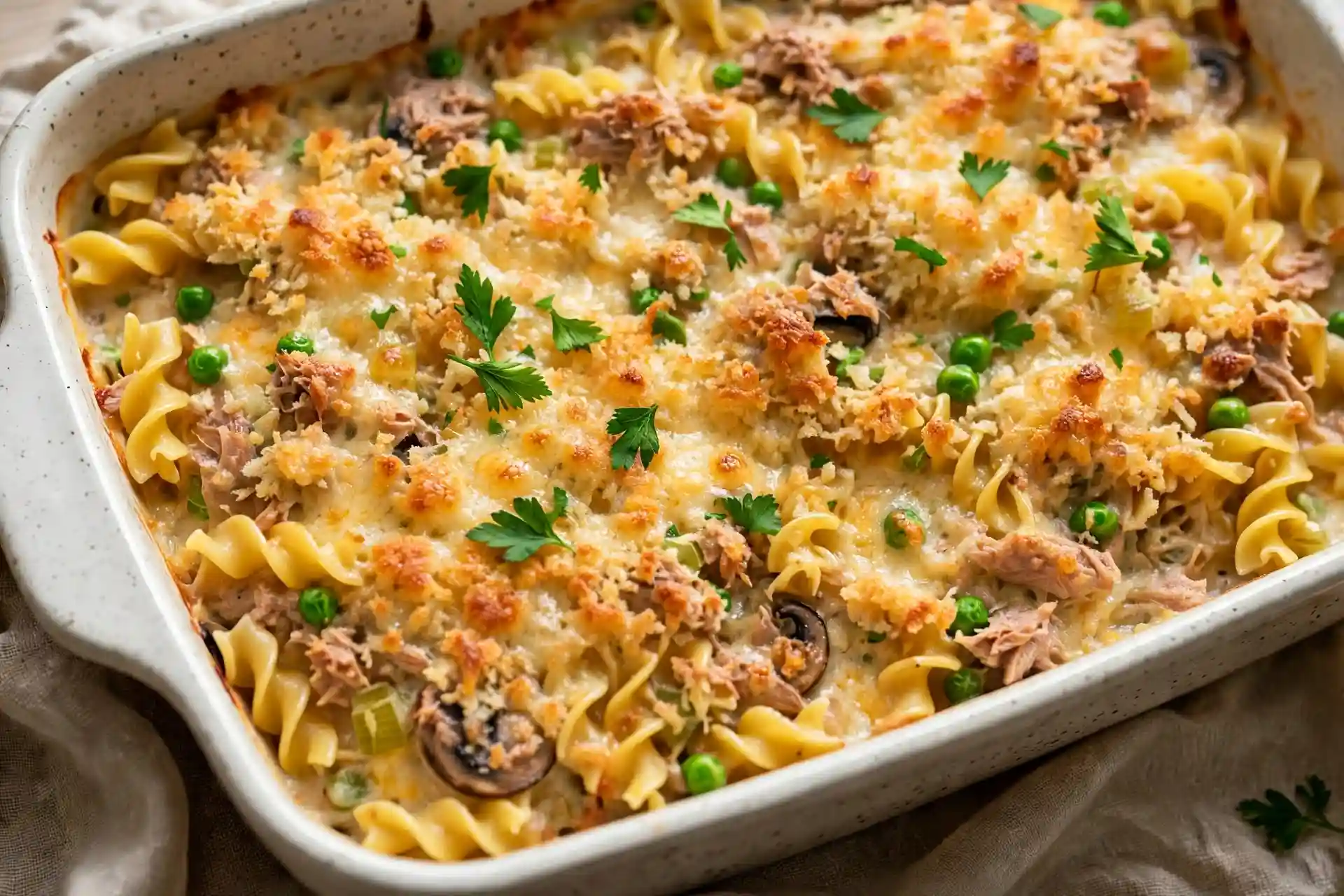
Tuna Noodle Casserole
Ingredients
Method
- Boil noodles two minutes under package time and drain without rinsing.
- Build a roux with the butter and flour, whisk in the milk and broth, and simmer until thickened.
- Melt in the cheddar gradually, then stir in the mustard and onion powder.
- Saute the mushrooms separately until browned.
- Fold the noodles, tuna, mushrooms, celery, and peas into the sauce.
- Transfer to a buttered 9×13 dish.
- Toast the panko, mix with butter and parmesan, and scatter on top.
- Bake at 375°F for 20 to 25 minutes until bubbling and golden.
- Rest 5 minutes before serving.
4 Comments
Comments are closed.