Egg Roll in a Bowl
Egg Roll in a Bowl (The Stir-Fry Method That Keeps the Cabbage From Turning Soggy)
Egg roll in a bowl usually turns into a soggy, watery mess for one simple reason: the cabbage releases moisture as it cooks, and most recipes don’t account for it. The pan fills with liquid, the sauce turns thin instead of clinging to the vegetables, and what should be a quick, crisp stir-fry ends up closer to a wilted, steamed pile. This version cooks the cabbage in batches over high heat instead of dumping it all in at once, builds the sauce separately so it doesn’t dilute in the pan liquid, and finishes with a quick toss at the very end to coat everything without extra cooking time.
Why This Version Stays Crisp Instead of Watery
Cooking the cabbage in two batches instead of one lets each batch actually sear against the hot pan surface rather than steaming in its own released liquid.
Ground chicken thighs instead of ground beef or ground turkey breast bring enough natural fat to the pan that you don’t need extra oil partway through, and the texture stays juicier through the quick cook time.
Building the sauce separately in a small bowl means it goes into the pan all at once at the very end, coating everything evenly instead of unevenly soaking in over several minutes of cooking.
A splash of rice vinegar added off the heat at the very end keeps its bright, sharp edge instead of cooking off and turning flat, which happens if it’s added earlier in the process.
This version skips the deep-fried egg roll wrapper entirely, so there’s no oil to heat or wrapper to seal, cutting a genuinely time-consuming step out of a dish that’s supposed to be the fast version in the first place.
Quick Snapshot
- Prep time: 15 minutes
- Cook time: 20 minutes
- Total time: 35 minutes
- Servings: 4
- Difficulty: Easy
- Calories per serving: 340
- Ingredient that matters most: A wide, high-heat skillet or wok that doesn’t crowd the cabbage
- Best for: A fast weeknight dinner that still feels like takeout
Ingredients
For the stir-fry
Ground chicken thigh brings enough fat to keep the dish from tasting dry, unlike leaner ground chicken breast, which can turn stringy under quick, high heat.
- 1 pound ground chicken thigh
- 1 tablespoon vegetable oil, divided
- 1 medium yellow onion, diced
- 3 cloves garlic, minced
- 1 tablespoon fresh ginger, grated
- 1 medium head green cabbage, thinly sliced (about 8 cups)
- 2 medium carrots, julienned or shredded
- 3 green onions, sliced, whites and greens separated
For the sauce
- ¼ cup low-sodium soy sauce
- 1 tablespoon sesame oil
- 1 tablespoon rice vinegar
- 1 teaspoon ground ginger
- ½ teaspoon garlic powder
- 1 to 2 teaspoons sriracha (optional, for heat)
For serving
- Toasted sesame seeds
- Extra sliced green onion
If ground chicken thigh isn’t available, ground turkey works as a substitute, though it runs leaner and benefits from an extra ½ tablespoon of oil in the pan to keep the texture from drying out. Napa cabbage can replace green cabbage for a slightly more tender bite, though it releases more water during cooking, so give it a little extra time in the pan to crisp back up.
You may also like: mississippi pot roast
Recipe Timing
- Prep time: 15 minutes
- Cook time: 20 minutes
- Rest time: 0 minutes
- Total time: 35 minutes
- Servings: 4
- Difficulty: Easy
- Cuisine: Asian-American
- Course: Main dish
Allergen Disclosure
This recipe contains soy from the soy sauce and sesame from the sesame oil and seeds. For a soy-free version, swap the soy sauce for coconut aminos in the same amount, keeping in mind the flavor will be slightly sweeter and less salty. For a sesame-free version, skip the sesame oil and seeds and use a neutral oil instead, though the dish will lose some of its characteristic nutty background flavor.
Equipment Needed
- A wide, high-heat skillet or wok, since a crowded, narrow pan is the main reason the cabbage steams instead of searing
- Tongs or a wide spatula for tossing the cabbage without crushing it
- A box grater or julienne peeler for the carrots
- A small bowl for mixing the sauce separately before it goes into the pan
A wok’s sloped sides genuinely help here, letting you push cooked vegetables up and out of direct heat while a fresh batch sears in the center, something a flat skillet can’t quite replicate.
Nutrition Information
Per serving: 340 calories, 26g protein, 14g carbohydrates, 20g fat, 4g fiber, 6g sugar, 780mg sodium. These are estimates based on standard USDA nutrient data for ground chicken thigh and the listed vegetables, and will shift depending on your exact brands and portion sizes.
Why Cooking the Cabbage in Batches Actually Prevents Sogginess
Cabbage is mostly water held inside its cell walls, and high heat ruptures those walls fast, releasing moisture into the pan. When too much cabbage goes in at once, that released liquid has nowhere to evaporate quickly, so the vegetables end up simmering in their own runoff instead of searing against the hot metal surface. Splitting the cabbage into two batches keeps the pan hot enough the whole time for real browning instead of steaming.
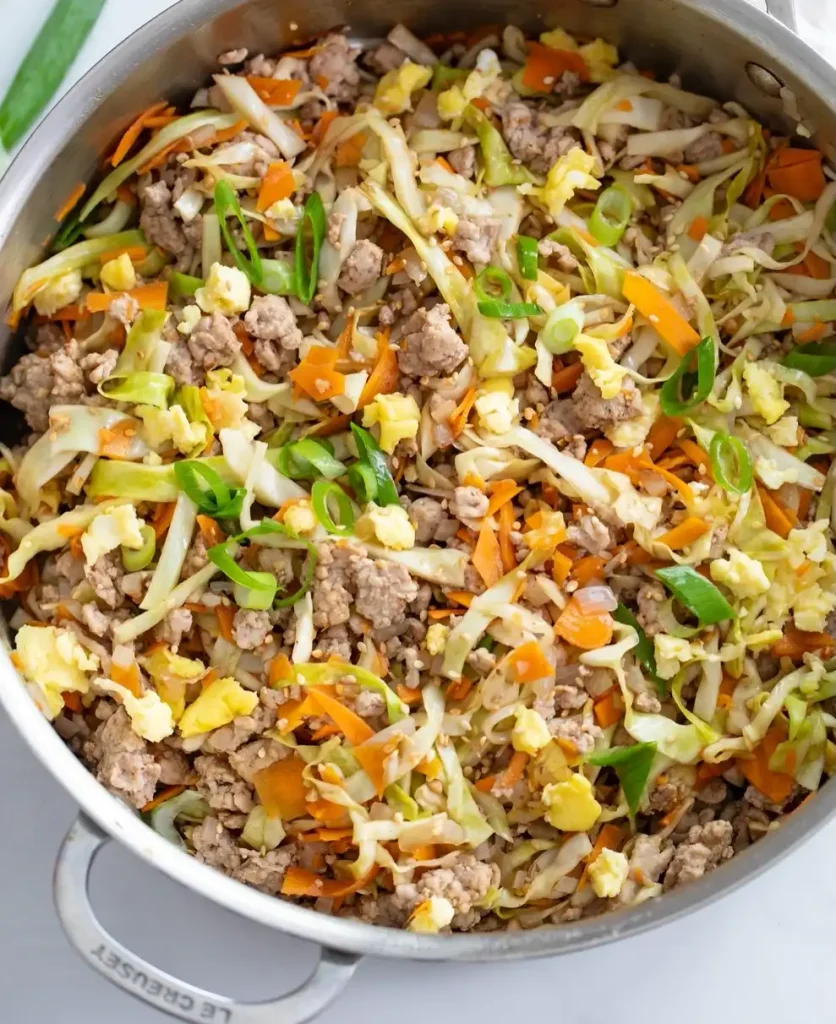
Building the sauce separately solves a related issue. Adding soy sauce and vinegar directly into a pan already full of cabbage liquid dilutes both, leaving a thin, watery coating instead of a sauce that actually clings to the vegetables.
Preparation
Slice the cabbage and carrots before you start cooking, since the stir-fry itself moves fast and there’s no time to chop mid-step once the pan is hot. Whisk the sauce ingredients together in a small bowl ahead of time so it’s ready to pour in the instant the vegetables are done.
Step-by-Step Method
1. Heat a wide skillet or wok over medium-high heat with no oil yet, letting it get properly hot for about 2 minutes before adding anything. A pan that’s fully preheated is what actually produces a sear on the chicken instead of a gray, steamed texture.
2. Add the ground chicken thigh and break it apart with a spatula, cooking for 6 to 7 minutes until no pink remains and it’s developed some browned, crispy edges in spots. Resist stirring constantly here; letting the meat sit undisturbed for stretches is what lets those browned edges actually form.
Food safety note: Ground chicken should reach an internal temperature of 165°F throughout; check the thickest clump with a thermometer if you’re unsure it’s fully cooked.
3. Push the cooked chicken to one side of the pan and add the diced onion to the cleared space, cooking for about 3 minutes until it softens and turns translucent. Stir the onion together with the chicken once it’s soft, then push the whole mixture to one side again.
4. Add the garlic and ginger to the cleared space and cook for about 30 seconds, just until fragrant, then stir everything together. Garlic burns fast at this heat, so keep it moving and don’t step away during this brief window.
5. Transfer the chicken mixture to a plate and set it aside, then add 1 teaspoon of the oil to the now-empty pan. Add half the sliced cabbage and half the carrots, spreading them out in as even a layer as the pan allows.
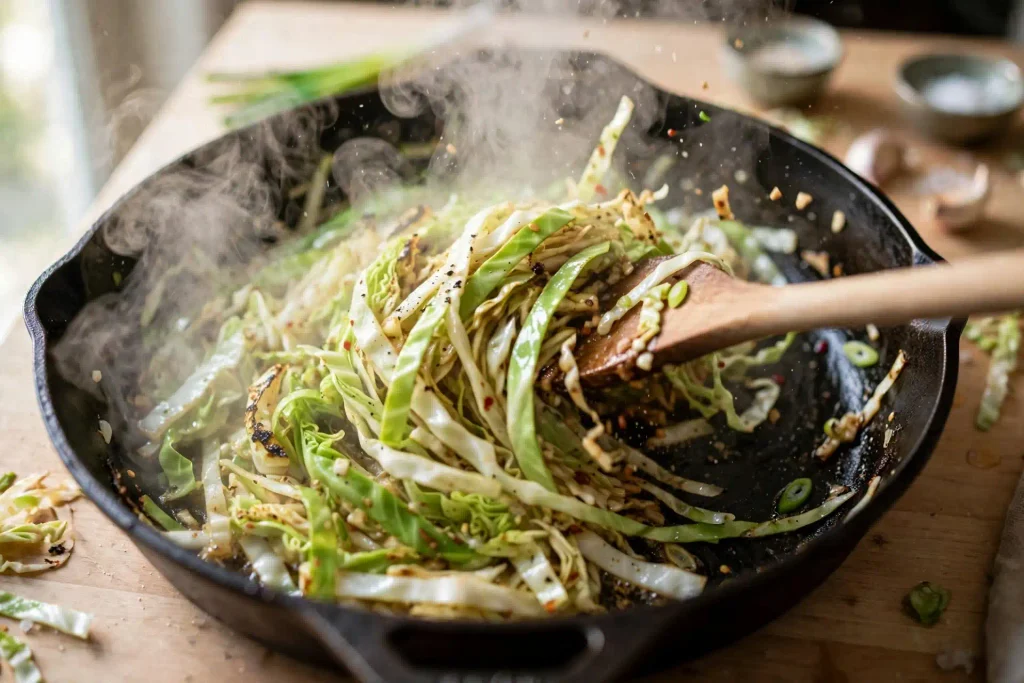
6. Let the first batch cook undisturbed for about 2 minutes before tossing, then continue cooking and tossing occasionally for another 3 to 4 minutes total, until the cabbage turns bright green with some lightly charred edges and softens but still holds a slight crunch. Overcrowding this step is the single biggest reason cabbage turns soggy instead of crisp.
Chef’s Note: Listen for the pan. A steady sizzle means the heat is doing its job; if it goes quiet and the cabbage starts pooling liquid, bump the heat up slightly.
7. Transfer the first batch of cooked cabbage to the plate with the chicken, add the remaining teaspoon of oil, and repeat with the second batch of cabbage and carrots. This second batch usually cooks a touch faster since the pan is already fully hot from the first round.
Chef’s Note: If your pan is wide enough to hold all the cabbage in one loose layer without stacking, you can skip splitting it into batches entirely, though most home stovetops don’t have quite that much surface area.
8. Return the chicken mixture and the first batch of cabbage to the pan with the second batch, along with the white parts of the sliced green onions. Toss everything together over the heat for about 1 minute, just until reheated through.
9. Pour the pre-mixed sauce evenly over everything and toss quickly to coat, cooking for another 30 to 60 seconds just until everything is glossy and heated through. Adding the sauce at the very end rather than earlier is what keeps it clinging to the vegetables instead of thinning out in the pan liquid.
10. Remove the pan from the heat and stir in the rice vinegar if you held any back, or taste and adjust with an extra splash if the dish needs more brightness. Top with the green parts of the sliced green onions, toasted sesame seeds, and extra green onion before serving.
Expert Tips
- Make-ahead: Slice the cabbage and carrots up to 2 days ahead and store in the fridge in a sealed bag, since the actual cooking process moves fast once everything’s prepped. Cook the dish fresh, though, since reheated cabbage loses most of its crunch.
- Storage: Keeps in the fridge for up to 4 days in an airtight container, though the cabbage softens noticeably more with each day it sits.
- Don’t skip preheating the empty pan for those first 2 minutes; a pan that isn’t fully hot before the chicken goes in is the most common reason people end up with steamed instead of browned meat.
- If you’re using pre-shredded coleslaw mix instead of slicing your own cabbage, cut the cook time by about a minute per batch, since it’s usually sliced thinner than a whole head cut by hand.
- A drizzle of extra sesame oil right at the end, off the heat, adds a stronger sesame flavor than cooking it in earlier, since heat cooks off some of its aroma.
- Keep the heat at medium-high, not full high, through the whole cabbage stage; too aggressive a heat browns the outside before the inside has a chance to soften even slightly.
Callout box: Save the tougher outer leaves of the cabbage head for this recipe rather than the tender inner leaves, since they hold up better under the high heat and stay crisper through the whole cook.
You may also like: beef stroganoff
Common Mistakes and How to Fix Them
Cabbage turns watery and limp instead of crisp. This almost always means too much went into the pan at once. Split it into two batches, and give each one room to actually touch the hot pan surface.
Sauce tastes thin and doesn’t cling to anything. Adding the sauce too early, while the pan still has liquid from the cabbage, dilutes it. Mix the sauce separately and add it only at the very end, off the bulk of the cooking liquid.
Chicken comes out dry and crumbly. Ground chicken breast instead of thigh, or overcooking past the point it’s done, both cause this. Stick with thigh meat for the fat content, and pull it the moment it’s no longer pink.
Dish tastes flat despite all the sauce ingredients. This often means the rice vinegar cooked off too early in the process. Hold some back and add it off the heat at the very end for a brighter, sharper finish.
Vegetables cook unevenly, some soft and some still raw. Uneven slicing is usually the cause, with thicker pieces of cabbage or carrot taking longer than thin ones. Aim for consistent, thin slices across the whole batch.
Callout box: If you’re doubling this recipe, cook the cabbage in three or four smaller batches rather than two larger ones. The batch size matters more than the total amount, since a crowded pan is a crowded pan no matter how much total cabbage you’re working through.
Honest Trade-Off
This method takes a bit more hands-on attention than a version where everything goes into one big pot and simmers together until soft. If you’re feeding picky eaters who don’t mind a softer, more uniformly cooked texture, dumping everything in together and cooking it down for 10 minutes saves some active stirring time. Anyone who prefers real crunch in their cabbage will notice the difference immediately, but for a fast, low-effort version, the one-pot shortcut still tastes fine.
Storage and Make-Ahead
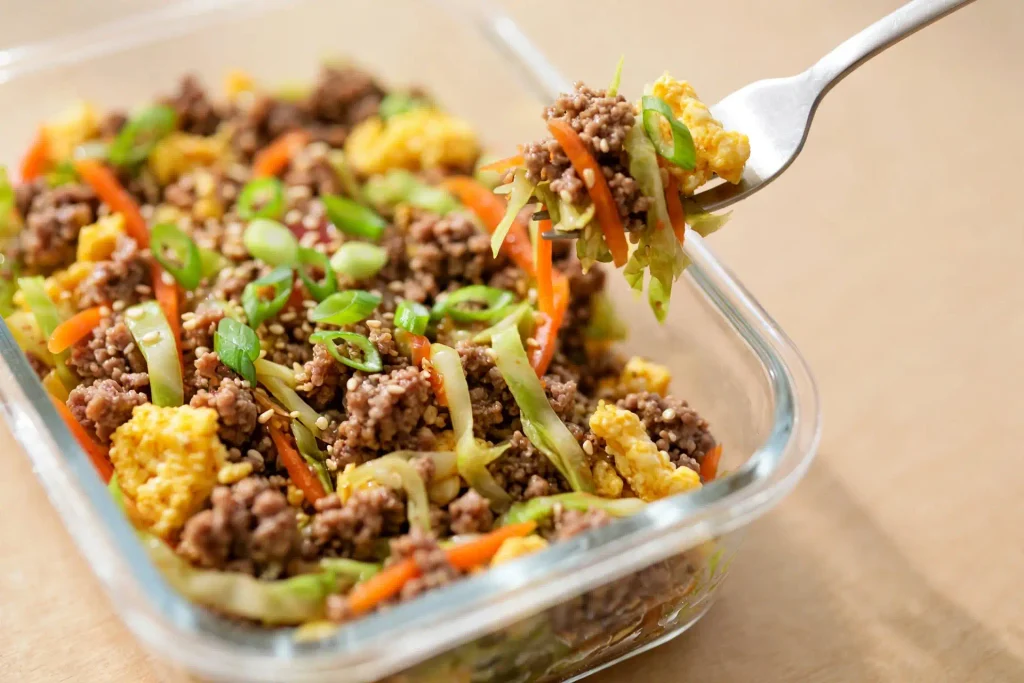
Store leftover egg roll in a bowl in an airtight container in the fridge for up to 4 days, keeping in mind the cabbage softens more each day it sits. Reheat in a skillet over medium heat rather than the microwave when possible, since dry pan heat helps bring back a little of the original crispness that microwave steam tends to erase. Freezing isn’t recommended, since cabbage turns limp and watery once thawed and doesn’t regain its texture no matter how it’s reheated.
Variations
Spicy version: Double the sriracha in the sauce and add a pinch of red pepper flakes to the pan along with the garlic and ginger for a sharper, more consistent heat throughout.
Ground beef version: Substitute ground beef for the ground chicken thigh, browning it the same way, for a heartier, slightly richer take on the same flavors.
Low-carb, extra-veggie version: Add a cup of sliced mushrooms and a cup of bean sprouts along with the cabbage for more volume and texture without adding many calories.
Peanut version: Stir a tablespoon of peanut butter into the sauce mixture before adding it to the pan for a richer, nuttier finish closer to a satay-style flavor.
Serving Suggestions
Egg roll in a bowl works well on its own, but a scoop of steamed white or brown rice underneath soaks up the extra sauce nicely if you want a heartier meal. A light cucumber salad with rice vinegar on the side adds a cool, crisp contrast to the warm stir-fry. Crispy wonton strips scattered on top bring back some of the crunch you’d get from a traditional egg roll’s wrapper, without needing to fry anything.
You may also like: shrimp tacos
Frequently Asked Questions
Can I make egg roll in a bowl ahead of time for meal prep?
Yes, though it’s best to slice the vegetables ahead and cook the dish closer to when you’ll eat it, since cabbage loses its crunch the longer it sits after cooking. If you do cook it ahead, reheat portions in a skillet rather than the microwave to bring back some texture.
Why did my cabbage turn out soggy instead of crisp?
This almost always comes from overcrowding the pan, which causes the cabbage to steam in its own released liquid instead of searing against the hot surface. Cook it in two smaller batches with the pan fully preheated each time for a crisper result.
What can I use instead of ground chicken in this recipe?
Ground turkey works as a substitute, though it runs leaner and benefits from a touch of extra oil to keep the texture from drying out during the quick cook. Ground pork substitutes such as ground chicken sausage also work well if you want more seasoning built into the meat itself.
How do I know when the ground chicken is fully cooked?
The chicken should show no pink throughout and reach an internal temperature of 165°F, which you can confirm with a meat thermometer inserted into the thickest clump. Visually, it should also develop small browned, slightly crispy edges once it’s had time to sear undisturbed in the pan.
Is egg roll in a bowl safe to eat cold as leftovers?
It’s best reheated rather than eaten cold, since ground chicken should be brought back to a steaming hot temperature before eating again, based on standard USDA guidance for reheating cooked poultry dishes. A quick reheat in a hot skillet for a few minutes works better than the microwave both for safety and for bringing back some of the cabbage’s original texture.
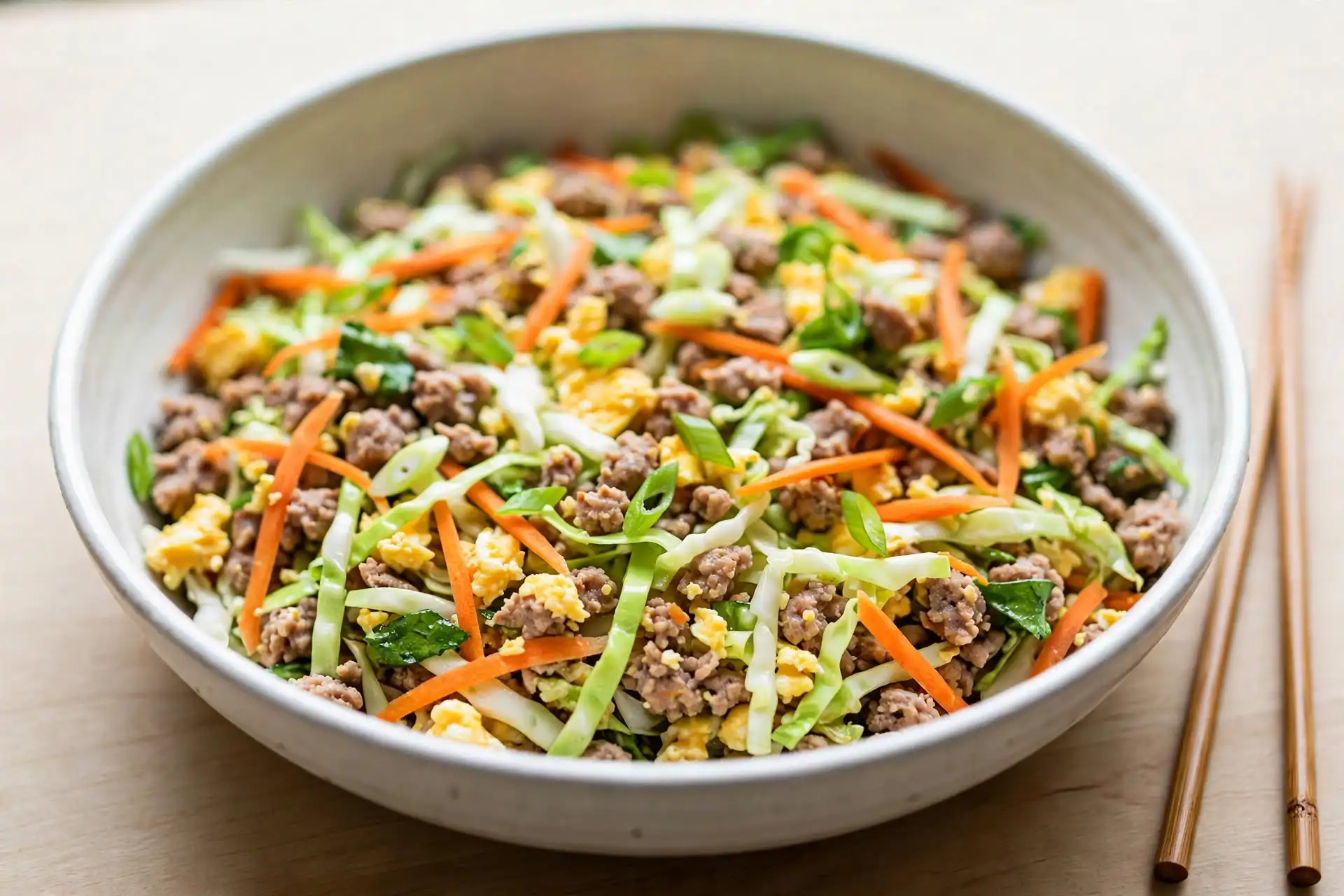
The whole dish really comes down to pan space and timing more than any specific ingredient choice. Give the cabbage room to actually touch the heat, hold the sauce until the very end, and the crunch takes care of itself. Once you’ve made this version with genuinely crisp cabbage, the soggy one-pot approach is hard to go back to.
Egg Roll in a Bowl
Ingredients
Method
- Preheat an empty pan 2 minutes, then cook chicken until browned and no pink remains, 6-7 minutes.
- Push chicken aside; cook onion until soft, about 3 minutes. Stir together.
- Add garlic and ginger; cook 30 seconds. Remove mixture to a plate.
- Cook cabbage and carrots in two batches, about 5-6 minutes each, until crisp-tender with charred edges.
- Return chicken mixture and all cabbage to the pan with green onion whites; toss 1 minute.
- Pour in pre-mixed sauce; toss and cook 30-60 seconds until glossy.
- Top with green onion greens and sesame seeds; serve.

6 Comments
Comments are closed.