Cheeseburger Soup
Cheeseburger Soup: Amazing One-Pot Recipe (40 Min)
Cheeseburger soup takes everything that makes a good burger work, seasoned beef, melted cheddar, a hit of tang, and turns it into something you eat with a spoon on a cold night. This version browns the beef properly instead of just simmering it gray, builds the broth with real depth from mustard and Worcestershire, and finishes with enough sharp cheddar that it actually tastes like cheese instead of orange-tinted water. No canned soup base, no flour slurry that turns gluey. Just a pot, some patience for 15 minutes, and a bowl that tastes closer to a diner burger than most people expect from soup.
Why This Cheeseburger Soup Recipe Actually Tastes Like a Burger
Browning the beef in batches instead of dumping it all in at once means every piece gets real contact with the hot pan, which is where the deep, meaty flavor actually comes from rather than from the broth alone. A splash of yellow mustard added directly to the broth mimics the tang you’d get from a burger’s condiments, and it’s a trick most cheeseburger soup recipes skip entirely. Shredding your own cheddar block instead of using pre-shredded bags makes a real difference here, since bagged cheese contains anti-caking starch that keeps it from melting smoothly into broth. You can have this fully done in under 40 minutes, and the leftovers actually improve overnight as the potatoes soak up more of the beefy broth. Kids who normally push back on soup tend to eat this one without complaint, mostly because it tastes like a burger they’re already familiar with.
Quick Info
- Prep time: 15 minutes
- Cook time: 25 minutes
- Total time: 40 minutes
- Servings: 6
- Difficulty: Easy
- Calories: About 410 per serving
- Key tool: A Dutch oven or heavy-bottomed pot, for even heat while the beef browns
- Best for: Cold-weather dinners, family meals, or feeding a crowd without much effort
Ingredients
For the beef base:
- 1.5 lbs ground beef (80/20 for real flavor, though 90/10 works if you drain less fat)
- 1 medium yellow onion, diced small
- 2 cloves garlic, minced
- 1 tsp kosher salt
- 1/2 tsp black pepper
Ground beef at 80/20 renders enough fat during browning to carry flavor through the whole pot, which is part of why leaner blends can taste flatter here even with identical seasoning. If you’re using a leaner ratio, add an extra tablespoon of butter when you sauté the onion to make up the difference.
For the broth and vegetables:
- 4 cups low-sodium beef broth
- 3 medium russet potatoes, peeled and diced into half-inch cubes
- 2 medium carrots, peeled and diced small
- 2 celery stalks, diced small
- 1 tbsp yellow mustard
- 1 tbsp Worcestershire sauce
- 1/4 cup all-purpose flour
- 3 tbsp butter
Russet potatoes break down slightly as they simmer, which naturally thickens the broth alongside the flour, so you get body without needing extra starch. Yukon golds work too, but they hold their shape more firmly and won’t contribute the same thickening effect.
For the dairy finish:
- 2 cups sharp cheddar cheese, shredded from a block
- 1 cup whole milk
- 1/2 cup sour cream
Sour cream stirred in at the very end adds a tang close to what you’d get from a burger’s pickles or special sauce, without needing to add either ingredient directly to the soup. Skip it if you’d rather keep things simpler, though the soup loses a bit of that burger-specific tang without it.
Optional toppings:
- Diced tomato
- Chopped dill pickles
- Extra shredded cheddar
- Sliced green onion
You may also like: beef stroganoff
Recipe Timing
Prep time: 15 minutes | Cook time: 25 minutes | Total time: 40 minutes | Servings: 6 | Difficulty: Easy | Cuisine: American | Course: Main dish
Allergen Disclosure
This recipe contains dairy (cheddar, milk, sour cream, butter) and gluten (all-purpose flour). For a gluten-free version, swap the flour for an equal amount of cornstarch mixed with a little cold broth before whisking it in. There’s no reliable dairy-free swap that keeps this soup’s texture and flavor intact, since the cheese and cream are central to what makes it taste like cheeseburger soup rather than plain beef and potato soup.
Equipment Needed
- A Dutch oven or heavy-bottomed pot, for browning the beef without hot spots that scorch the bottom
- A box grater, for shredding your own cheddar block
- A wooden spoon or heat-safe spatula, for scraping up browned bits after the beef comes out
- A ladle, for serving without breaking apart the potatoes
Shredding cheese from a block takes maybe two extra minutes, but it melts into the broth far more smoothly than pre-shredded cheese, which tends to clump instead of dissolving evenly.
Nutrition Information
Per serving: 410 calories, 24g protein, 26g carbohydrates, 24g fat, 3g fiber, 5g sugar, 780mg sodium. These numbers come from standard USDA nutrient data for the ingredients as listed and will shift depending on the beef’s fat content, cheese brand, and exact potato size. Use a nutrition app for exact tracking if you’re watching sodium or fat closely.
Why the Roux and Beef Fat Matter Here
A roux made from butter and flour, cooked briefly before the broth goes in, thickens the soup without leaving any raw flour taste behind, which is the main problem with recipes that skip this step and just dump flour straight into liquid. Browning the beef first and leaving some of its rendered fat in the pot means that fat carries into the roux, adding a layer of beefy richness that a plain butter roux alone wouldn’t give you.

Cheddar melts smoothly into hot liquid only within a fairly narrow temperature window. Too hot, and the proteins in the cheese separate from the fat, leaving you with a greasy, grainy texture instead of the smooth, glossy result you’re after.
Preparation
Dice the onion, carrots, and celery into roughly the same small size so they cook at an even rate, and peel and cube the potatoes into half-inch pieces so they’re tender by the time the soup finishes. Shred the cheddar block ahead of time and let it sit at room temperature, since cold cheese straight from the fridge is more likely to clump when it hits the hot broth. Measure out the flour, mustard, and Worcestershire so they’re within reach once the beef starts browning.
Step-by-Step Method
1. Heat a Dutch oven over medium-high heat with no oil added, since the beef’s own fat will render out. Add the ground beef in two batches, breaking it into small crumbles with a spatula, and cook until deep brown with visible crispy edges, about 5 minutes per batch.
2. Remove the browned beef with a slotted spoon and set it aside, leaving roughly 2 tablespoons of rendered fat in the pot.
Chef’s Note: Don’t skip draining down to that specific amount. Too much leftover fat makes the finished soup greasy, while too little leaves the roux without enough richness.
3. Add the butter to the pot along with the diced onion, carrots, and celery. Cook, stirring occasionally, until the onion turns translucent and the carrots soften slightly at the edges, roughly 6 minutes.
4. Sprinkle the flour over the softened vegetables and stir constantly for about 90 seconds, until the mixture smells toasted rather than raw and turns a shade darker. This step cooks off the flour’s raw starch taste, which is the reason soups made by dumping flour straight into broth often taste chalky.
Food safety note: Ground beef needs to reach an internal temperature of 160°F to be considered fully cooked, so check a few crumbles with an instant-read thermometer if you’re unsure during the browning step.
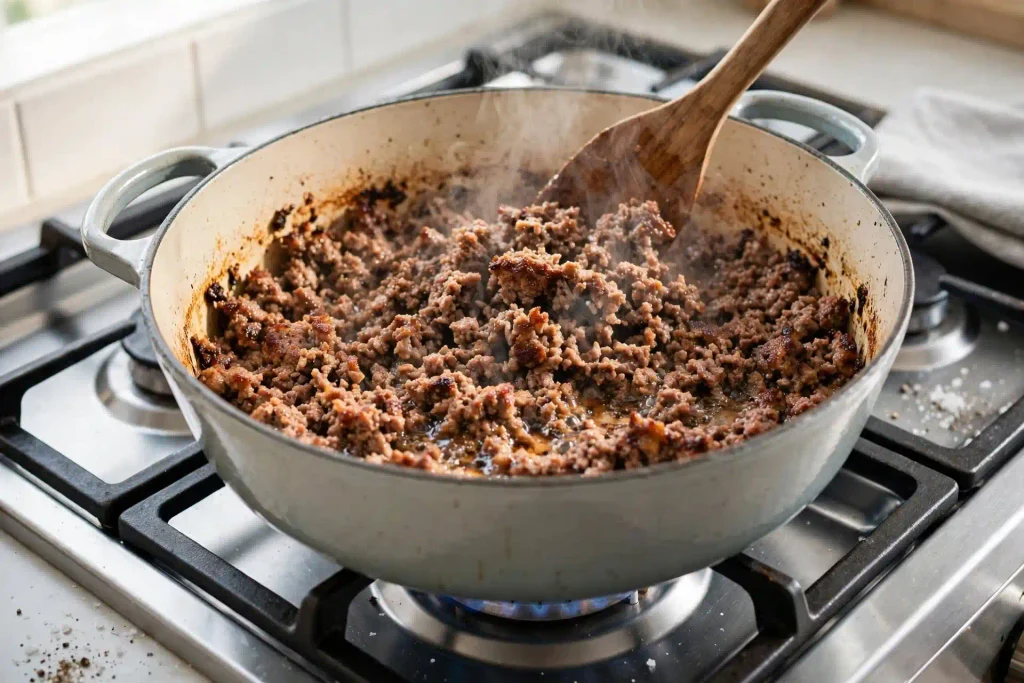
5. Pour in the beef broth gradually, whisking as you go to prevent lumps from forming around the flour mixture. Add the diced potatoes, mustard, Worcestershire sauce, and the browned beef back into the pot, then bring everything to a low simmer.
6. Let the soup simmer uncovered for 15 minutes, until a potato cube pierced with a fork offers almost no resistance and slides off easily. Stir occasionally so nothing settles and scorches on the bottom of the pot.
7. Lower the heat to its gentlest setting and stir in the milk, followed by the shredded cheddar in small handfuls. Add each handful only once the previous one has fully melted in, which keeps the cheese from seizing into stringy clumps.
Chef’s Note: If the soup looks broken or greasy after adding the cheese, the heat was likely too high. Pull the pot off the burner entirely for a minute, whisk vigorously, and the emulsion usually comes back together on its own.
8. Remove the pot from heat entirely and stir in the sour cream last. Taste and adjust salt, since the beef broth’s sodium level varies noticeably between brands.
Chef’s Note: Serve this within 20 minutes of finishing, while the cheese is still fully melted and glossy. Cheeseburger soup left sitting too long before serving can start to separate slightly as it cools.
Expert Tips & Tricks
- Make-ahead: Cook everything through the potato simmer step up to 2 days ahead, then reheat gently and add the dairy fresh right before serving. Adding the cheese and cream too early and then reheating tends to break the texture.
- Storage: Leftovers keep for up to 3 days in an airtight container in the fridge. Reheat over low heat on the stovetop, stirring frequently, since high heat or a microwave can cause the cheese to separate.
- Shred extra cheese while you’re at it and freeze what you don’t use in a sealed bag. Pre-shredded frozen cheese from your own block still melts better than the anti-caking bagged kind.
- Swap in ground turkey for a lighter version, though add an extra tablespoon of butter to the roux step, since turkey renders far less fat than beef during browning.
- Double the mustard if you like a sharper tang. It reads more clearly once the cheese and cream go in and mellow out the flavor slightly.
- Keep a thermos of this on hand for lunches. It holds heat well for several hours and travels better than most soups because the potatoes don’t turn mushy from sitting.
You may also like: mississippi pot roast
Common Mistakes and How to Fix Them
Grainy, broken cheese sauce. This happens almost every time the cheese goes in over heat that’s too high. Pull the pot off the burner before adding cheese, and add it in small handfuls, whisking until each addition melts before the next goes in.
Bland soup despite the seasoning list. Usually traces back to skipping the mustard and Worcestershire, or using a beef broth so low in sodium that nothing else in the recipe compensates. Taste right before serving and adjust salt in small increments, since the cheese adds its own sodium as it melts in.
Chalky, raw-tasting broth. Almost always means the flour didn’t cook long enough in the roux step. Give it the full 90 seconds over the vegetables, watching for that toasted smell and slightly darker color before adding any liquid.
Mushy, falling-apart potatoes. Comes from dicing them too small or simmering past the 15-minute mark. Check for doneness starting around the 12-minute mark, since potato size and pot heat both affect exactly how long they need.
Greasy soup on top. Usually means too much beef fat was left in the pot after browning. Drain down to roughly 2 tablespoons before adding the vegetables, using a spoon to skim off any excess.
Honest Trade-Off
This version trades the tomato-forward brightness you’d get from adding diced tomatoes directly into the broth, the way some classic versions of this soup do. If you want that brighter, more acidic profile running through every bite, stirring crushed tomatoes in during the simmer step gets you there, though it changes the color and cuts some of the richness. But if you want a soup that leans fully into rich, cheesy, burger-forward flavor without competing acidity, this version delivers that more directly.
Storage and Make-Ahead
Store leftovers in an airtight container in the fridge for up to 3 days. The texture holds up reasonably well, though the potatoes soften further and the broth thickens more as it sits. Freezing isn’t recommended once the dairy’s been added, since cheese and sour cream tend to separate and turn grainy after thawing, even with gentle reheating.

Variations and Substitutions
For a spicier version, stir in a diced jalapeño with the onion and carrots, or finish with a few dashes of hot sauce at the table. For a milder, kid-friendly version, skip the mustard’s full amount and cut it to a teaspoon instead. A lower-carb version works well replacing the potatoes with diced cauliflower florets, added at the same point in the recipe, though the broth won’t thicken quite as naturally without the potato starch. For dairy-forward variety, swap half the cheddar for pepper jack to bring a milder heat throughout instead of adding jalapeño directly.
Serving Suggestions
This pairs naturally with a simple green salad or a side of buttered corn to round out the meal without much extra effort. A slice of crusty bread on the side works well for scooping up the last bit of broth once the soup’s mostly gone. For something to drink, unsweetened iced tea or a cold sparkling water with lemon keeps things light against the soup’s richness.
You may also like: beef and broccoli
FAQ
Can I make cheeseburger soup ahead of time for the week?
Yes, though it’s best to hold off on adding the cheese and sour cream until you’re ready to reheat and serve. Cook the beef, vegetables, and broth up to 2 days ahead, then warm it gently and stir in the dairy fresh, since reheating already-melted cheese tends to make it separate.
Why did my cheese turn grainy instead of smooth?
Grainy cheese almost always means it melted in over heat that was too high. Pull the pot off the burner before adding cheddar, and stir it in small handfuls off direct heat so the proteins don’t separate from the fat.
What can I use instead of sour cream?
Plain Greek yogurt works as a close substitute and adds a similar tang, though it’s slightly thinner, so add it off heat just like the sour cream to avoid curdling. Heavy cream also works if you want a milder flavor without the tang.
How do I know when the potatoes are fully cooked?
The potatoes are done once a fork slides into a cube with almost no resistance, usually right around the 15-minute mark of simmering. Start checking a few minutes early, since pot size and how small the dice are cut both affect the exact timing.
Is cheeseburger soup safe for someone with a dairy allergy?
No, this recipe isn’t safe for a dairy allergy, since cheddar, milk, and sour cream are all central to its flavor and texture. There’s no substitution here that keeps the same result, so a different soup base is a better option for anyone avoiding dairy entirely.
A Few Final Notes
Cheeseburger soup earns a spot in regular dinner rotation once the roux and cheese-melting steps feel familiar, since the actual hands-on time stays under 20 minutes even with two rounds of beef browning. Keep extra cheddar shredded and frozen ahead of time, and the next batch comes together with even less prep. The mustard and Worcestershire combination here works just as well stirred into other beef-based soups if you’re looking to carry that same burger-adjacent flavor somewhere else.

Cheeseburger Soup
Ingredients
Method
- Brown ground beef in batches in a Dutch oven, then set aside, leaving 2 tbsp fat in the pot.
- Sauté onion, carrots, and celery in butter until softened.
- Stir in flour and cook 90 seconds until toasted and slightly darker.
- Whisk in beef broth gradually, then add potatoes, mustard, Worcestershire, and browned beef.
- Simmer uncovered 15 minutes until potatoes are fork-tender.
- Lower heat, stir in milk, then cheddar in small handfuls until melted.
- Remove from heat, stir in sour cream, adjust salt to taste.





7 Comments
Comments are closed.