Beef Stroganoff
Beef Stroganoff (The Sear-and-Simmer Method That Keeps the Beef Tender)
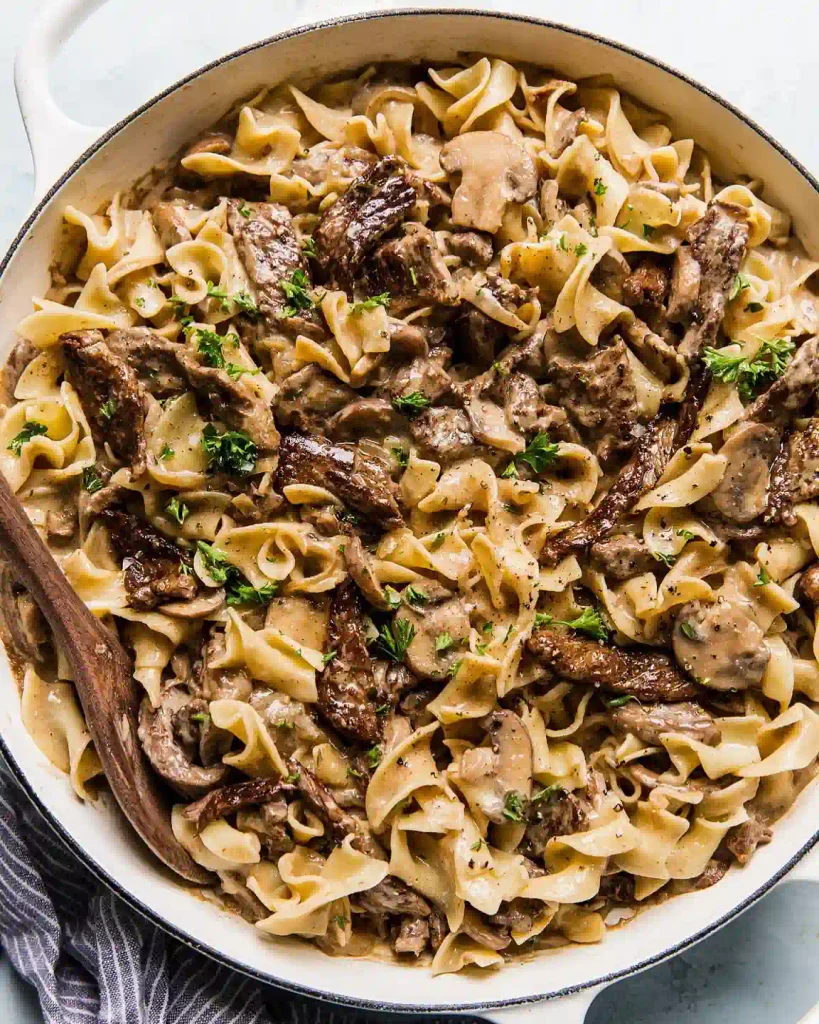
Most beef stroganoff goes wrong at the sauce stage, when strips of beef sit simmering in sour cream far longer than they should and turn chewy instead of tender. The fix isn’t a different cut of beef, it’s timing: sear hard and fast, pull the beef out, build the sauce, then bring the meat back in only long enough to warm through. This version uses that two-stage approach along with a starch trick that keeps the sour cream from breaking into curdled flecks, which is the other common failure point in this dish.
Why This Stroganoff Stays Tender Every Time
Pulling the beef out of the pan before building the sauce means it never sits in simmering liquid for more than two minutes, which is short enough to avoid toughening even a leaner cut like sirloin.
A spoonful of flour stirred into the mushrooms before the liquid goes in thickens the sauce gently, so you don’t need to reduce it hard enough to risk curdling the sour cream.
Tempering the sour cream with a ladle of hot sauce before adding it to the pan is the one step that separates a smooth stroganoff from a grainy, broken one, and it takes about ten extra seconds.
Egg noodles get tossed directly with a spoonful of the sauce before plating, so the noodles carry flavor instead of sitting under a puddle of sauce that never quite reaches them.
Using beef stock instead of the more common combination of stock and wine keeps the dish approachable for anyone avoiding alcohol without losing depth, since the mushrooms and a splash of Dijon carry plenty of their own.
Quick Snapshot
- Prep time: 15 minutes
- Cook time: 25 minutes
- Total time: 40 minutes
- Servings: 4
- Difficulty: Moderate
- Calories per serving: 610
- Ingredient that matters most: Sirloin steak, sliced thin against the grain
- Best for: Weeknight dinners that need to feel a little more special than usual
Ingredients
For the beef
Sirloin gives you tenderness without the price tag of a more premium cut, provided it’s sliced thin and against the grain.
- 1½ pounds sirloin steak, sliced into thin strips against the grain
- 1 teaspoon salt
- ½ teaspoon black pepper
- 2 tablespoons vegetable oil, divided
For the sauce
- 4 tablespoons unsalted butter
- 1 large yellow onion, thinly sliced
- 16 ounces cremini mushrooms, sliced
- 3 cloves garlic, minced
- 2 tablespoons all-purpose flour
- 2 cups beef stock
- 1 tablespoon Dijon mustard
- 1 cup sour cream, at room temperature
- Salt and black pepper, to taste
- Fresh parsley, chopped, for garnish
For serving
- 12 ounces egg noodles
If sirloin isn’t available, flank steak works as a substitute, though it needs slightly thinner slicing since it’s naturally a bit chewier. Crimini mushrooms can be swapped for regular white button mushrooms, which will give a milder, less earthy flavor to the finished sauce.
You may also like: beef stew
Recipe Timing
- Prep time: 15 minutes
- Cook time: 25 minutes
- Rest time: 0 minutes
- Total time: 40 minutes
- Servings: 4
- Difficulty: Moderate
- Cuisine: Russian-American
- Course: Main dish
Allergen Disclosure
This recipe contains dairy (butter, sour cream) and gluten (flour, egg noodles). For a dairy-free version, replace the sour cream with a full-fat coconut yogurt, though the tang will be noticeably milder. For a gluten-free version, swap the flour for cornstarch mixed with a little cold water, and serve over rice or gluten-free noodles instead of egg noodles.
Equipment Needed
- A large, heavy-bottomed skillet, ideally cast iron or stainless steel for a proper sear
- Tongs for turning the beef strips without piercing them
- A fine-mesh strainer, useful if your sour cream has any lumps before tempering
- A separate pot for boiling the noodles
Getting a real sear on the beef depends almost entirely on not crowding the pan, so work in two batches if your skillet is smaller than 12 inches.
Nutrition Information
Per serving: 610 calories, 38g protein, 42g carbohydrates, 32g fat, 3g fiber, 5g sugar, 780mg sodium. These figures are estimates based on standard USDA nutrient data for the listed ingredients and will vary depending on the exact cut of beef and brands used.
Why Searing First and Simmering Second Actually Matters
Beef strips this thin cook through in under two minutes of direct heat, and once they hit that point, every additional minute in liquid pulls moisture out and tightens the muscle fibers, which is what makes stroganoff taste tough even when the cut itself was tender. Pulling the beef the moment it browns and adding it back only at the very end keeps it inside that short window the whole way through.
Tempering the sour cream works because sudden heat is what causes dairy proteins to seize and curdle. Slowly raising its temperature with a spoonful of hot sauce first, stirred in gradually, lets the proteins adjust instead of shocking all at once.
Preparation
Slice the sirloin while it’s still slightly cold from the fridge, since firm meat is easier to cut into thin, even strips than room-temperature meat. Pat the strips dry with paper towels before seasoning, because a dry surface is what actually produces a proper brown sear instead of a gray, steamed one.
Step-by-Step Method
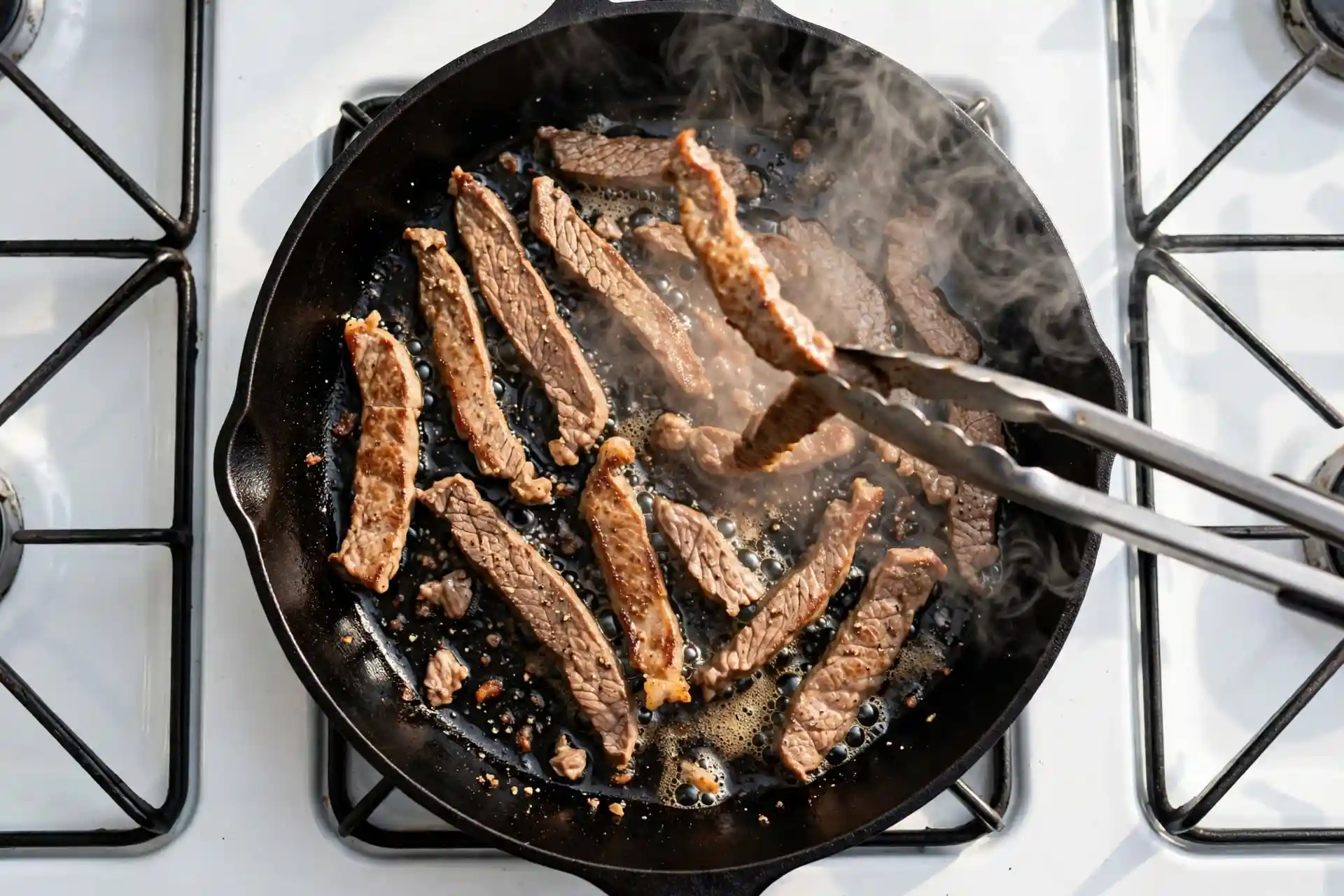
1. Season the sliced beef with salt and pepper, then heat 1 tablespoon of oil in your skillet over high heat until it shimmers and just barely starts to smoke. A properly hot pan is non-negotiable here, since a lukewarm one steams the beef instead of browning it.
2. Add half the beef in a single layer, leaving space between each piece, and sear for about 90 seconds per side until deep brown crust forms. Overcrowding drops the pan’s temperature fast, so resist the urge to add it all at once even if it feels slow.
Chef’s Note: You’ll hear a loud, steady sizzle the moment the beef hits the pan. If it goes quiet, your pan wasn’t hot enough and you should let it reheat before continuing.
3. Transfer the seared beef to a plate and repeat with the remaining oil and beef. Set the plate aside; the beef will finish cooking later in the sauce, so don’t worry if the centers still look slightly pink.
4. Lower the heat to medium and melt the butter in the same skillet, scraping up any browned bits stuck to the bottom with a wooden spoon as it melts. Those browned bits carry most of the savory depth in the final sauce, so don’t skip the scraping.
5. Add the sliced onion and cook, stirring occasionally, until it turns soft and translucent, roughly 5 minutes. Since onions release moisture as they cook, the pan will look a little wet at first before it dries out and the onions start to color slightly at the edges.
6. Add the mushrooms and cook without stirring too often, letting them sit long enough to brown rather than just steam, about 7 minutes total. Mushrooms release a surprising amount of liquid early on; once that liquid evaporates and the pan goes quiet again, that’s your cue they’re ready for the next step.
Chef’s Note: If the mushrooms are releasing so much liquid the pan looks like a shallow soup, your heat is too low. Bump it up slightly to help that moisture cook off faster.
7. Stir in the garlic and cook just until fragrant, about 30 seconds, then sprinkle the flour over everything and stir constantly for another minute. The flour needs this minute of cooking to lose its raw, pasty taste before the liquid goes in.
8. Pour in the beef stock gradually, whisking as you go to work out any flour lumps, then stir in the Dijon mustard. Bring the mixture to a gentle bubble and let it simmer, uncovered, for about 5 minutes until it thickens enough to coat the back of a spoon.
9. Ladle about ½ cup of the hot sauce into a small bowl with the sour cream and whisk together until fully smooth. This tempering step raises the sour cream’s temperature gradually, which is what keeps it from breaking once it goes back into the hot pan.
Chef’s Note: If you skip tempering and just dump cold sour cream straight into the simmering pan, you’ll likely end up with small curdled flecks throughout the sauce. It’s still edible, just visually messy.
10. Reduce the heat to low, then stir the tempered sour cream mixture back into the skillet along with the seared beef and any juices that collected on the plate. Warm everything through gently for 1 to 2 minutes, just until the beef is heated and no longer pink in the center, without letting the sauce return to a full simmer.
Food safety note: Beef strips this thin cook through fully during the searing step and this final warming stage combined; confirm there’s no raw pink remaining before serving.
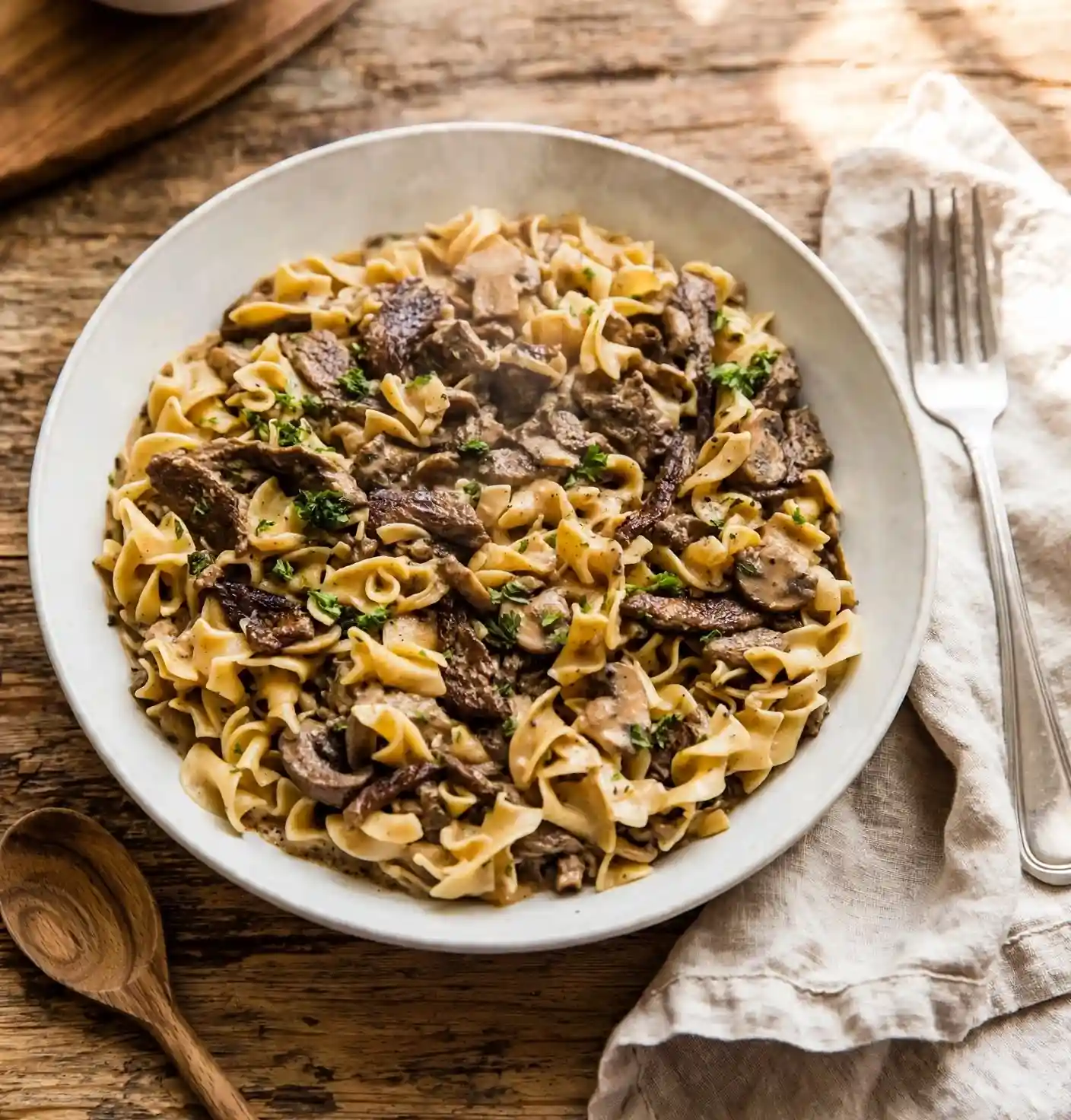
11. Season the finished sauce with salt and pepper to taste, then serve immediately over cooked egg noodles tossed with a spoonful of the sauce, topped with chopped parsley.
Expert Tips
- The sauce base, through step 8, can be made up to a day ahead and reheated gently before adding the beef and sour cream. Don’t add the sour cream or beef until you’re ready to serve.
- Leftover stroganoff keeps in the fridge for up to 3 days, though the texture of the sauce is noticeably better on day one before the sour cream thins slightly with reheating.
- Slice the beef while it’s partially frozen, about 20 minutes in the freezer first, for cleaner, thinner strips than you’ll get slicing it fully thawed.
- Room-temperature sour cream tempers more evenly than cold sour cream straight from the fridge, so pull it out about 20 minutes before you start cooking.
- Salt the noodle water generously; it’s your only real chance to season the noodles themselves, since the sauce won’t fully penetrate them once plated.
- If the sauce thickens too much while sitting, a splash of warm beef stock loosens it back to the right consistency without diluting the flavor.
Callout box: Cremini mushrooms hold their shape better than white button mushrooms once simmered in sauce, so if you have a choice at the store, cremini is the better pick for this particular dish.
You may also like: egg roll in a bowl
Common Mistakes and How to Fix Them
Tough, chewy beef. This almost always means the beef simmered in the sauce too long. Keep the final warming step under 2 minutes, and pull the beef out entirely while you build the sauce.
Curdled, grainy sauce. Cold sour cream added directly to hot liquid is the usual cause. Temper it first with a ladle of hot sauce, and keep the heat low once it’s stirred back in.
Watery, thin sauce. Skipping the flour step, or not letting the mushrooms release and cook off their liquid, both lead to a sauce that never thickens properly. Give the mushrooms the full 7 minutes and don’t rush the flour cooking step.
Mushrooms that taste rubbery instead of tender. Overcrowding the pan during the mushroom step steams them instead of browning them. Use a wide skillet and don’t stir too frequently while they’re browning.
Noodles that taste bland even under a rich sauce. Under-salted noodle water is the culprit. The noodles need their own seasoning since the sauce sits mostly on top rather than soaking through.
Callout box: If your beef strips aren’t browning no matter how hot the pan gets, check whether you patted them fully dry first. Even a small amount of surface moisture will make the pan steam instead of sear.
Honest Trade-Off
This method takes a bit more attention than a one-pot version where everything simmers together from the start, mainly because of the extra step of searing in batches and pulling the beef out. If you’re feeding a crowd on a tight schedule and don’t mind slightly firmer beef, the one-pot approach saves about ten minutes and one less dish to wash. Anyone who’s had genuinely tender stroganoff before will notice the texture difference, but for a fast weeknight version with kids who won’t care either way, the shortcut is reasonable.
Storage and Make-Ahead
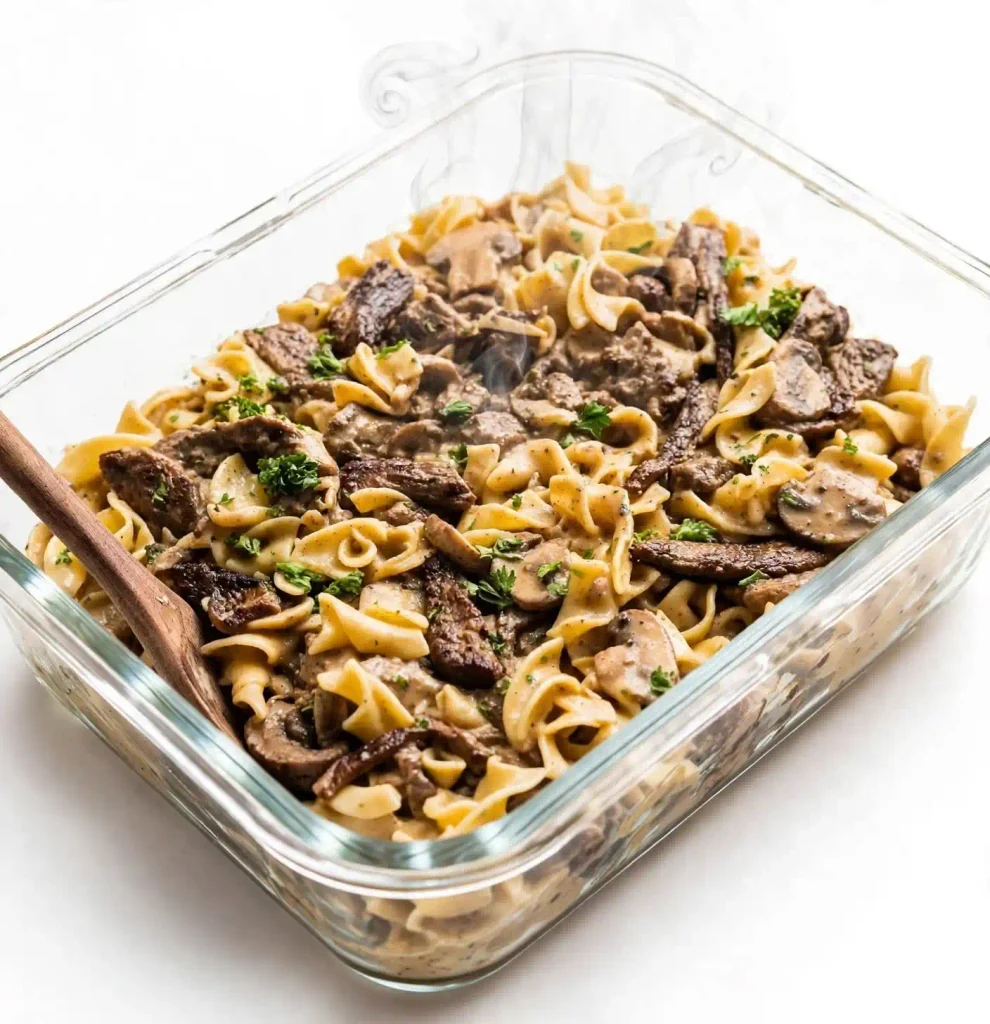
Store leftover stroganoff in an airtight container in the fridge for up to 3 days, keeping the noodles and sauce together is fine since they don’t separate the way rice dishes sometimes do. Reheat gently on the stovetop over low heat, adding a splash of beef stock if the sauce has thickened too much. Freezing isn’t recommended, since sour cream-based sauces tend to separate and turn grainy once thawed, and there’s no good way to bring the texture back afterward.
Variations
Mushroom-forward version:
Double the mushrooms and use a mix of cremini and shiitake for a deeper, more savory sauce with less emphasis on the beef.
Lighter version:
Swap the sour cream for plain Greek yogurt, added off the heat entirely to avoid curdling, for a tangier and noticeably lower-fat sauce.
Ground beef version:
Substitute ground beef for the sliced sirloin, browning it in crumbles instead of strips, for a faster, more budget-friendly take on the same flavors.
Chicken stroganoff:
Thinly sliced chicken thighs work in place of beef, though they’ll need slightly longer in the final warming step, about 3 minutes instead of 2, to cook through fully.
Serving Suggestions
Beef stroganoff traditionally goes over egg noodles, but mashed potatoes or steamed rice both work well if you want something a little different from the usual. A simple side salad with a sharp vinaigrette cuts through the richness of the sauce nicely. Steamed green beans or roasted broccoli add color and a bit of crunch against the soft texture of the noodles and sauce.
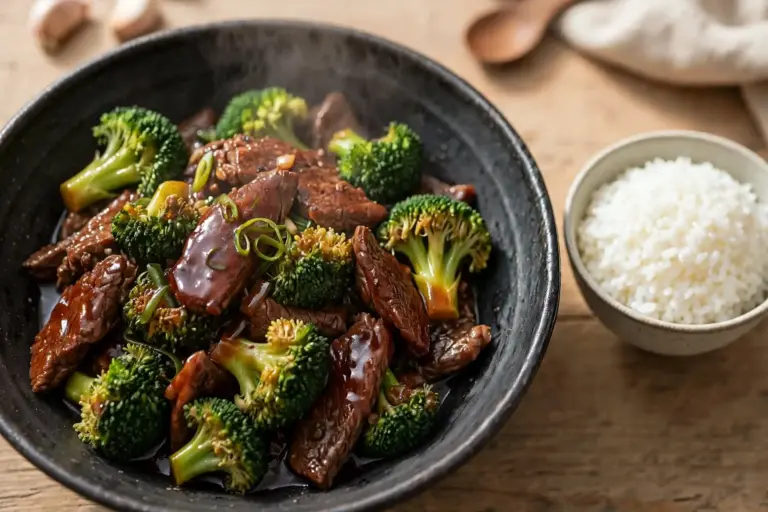
You may also like: beef and broccoli
Frequently Asked Questions
Can I make beef stroganoff ahead of time for a dinner party?
You can prepare the sauce base through the mushroom and stock stage up to a day ahead, then reheat gently and add the seared beef and tempered sour cream just before serving. Adding the beef and sour cream too early and reheating the whole dish tends to overcook the meat and risk curdling.
Why did my stroganoff sauce curdle?
Cold sour cream hitting a hot pan directly is almost always the cause. Temper it first by whisking in a ladle of hot sauce before adding it back to the skillet, and keep the heat low from that point on.
What can I use instead of sour cream in stroganoff?
Plain Greek yogurt works well as a substitute and gives a similar tang, though it should be added off the heat to avoid separating. Crème fraîche is another option and tends to hold up slightly better under heat than either sour cream or yogurt.
How do I know when the beef is fully cooked without overcooking it?
The strips should lose all pink color within the final 1 to 2 minute warming step, since they were already mostly cooked during the initial sear. Cutting into the thickest piece to check for any remaining pink center is the most reliable way to confirm doneness.
Is beef stroganoff safe to reheat the next day?
Yes, as long as it was refrigerated within two hours of cooking and reheated to a full simmer, based on standard USDA guidance for reheating cooked beef dishes. Reheat gently over low heat rather than high, since the sour cream sauce can separate if it heats too fast.
The difference between a good stroganoff and a great one really comes down to those last two minutes in the pan, not the ingredient list. Once the beef goes back in and the sour cream is properly tempered, everything else is just timing and a bit of patience with the heat. Get that part right, and this becomes one of those dishes you can make from memory without checking a recipe again.
Beef Stroganoff
Ingredients
Method
- Season beef; sear in batches over high heat, about 90 seconds per side. Set aside.
- Melt butter in the same skillet; scrape up browned bits.
- Cook onion until soft, about 5 minutes.
- Add mushrooms; cook until browned, about 7 minutes.
- Stir in garlic, then flour; cook 1 minute.
- Whisk in beef stock and Dijon; simmer 5 minutes until thickened.
- Temper sour cream with a ladle of hot sauce, then stir back into the pan.
- Return beef and juices to the pan; warm through 1-2 minutes over low heat.
- Season to taste and serve over noodles tossed with sauce.



7 Comments
Comments are closed.