Guacamole
Guacamole That Doesn’t Turn Brown Before Dinner Even Starts
Guacamole oxidizes fast, and most recipes blame the avocado when the real issue is how the batch gets mixed, stored, and acidified. Mash too smooth and too far ahead, skip proper lime coverage, or store it wrong, and you get a dull brown layer within the hour even with lime already in the mix. This version front-loads the acid correctly, keeps some texture instead of pureeing everything flat, and uses a storage method that actually blocks air contact instead of just trusting plastic wrap to do the job.
Why This Guacamole Holds Its Color and Flavor Longer
Mashing the avocado with lime juice already in the bowl, rather than adding it after, coats more of the surface before oxidation has a chance to start.
Leaving some avocado in rough, uneven chunks instead of mashing it smooth means less exposed surface area overall, which slows browning compared to a fully pureed batch.
Red onion gets a quick rinse under cold water before going in, cutting the sharp raw bite without losing the crunch, a step most recipes skip entirely.
Using a hass avocado specifically, not any softer variety, gives a creamier base that holds structure better once the lime and salt are worked in.
Pressing plastic wrap directly onto the surface rather than just covering the bowl blocks oxygen contact at the one spot where browning actually starts.
Quick Information
Prep time: 15 minutes. Cook time: none. Total time: 15 minutes. Servings: 6 (about 2 cups). Difficulty: Easy. Calories: about 120 per serving. The one thing that matters most here is using fully ripe avocados, since underripe fruit won’t mash properly no matter how long you work at it. Good for tacos, chips, or as a topping for grilled meats.
Ingredients
For the base:
- 4 ripe hass avocados
- 3 tablespoons fresh lime juice (about 2 limes)
- 1/2 teaspoon salt, plus more to taste
Fresh lime juice does double duty here, it balances the richness of the avocado and slows oxidation at the same time, which bottled juice does less effectively since its acidity level is inconsistent between brands.
For the mix-ins:
- 1/2 cup red onion, finely diced
- 1 jalapeño, seeded and minced (leave seeds in for more heat)
- 2 Roma tomatoes, seeded and diced
- 1/4 cup fresh cilantro, chopped
- 2 cloves garlic, minced
Seeding the tomatoes matters more than it seems, since the seeds and surrounding gel add extra liquid that thins the guacamole and makes it watery by the time it reaches the table.
You may also like: egg roll in a bowl
Recipe Timing
Prep: 15 minutes. Cook: none. Rest: none required. Total: 15 minutes. Servings: 6. Difficulty: Easy. Cuisine: Mexican. Course: Appetizer, side, condiment.
Equipment Needed
A sturdy fork or a potato masher works better than a food processor here, since a processor purees the avocado too smooth and loses the texture that separates good guacamole from baby food. A sharp knife for even dicing on the onion and tomato, uneven pieces mean inconsistent bites. A citrus juicer gets more juice out of the limes than squeezing by hand alone.
Nutrition Information
Calories: 120 per serving. Protein: 2g. Carbs: 8g. Fat: 10g. Fiber: 5g. Sugar: 1g. Sodium: 200mg. Serving size: about 1/3 cup. Servings per recipe: 6. This is a solid source of fiber and healthy monounsaturated fat for the calorie count, mostly from the avocado itself. These figures are estimates based on standard USDA nutrition data and will shift depending on avocado size, not a substitute for a nutrition label or lab analysis.
Why Guacamole Browns So Fast (And How to Actually Slow It Down)
Avocado flesh contains an enzyme called polyphenol oxidase, and the moment it’s exposed to oxygen, that enzyme starts converting certain compounds into melanin, the same browning reaction that happens in a cut apple. Lime juice slows this because its acidity lowers the pH enough to make the enzyme work less efficiently, but only on the surface area it actually touches. That’s why stirring the lime in thoroughly, coating every mashed piece rather than just drizzling it over the top, makes a bigger difference than most people expect.
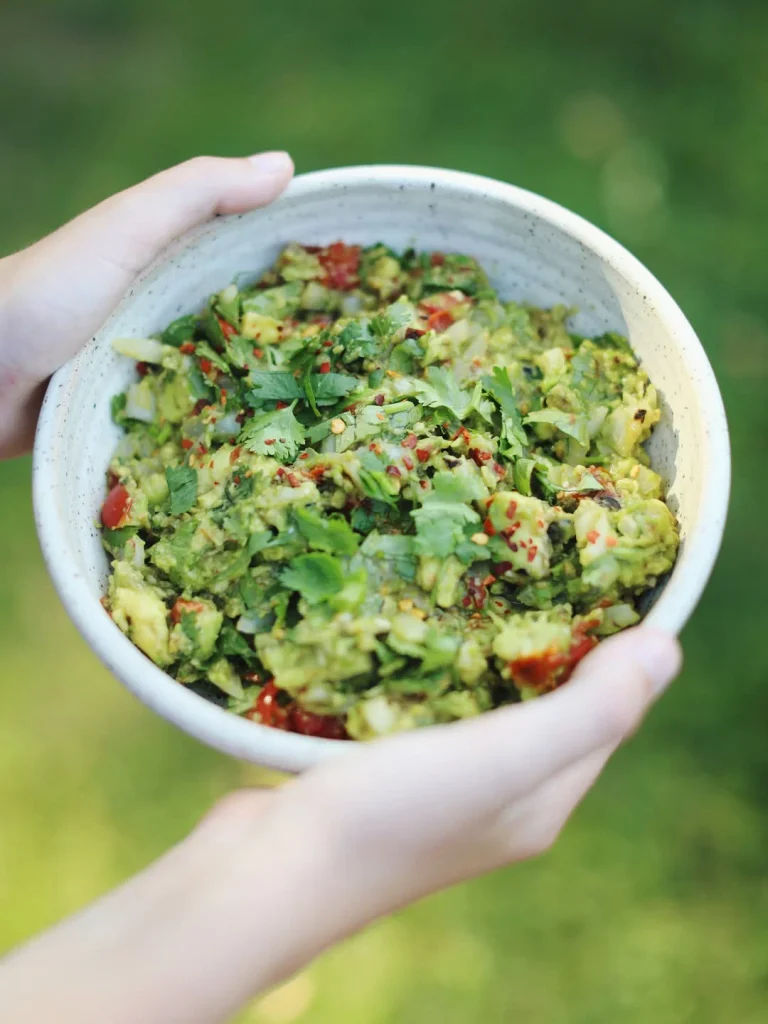
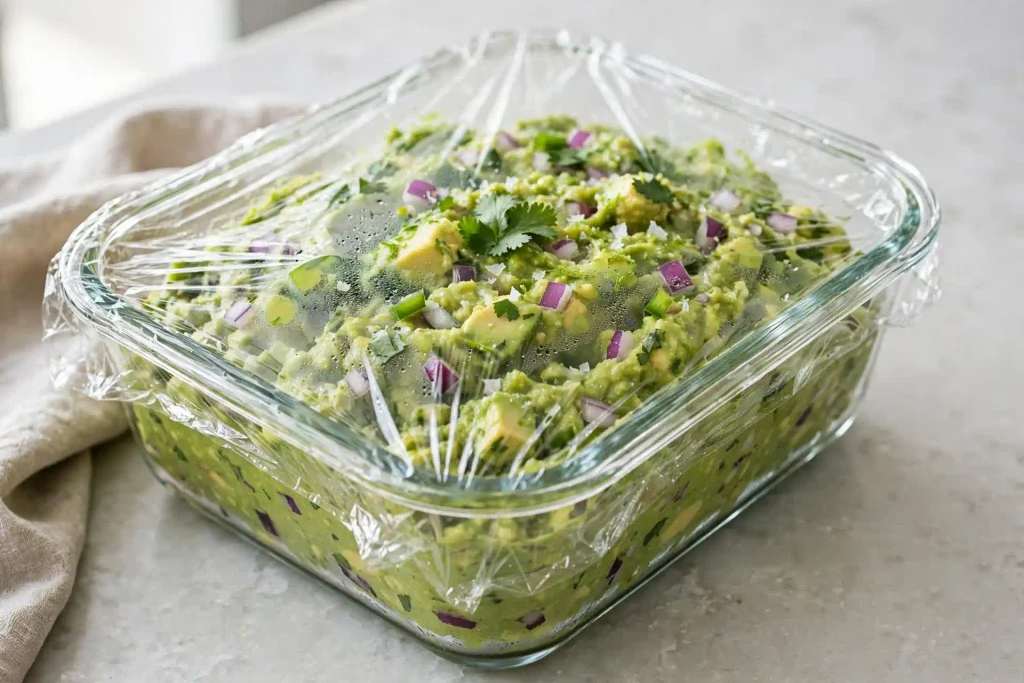
Pressing plastic wrap flush against the surface, with no air pocket between the wrap and the guacamole, blocks the oxygen contact that triggers the reaction in the first place, which is a more reliable fix than just covering the bowl loosely.
Preparation
Halve and pit the avocados, then scoop the flesh into a wide, shallow bowl rather than a deep one, since a wider surface makes mashing to an even consistency faster. Dice the onion, jalapeño, and tomato before touching the avocado, so the avocado isn’t sitting exposed to air while you prep everything else. Rinse the diced red onion under cold water for about 10 seconds if you want to soften its raw bite before mixing it in.
Step-by-Step Method
- Add the lime juice directly to the bowl with the avocado flesh before you start mashing. Coating the fruit in acid from the first pass through with the fork is what gives this version its longer color hold compared to adding lime at the end.
- Mash with a fork, leaving some pieces in rough, pea-sized chunks rather than working it to a smooth paste. Stop once about two-thirds of the mixture looks creamy and the rest still holds visible texture.
- Sprinkle in the salt and stir it through evenly, tasting a small bit on its own before adding anything else, since salt levels are much easier to judge against the avocado alone than once everything else goes in.
- Fold in the diced onion, jalapeño, tomato, cilantro, and garlic, using a gentle folding motion rather than stirring hard, so the tomato doesn’t break down and add extra liquid to the mix.
- Taste the finished batch and adjust with more lime juice or salt in small increments, since both ingredients are far easier to add than to pull back out once overdone.
- If you’re not serving it within the next few minutes, press a sheet of plastic wrap directly onto the surface of the guacamole, smoothing out any trapped air pockets by hand before sealing the container.
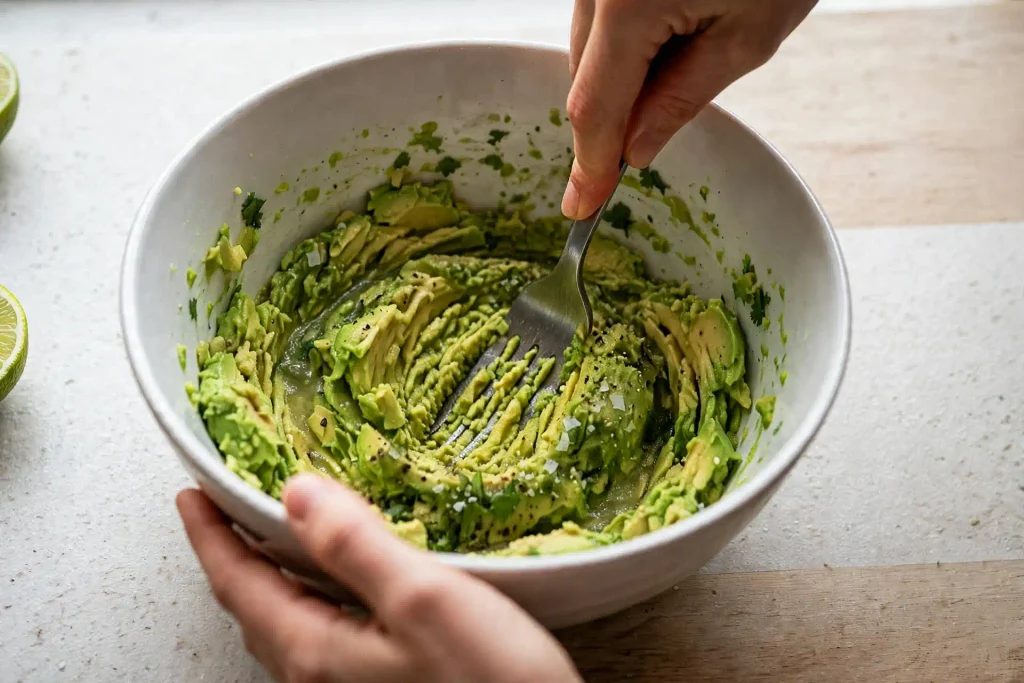
Chef’s Note: If your guacamole turns out watery, the tomatoes probably weren’t seeded well enough. Scoop out every bit of the gel-like center before dicing, not just the obvious large seeds.
Chef’s Note: A pit left in the serving bowl doesn’t actually prevent browning, despite the common kitchen myth. It only blocks oxygen directly underneath itself, leaving the rest of the surface exposed just as much as before.
Chef’s Note: The step people skip most often is seeding the jalapeño properly. Leftover membrane carries more heat than the seeds themselves, so scrape it out fully if you want to control the spice level precisely.
You may also like: shrimp tacos
Expert Tips & Tricks
Make this up to 4 hours ahead if you press plastic wrap directly onto the surface immediately after mixing and keep it refrigerated until serving.
Store leftovers the same way, pressed and sealed, in the fridge for up to 2 days before the texture and flavor start to decline noticeably.
If you want a smokier version, char the jalapeño directly over a gas flame for about a minute per side before mincing it in.
Using a mix of fully ripe and slightly underripe avocados, about three-quarters ripe to one-quarter firmer, keeps a bit more structural texture in the final batch.
A splash of orange juice alongside the lime adds a subtle sweetness that balances the jalapeño’s heat without making the guacamole taste citrus-forward.
Doubling this recipe works fine, just mash each batch of avocados in its own bowl first before combining, since mashing too much avocado at once makes it hard to control texture evenly.
Common Mistakes & Troubleshooting
Guacamole turns brown within an hour. This usually means the lime juice wasn’t mixed in thoroughly enough to coat all the mashed avocado. Stir it in first, before anything else goes into the bowl, and press plastic wrap directly onto the surface for storage.
Texture comes out watery instead of thick. Almost always caused by tomatoes that weren’t properly seeded, or tomatoes added too far ahead of serving. Scoop out the seed gel completely and fold them in last, right before serving.
Guacamole tastes flat despite the salt. This happens when salt goes in before tasting the avocado alone, masking how much it actually needs. Taste after mashing, before adding mix-ins, then adjust from there.
Onion overwhelms every bite. Diced too large or not rinsed, raw red onion can dominate the whole dish. Dice it fine and give it a quick cold rinse to soften the sharp edge.
Avocados won’t mash smoothly no matter how long you work at it. This means they weren’t ripe enough to start. A ripe hass avocado gives slightly under gentle pressure and the skin pulls away easily from the flesh.
Honest Trade-Off
Leaving visible chunks instead of mashing everything smooth means some people expecting a dip-style, uniform texture might find this version less spreadable on chips. A fully smooth, food-processor version spreads more evenly and holds up better as a sandwich spread, it just loses the textural contrast that makes chunkier guacamole feel fresher. Someone wanting a smooth spread for toast should process it fully; someone serving it with chips for scooping should keep the chunks.
Storage & Make-Ahead
Store in an airtight container with plastic wrap pressed directly onto the surface, refrigerated for up to 2 days. After that, both the texture and the flavor decline enough that it’s no longer worth serving fresh.
This doesn’t freeze well. The avocado’s texture turns grainy and separates once thawed, making it unsuitable for freezing even in an airtight container.
Variations & Substitutions
For a spicier version, leave the jalapeño seeds and membrane in, or add a minced serrano pepper alongside it.
For a milder, kid-friendly version, skip the jalapeño entirely and add a small pinch of smoked paprika instead for depth without heat.
For a chunkier, more textured version, dice the avocado into small cubes with a knife instead of mashing it, folding the mix-ins in gently afterward.
For a fruitier variation, fold in 1/4 cup of finely diced mango or pineapple right before serving, which adds sweetness against the lime and jalapeño.
Serving Suggestions
Tortilla chips are the obvious pairing, and thick, sturdy chips hold up to scooping better than thin, delicate ones. Grilled chicken or steak tacos benefit from a spoonful on top, cutting through the richness of the meat. A simple pico de gallo on the side gives guests a lighter, less rich option alongside the guacamole. For drinks, a classic margarita or a cold Mexican lager pairs naturally with the lime and jalapeño flavors already in the bowl.
You may also like: beef stroganoff
FAQ
Can I make guacamole ahead of time?
Yes, up to 4 hours ahead if you press plastic wrap directly onto the surface right after mixing and refrigerate it immediately. This blocks the oxygen contact that causes browning, keeping the color fresh until you’re ready to serve.
Why does my guacamole turn brown so quickly?
Browning happens when an enzyme in the avocado reacts with oxygen, and it speeds up if the lime juice isn’t mixed in thoroughly or if the surface is left exposed to air. Stir the lime in first, before adding anything else, and store it with plastic wrap pressed flat against the top.
Can I use lemon juice instead of lime?
You can, and it’ll still slow oxidation since the acidity works the same way, but the flavor shifts slightly sharper and less rounded than lime gives you. Start with a bit less lemon juice than the lime amount called for, since lemon can taste more acidic in the same quantity.
How do I know when an avocado is ripe enough for guacamole?
A ripe hass avocado gives slightly under gentle pressure without feeling mushy, and the small stem at the top should pull away easily to reveal green underneath, not brown. If it feels rock hard or the stem won’t budge, give it another day or two at room temperature.
Does keeping the avocado pit in the bowl stop it from browning?
No, this is a common kitchen myth. The pit only blocks oxygen in the small area directly underneath it, leaving the rest of the surface just as exposed as if the pit weren’t there at all.
One Thing Worth Remembering
The lime juice does more work when it touches the avocado first, before anything else goes into the bowl. That single sequencing choice, mixing acid in before mashing is even finished, matters more to how long this stays green than any amount of plastic wrap or careful storage after the fact. Get that part right, and the rest of the batch holds its color and texture far longer than a typical mashed-together version.
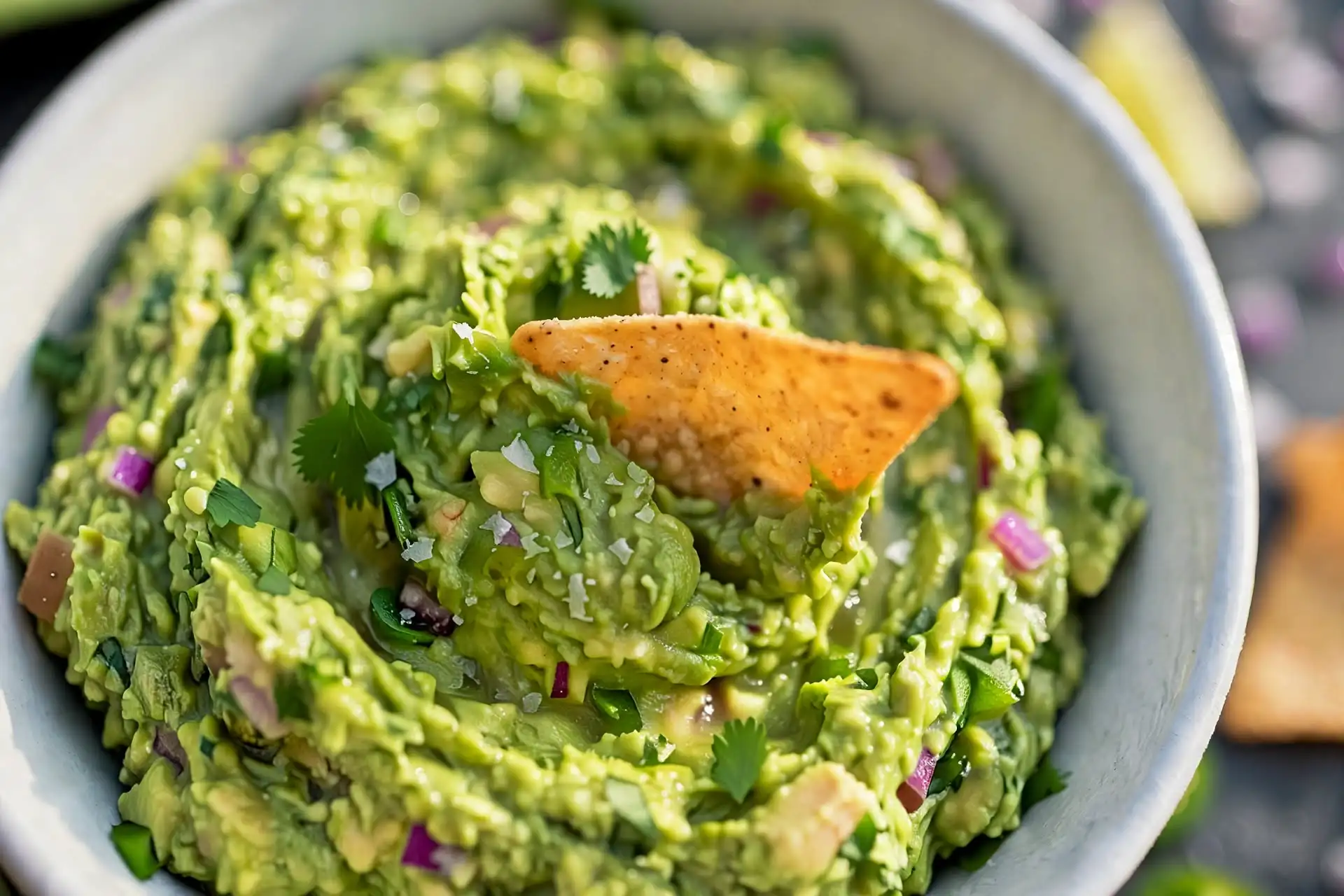
Guacamole
Ingredients
Method
- Add lime juice to the avocado flesh before mashing.
- Mash with a fork, leaving some chunks, until two-thirds creamy.
- Stir in salt, tasting before adding other ingredients.
- Fold in onion, jalapeño, tomato, cilantro, and garlic gently.
- Taste and adjust lime or salt in small increments.
- Press plastic wrap directly onto the surface if not serving immediately.
2 Comments
Comments are closed.