Lasagna Soup
Lasagna Soup That Doesn’t Turn Into Mush by Day Two
Lasagna soup sounds like an easy shortcut until the noodles sit in the broth for an hour and turn to paste, which is exactly what happens in most recipes that cook the pasta directly in the pot. The actual fix is cooking the noodles separately and adding them to each bowl right before serving, not to the pot itself. That one change is the difference between a soup you can make ahead and one that’s only good the moment it comes off the stove. This version also skips the usual step of layering ricotta on top and instead swirls it into each bowl, so it stays creamy instead of clumping into a cold scoop.
Why This Lasagna Soup Actually Tastes Like Lasagna
The broth simmers for a full 30 minutes with the beef and tomatoes before anything else goes in, giving the flavors time to actually meld instead of tasting like separate ingredients floating together.
Mafaldine or broken lasagna noodles give you the ruffled edge that regular pasta shapes don’t, so each spoonful still reads as lasagna even though it’s served in a bowl.
Three cheeses go in at three different points: Parmesan cooked into the broth, mozzarella melted on top, and ricotta swirled in cold, so you get the full range of texture lasagna normally delivers through its layers.
Italian sausage browned with its own fat left in the pot means the broth starts with real flavor built in, rather than relying on broth alone to carry everything.
Keeping the noodles separate until serving means leftovers actually reheat well for up to 4 days, which is rare for anything with pasta sitting in liquid.
Quick Information
Prep time: 15 minutes. Cook time: 40 minutes. Total time: 55 minutes. Servings: 6. Difficulty: Easy. Calories: about 420 per serving. The one thing that matters most here is cooking the pasta separately from the broth, since skipping that step is what ruins the texture by the second bowl. Good for a cold-weather weeknight dinner or meal prep.
Ingredients
For the base:
- 1 lb Italian sausage, casings removed (mild or hot, your call)
- 1/2 lb ground beef
- 1 medium onion, diced
- 1 red bell pepper, diced
- 4 cloves garlic, minced
Using both sausage and ground beef gives the broth more depth than either one alone, the sausage brings fennel and fat, the beef brings a plainer meatiness that lets the tomatoes come through.
For the broth:
- 1 can (28 oz) crushed tomatoes
- 1 can (14.5 oz) diced tomatoes
- 6 cups beef broth
- 2 tablespoons tomato paste
- 1 teaspoon dried oregano
- 1 teaspoon dried basil
- 1/2 teaspoon red pepper flakes (optional)
- 2 bay leaves
- 1/2 cup grated Parmesan
Tomato paste goes in before the liquid, not after, and gets a minute in the hot fat first. That short cook mellows its raw, slightly metallic edge, which is a step most versions skip entirely.
For serving:
- 8 oz mafaldine or broken lasagna noodles, cooked separately
- 1 cup ricotta cheese
- 1 1/2 cups shredded mozzarella
- Fresh basil, torn, for topping
Keeping the ricotta separate until the bowl is served means it stays distinct and creamy rather than dissolving into the broth the way it would if cooked in.
You may also like: broccoli cheddar soup
Recipe Timing
Prep: 15 minutes. Cook: 40 minutes. Rest: none. Total: 55 minutes. Servings: 6. Difficulty: Easy. Cuisine: Italian-American. Course: Main dish, soup.
Allergen and Dietary Disclosure
This recipe contains dairy (Parmesan, ricotta, mozzarella) and gluten (lasagna noodles). For a dairy-free version, a cashew-based ricotta substitute works reasonably well, though the melted mozzarella top is harder to replace without changing the finish. For gluten-free, swap in gluten-free lasagna noodles or broken gluten-free sheets, cooked separately exactly the same way.
Equipment Needed
A large Dutch oven or heavy stockpot holds the broth at a steady simmer without scorching the bottom where the meat browned. A separate pot for the noodles, since cooking them apart from the broth is the whole point of this method. A box grater for the Parmesan and mozzarella, pre-shredded cheese melts less smoothly into both the broth and the topping. A ladle wide enough to serve the chunky broth without leaving half the meat behind in the pot.
Nutrition Information
Calories: 420 per serving. Protein: 26g. Carbs: 28g. Fat: 22g. Fiber: 3g. Sugar: 7g. Sodium: 890mg. Serving size: about 1.5 cups broth plus noodles and toppings. Servings per recipe: 6. The sodium here runs higher than a typical vegetable soup mainly from the broth and cheese combined, so a low-sodium beef broth cuts that down meaningfully. These figures are estimates based on standard USDA nutrition data, not a substitute for a nutrition label or lab analysis.
Why Keeping the Noodles Separate Actually Matters
Pasta left sitting in hot liquid keeps absorbing it well past the point of al dente, the same way it does in any soup, and lasagna noodles are wide enough that the effect shows fast. Within about 20 minutes in a hot pot, noodles cooked directly in the broth go from tender to falling apart, and by the next day in the fridge they’ve turned to mush. Cooking the noodles in their own pot of salted water, draining them, and adding a portion to each bowl right before ladling broth over the top means they only ever sit in liquid for the few minutes it takes to eat.
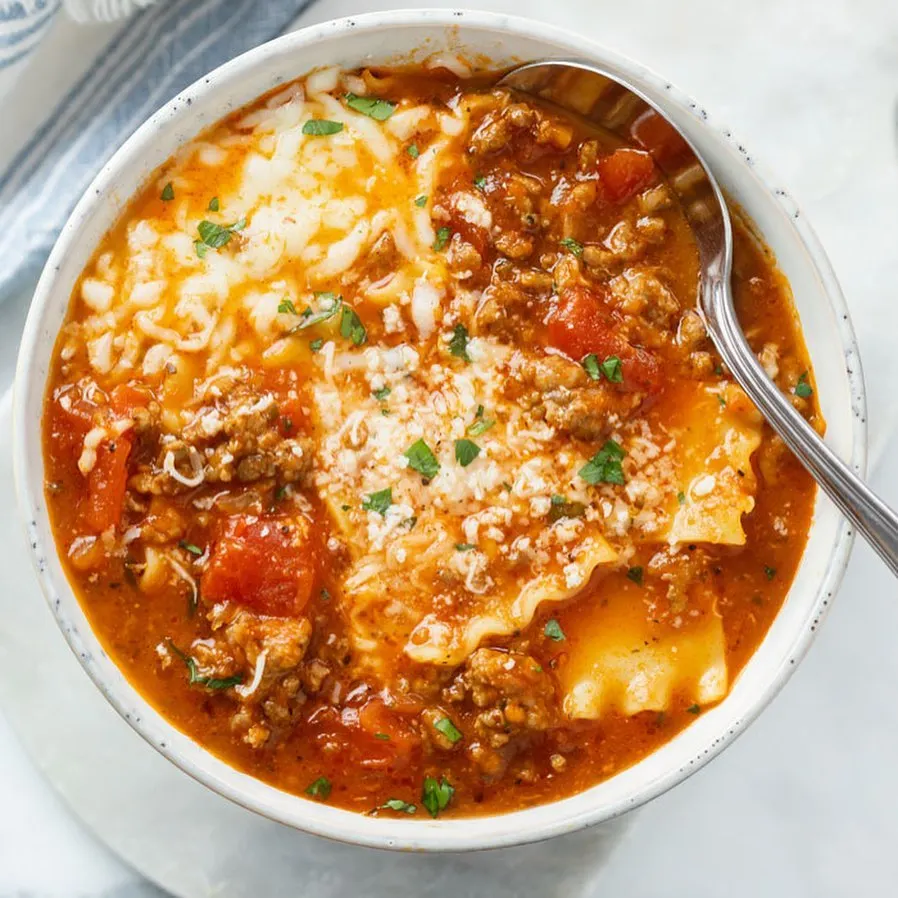
If you’re making this ahead, store the noodles and broth in separate containers entirely, this single habit is what keeps the leftovers tasting like day one instead of day three.
Preparation
Dice the onion and bell pepper before anything goes on the stove, since the meat browns fast and you don’t want to be chopping while it’s close to burning. Mince the garlic. Measure the dried herbs and tomato paste into small bowls so they’re ready to go in quickly once the meat is browned. Bring a separate pot of salted water to a boil for the noodles, timed so it’s ready about 10 minutes before the broth finishes.
Step-by-Step Method
- In a large Dutch oven over medium-high heat, cook the sausage and ground beef together, breaking it up with a spoon, until no pink remains, about 7 minutes. Because raw ground meat is involved, don’t taste or adjust seasoning until it’s fully cooked through.
- Drain off all but about 1 tablespoon of the rendered fat, then add the onion and bell pepper to the same pot. These soften in about 5 minutes, you’ll know they’re ready when the onion turns translucent at the edges rather than staying opaque white.
- Stir in the garlic and cook for 30 seconds, just long enough to smell it turn fragrant. Garlic left in a hot pan longer than that starts to taste bitter instead of sweet.
- Push the meat and vegetables to one side of the pot and add the tomato paste directly to the cleared space. Let it cook undisturbed for 1 minute, until it darkens slightly in color, then stir it through everything else.
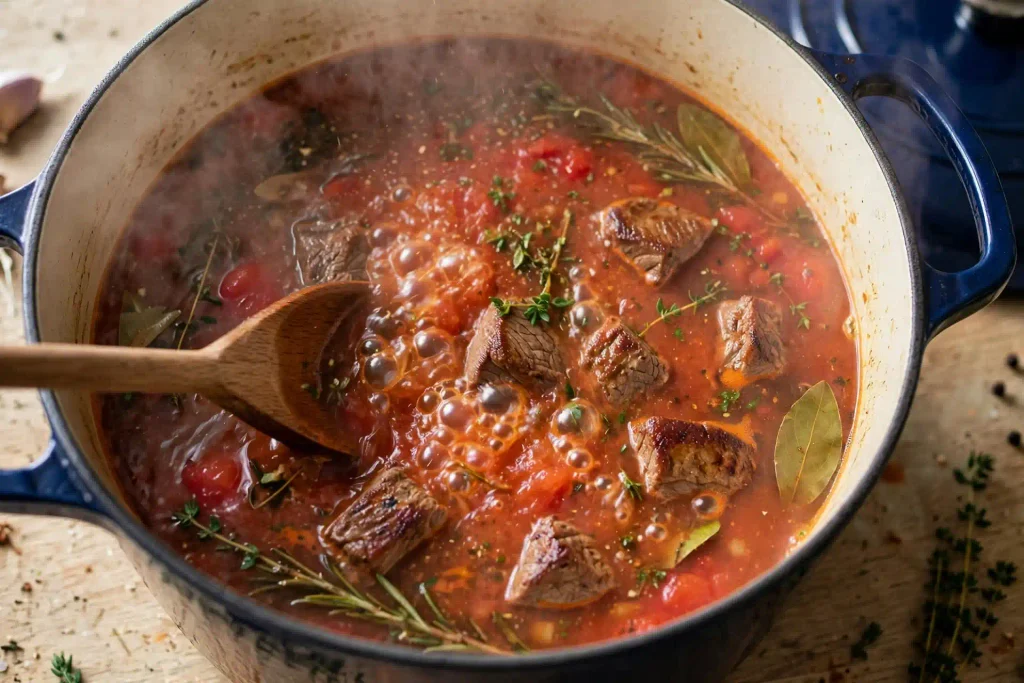
- Pour in the crushed tomatoes, diced tomatoes, and beef broth, scraping up any browned bits stuck to the bottom of the pot as the liquid hits it.
- Add the oregano, basil, red pepper flakes if using, and bay leaves, then bring the whole pot to a boil before dropping it to a simmer.
- Simmer uncovered for 25 to 30 minutes, stirring occasionally, until the broth has reduced slightly and tastes rounded rather than sharply acidic from the raw tomatoes.
- While the broth simmers, cook the noodles in the separate pot of boiling salted water until al dente according to the package, then drain and toss with a small drizzle of olive oil to keep them from sticking together.
- Remove the bay leaves from the broth and stir in the grated Parmesan until it melts fully into the liquid, which only takes about a minute since the broth is already hot.
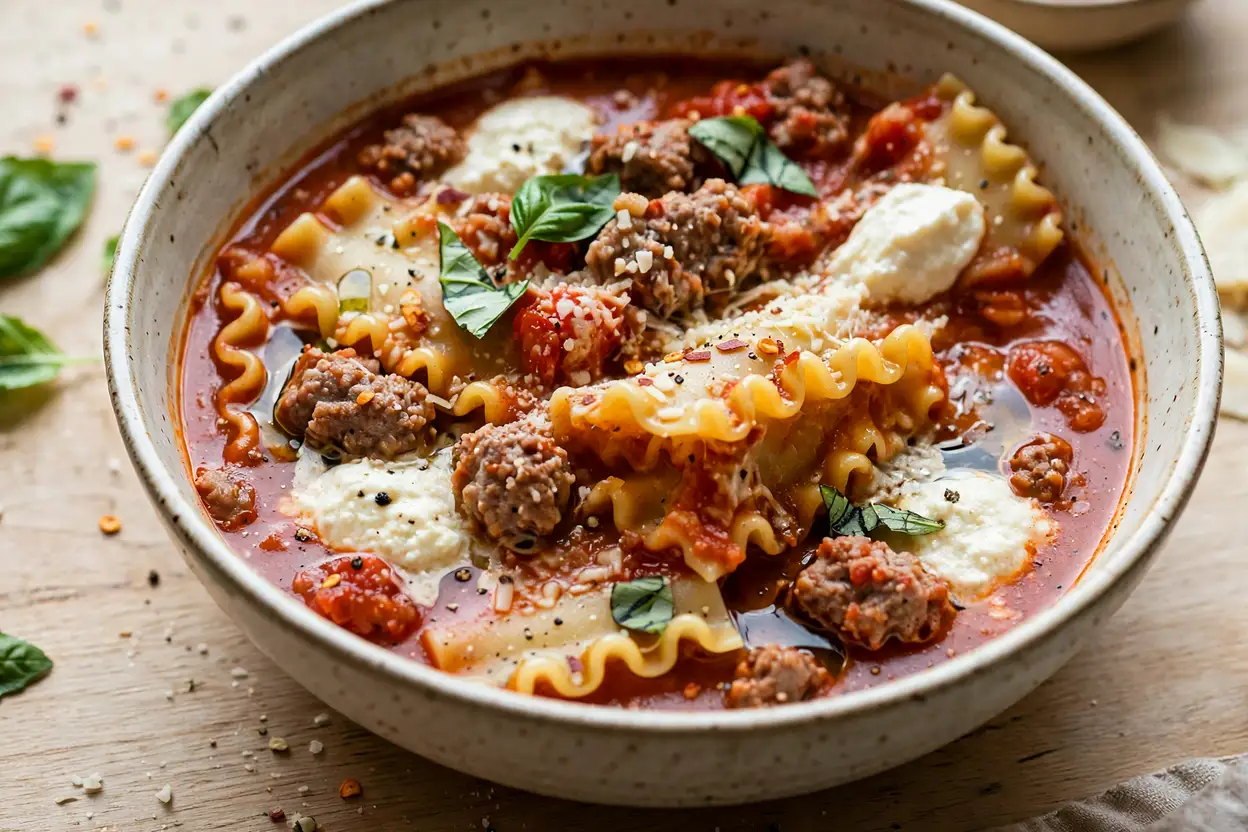
- To serve, place a portion of cooked noodles in the bottom of each bowl, ladle the hot broth over the top, then add a dollop of ricotta and a handful of shredded mozzarella so it melts against the heat of the broth.
- Finish with torn fresh basil over each bowl right before bringing it to the table, since basil added to the pot earlier loses most of its flavor to the long simmer.
Chef’s Note: If your broth tastes flat after simmering, it’s usually missing salt rather than missing an ingredient. Taste after the Parmesan goes in, since the cheese adds its own salt and you don’t want to double up before checking.
Chef’s Note: Browning the tomato paste directly in the pot instead of just stirring it into the liquid is a small step most recipes skip, and it’s the difference between a broth that tastes slightly raw and one that tastes cooked through.
Chef’s Note: Ricotta straight from the fridge can seize slightly when it hits hot broth. Letting it sit at room temperature for 10 minutes before serving keeps it smoother when it melts into the bowl.
You may also like: cheeseburger soup
Expert Tips & Tricks
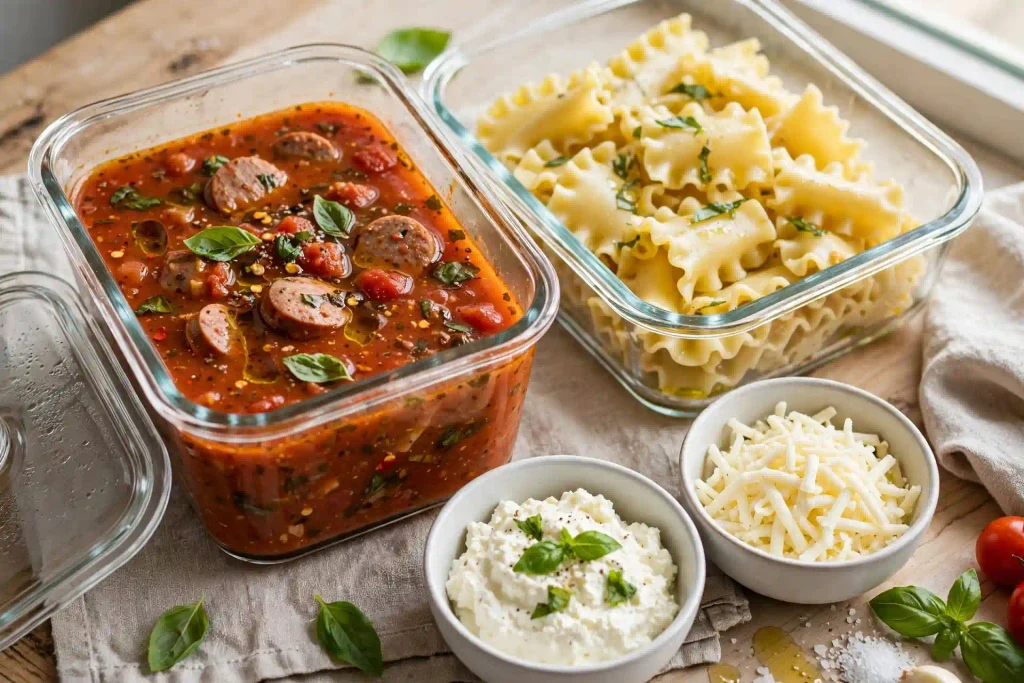
You can make the broth up to 3 days ahead and store it separately from the noodles, then just reheat it on the stove and cook fresh noodles when you’re ready to serve.
Leftovers keep well for up to 4 days specifically because the noodles are stored apart, combine them only right before eating, never store them together in the same container.
If you want a thicker, heartier broth, mash a few tablespoons of the diced tomatoes against the side of the pot while simmering, it breaks down the pieces without needing a blender.
Using hot Italian sausage instead of mild adds heat without needing extra red pepper flakes, if you’re serving people with different spice tolerances, mild sausage plus flakes on the side gives everyone control.
Freezing the broth alone in portioned containers works well, since it’s the noodles and cheese that don’t hold up to freezing, not the broth itself.
A splash of red wine added right after the garlic, before the tomatoes, deepens the flavor noticeably if you have an open bottle, letting it cook off for about a minute before adding the tomatoes.
Common Mistakes & Troubleshooting
Noodles turn to mush within a day of making this. This almost always means the noodles were cooked directly in the broth pot instead of separately. Keep them in their own container and only combine portions right before serving.
Broth tastes like raw tomatoes instead of cooked. Usually means the simmer time was cut short. Give it the full 25 to 30 minutes uncovered, the acidity mellows out as the liquid reduces and the flavors have time to combine.
Ricotta clumps instead of swirling smoothly into the bowl. This happens when it goes in cold straight from the fridge onto very hot broth. Let it sit out for 10 minutes first, or stir a small spoonful of hot broth into the ricotta before adding it to loosen it slightly.
Soup tastes bland despite all the herbs. Dried herbs lose potency the longer they sit in your pantry, if yours are more than a year old, double the amount or finish the pot with a pinch of fresh herbs instead.
Mozzarella doesn’t melt, just sits on top in clumps. The broth needs to be hot enough when it’s ladled over the cheese, if it’s sat and cooled even slightly, give the pot a quick reheat before serving the next bowl.
Honest Trade-Off
Cooking the noodles in a separate pot means an extra pot to wash and a few more minutes of coordinating timing between two burners. A true one-pot version, with noodles cooked directly in the broth, is simpler and uses less cleanup, it just doesn’t hold up for leftovers or meal prep. Someone cooking for one meal with no leftovers planned can skip this step and simmer everything together; someone who wants this to reheat well through the week should keep the noodles separate.
Storage & Make-Ahead
Store the broth and cooked noodles in separate airtight containers in the fridge for up to 4 days. Combine portions only when reheating, warming the broth on the stove and adding fresh or refrigerated noodles directly to the hot liquid for the last minute.
Freezing works well for the broth alone, up to 3 months in a freezer-safe container. Don’t freeze the noodles or the cheese toppings, both change texture significantly after thawing and are quick enough to prepare fresh anyway.
Variations & Substitutions
For a spicier version, use hot Italian sausage and double the red pepper flakes in the broth.
For a milder, kid-friendly version, use mild sausage only, skip the beef entirely, and leave out the red pepper flakes.
For a vegetarian version, swap the sausage and beef for a plant-based ground meat substitute and use vegetable broth instead of beef broth, the browning step stays roughly the same.
For a lower-carb version, skip the pasta entirely and serve the broth over a bed of sautéed zucchini ribbons instead, keeping the cheese toppings the same.
Serving Suggestions
Garlic bread or a crusty baguette works well for soaking up the extra broth left in the bowl. A simple arugula salad with lemon vinaigrette adds a sharp, peppery contrast to the richness of the soup. Roasted asparagus or green beans on the side rounds the meal out without adding more heaviness. For drinks, a dry red wine like Chianti pairs naturally given the Italian flavors already in the pot.
You may also like: honey garlic chicken
FAQ
Can I make lasagna soup ahead of time?
Yes, make the broth up to 3 days ahead and store it separately from the noodles and cheese. Reheat the broth on the stove and cook fresh noodles right before serving, which keeps the texture from going soft the way it would if everything sat together.
Why do my lasagna soup noodles always turn mushy?
This happens when the noodles cook directly in the broth instead of in their own pot of water. Cook them separately, drain them, and add a portion to each bowl only when you’re ready to serve, keeping them out of the liquid until the last possible minute.
Can I substitute regular pasta for lasagna noodles?
You can, broken penne or rotini both work fine in terms of texture, though you’ll lose the ruffled edge that mafaldine or broken lasagna noodles give the dish. The cooking method stays exactly the same either way.
How do I know when the broth has simmered long enough?
Taste it, raw tomato flavor should have mellowed into something rounder and less sharply acidic, usually around the 25 to 30 minute mark. The broth will also have reduced slightly and thickened a bit compared to when the tomatoes first went in.
Is this recipe safe for someone with a dairy allergy?
As written, no, it contains Parmesan, ricotta, and mozzarella. A cashew-based ricotta substitute works reasonably well in place of the dairy version, though the melted mozzarella topping is harder to replace without changing the finished texture.
One Thing Worth Remembering
The broth and the noodles are two separate projects that only meet in the bowl, not in the pot. Treat them that way from the start, cook each one on its own timeline, and this holds up for a week of lunches instead of turning into a single-night dinner. That’s the one habit that separates this from the version that goes soft and gray by the second day in the fridge.
Lasagna Soup
Ingredients
Method
- Brown sausage and beef together, 7 minutes, drain excess fat.
- Add onion and bell pepper, cook 5 minutes until softened.
- Add garlic, cook 30 seconds.
- Cook tomato paste in cleared space 1 minute, then stir through.
- Add crushed tomatoes, diced tomatoes, and broth, scraping up browned bits.
- Add herbs and bay leaves, bring to a boil, then simmer.
- Simmer uncovered 25 to 30 minutes until flavors round out.
- Cook noodles separately in boiling salted water until al dente, drain, toss with oil.
- Remove bay leaves, stir Parmesan into broth until melted.
- Serve noodles in bowls, ladle broth over top, add ricotta and mozzarella.
- Top with fresh basil just before serving.

3 Comments
Comments are closed.