Mississippi Pot Roast
Mississippi Pot Roast (The Slow-Cook Method That Keeps It From Turning Mushy)
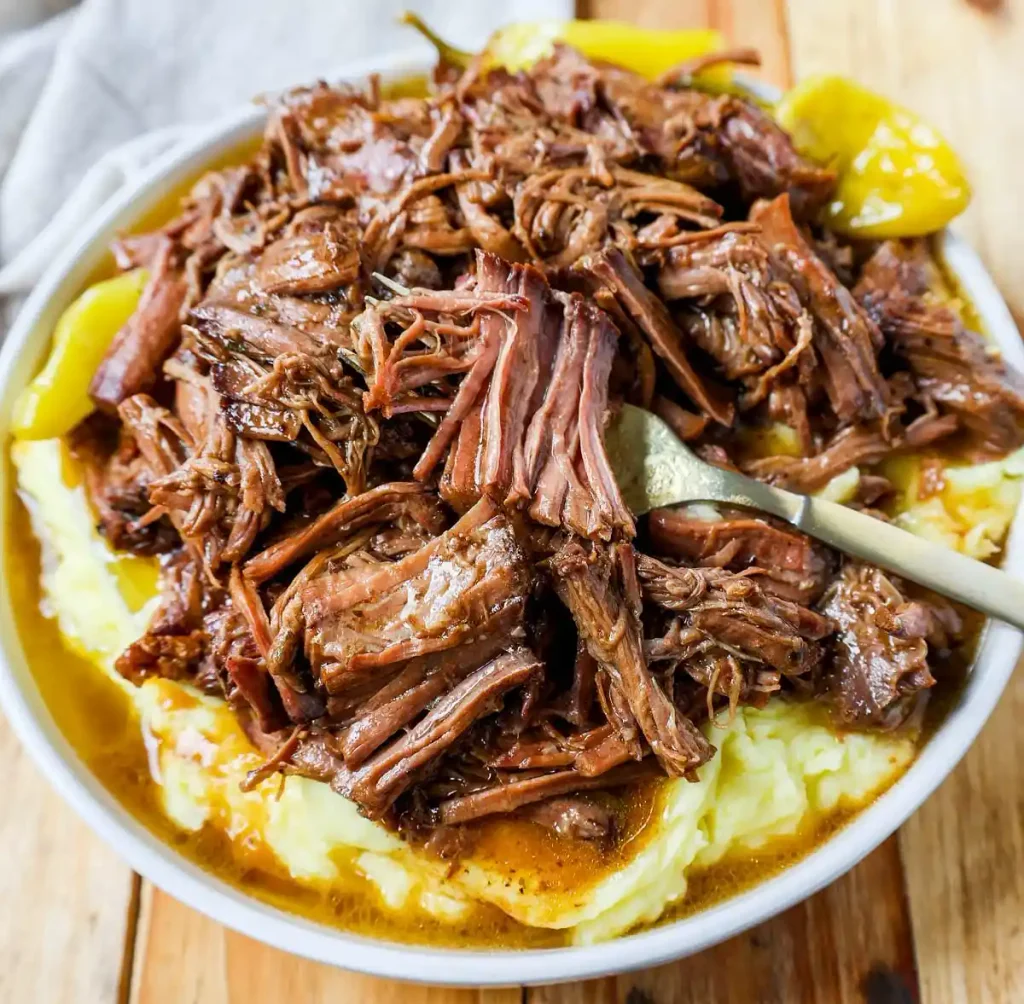
Mississippi pot roast is famous for being simple, just a chuck roast, a packet of seasoning, some pepperoncini, and a stick of butter dropped in a slow cooker. The problem is that “simple” often means “unattended,” and unattended usually means the roast either sits too long and turns to mush, or the butter never fully incorporates and leaves a greasy layer floating on top. This version fixes both issues with a quick sear before the slow cooker, a homemade seasoning blend that skips the sodium overload of the packet mixes, and a timing window that keeps the meat tender without letting it disintegrate into strands too early.
Why This Version Holds Its Texture Better
Searing the roast in a hot skillet before it goes into the slow cooker builds a browned crust that packet-seasoning versions skip entirely, adding a layer of flavor the classic recipe usually misses.
Cutting the butter into smaller pieces instead of dropping in one whole stick lets it melt evenly throughout the cook instead of pooling in one spot and turning the gravy greasy near the end.
A homemade ranch and au jus seasoning blend replaces the packaged mixes, cutting the sodium significantly while still delivering the same tangy, savory flavor people expect from this dish.
Checking for tenderness starting at the 7-hour mark instead of committing to a full 8 hours prevents the roast from sliding past fork-tender into mushy, stringy territory.
Reserving a portion of the whole pepperoncini for serving, rather than letting all of them cook down completely, keeps some bright, vinegary bite in the final dish instead of everything blending into one soft, muted flavor.
Quick Snapshot
- Prep time: 15 minutes
- Cook time: 7 to 8 hours (slow cooker)
- Total time: 7 hours 15 minutes
- Servings: 6
- Difficulty: Easy
- Calories per serving: 540
- Ingredient that matters most: Chuck roast, seared before it goes into the slow cooker
- Best for: A weekday dinner you want ready without much hands-on effort
Ingredients
For the roast
Chuck roast has enough fat marbled through it to stay tender over a long, slow cook, unlike leaner cuts that dry out under the same amount of time.
- 3 to 3½ pound chuck roast
- 1 teaspoon salt
- ½ teaspoon black pepper
- 2 tablespoons vegetable oil
For the seasoning blend
- 1 tablespoon dried dill
- 1 teaspoon garlic powder
- 1 teaspoon onion powder
- 1 teaspoon dried parsley
- ½ teaspoon black pepper
- ½ teaspoon paprika
For the slow cooker
- 1 cup beef stock
- 8 to 10 whole pepperoncini peppers, divided
- ¼ cup pepperoncini brine (from the jar)
- 6 tablespoons unsalted butter, cut into pieces
- 2 tablespoons cornstarch (optional, for a thicker gravy)
- Fresh parsley, chopped, for garnish
You may also like: beef stew
If pepperoncini aren’t available, banana peppers work as a substitute, though they carry less tang and the dish will taste noticeably milder as a result. For a lower-sodium version, cut the added salt in the seasoning blend by half, since the pepperoncini brine already contributes a fair amount on its own.
Recipe Timing
- Prep time: 15 minutes
- Cook time: 7 to 8 hours
- Rest time: 10 minutes
- Total time: 7 hours 25 minutes
- Servings: 6
- Difficulty: Easy
- Cuisine: American, Southern
- Course: Main dish
Allergen Disclosure
This recipe contains dairy from the butter. For a dairy-free version, substitute the butter with the same amount of olive oil stirred in at the same stages, though the finished gravy will taste noticeably less rich and won’t develop quite the same glossy texture.
Equipment Needed
- A slow cooker large enough to hold the roast without cramming it against the sides
- A heavy skillet for searing the roast before it goes into the slow cooker
- Tongs for turning and transferring the roast
- Two forks for shredding once the roast is done
Searing in a separate skillet rather than skipping straight to the slow cooker is the one step that makes the biggest difference in the final flavor, even though it adds a dish to wash.
Nutrition Information
Per serving: 540 calories, 38g protein, 3g carbohydrates, 41g fat, 1g fiber, 1g sugar, 890mg sodium. These are estimates based on standard USDA nutrient data for chuck roast and the listed ingredients, and will shift depending on the exact fat trim and brine sodium content used.
Why Checking Early Prevents the Roast From Turning Mushy
Chuck roast reaches fork-tender once its collagen has broken down into gelatin, usually somewhere between 7 and 8 hours on low heat, but it keeps cooking past that point if left unchecked, and the muscle fibers eventually separate into shreds so fine the meat loses its structure entirely. Checking at the 7-hour mark instead of automatically running the full 8 gives you the chance to catch that window before it slides past.
Butter added in smaller pieces spread throughout the pot melts gradually and blends into the gravy as it goes, rather than sitting as a single concentrated fat pocket that only partially incorporates by the time the roast is done.
Preparation
Pat the roast completely dry with paper towels before searing, since surface moisture is the main reason a sear turns gray and steamed instead of deeply browned. Mix the seasoning blend in a small bowl ahead of time so it’s ready to rub onto the roast the moment it comes out of the skillet.
Step-by-Step Method
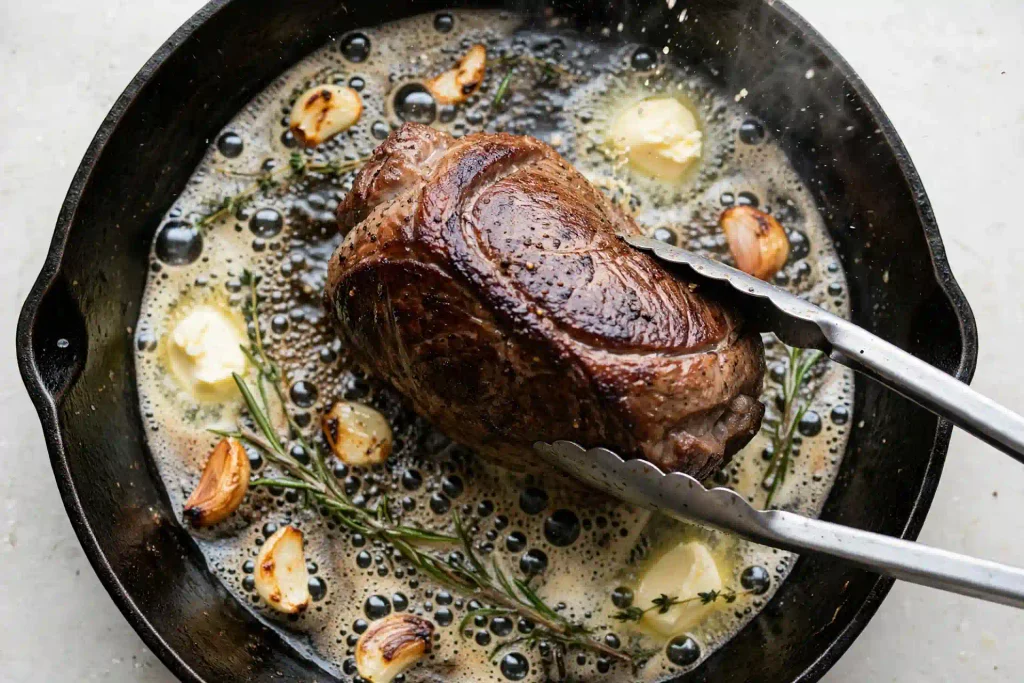
1. Season the roast on all sides with salt and pepper, then heat the vegetable oil in a skillet over medium-high heat until it shimmers. Sear the roast for 3 to 4 minutes per side, including the edges, until a deep brown crust forms across every surface.
Chef’s Note: Use tongs to hold the roast on its edges for about 30 seconds each, since those thinner sides brown fast and are easy to skip if you’re only searing the two flat faces.
2. Transfer the seared roast to the slow cooker and rub the seasoning blend evenly over the top and sides. Pressing the seasoning gently into the crust with your fingers helps it stick rather than sliding off once the liquid goes in.
3. Pour the beef stock and pepperoncini brine around the roast, not directly over the top, so you don’t wash off the seasoning you just pressed on. Scatter half the pepperoncini peppers around the roast, reserving the rest for later.
4. Distribute the butter pieces evenly around the roast rather than stacking them in one spot, tucking a few directly against the sides of the meat. Spreading them out from the start is what keeps the gravy from turning greasy in just one section by the end of cooking.
5. Cover and cook on low for 7 to 8 hours, checking for tenderness starting at the 7-hour mark by pressing a fork gently into the thickest part of the roast. It should offer very little resistance and begin to pull apart on its own without needing to be forced.
Food safety note: Chuck roast should reach at least 145°F internally for safety, though this slow cook carries it far past that minimum by the time it’s actually tender.
6. Once tender, remove the roast to a cutting board and let it rest for 10 minutes before shredding. Resting first keeps more of the juices inside the meat rather than losing them all onto the board the second you start pulling it apart.
Chef’s Note: If the gravy in the slow cooker still looks thin after the roast comes out, whisk 2 tablespoons of cornstarch with an equal amount of cold water, stir it into the liquid, and let it sit on low or warm for 10 minutes to thicken.
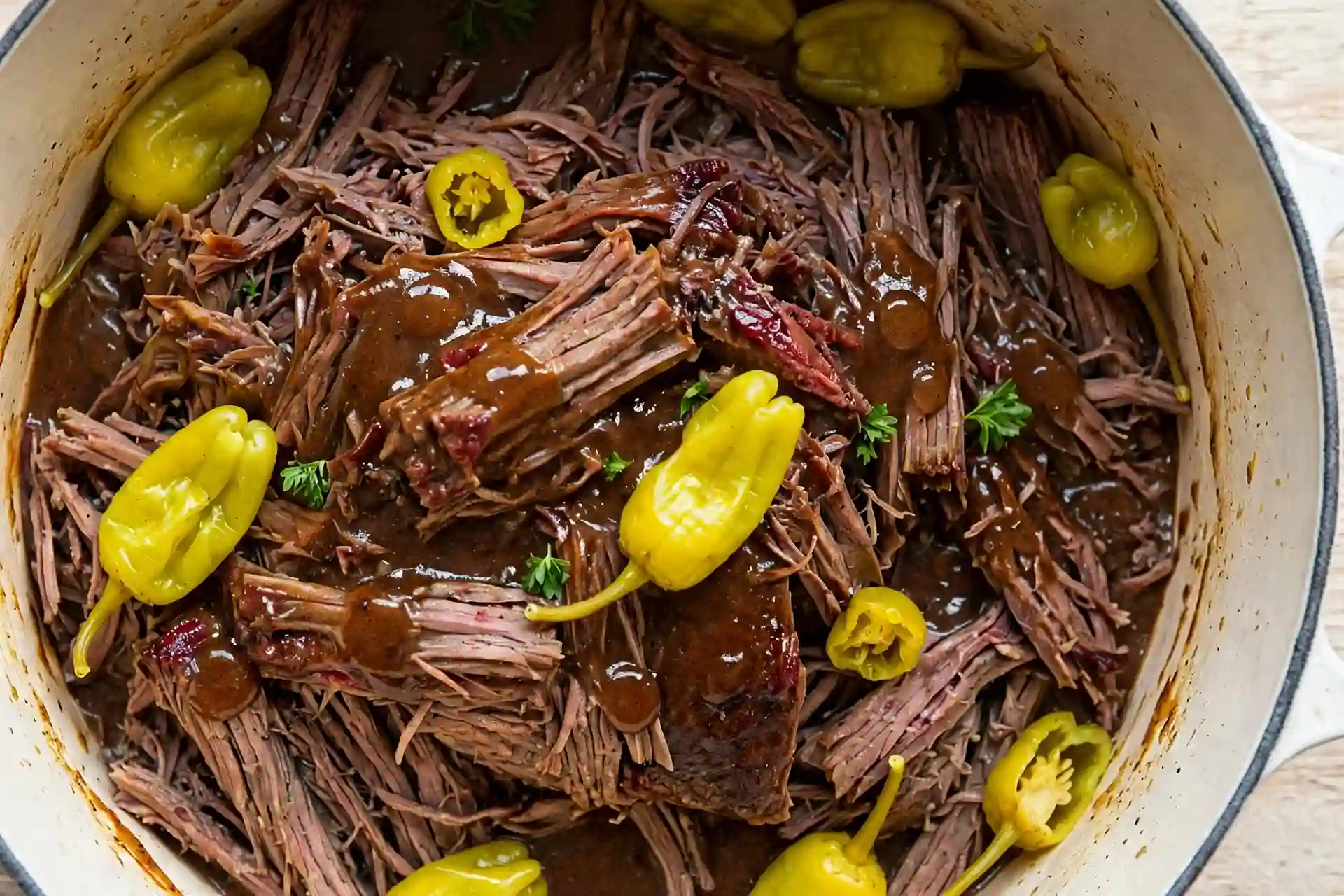
7. Shred the rested roast into large, roughly bite-sized pieces using two forks, discarding any large pockets of fat you come across. Return the shredded meat to the slow cooker and stir gently to coat it in the gravy.
8. Chop the reserved whole pepperoncini and stir half of them into the pot, keeping the rest whole for topping individual servings. This split keeps some bright, vinegary bite intact instead of letting every pepper cook down into the same soft texture as the rest.
9. Taste the gravy and adjust salt if needed, keeping in mind the brine and seasoning blend both already carry a fair amount. Scatter chopped parsley over the top just before serving.
Expert Tips
- Make-ahead: This dish tastes better the next day, once the shredded beef has had time to soak up more of the gravy overnight in the fridge. Making it a day ahead and reheating gently is genuinely an improvement, not just a shortcut.
- Storage: Keeps in the fridge for up to 4 days in an airtight container, and freezes well for up to 3 months, since there’s no dairy-heavy sauce prone to separating the way cream-based dishes are.
- Sear the roast in the same pot you’ll eventually use if you have a multi-function slow cooker with a sauté setting, saving a dish and keeping all the browned bits in one place.
- Cut the roast in half before searing if it’s an unusually thick piece, since two smaller sections sear more evenly than one oversized roast crammed against the sides of the pan.
- A splash of the reserved pepperoncini brine stirred in right at the end brightens the gravy if it’s tasting a little flat after the long cook.
- Skip stirring the pot too often during cooking; the slow cooker holds heat better with the lid closed, and repeated peeking adds cooking time you didn’t plan for.
Callout box: Keep the jar of pepperoncini in the fridge after opening rather than the pantry, since the brine loses some of its sharpness at room temperature over time, and you’ll want that sharpness for the reserved peppers at the end.
You may also like: marry me chicken
Common Mistakes and How to Fix Them
Roast turns to mush with almost no texture left. This means it cooked past fork-tender into overdone territory, usually from running the full time without checking early. Start checking at the 7-hour mark instead of committing to a fixed 8 hours.
Gravy looks greasy or separated on top. The butter likely went in as one whole stick instead of spread out in smaller pieces. Cut it into pieces and distribute them around the roast, not stacked in one place.
Dish tastes overwhelmingly salty. This usually comes from using both the full amount of brine and a heavily salted seasoning packet at the same time. Stick to the homemade blend here and taste before adding extra salt at the end.
Meat comes out dry instead of tender and juicy. A roast that’s too lean, or one that didn’t get a full sear before going into the slow cooker, is the usual cause. Stick with chuck roast specifically and don’t skip the searing step.
Peppers lose all their bite and taste muted. Cooking every pepperoncini for the full 7 to 8 hours breaks down their sharp flavor completely. Reserve some whole peppers to stir in fresh at the very end.
Callout box: If you’re doubling this recipe for a larger crowd, use two smaller roasts instead of one oversized one. Smaller roasts sear more evenly and tend to reach fork-tender more consistently across the whole piece.
Honest Trade-Off
This method adds about 10 extra minutes for searing compared to the classic dump-and-go version where everything goes straight into the slow cooker raw. If you’re truly short on time in the morning and don’t mind a slightly less developed flavor, skipping the sear and tossing the seasoned raw roast directly into the slow cooker still produces a decent result. Anyone who’s tasted the difference a proper sear makes will notice it’s missing, but for a genuinely hands-off morning, the shortcut works.
Storage and Make-Ahead
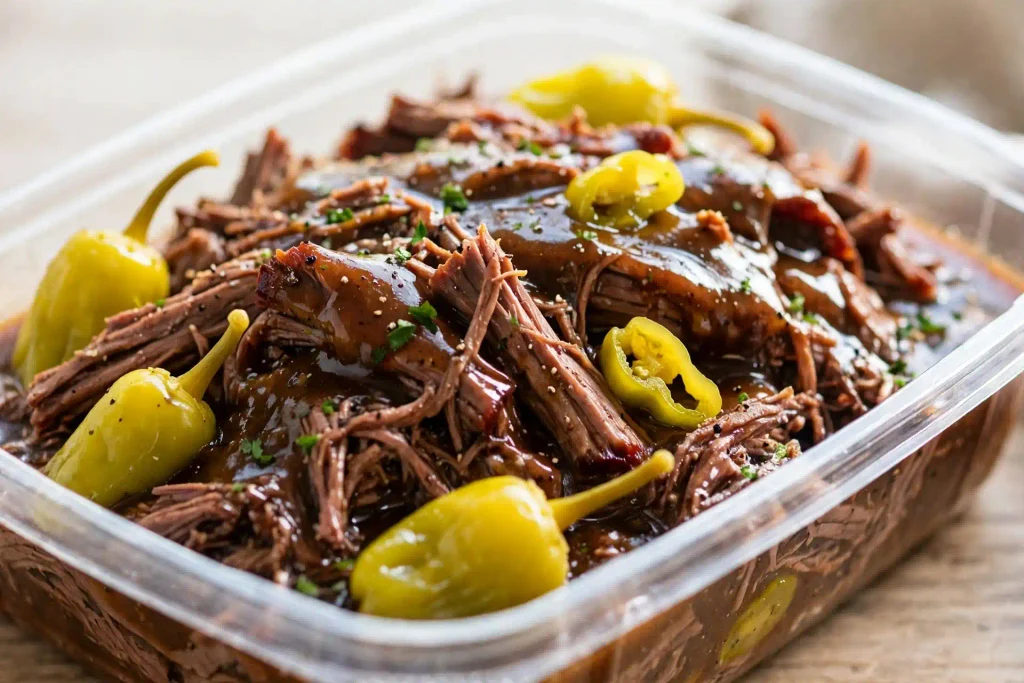
Store cooled, shredded pot roast in an airtight container in the fridge for up to 4 days, and the flavor generally improves by the second day as the meat continues absorbing the gravy. Freeze in portioned containers for up to 3 months, leaving a little headspace since the gravy expands slightly as it freezes. Thaw overnight in the fridge and reheat gently on the stovetop or in the microwave, adding a splash of beef stock if the gravy has thickened too much in storage.
Variations
Spicier version: Use the full jar of pepperoncini instead of holding half back, and add a pinch of cayenne to the seasoning blend for a sharper heat throughout.
Milder version: Cut the pepperoncini down to just 4 or 5 peppers and rinse them briefly before adding, reducing both the tang and the heat noticeably.
Sandwich version: Pile the shredded meat and a spoonful of gravy onto a toasted hoagie roll with a slice of provolone melted over the top for an easy weeknight sandwich.
Root vegetable version: Add quartered baby potatoes and carrot chunks to the slow cooker alongside the roast at the start, turning this into a more complete one-pot meal.
Serving Suggestions
Mississippi pot roast is traditionally served over mashed potatoes, which soak up the buttery gravy better than almost anything else. Egg noodles or steamed rice work well too if you want a change from potatoes. A simple green vegetable like roasted green beans or sautéed spinach balances out the richness of the dish nicely.
You may also like: beef stroganoff
Frequently Asked Questions
Can I make Mississippi pot roast in the oven instead of a slow cooker?
Yes, sear the roast the same way, then transfer it to a covered Dutch oven with the same liquid, seasoning, and butter, and cook at 300°F for about 3½ to 4 hours. Check for tenderness starting around the 3-hour mark, since oven braising tends to move a bit faster than a slow cooker on low.
Why is my pot roast gravy greasy instead of smooth?
This usually happens when the full stick of butter is dropped in one piece instead of cut up and distributed around the roast. Cutting it into smaller pieces and spreading them out lets the fat incorporate gradually instead of pooling in one spot.
What can I use instead of pepperoncini in this recipe?
Banana peppers work as a milder substitute, though the dish will lack some of the sharp tang pepperoncini bring. Pickled jalapeños are another option if you want more heat instead of tang, though the flavor profile shifts noticeably from the classic version.
How do I know when the roast has reached the right tenderness without overcooking it?
Press a fork gently into the thickest part of the meat; it should offer almost no resistance and begin pulling apart on its own rather than needing force. Checking starting at 7 hours instead of waiting for the full 8 gives you the best chance of catching that window.
Is it safe to leave a slow cooker running on low overnight or while I’m at work?
Yes, slow cookers are designed to cook safely at low, steady temperatures over extended periods, based on standard USDA guidance for slow cooking. Just make sure the roast starts refrigerator-cold rather than sitting out at room temperature beforehand, and that the total cook time stays within the recipe’s range rather than running well past it.
Mississippi pot roast earns its reputation for being easy, but the difference between a good batch and a great one really comes down to two things: searing before it goes in, and checking on it before the timer says it’s done. Once you’ve made it with both of those in place, the classic dump-and-go version starts to feel like it was always missing something. That gravy, once it’s right, is the part people actually remember.
Mississippi Pot Roast
Ingredients
Method
- Season and sear the roast on all sides, about 3-4 minutes per side. Transfer to the slow cooker.
- Rub seasoning blend over the roast.
- Pour stock and brine around the roast; add half the pepperoncini.
- Distribute butter pieces evenly around the roast.
- Cover and cook on low 7-8 hours, checking tenderness starting at 7 hours.
- Rest the roast 10 minutes, then shred.
- Return shredded meat to the pot; stir in remaining chopped pepperoncini.
- Season to taste and serve.



5 Comments
Comments are closed.