Loaded Baked Potato Soup
Loaded Baked Potato Soup with Crispy Shallots and Cheddar
Most loaded baked potato soup is boiled potatoes in cream with cheese stirred in, and it tastes exactly like that. The version below starts in the oven. Russets bake until the skins turn papery, the flesh goes dry and fluffy, and both end up in the pot. A flour and butter base gives the soup body without a blender, and a spoonful of smoked paprika supplies the savory depth that most recipes get from cured meat. Crispy fried shallots take over the crunchy topping job. The result is a soup you can stand a spoon in, one that tastes like the inside and the skin of a restaurant baked potato at the same time.
Why This Loaded Baked Potato Soup Tastes Like the Real Thing
- Oven baking dries the potato flesh, so it absorbs the broth and milk like a wrung out sponge instead of watering the soup down.
- The skins go into the pot. They add the roasted, slightly salty edge you taste at the end of a baked potato.
- A roux built from butter and flour thickens the soup to the point where it clings to a spoon, with no cornstarch gloss.
- Smoked paprika does the smoky work quietly. Nobody at the table will ask what is missing.
- The toppings are cooked separately, so each bowl gets a hot, creamy base against cold sour cream and shattering shallots.
- Everything fits in one pot plus one small skillet.
Quick Recipe Snapshot
- Prep time: 15 minutes
- Cook time: 1 hour 30 minutes
- Rest time: 10 minutes
- Total time: 1 hour 55 minutes
- Servings: 6
- Difficulty: Easy
- Calories: about 455 per serving
- Most important tool: a heavy 5 to 6 quart pot that holds heat evenly
- Best for: cold evenings, weekend lunches, and feeding a crowd
Ingredients
For the Potatoes
- 4 large russet potatoes (about 2.5 lb total)
- 2 tablespoons olive oil
- 1 teaspoon kosher salt
Russets have the highest starch and lowest moisture of the common potatoes, which is why they bake up fluffy and thicken a soup. Yukon Golds work as a swap, but the soup comes out denser and slightly buttery rather than light. The oil and salt roughen the skin so it crisps instead of steaming.
For the Soup Base
- 4 tablespoons unsalted butter
- 1 medium yellow onion, finely diced (about 1 cup)
- 3 garlic cloves, minced
- 1/3 cup all purpose flour
- 1 teaspoon smoked paprika
- 4 cups chicken or vegetable broth (try [internal link: homemade chicken broth])
- 2 cups whole milk
- 1/2 cup full fat sour cream
- 6 ounces sharp cheddar, freshly shredded (about 1.5 cups)
- 1/2 teaspoon black pepper
- Kosher salt, added in small amounts at the end
Sharp cheddar melts smoothly and still tastes like cheese after being diluted by potato and milk. Mild cheddar disappears into the background. If you need a milk swap, half and half makes a richer soup, and 2% milk works if you accept a thinner body. Broth saltiness varies by brand, so hold back on the salt until the very end.
For the Toppings
- 2 large shallots, sliced into thin rings
- 1/3 cup neutral oil, such as canola
- 3 scallions, thinly sliced
- Extra shredded cheddar
- Extra sour cream
The shallots replace the usual salty crunch and deliver a sweet, savory snap. Slice them as evenly as you can, since thick rings stay soft in the middle.
You may also like: broccoli cheddar soup
Recipe Timing
Prep 15 minutes, cook 1 hour 30 minutes (60 minutes baking plus 30 minutes on the stovetop), rest 10 minutes, total 1 hour 55 minutes. Serves 6. Difficulty: easy. Cuisine: American. Course: soup.
Allergen and Dietary Disclosure
This soup contains dairy (butter, milk, sour cream, cheddar) and gluten (wheat flour). For gluten, replace the flour with 2 tablespoons of cornstarch whisked into 1/4 cup of cold milk and stirred in after the broth, then check your broth label for wheat. For dairy, there is no one swap that reproduces the texture. Plant based butter and unsweetened oat milk get close, but the cheese and sour cream components will taste different. Check every product label against your own needs.
Equipment Needed
- Heavy 5 to 6 quart pot. Thin pots scorch the roux and the bottom layer of potato. Medium low heat protects even a good pot.
- Rimmed baking sheet. Slide it on the rack below the potatoes to catch drips while the potatoes sit directly on the oven rack, where hot air can dry the skins evenly.
- Box grater. Pre shredded cheese is coated with anti caking starch that leaves the soup slightly gritty.
- Potato masher. It gives you control, which a blender never does, over how many chunks survive.
- Small skillet and slotted spoon for the shallots.
Nutrition Information
Per serving (1 of 6, roughly 1.5 cups): about 455 calories, 17 g protein, 42 g carbohydrates, 24 g fat, 3 g fiber, 7 g sugar, 880 mg sodium. Most of the protein comes from the cheddar and milk, and the skins supply the fiber.
These numbers are estimates only, calculated from ingredient values in the USDA FoodData Central database. Brands, broth, and topping portions will shift the totals.
Why Baked Potatoes Change Everything
Boiled potatoes absorb water. By the time they land in the soup, they are already full, so they add starch and nothing else. Oven baking does the opposite. Heat drives moisture out of the flesh and caramelizes the skin, and the potato arrives hungry for liquid and loaded with roasted flavor.
What makes loaded baked potato soup different from regular potato soup? Oven baking dries out the potato flesh and browns the skin, and both go into the pot, so the soup tastes like a baked potato instead of boiled ones in cream.
The roux matters just as much. Flour toasted in butter forms a paste that thickens the liquid as it heats, leaving the soup silky instead of starchy. Mashing part of the potatoes directly in the pot supplies the rest of the body. Leave about a third of the flesh in walnut sized pieces and you get a soup that is smooth and chunky at once.

Preparation
Set a rack in the center of the oven and slide a baking sheet onto the rack below it. Scrub the potatoes under cold running water, since the skins are going into the soup. Pat them completely dry, because wet skins steam instead of crisp. While the oven heats to 425°F, dice the onion, mince the garlic, slice the shallots, and shred the cheese. Doing this during the bake means the stovetop stage moves without a pause.
Step by Step Method
Poke each potato four times with a fork, rub with the olive oil and 1 teaspoon of kosher salt, and place them directly on the oven rack. Bake for 55 to 65 minutes, until the skins feel papery and a knife glides to the center with no resistance.
Heat the neutral oil in a small skillet over medium heat. Add the shallots and stir now and then for 6 to 8 minutes. Lift them out with a slotted spoon when they reach the color of dark honey, because they keep darkening on the paper towel. A pinch of salt goes on while they are still hot.
Chef’s Note: Shallots that look perfect in the pan will taste bitter by the time you serve them. Pull them one shade lighter than you want.
Let the baked potatoes rest for 10 minutes. Halve them, scoop the flesh into a bowl while leaving a thin layer against the skin, and chop about half the skins into small pieces. Mash the flesh with a fork until it looks like a coarse crumble.
Melt the butter in the pot over medium heat. When the foam subsides, add the onion and a pinch of salt. Stir occasionally for 6 to 8 minutes, until the onion turns soft and see through at the edges with only a hint of tan. Stir in the garlic for 30 seconds, just until it smells sharp and sweet.
Sprinkle the flour and smoked paprika over the onions. Stir constantly for about 2 minutes. The mixture should look like wet sand and smell faintly nutty, with no raw flour scent left.
Chef’s Note: Paprika burns fast. Keep it moving in the pot, and drop the heat if the roux starts to darken beyond pale tan.
Pour in the broth a splash at a time, whisking hard after each addition so the roux dissolves without clumping. Once the first cup is smooth, add the rest in a steady stream, then the milk.
Add the mashed potato and chopped skins. Hold the pot at a lazy bubble for 12 to 15 minutes, scraping the bottom every few minutes. Drag a finger across the back of a coated spoon: the line should hold its shape.
Press the masher through the pot six or seven times to break up some potato. Leave visible chunks. The soup will look thicker than you expect, and that is correct because the dairy still has to go in.
Chef’s Note: If you prefer a smoother soup, blend only two cups and return it to the pot. Blending the whole batch overworks the starch and turns it gluey.
Pull the pot off the burner and wait 2 minutes. Stir in the sour cream first, then add the cheddar by the handful, letting each addition melt before the next. This is the step most people skip, and it is the reason soups turn grainy. Cheese and sour cream split when they hit liquid that is still bubbling.
Taste, then add salt in pinches and the black pepper. If the soup sits too thick, loosen it with a splash of milk. Ladle into bowls and top with extra cheddar, a spoonful of sour cream, scallions, and the shallots.

Callout: Use the Skins. Chopped skins hold their shape in the pot and add the toasted flavor that separates this soup from creamy potato soup made with peeled spuds. Keep the pieces under a half inch so no one gets a tough bite.
You may also like: lasagna soup
Expert Tips and Tricks
- Make ahead: Bake the potatoes up to 2 days early and refrigerate them whole. Cold potatoes mash into the pot just as well, and you cut an hour from the cook time.
- Storage: Keep the shallots in a dry container on the counter, never in the fridge, where they go limp within hours.
- Texture: Use the masher for chunks, a fork for fine crumbs. A blender is the only tool that can ruin this soup.
- Time saver: Grate the cheese and slice the scallions while the potatoes bake, since waiting time is free time.
- Thinning reserve: Hold back half a cup of broth. The soup stiffens as it sits, and broth thins it without diluting the flavor the way water does.
- Salt in layers: A pinch with the onion, one with the shallots, and the rest at the very end. Salt added early builds flavor, salt added last sets the final taste.
Common Mistakes and Troubleshooting
The soup turns gluey. Overworked potato starch is the cause, usually from a blender or food processor. Mash by hand, and if it has already happened, stir in a splash of warm milk and a handful of fresh cooked potato chunks to restore texture.
The cheese turns stringy or oily. Heat caused it. Cheddar added to a bubbling pot splits into fat and clumps. Take the pot off the burner first, and next time shred the block yourself.
Raw flour taste. The roux was too short. Two full minutes of stirring cooks out the pasty flavor. If the finished soup still tastes floury, simmer it gently another 5 minutes.
Lumps in the base. Cold broth poured in all at once overwhelms the roux. Add liquid slowly at first, whisking the whole time, and strain through a fine sieve if a few lumps slip through.
Scorched bottom. Potato starch settles and burns on thin pots. Scrape the base every few minutes and keep the heat at a lazy bubble.
The Honest Trade Off
Roasting the potatoes first costs you an hour. A boiled potato soup finishes in 40 minutes and works on a weeknight when time is short. Anyone who wants speed over depth is better off cubing Yukon Golds and simmering them right in the broth, accepting a milder flavor in exchange.
Storage and Make Ahead
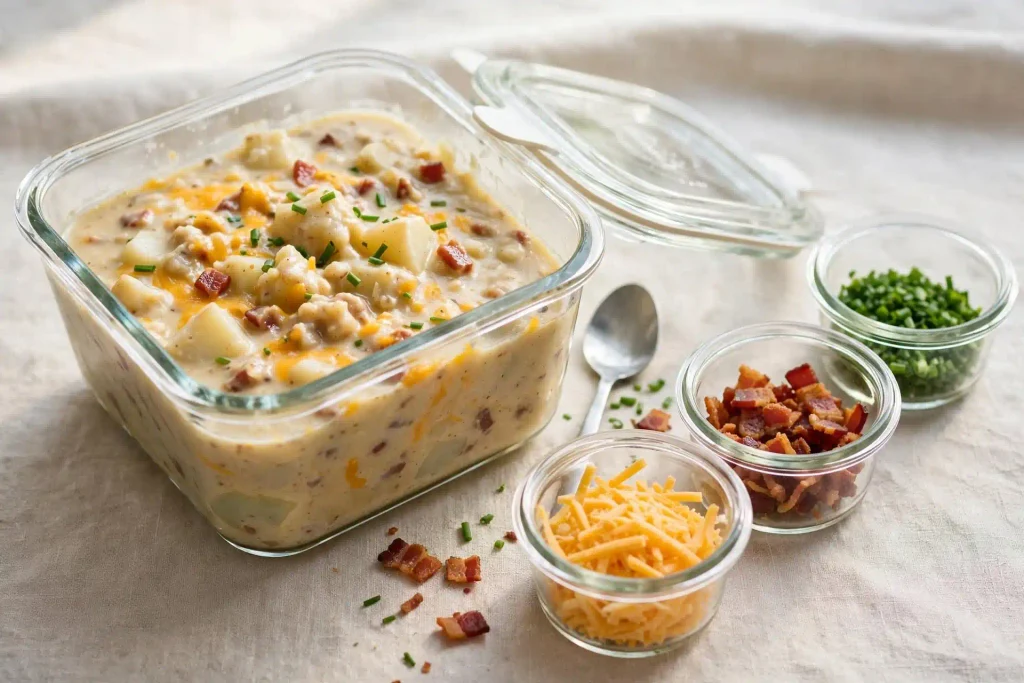
Cool the soup and move it into airtight containers within 2 hours of cooking, following USDA food safety guidance. It keeps in the refrigerator for 4 days. Reheat gently over low heat, stirring often, until it reaches 165°F, adding a splash of milk if it has thickened. Skip the microwave at full power, which can scorch the edges.
Freezer verdict: not recommended. Potatoes turn grainy after freezing and the dairy separates when thawed. If you must, freeze the base before adding sour cream and cheddar, then finish it fresh.
Variations and Substitutions
- Spicy: Add 1/4 teaspoon cayenne with the paprika, or top with pickled jalapeños.
- Mild and kid friendly: Skip the paprika, use mild cheddar, and mash the soup fully smooth.
- Vegetarian: Use vegetable broth. The recipe is otherwise already meatless.
- Gluten free: Swap the flour for the cornstarch slurry described in the allergen section.
- Heartier: Stir in 2 cups of shredded cooked chicken after the potatoes finish simmering.
Serving Suggestions
A thick slab of toasted bread suits the soup well (see [internal link: crusty bread recipe]). For something fresh next to the rich bowl, a salad with a sharp lemon dressing cuts through the cheese ([internal link: side salad ideas]). Sparkling water with lime or cold iced tea work as drinks. For a party, set out bowls of the cheddar, scallions, sour cream, and shallots and let everyone build their own.
You may also like: cheeseburger soup
FAQ
Can I make loaded baked potato soup ahead of time?
Yes, and it holds well for 4 days in the refrigerator. Cook it through step 10 but wait on the toppings, then reheat gently to 165°F while stirring. The soup tightens in the cold, so keep some milk handy to thin it. Fresh scallions and shallots go on at serving time.
Why did my potato soup turn out gummy?
Blending or over mashing is almost always the cause. Starch granules burst when overworked and release a sticky gel. Mash by hand and stop while chunks remain. If you already blended it, adding a few fresh baked potato pieces and a little warm milk brings back some texture.
Can I use Yukon Gold potatoes instead of russets?
You can, with a small change in result. Yukon Golds hold more moisture, so the soup is denser and more buttery, with less of the fluffy baked potato effect. Bake them the same way and reduce the broth by a quarter cup, since waxy potatoes release less starch to thicken the pot.
How do I know when the soup is thick enough?
Dip a spoon and run a finger across the back. A clean line that holds means it is ready. The soup keeps thickening as it cools, so stop a touch looser than the texture you want. A splash of milk fixes an overshoot in seconds.
Is this soup safe for gluten free diets?
Not as written, since the roux uses wheat flour. Cornstarch dissolved in cold milk replaces it, and the soup thickens the same way. Check the broth, shallot oil, and cheese labels for added gluten. Cross contact in the kitchen matters too, so use clean tools if that applies to you.
Callout: Warm the Dairy Gently. Sour cream straight from the fridge can curdle when it hits hot liquid. Stir a ladle of soup into the sour cream bowl first, then add the mixture back to the pot.
Conclusion
A good loaded baked potato soup depends on timing more than technique: bake the potatoes long enough to dry them out, let the roux lose its raw edge, and take the pot off the heat before any dairy goes in. Those three habits carry over to nearly every cream based soup you will make this winter. Next time, try roasting a whole head of garlic alongside the potatoes and squeezing it into the base for a mellow sweetness, then see how far the smoked paprika can stretch.

Loaded Baked Potato Soup
Ingredients
Method
- Rub the potatoes with oil and salt and bake at 425°F for 55 to 65 minutes, until a knife slides in easily.
- Fry the shallot rings in the neutral oil over medium heat for 6 to 8 minutes, until dark honey colored. Drain and salt.
- Rest the potatoes 10 minutes, scoop out the flesh, mash coarsely, and chop half the skins.
- Melt the butter, cook the onion 6 to 8 minutes until soft, then add the garlic for 30 seconds.
- Stir in the flour and paprika for 2 minutes until the mixture looks like wet sand.
- Whisk in the broth gradually, then the milk.
- Add the potato and skins and hold at a lazy bubble for 12 to 15 minutes, until the soup coats a spoon.
- Mash a few times in the pot, leaving chunks.
- Remove from the heat for 2 minutes, then stir in the sour cream and add the cheddar by the handful.
- Adjust salt and pepper, thin with milk if needed, and top each bowl.




2 Comments
Comments are closed.