Chicken Stir Fry
Chicken Stir Fry That Isn’t Soggy or Steamed
Most homemade chicken stir fry turns out gray and watery because the pan gets overcrowded, dropping the temperature so fast that everything steams instead of sears. The fix is cooking in batches, giving the chicken and each vegetable enough open space to actually brown, then combining everything only at the very end. This version also velvets the chicken briefly in a cornstarch-egg white mixture, a restaurant technique that keeps the meat tender through high heat instead of turning tough and dry.
Why This Chicken Stir Fry Doesn’t Turn Soggy
Velveting the chicken in a thin cornstarch coating before cooking seals in moisture, so the meat stays tender even after hitting a screaming hot pan, something plain raw chicken can’t do on its own.
Cooking in batches, chicken first, then vegetables, then combining at the end, means the pan never loses enough heat to drop into steaming territory, which is the single biggest reason stir fry turns watery.
A sauce thickened separately with cornstarch slurry, added only in the last minute, clings to the ingredients instead of pooling at the bottom of the pan like a thin, unthickened sauce does.
Cutting vegetables into similar sizes within each type means everything in that batch finishes cooking at roughly the same rate, instead of some pieces turning mushy while others stay raw.
High smoke-point oil, not olive oil, matters more here than people expect, since a lower smoke-point oil starts breaking down and smoking before the pan ever reaches true stir-fry heat.
Quick Information
Prep time: 20 minutes. Cook time: 15 minutes. Total time: 35 minutes. Servings: 4. Difficulty: Easy. Calories: about 380 per serving. The one thing that matters most here is not overcrowding the pan, since that single mistake is behind almost every soggy stir fry. Good for a fast weeknight dinner over rice or noodles.
Ingredients
For the chicken:
- 1.5 lbs boneless, skinless chicken breast or thighs, sliced thin against the grain
- 1 egg white
- 1 tablespoon cornstarch
- 1 tablespoon soy sauce
- 1/2 teaspoon salt
Velveting the chicken in egg white and cornstarch before it ever touches the pan is what keeps thin-sliced chicken from turning rubbery under high heat, a step most home versions skip entirely.
For the vegetables:
- 2 tablespoons high smoke-point oil (avocado or peanut oil), divided
- 1 red bell pepper, sliced into thin strips
- 1 cup broccoli florets, cut small and uniform
- 1 cup snap peas, trimmed
- 1 medium carrot, sliced thin on a diagonal
- 3 cloves garlic, minced
- 1 tablespoon fresh ginger, grated
Slicing the carrot on a diagonal rather than straight across increases the surface area that actually touches the hot pan, which matters since root vegetables need more direct contact to cook through in the short time a stir fry allows.
For the sauce:
- 1/3 cup low-sodium soy sauce
- 2 tablespoons oyster sauce
- 1 tablespoon rice vinegar
- 1 tablespoon honey
- 1/2 cup chicken broth
- 1 tablespoon cornstarch
- 1 tablespoon water
- 2 green onions, sliced, for finishing
- 1 tablespoon sesame seeds, toasted, for finishing
Mixing the cornstarch with water separately before adding it to the sauce avoids the clumping that happens when cornstarch hits hot liquid directly, a mistake that leaves gritty lumps instead of a smooth glaze.
You may also like: honey garlic chicken
Recipe Timing
Prep: 20 minutes. Cook: 15 minutes. Rest: none required. Total: 35 minutes. Servings: 4. Difficulty: Easy. Cuisine: Chinese-American. Course: Main dish.
Allergen and Dietary Disclosure
This recipe contains egg (in the velveting mixture), soy (soy sauce, oyster sauce), and shellfish-adjacent ingredients depending on your oyster sauce brand, check labels since some contain fish derivatives. For an egg-free version, skip the egg white in the velveting step and use cornstarch alone mixed with a splash of water, the texture benefit is slightly less dramatic but still noticeable. For a soy-free version, coconut aminos work in place of soy sauce, though the flavor shifts slightly sweeter, and a soy-free oyster sauce alternative exists in most well-stocked grocery stores.
Equipment Needed
A carbon steel or well-seasoned cast iron wok holds and distributes heat far better than a standard nonstick skillet, which matters more in stir fry than in almost any other cooking method. A fish spatula or wok spatula lets you move food fast without crushing it. A small bowl for the cornstarch slurry, mixing it in advance means it’s ready the moment the sauce needs thickening. Tongs help with turning the chicken in the velveting stage without breaking the coating.
Nutrition Information
Calories: 380 per serving. Protein: 34g. Carbs: 22g. Fat: 16g. Fiber: 3g. Sugar: 9g. Sodium: 980mg. Serving size: about 1.5 cups. Servings per recipe: 4. This dish is a solid lean protein option for the calorie count, though sodium runs higher than average mainly from the soy sauce and oyster sauce combined. These figures are estimates based on standard USDA nutrition data and will shift depending on the exact sauce brands used, not a substitute for a nutrition label or lab analysis.
Why Stir Fry Turns Soggy (And How Batch Cooking Actually Fixes It)
A hot pan loses heat the moment cold or wet food hits it, and the more food you add at once, the more that temperature drops, sometimes by over 100°F in a crowded pan. Once the surface temperature falls below the point needed for a real sear, the food starts releasing its own moisture into the pan instead of browning, and everything ends up simmering in its own liquid rather than searing against hot metal. Cooking the chicken and each vegetable in smaller batches keeps the pan’s surface consistently hot enough that each addition sears on contact instead of dropping the temperature into steaming range.
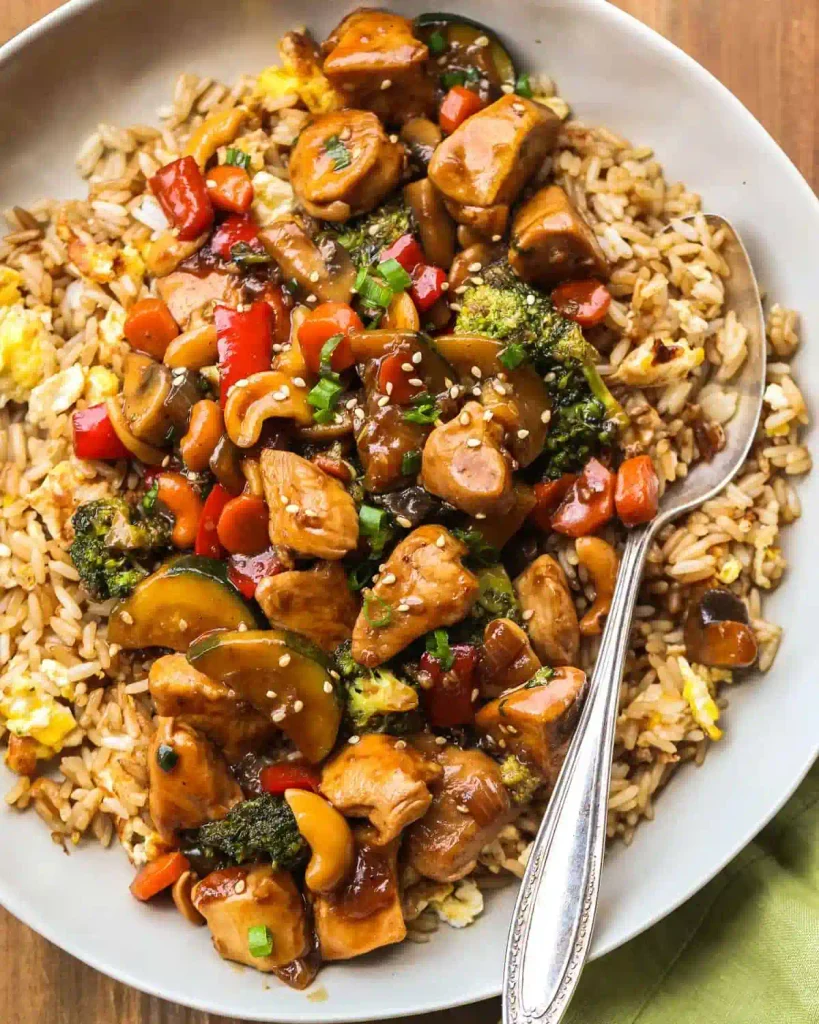
Combining everything back together only in the final minute, once the sauce has thickened, means the vegetables keep their crunch right up until serving instead of sitting in sauce and softening further while the chicken finishes cooking.
Preparation
Slice the chicken thin and against the grain before mixing the velveting ingredients, uneven thickness means some pieces cook through before others. Cut all the vegetables and have them arranged by type near the stove, since stir fry moves too fast to be chopping mid-cook. Mix the sauce ingredients, except the cornstarch slurry, in one bowl, and keep the slurry separate in its own small dish until the final step.
Step-by-Step Method
- Toss the sliced chicken with the egg white, cornstarch, soy sauce, and salt in a bowl, mixing until every piece is evenly coated, then let it sit for 10 minutes while you prep the vegetables.
- Heat 1 tablespoon of oil in the wok over high heat until it shimmers and just starts to show the faintest wisp of smoke, that visual cue matters more than a timer here since stove strength varies.
- Add the chicken in a single layer, resisting the urge to add it all if your pan is on the smaller side, cooking undisturbed for 2 minutes until the bottom turns opaque and lightly golden.
- Flip and cook the second side for another minute, until the chicken is just cooked through with no pink remaining. Because raw poultry was handled here, transfer the cooked chicken to a clean plate rather than the one used for raw meat, and wash any utensils that touched it before reusing them.
- Add the remaining tablespoon of oil to the now-empty wok, then add the carrot and broccoli first, since these take slightly longer to cook than the softer vegetables joining later.
- Stir-fry the carrot and broccoli for about 2 minutes, tossing frequently, until the broccoli turns bright green and the carrot softens just slightly at the edges while staying firm in the center.
- Add the bell pepper and snap peas, continuing to toss for another 2 minutes, until the pepper softens slightly but still holds a visible snap when you bite into a piece.
- Push the vegetables to one side of the wok and add the garlic and ginger directly to the cleared space, letting them cook for about 20 seconds until fragrant before stirring them through everything else.
- Return the cooked chicken to the wok, then pour in the soy sauce, oyster sauce, rice vinegar, honey, and chicken broth mixture, stirring to coat everything evenly.
- Whisk the cornstarch slurry once more to recombine it, since cornstarch settles fast, then pour it into the wok while stirring constantly.
- Let everything cook together for about 1 minute, until the sauce thickens enough to coat the back of a spoon and cling visibly to the chicken and vegetables rather than pooling thin at the bottom.
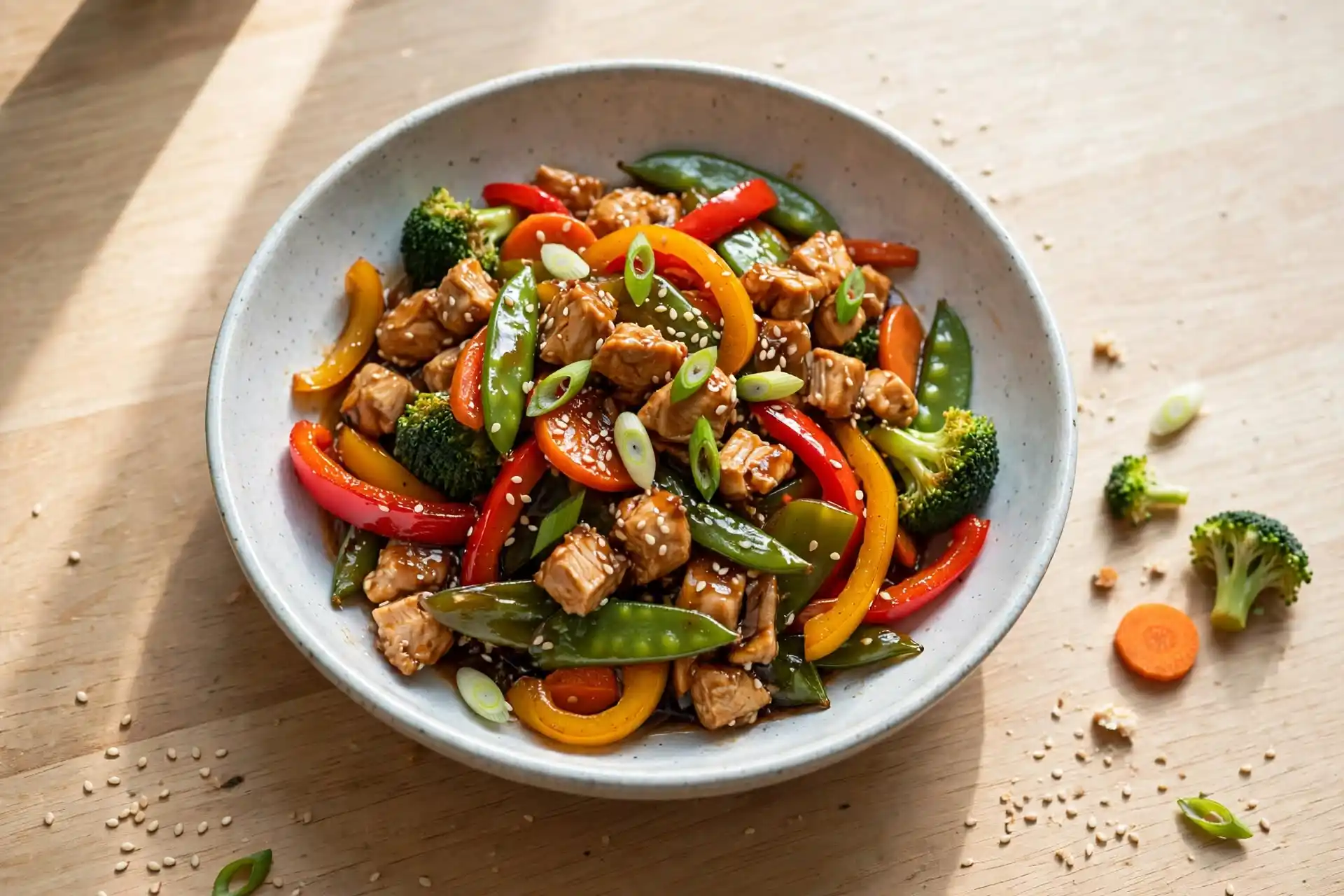
- Remove from heat immediately and scatter the green onions and toasted sesame seeds over the top just before serving.
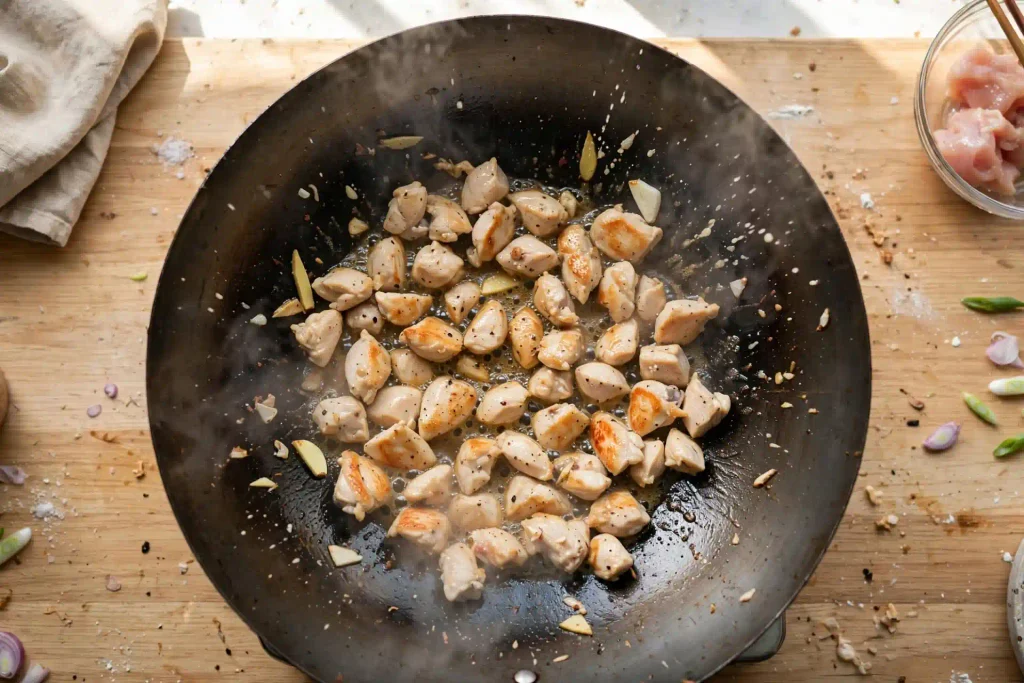
Chef’s Note: If your chicken comes out gray instead of golden, the pan likely wasn’t hot enough, or too much chicken went in at once. Give the oil a full 30 seconds to shimmer and cook in smaller batches if needed.
Chef’s Note: Velveting feels like an extra step for a weeknight dinner, but the texture difference is noticeable enough that it’s worth the 10 minutes, especially with leaner cuts like chicken breast.
Chef’s Note: The step most people skip is pushing vegetables aside to cook the garlic and ginger directly in the pan’s surface. Stirring them in immediately with everything else means they never get direct contact with the heat, losing some of their aromatic punch.
You may also like: turkey meatballs
Expert Tips & Tricks
You can velvet the chicken and prep all the vegetables up to a day ahead, storing them separately in the fridge, then the actual cooking takes under 15 minutes once everything’s ready.
Leftovers keep in an airtight container in the fridge for up to 3 days, though the vegetables lose some crispness, a quick reheat in a hot pan brings back more texture than the microwave does.
If you want more heat, a teaspoon of chili garlic sauce or a few dashes of sriracha stirred into the sauce mixture adds spice without needing fresh chilies on hand.
Using a wok instead of a flat skillet makes a real difference here, since the sloped sides let you push food up and away from the direct heat while keeping other ingredients searing below.
Pre-measuring every sauce ingredient into one bowl before you start cooking means you’re not fumbling with bottles once the pan is already hot and moving fast.
Doubling this recipe works better as two separate batches rather than one large one, since a pan that’s too full defeats the entire point of high, direct heat contact.
Common Mistakes & Troubleshooting
Chicken turns out tough and dry despite short cook time. This usually means the velveting step was skipped or the chicken was sliced too thick. Keep slices thin and let the cornstarch coating sit for the full 10 minutes before cooking.
Vegetables turn soft and watery instead of staying crisp. Almost always caused by overcrowding the pan, which drops the temperature and causes steaming instead of searing. Cook in smaller batches, giving each addition room to actually touch the hot surface.
Sauce stays thin and doesn’t coat anything. This happens when the cornstarch slurry wasn’t added, or was added too early before the pan was hot enough to activate the starch. Whisk the slurry in during the final minute over active heat, stirring until it visibly thickens.
Garlic and ginger taste burnt and bitter. The pan is usually too hot when these go in directly, or they’re left too long before the sauce follows. Push vegetables aside, add garlic and ginger for just 20 seconds, then stir everything together quickly.
Dish tastes flat despite all the sauce ingredients. Salt and umami get diluted across a large volume of vegetables and chicken, so taste the finished dish before adding extra soy sauce at the table, the oyster sauce often carries more seasoning than expected.
Honest Trade-Off
Velveting the chicken and cooking everything in batches takes a bit more active attention than dumping everything into one pan at once and stirring until it looks done. The one-pan method is faster and uses less cleanup, it just risks the gray, steamed texture that comes from overcrowding and skipping the protein-coating step. Someone who wants dinner on the table in 20 minutes flat with minimal fuss might skip the velveting; someone chasing a texture closer to takeout should take the extra steps.
Storage & Make-Ahead
Refrigerate leftovers in an airtight container for up to 3 days. Reheat in a hot skillet or wok over medium-high heat rather than the microwave, which tends to soften the vegetables further and leave the chicken slightly rubbery.
Freezing isn’t recommended here, since the vegetables lose their crisp texture almost entirely once thawed, turning soft and watery in a way reheating can’t fix.
Variations & Substitutions
For a spicier version, add 1 to 2 teaspoons of chili garlic sauce to the sauce mixture, or toss in sliced fresh red chilies with the garlic and ginger.
For a milder, kid-friendly version, skip the oyster sauce’s stronger flavor profile and replace it with an extra tablespoon of soy sauce plus a touch more honey.
For a vegetarian version, swap the chicken for extra-firm tofu, pressed and cubed, pan-fried separately until golden, and use vegetable broth in place of chicken broth.
For a lower-sodium version, use low-sodium soy sauce throughout and cut the oyster sauce amount in half, adding a bit more honey to maintain balance.
Serving Suggestions
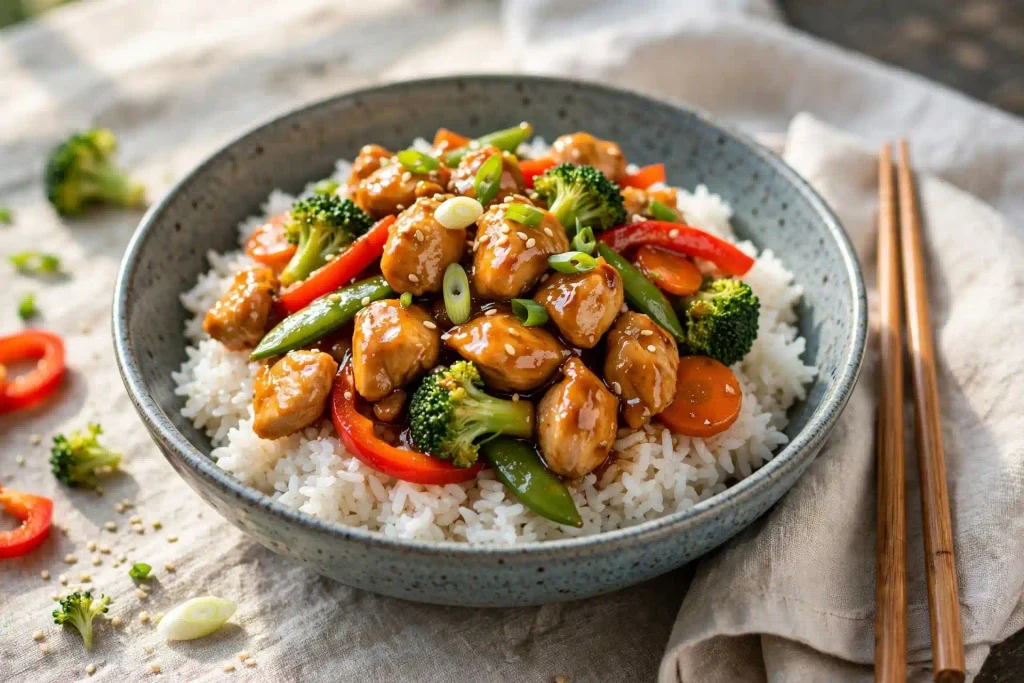
Steamed jasmine rice is the classic pairing, soaking up the sauce without competing with the dish’s flavors. Lo mein or rice noodles work well as an alternative base if you want something heartier than plain rice. A simple cucumber salad with rice vinegar on the side adds a cool, acidic contrast to the warm stir fry. For drinks, iced green tea complements the ginger and garlic without adding competing sweetness.
You may also like: butter chicken
FAQ
Can I make chicken stir fry ahead of time?
You can velvet the chicken and prep all the vegetables up to a day ahead, storing everything separately in the fridge, then the actual cooking takes under 15 minutes. Making the full dish ahead and reheating works less well, since the vegetables lose crispness even with careful storage.
Why does my chicken stir fry always turn watery?
This almost always comes down to overcrowding the pan, which drops the temperature enough that food steams instead of sears. Cook the chicken and vegetables in smaller batches, giving each addition enough open space to actually brown on contact with the hot surface.
Can I use chicken thighs instead of chicken breast?
Yes, thighs hold up well to the quick, high heat of stir frying and tend to stay slightly more tender than breast meat even without the velveting step, though velveting still helps either cut. Slice thighs the same thin way against the grain for even cooking.
How do I know when the chicken is fully cooked?
Look for the chicken to turn fully opaque with no pink remaining, usually within about 3 minutes total given how thin the slices are. Cutting into the thickest piece to check is the most reliable way, since color alone can be slightly misleading on thin-sliced meat.
Is this recipe safe for someone with a soy allergy?
As written, no, it contains soy sauce and oyster sauce, both of which typically include soy. Coconut aminos work as a substitute for the soy sauce, and a soy-free oyster sauce alternative is available at most well-stocked grocery stores, though the flavor shifts slightly sweeter either way.
One Thing Worth Remembering
The pan’s heat is the one variable that decides almost everything else about how this dish turns out, more than any specific sauce ratio or vegetable choice. Keep it hot by cooking in batches, and both the chicken and vegetables sear instead of steam, holding their texture through to the plate. Crowd the pan even once, and the whole dish drops into the soggy, gray territory that takeout somehow always avoids and homemade versions usually don’t.
Chicken Stir Fry
Ingredients
Method
- Toss chicken with egg white, cornstarch, soy sauce, and salt; rest 10 minutes.
- Sear chicken in hot oil, 2 minutes per side, until cooked through.
- Transfer chicken to a clean plate.
- Stir-fry carrot and broccoli in remaining oil, 2 minutes.
- Add bell pepper and snap peas, cook 2 more minutes.
- Push vegetables aside, cook garlic and ginger 20 seconds.
- Return chicken to wok, add sauce ingredients (except slurry).
- Whisk cornstarch slurry, stir into wok, cook 1 minute until thickened.
- Remove from heat, top with green onions and sesame seeds.
One Comment
Comments are closed.