Beef Stew (One-Pot Method With a Dark Roux Base for Deeper Flavor)
The broth is where most beef stew recipes cut corners, relying on stock alone to carry the flavor while the meat gets all the attention. This version flips that: a roux browned in the same pot used for searing the beef becomes the base of the broth, giving it a deeper color and a slightly nutty backbone that plain stock never develops on its own. Paired with a longer, gentler braise and potatoes added late enough to keep their shape, this produces a stew with a genuinely different character from a tomato-forward version, even using nearly the same ingredient list.
Why a Roux-Based Broth Changes Everything Here
Browning the flour in fat before adding any liquid gives the broth a warm, toasted color close to French onion soup, rather than the thinner, paler look of a cornstarch-thickened stew.
Because the roux thickens the broth on its own, this version skips tomato paste entirely, leaving a cleaner, more purely savory flavor that lets the beef and mushrooms lead.
Adding a splash of apple cider vinegar right before serving lifts the whole pot without anyone identifying exactly what changed, cutting through the richness the roux builds up.
Mushrooms go in raw with the onions instead of being sautéed separately first, so they simmer directly in the broth for hours and pick up far more of its flavor than a quick sauté would allow.
This method uses one pot start to finish, no transferring between a skillet and a slow cooker or Dutch oven, which matters if you’re trying to keep the cleanup down to a single dish.
Quick Snapshot
- Prep time: 20 minutes
- Cook time: 2 hours 20 minutes
- Total time: 2 hours 40 minutes
- Servings: 6
- Difficulty: Moderate
- Calories per serving: 465
- Ingredient that matters most: All-purpose flour, browned properly before any liquid goes in
- Best for: Sunday dinners where you have the pot on the stove most of the afternoon anyway
Ingredients
For the beef
Chuck roast holds up through a long braise better than any leaner cut, since its connective tissue needs time and moisture to break down into something tender.
- 3 pounds chuck roast, trimmed and cut into 1½-inch cubes
- 1½ teaspoons salt
- ½ teaspoon black pepper
- 3 tablespoons vegetable oil, divided
For the roux and broth
- ¼ cup all-purpose flour
- 2 tablespoons unsalted butter
- 1 large yellow onion, diced
- 8 ounces cremini mushrooms, quartered
- 3 cloves garlic, minced
- 5 cups beef stock
- 2 bay leaves
- 1 teaspoon dried thyme
- 1 teaspoon smoked paprika
For the vegetables
- 4 medium carrots, cut into 1-inch chunks
- 1½ pounds baby potatoes, halved
- 1 tablespoon apple cider vinegar
- Fresh parsley, chopped, for garnish
If cremini mushrooms aren’t available, white button mushrooms work fine, though the broth will taste a touch milder without their deeper flavor. Baby potatoes can be swapped for cubed Yukon golds, just watch them closely near the end since larger cut pieces need slightly more time to soften.
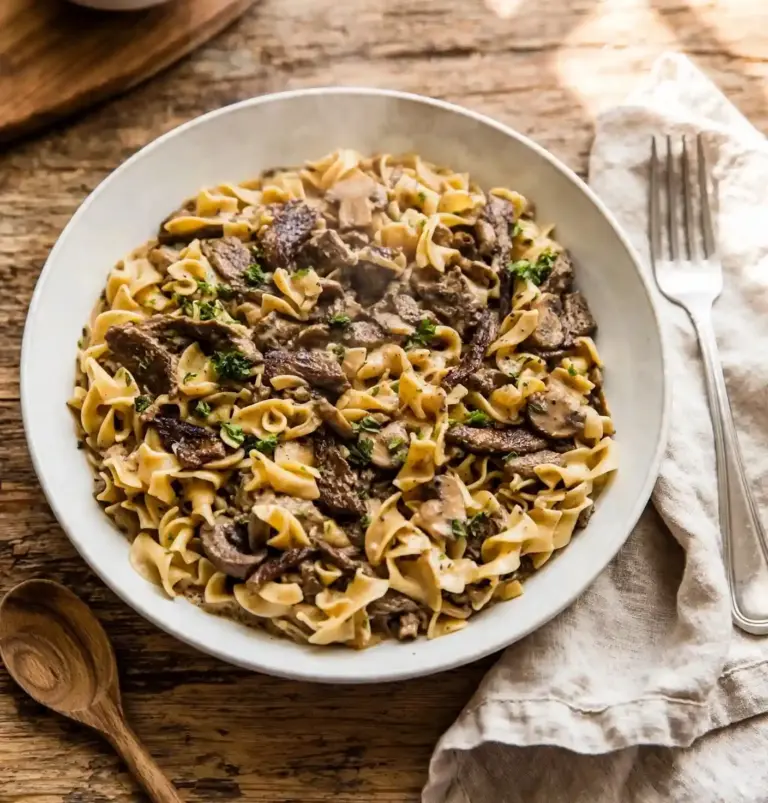
You may also like: beef stroganoff
Recipe Timing
- Prep time: 20 minutes
- Cook time: 2 hours 20 minutes
- Rest time: 0 minutes
- Total time: 2 hours 40 minutes
- Servings: 6
- Difficulty: Moderate
- Cuisine: American
- Course: Main dish
Allergen Disclosure
This recipe contains gluten from the flour used in the roux and butter, which contains dairy. For a gluten-free version, replace the flour roux with 3 tablespoons of cornstarch whisked with cold water and stirred in after the vegetables are added instead of at the start. For a dairy-free version, use a neutral oil in place of the butter for the roux.
Equipment Needed
- A heavy-bottomed Dutch oven, since even heat is essential for browning the roux without scorching it
- A whisk, specifically for smoothing the roux into the stock without lumps
- Tongs for handling the beef during searing
- A wooden spoon that can reach into the corners of the pot while browning the flour
The whisk matters more than it seems. A wooden spoon alone tends to leave small flour clumps behind that never fully dissolve once the stock goes in.
Nutrition Information
Per serving: 465 calories, 33g protein, 28g carbohydrates, 21g fat, 3g fiber, 4g sugar, 640mg sodium. These are estimates based on standard USDA nutrient data for chuck roast and the ingredients listed, and will vary with the exact fat trim and stock brand used.
Why Browning the Flour First Actually Builds Flavor
Flour cooked dry or in fat undergoes the same browning reaction responsible for toasted bread and seared meat, developing new flavor compounds that plain, uncooked flour or cornstarch simply don’t have. A roux taken to a light amber color carries a faint nuttiness into the broth that a thickener added at the end can’t replicate, no matter how long the stew simmers afterward.
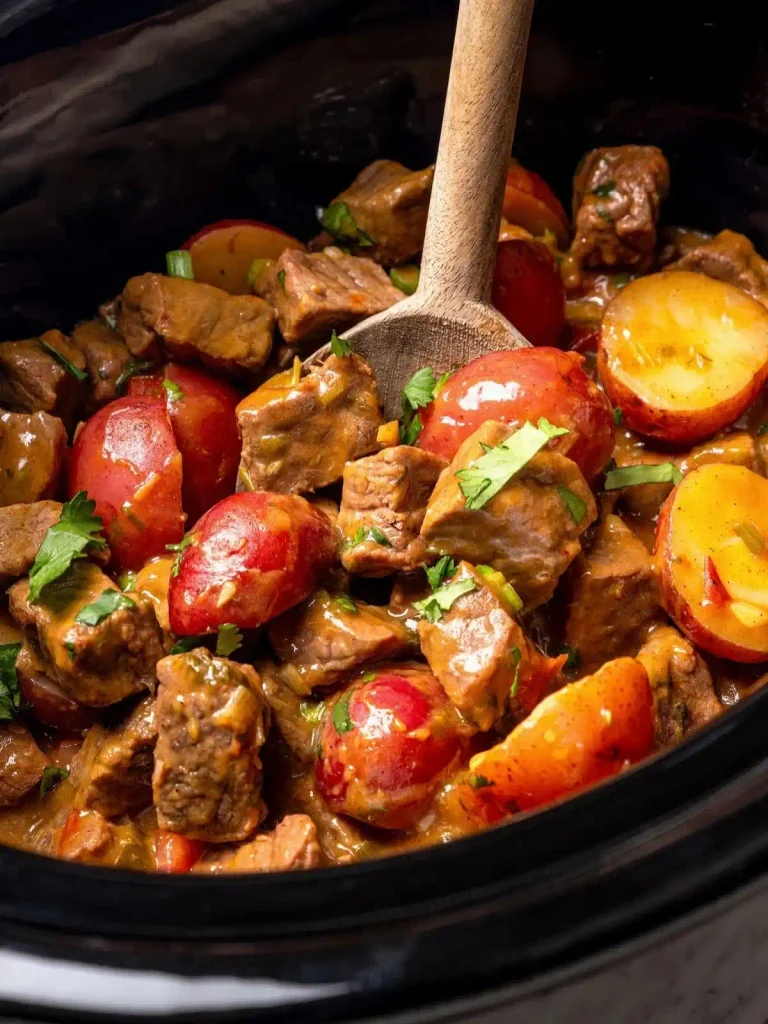
The tradeoff is patience. A roux needs steady, moderate heat and constant attention for several minutes, since it can go from golden to burnt within seconds once it starts to turn.
Preparation
Cut the beef into uniform cubes and pat each piece completely dry, since wet meat drops the pan’s temperature and steams instead of browning. Measure out the flour and have your butter ready beside the stove, since the roux step moves fast once it starts and there’s no time to go hunting for ingredients mid-stir.
Step-by-Step Method
1. Season the beef cubes generously with salt and pepper. Heat 2 tablespoons of oil in the Dutch oven over medium-high heat until it ripples across the surface, a sign it’s hot enough to sear rather than steam the meat.
2. Working in two or three batches, add the beef in a single layer without crowding, searing about 2 minutes per side until a deep brown crust forms. Crowded pieces trap steam between them and never develop that crust no matter how long they cook.
Chef’s Note: Listen for the sizzle. A quiet pan means the temperature dropped too far, and you should pause and let it reheat before adding the next batch.
3. Transfer each seared batch to a plate and continue until all the beef is browned, adding the last tablespoon of oil only if the pot has gone dry. Leave every browned bit stuck to the bottom exactly where it is; it dissolves into the broth later and carries most of the flavor.
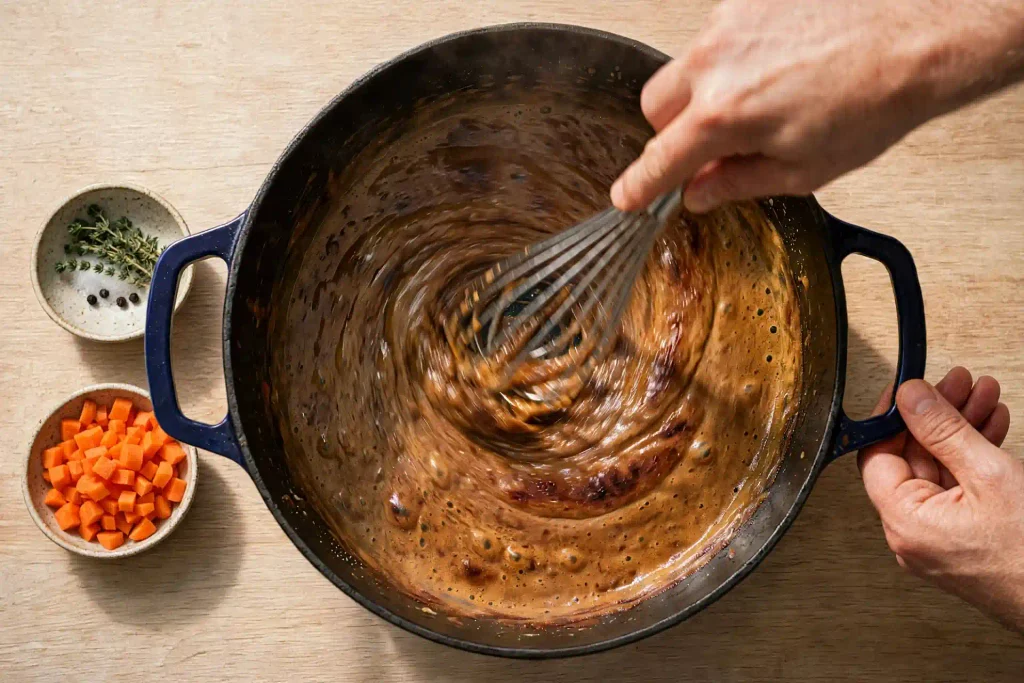
4. Reduce the heat to medium and melt the butter into the drippings left in the pot. Once melted, sprinkle in the flour and whisk constantly, scraping the bottom the whole time so nothing sticks and burns in one spot.
5. Continue whisking for 4 to 5 minutes until the roux turns a light amber, close to the color of peanut butter, and smells toasted rather than raw and pasty. Pull it off the heat immediately once it hits that color, since a roux this thin darkens fast and can burn within seconds of looking right.
6. Add the diced onion and quartered mushrooms directly to the roux, stirring to coat them, then cook for about 3 minutes until the onion starts to soften slightly. The vegetables will absorb some of the roux at this stage, which is intentional and helps distribute the thickening evenly through the finished broth.
7. Stir in the garlic and cook for 30 seconds, just until fragrant, then slowly pour in the beef stock while whisking constantly to prevent lumps from forming. Add the bay leaves, thyme, and smoked paprika, then return the browned beef and any collected juices to the pot.
Food safety note: Beef needs to reach at least 145°F internally, a threshold this stew clears well before the meat becomes tender, since the long braise carries it far past that point.
8. Bring the pot to a gentle simmer, just a slow bubble breaking the surface here and there, then cover with the lid slightly ajar. Hold that same low simmer for 2 hours, checking every 30 minutes to make sure the heat hasn’t crept up toward a boil.
Chef’s Note: If the broth ever looks like it’s boiling hard rather than gently bubbling, drop the heat immediately. An aggressive boil toughens the beef even after two hours of otherwise correct cooking.
9. After 2 hours, check a piece of beef for tenderness; it should pull apart with almost no resistance from a fork. If any pieces still feel firm, give the pot another 15 to 20 minutes before adding the vegetables.
10. Add the carrots and potatoes, pushing them down into the liquid so they’re mostly submerged, then continue simmering uncovered for 30 to 35 minutes until a knife slides through the potatoes easily. Uncovering at this stage lets some of the broth reduce slightly while the vegetables finish cooking.
11. Remove the pot from heat, discard the bay leaves, and stir in the apple cider vinegar. Taste and adjust the salt, then ladle into bowls and top with chopped parsley.
Expert Tips
- Make-ahead: This stew improves noticeably overnight, once the roux-based broth has had time to fully meld with the beef and vegetables. Making it the day before serving is a genuine upgrade, not a compromise.
- Storage: Keeps refrigerated for up to 4 days, and freezes well for up to 3 months, though potatoes lose a bit of their firm texture after thawing.
- Watch the roux closely during its 4 to 5 minutes of cooking; walking away even briefly is the most common way it goes from perfectly toasted to bitter and burnt.
- If the broth ends up thinner than you’d like after the full braise, a small separate roux made with a tablespoon each of butter and flour can be whisked in during the last 15 minutes to thicken it further.
- Quartering the mushrooms instead of slicing them keeps a meatier bite once they’ve simmered for two hours, since thin slices tend to disintegrate by the end.
- Skip stirring the pot too often during the low simmer. Stirring breaks down the potatoes and carrots faster than the gentle heat alone would.
Callout box: A roux this thin (equal-ish parts fat and flour by volume) cooks faster and burns more easily than a thicker roux used for gumbo, so don’t walk away from the stove during this step even for a minute.
You may also like: mississippi pot roast
Common Mistakes and How to Fix Them
Roux turns bitter or tastes burnt. The heat was too high, or it cooked past the amber stage before being pulled off. Start over with fresh butter and flour rather than trying to mask a burnt roux with more stock.
Broth stays thin despite the roux. This usually means the roux wasn’t cooked long enough to fully activate its thickening power, or too much stock was added too quickly. A quick fix is a small cornstarch slurry whisked in at the end.
Beef still tough after the full 2 hours. The simmer likely ran too hot, closer to a boil than a gentle bubble. Lower the heat and extend the time rather than trying to force tenderness with higher heat.
Potatoes falling apart into the broth. They went in too early, before the beef finished its full braise. Wait until the meat is nearly fork-tender before adding the potatoes and carrots.
Stew tastes flat despite all the ingredients. This often traces back to skipping the apple cider vinegar at the end, which balances the richness the roux adds. A small splash right before serving usually fixes it without needing more salt.
Callout box: If your stew looks a little greasy on top after cooking, skim it with a large spoon before serving. Some fat renders out of the chuck during the long braise and floats to the surface, and it’s easy to remove.
Honest Trade-Off
This roux-based method takes closer attention during one specific 5-minute window than a stew thickened at the end with cornstarch or flour slurry. If you’re not confident watching a roux without burning it, a slurry added near the finish is a safer, nearly foolproof alternative, just with a slightly thinner broth and less depth of flavor. Anyone who’s had a properly browned roux in a stew before will notice what’s missing without it, but for a first attempt at beef stew, the simpler thickening method is a reasonable place to start.
Storage and Make-Ahead
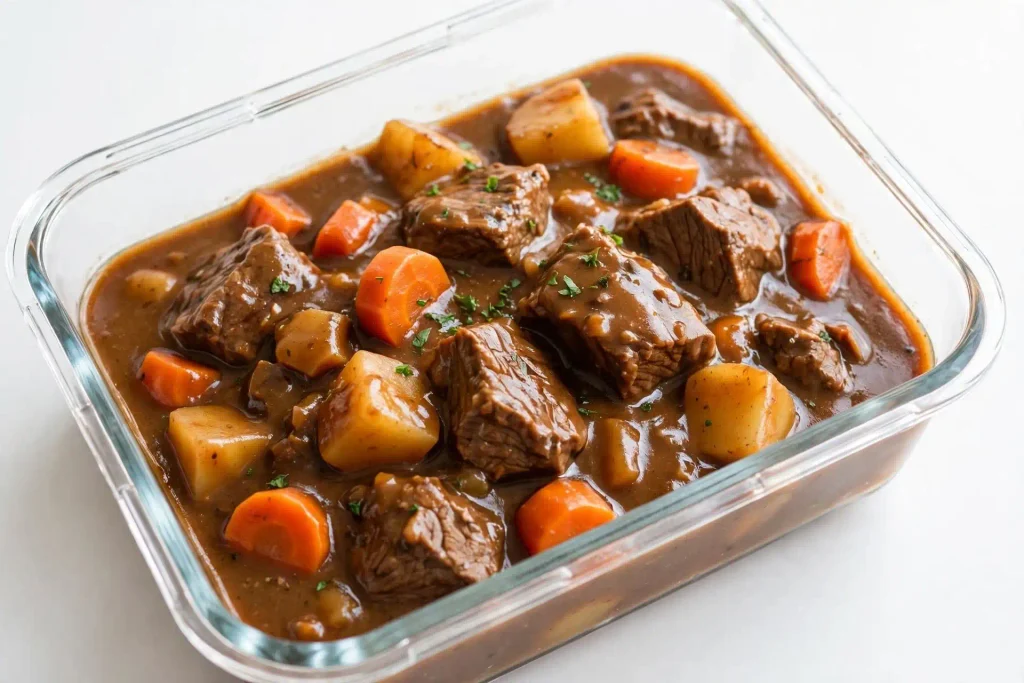
Store cooled stew in an airtight container in the fridge for up to 4 days, and the broth generally holds its texture slightly better than a tomato-based version over that time. Freeze in portioned containers for up to 3 months, leaving room at the top since the liquid expands. Thaw overnight in the fridge and reheat gently on the stovetop, whisking in a splash of stock if the roux-thickened broth has stiffened up too much after freezing.
Variations
Herb-forward version:
Add a sprig of fresh rosemary along with the thyme for a more aromatic, slightly piney background note that pairs well with the roux’s toasted flavor.
Root vegetable version:
Swap half the potatoes for parsnips or rutabaga, added at the same late stage, for a stew with a bit more earthy sweetness.
Lighter roux version:
Cut the flour and butter in the roux by half and rely more on the beef stock’s natural body for thickness, resulting in a noticeably lighter, more brothy stew.
Extra-mushroom version:
Double the mushrooms and add a handful of dried porcini, rehydrated in warm water first, for a much deeper, earthier broth.
Serving Suggestions
This stew’s richer, roux-thickened broth pairs especially well with a thick slice of crusty bread for soaking up every last bit. A simple arugula salad with lemon vinaigrette cuts through the richness nicely if you want something bright alongside it. Buttered egg noodles underneath a ladle of stew turn this into an even heartier plate for a cold evening.
You may also like: beef and broccoli
Frequently Asked Questions
Can I skip the roux and just use cornstarch to thicken beef stew instead?
Yes, cornstarch works as a thickener, but it won’t add the toasted, slightly nutty flavor a browned roux contributes to the broth. If you go this route, whisk a tablespoon of cornstarch into cold water first, then stir it in during the last 15 minutes of cooking.
Why did my roux turn bitter?
The flour cooked too long or at too high a heat, pushing it past the light amber stage into a burnt taste that can’t be fixed once it happens. Keep the heat at medium, whisk constantly, and pull the roux the moment it smells toasted rather than waiting for a darker color.
What can I substitute for chuck roast in this beef stew?
Bottom round or brisket both work, though either typically needs closer to 3 hours of simmering to reach the same tenderness as chuck, since they carry less marbling and connective tissue. Pre-cut stew meat from the store is convenient but often mixes several different cuts, which cook unevenly next to each other.
How do I know the potatoes are done without overcooking them into mush?
A knife should slide into a potato chunk with barely any resistance, similar to pressing into softened butter, while still holding its shape when lifted on a spoon. Checking at the 30-minute mark rather than waiting the full 35 gives you a chance to catch them right before they go soft.
Is this stew safe to eat if I reheated it from frozen?
Yes, as long as it was thawed in the refrigerator rather than left out at room temperature, based on standard USDA guidance for reheating cooked beef dishes. Bring it to a full simmer on the stovetop when reheating, not just a light warm-through, especially after a longer freezer stay.
The roux is really the one part of this recipe that rewards standing still and paying attention instead of walking away to do something else. Everything after that, the long simmer and the late vegetables, mostly takes care of itself with just occasional checking. Once that broth turns the right shade of brown, the rest of the stew tends to fall into place on its own terms.
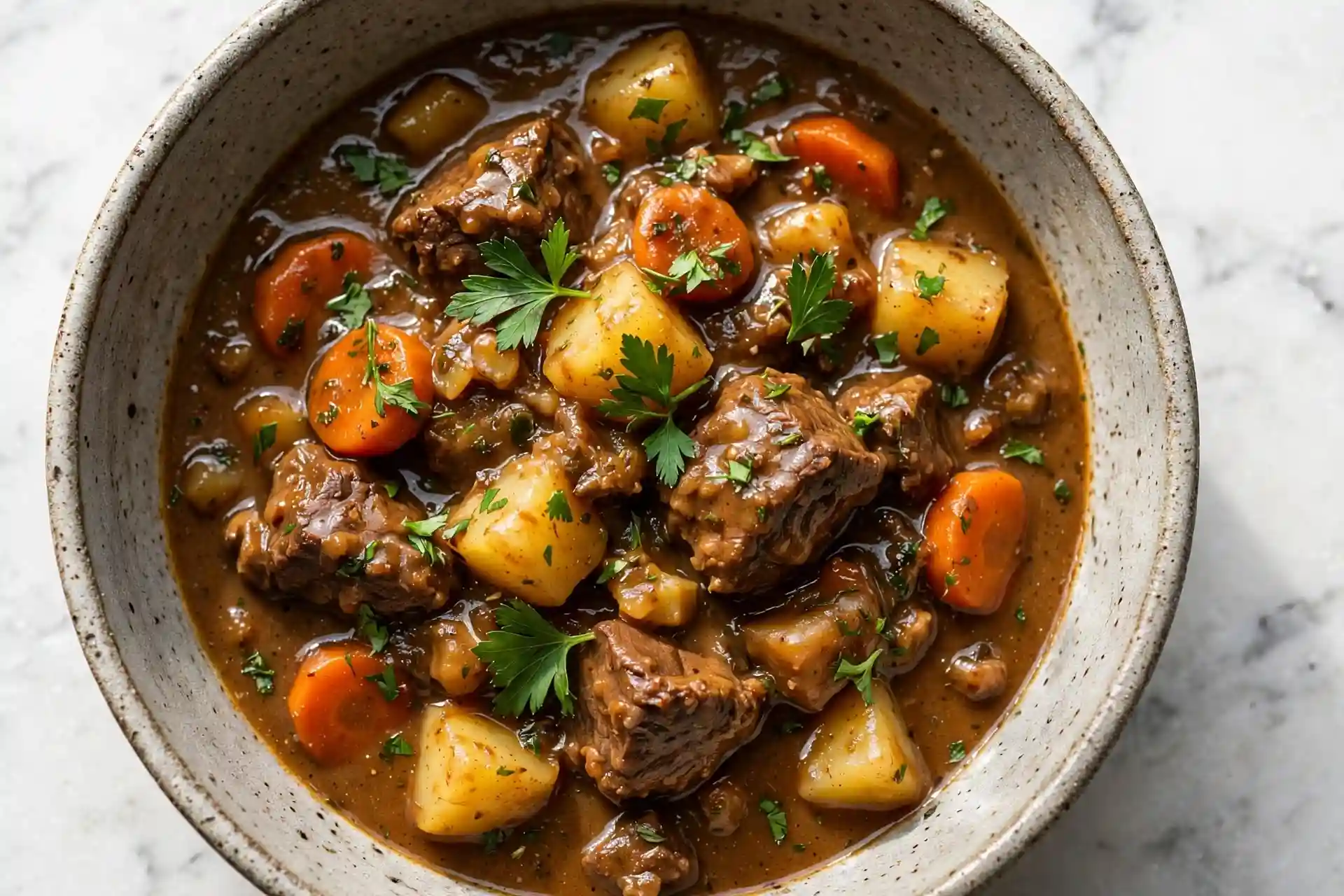
Beef Stew (Roux-Based Broth)
Ingredients
Method
- Season beef; sear in batches until browned. Set aside.
- Melt butter into drippings; whisk in flour and cook 4-5 minutes until amber.
- Add onion and mushrooms; cook 3 minutes.
- Stir in garlic, then whisk in stock gradually. Add bay leaves, thyme, paprika, and beef.
- Simmer gently, lid ajar, 2 hours until beef is fork-tender.
- Add carrots and potatoes; simmer uncovered 30-35 minutes.
- Remove from heat, discard bay leaves, stir in vinegar.
- Season to taste and serve.





2 Comments
Comments are closed.