Turkey Meatballs
Turkey Meatballs That Don’t Turn Out Dry and Rubbery
Turkey is lean enough that meatballs made from it alone often turn out dry and tight by the time they’re fully cooked through. The fix isn’t more sauce to mask it, it’s a proper panade, a bread-and-milk mixture worked into the meat before anything else goes in, which holds moisture through the whole cook. This version also browns the meatballs in a skillet before finishing them in sauce, giving you real texture on the outside instead of a pale, boiled-looking surface.
Why These Turkey Meatballs Stay Juicy
The panade of torn bread soaked in milk works moisture directly into the meat mixture, something ground turkey needs more than beef does since it has so little fat of its own.
Using a mix of ground turkey thigh and breast, rather than all breast meat, keeps some natural fat in the mixture without needing extra oil mixed in by hand.
Grated Parmesan does double duty here, adding savory depth while its slight saltiness means you can use less added salt without the meatballs tasting flat.
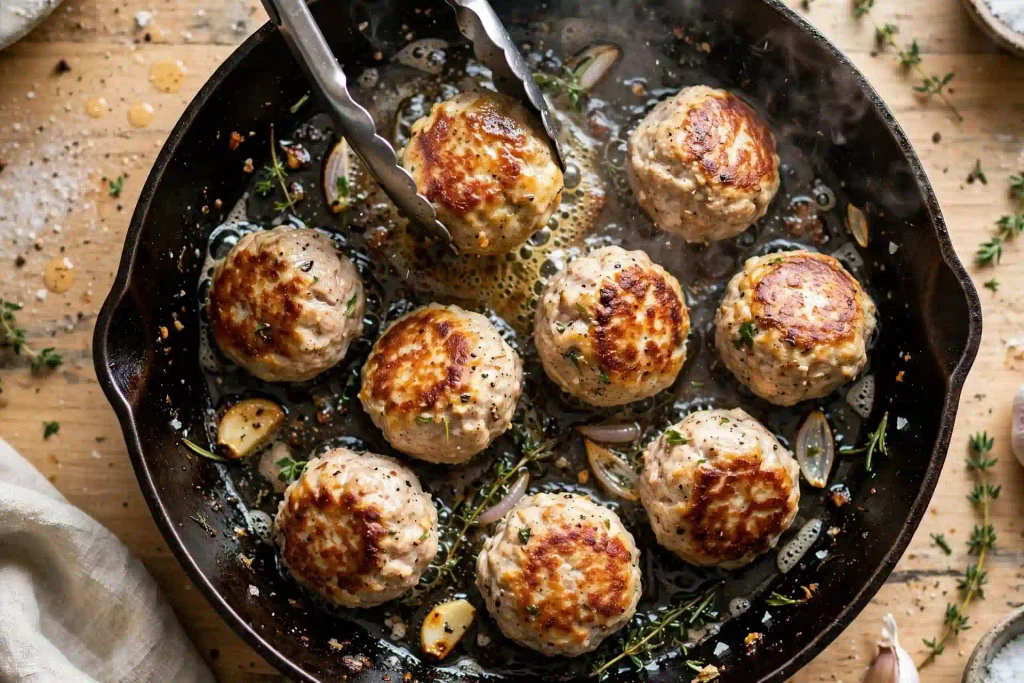
Searing the meatballs in a hot skillet before they ever touch the sauce locks in a browned crust that holds up through a 20-minute simmer, unlike meatballs dropped raw into sauce.
A rest of just 5 minutes after mixing lets the bread fully absorb the milk, making the mixture easier to shape and less likely to fall apart during cooking.
Quick Information
Prep time: 20 minutes. Cook time: 30 minutes. Total time: 50 minutes. Servings: 4 (about 20 meatballs). Difficulty: Easy. Calories: about 320 per serving. The one thing that matters most here is the panade, since skipping it is the single biggest reason turkey meatballs turn out dry. Good for pasta night, meatball subs, or served over polenta.
Ingredients
For the meatballs:
- 1 lb ground turkey thigh
- 1/2 lb ground turkey breast
- 2 slices white sandwich bread, crusts removed, torn into small pieces
- 1/3 cup whole milk
- 1/2 cup grated Parmesan
- 1 large egg
- 2 cloves garlic, minced
- 2 tablespoons fresh parsley, chopped
- 1 teaspoon salt
- 1/2 teaspoon black pepper
- 2 tablespoons olive oil, for searing
Mixing thigh and breast meat together solves the dryness problem at the source, since thigh meat carries enough fat on its own that you’re not relying entirely on the panade to compensate.
For the sauce:
- 1 jar (24 oz) marinara sauce, or homemade equivalent
- 1/4 cup fresh basil, torn, for finishing
Torn bread works into the mixture more evenly than breadcrumbs do, since breadcrumbs tend to clump instead of dissolving fully into the milk before you fold it into the meat.
You may also like: swedish meatballs
Recipe Timing
Prep: 20 minutes. Cook: 30 minutes. Rest: 5 minutes. Total: 55 minutes. Servings: 4. Difficulty: Easy. Cuisine: Italian-American. Course: Main dish.
Allergen and Dietary Disclosure
This recipe contains dairy (milk, Parmesan), egg, and gluten (bread). For a dairy-free version, unsweetened almond milk works in place of the whole milk in the panade, and the Parmesan can be left out entirely with a small increase in salt to compensate. For gluten-free, a gluten-free sandwich bread works the same way in the panade, torn and soaked exactly as the recipe describes.
Equipment Needed
A large, heavy skillet holds steady heat for searing, a thin pan loses heat too fast once the meatballs go in and they end up steaming instead of browning. A baking sheet or large plate for holding the shaped meatballs before cooking. A small whisk for breaking up the egg before it’s folded into the mixture. A kitchen scale helps if you want evenly sized meatballs that cook at the same rate, though a tablespoon scoop works fine without one.
Nutrition Information
Calories: 320 per serving. Protein: 28g. Carbs: 16g. Fat: 17g. Fiber: 2g. Sugar: 6g. Sodium: 780mg. Serving size: about 5 meatballs with sauce. Servings per recipe: 4. This dish is a solid lean protein option for the calorie count, mostly from the turkey itself. These figures are estimates based on standard USDA nutrition data and will shift depending on the exact marinara brand used, not a substitute for a nutrition label or lab analysis.
Why Turkey Meatballs Turn Out Dry (And How the Panade Actually Fixes It)
Ground turkey, especially breast meat, contains very little intramuscular fat compared to ground beef or pork, so as it cooks, the proteins tighten and squeeze out what little moisture is there, leaving a dense, rubbery texture behind. A panade works against this by introducing starch from the bread, which absorbs liquid and holds onto it even as the proteins around it contract during cooking. That’s the same reason meatloaf recipes almost always include a bread-and-milk mixture, and it matters even more here since turkey has less fat to fall back on than beef does.
Searing the meatballs before they hit the sauce adds a second layer of protection against dryness, since the browned crust seals in moisture that would otherwise escape directly into the simmering liquid.
Preparation
Tear the bread into small pieces and place them in a wide bowl, pouring the milk over the top so it has time to soak while you prep everything else. Mince the garlic and chop the parsley. Bring the ground turkey out of the fridge about 10 minutes before mixing, since working with ice-cold meat makes the mixture harder to combine evenly.
Step-by-Step Method
- Let the torn bread sit in the milk for about 5 minutes, pressing it down with a fork once or twice, until it turns into a soft, mashable paste with no dry pockets remaining.
- In a large bowl, combine the ground turkey thigh and breast, the soaked bread mixture, Parmesan, egg, garlic, parsley, salt, and pepper. Because raw poultry is involved here, use a clean utensil or washed hands, and wash your hands immediately after handling the raw mixture.
- Mix everything together using your hands, working just until combined. Overmixing at this stage presses out the fat and air that keep the texture light, so stop the moment you no longer see streaks of egg or loose bread.
- Shape the mixture into meatballs roughly the size of a golf ball, about 2 tablespoons each, placing them on a baking sheet as you go without pressing them too firmly.
- Heat the olive oil in a large skillet over medium-high until it shimmers, then add the meatballs in a single layer, leaving space between each one so they brown instead of steaming.
- Sear for about 3 minutes per side, rotating until most sides show a deep golden-brown crust. The centers will still be raw at this point, that’s expected since the sauce finishes the cooking.
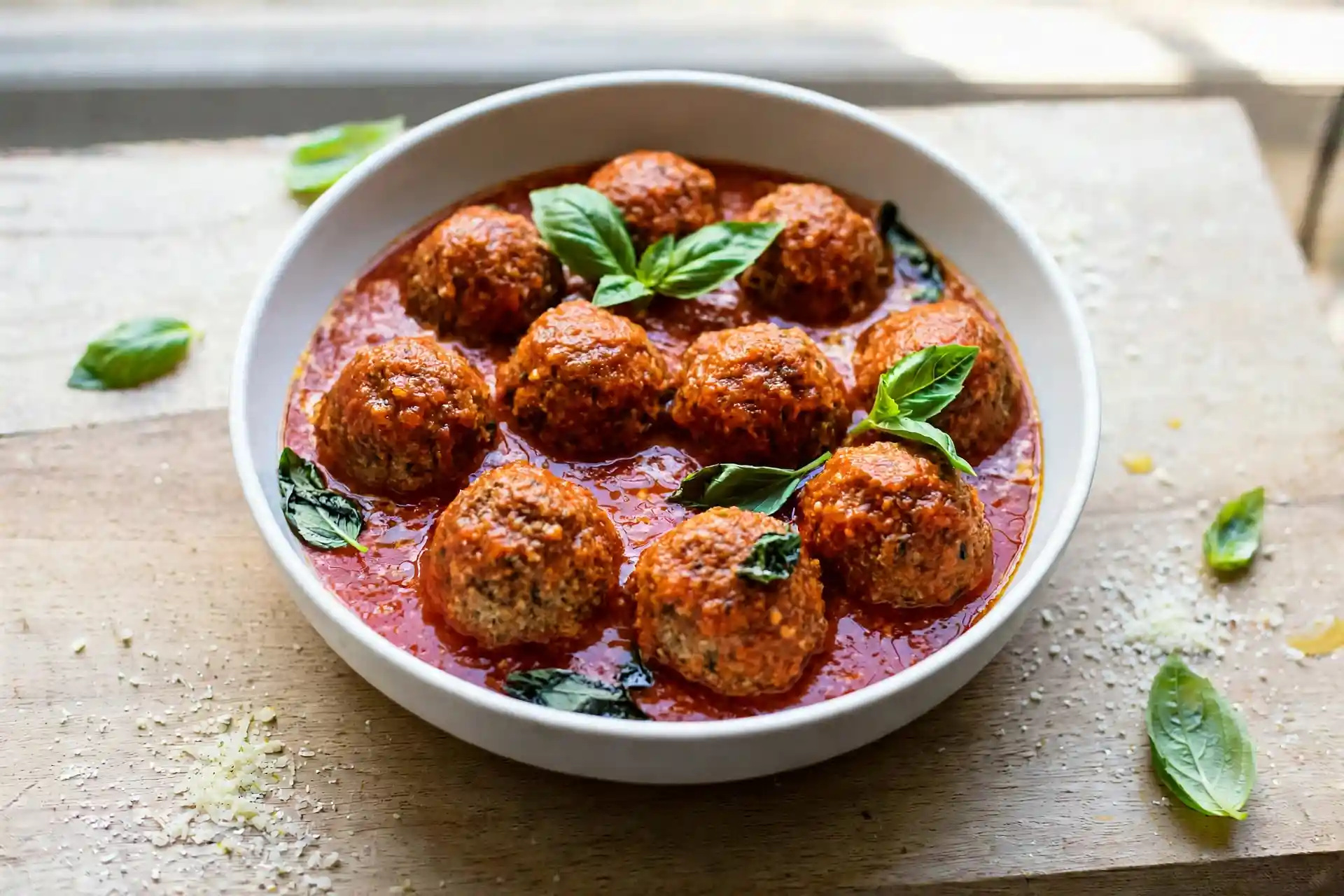
- Pour the marinara sauce over the meatballs, scraping up any browned bits stuck to the bottom of the skillet as the sauce hits the hot pan.
- Lower the heat to a gentle simmer, cover the skillet, and let the meatballs cook through for 20 minutes, until an instant-read thermometer inserted into the center of one reads 165°F.
- Remove the lid for the last 5 minutes of cooking if the sauce looks thinner than you’d like, letting some liquid cook off while the meatballs finish.
- Scatter the torn basil over the top just before serving, since basil added earlier loses most of its brightness to the heat of the simmer.
Chef’s Note: If your meatballs fall apart during searing, the mixture likely needed more rest time after shaping, or wasn’t mixed quite enough to hold together. A quick 10 minutes in the fridge before cooking firms them up.
Chef’s Note: Using a cookie scoop instead of eyeballing each portion keeps the meatballs a consistent size, which means they finish cooking at the same time instead of some staying raw while others overcook.
Chef’s Note: The step most people skip is searing before saucing. It adds a few minutes, but meatballs dropped raw into simmering sauce never develop the same crust or hold their shape as well once fully cooked.
You may also like: honey garlic chicken
Expert Tips & Tricks
You can shape the meatballs up to a day ahead and store them raw on a baking sheet in the fridge, covered, then sear and simmer them fresh when you’re ready to cook.
Leftovers keep in an airtight container in the fridge for up to 4 days, and the flavor often improves by the second day as the sauce soaks further into the meatballs.
If you want a smokier flavor, add a teaspoon of smoked paprika to the meat mixture alongside the garlic and parsley.
Baking the meatballs at 400°F for 15 minutes on a lined sheet works as an alternative to pan-searing if you’re making a large batch and don’t want to crowd a skillet.
Freezing raw, shaped meatballs on a baking sheet until solid, then transferring them to a freezer bag, means you can cook just a few at a time straight from frozen later.
Doubling this recipe works well for meal prep, just sear in batches rather than crowding the skillet, since too many meatballs at once drops the pan’s heat and they end up steaming instead of browning.
Common Mistakes & Troubleshooting
Meatballs turn out dry and dense. This almost always means the panade was skipped or the bread wasn’t given enough time to fully soak. Let the bread sit in the milk until it’s a soft paste, with no dry spots left.
Meatballs fall apart while searing. Usually caused by a mixture that was either overmixed, breaking down the proteins too much, or undermixed, leaving it too loose to hold shape. Mix just until combined and give shaped meatballs a short rest in the fridge before cooking.
Outside is sauce-soft instead of having any crust. This happens when the meatballs go straight into simmering sauce without a sear first. Brown them in a hot skillet for a few minutes per side before the sauce ever gets added.
Meatballs cook unevenly, some done, some still pink in the center. Usually means the sizes weren’t consistent. Use a scoop or scale to portion them evenly so they finish cooking at roughly the same time.
Sauce turns watery by the time the meatballs are done. This can happen if the lid stays on the whole simmer time. Remove it for the last 5 minutes to let some liquid reduce off.
Honest Trade-Off
Using turkey instead of beef or pork means a noticeably leaner final dish, but turkey also lacks the deeper, more savory flavor that beef fat naturally brings to a meatball. Someone focused on cutting fat without sacrificing the meatball format should stick with turkey and lean on the panade and Parmesan to compensate for flavor. Someone who wants a richer, more traditional meatball flavor might prefer a beef-pork blend instead, accepting the higher fat content that comes with it.
Storage & Make-Ahead
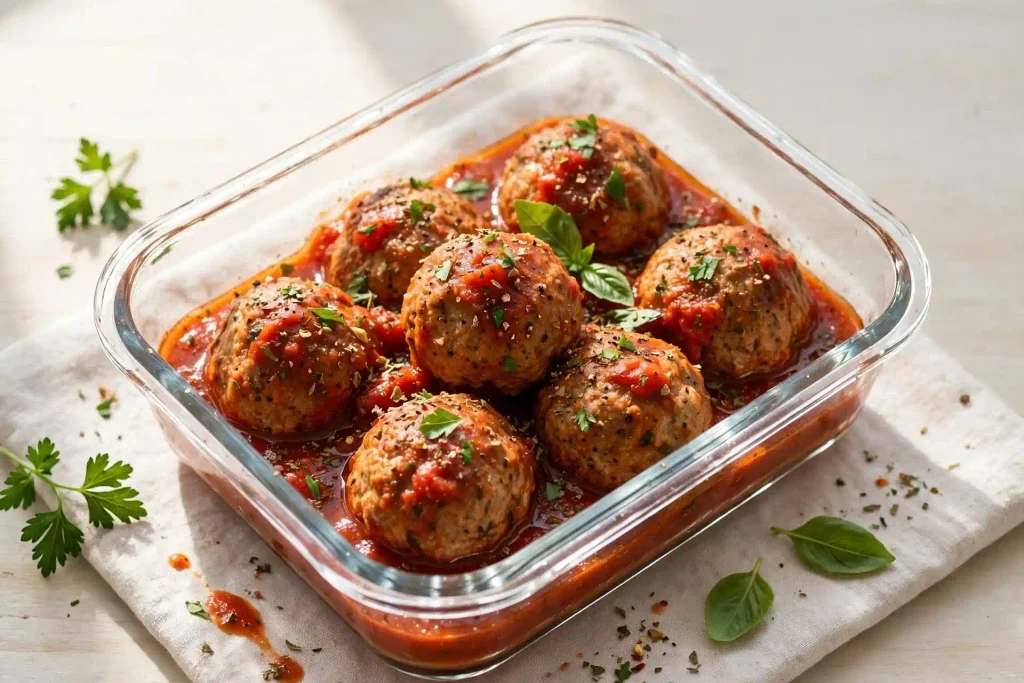
Refrigerate leftovers in an airtight container for up to 4 days. Reheat gently in a covered skillet over low heat with a splash of water or extra sauce, since the meatballs can dry out slightly in the microwave.
Freezing works well for up to 3 months, either cooked in sauce or raw and shaped. If freezing raw, freeze them individually on a tray first before bagging, so they don’t fuse into one block.
Variations & Substitutions
For a spicier version, add 1/2 teaspoon red pepper flakes to the meat mixture or stir them into the marinara before simmering.
For a milder, kid-friendly version, leave out the garlic’s second clove and skip any added pepper flakes, keeping the Parmesan as the main flavor carrier.
For a lower-carb version, swap the bread in the panade for a few tablespoons of almond flour soaked in the same amount of milk, the texture shifts slightly denser but still holds moisture well.
For a baked version instead of pan-seared, arrange the shaped meatballs on a lined sheet and bake at 400°F for 18 to 20 minutes, then transfer to the sauce to simmer for the final 10 minutes.
Serving Suggestions
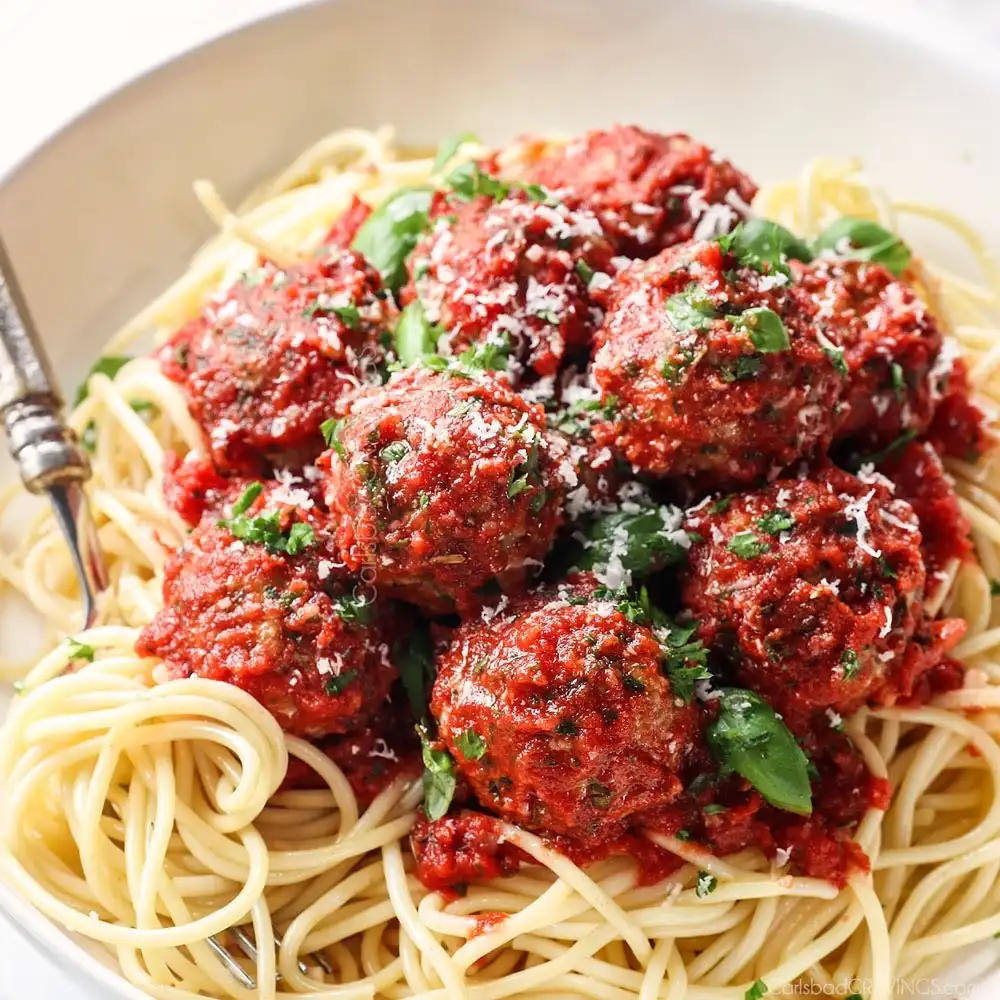
Spaghetti or any long pasta shape is the obvious pairing, giving the sauce something to cling to alongside the meatballs. A toasted sub roll turns this into a meatball sandwich, topped with a little extra Parmesan before broiling briefly. A simple green salad with a vinegar-based dressing balances the richness of the sauce. For drinks, a light red wine like Chianti pairs naturally with the tomato base already in the dish.
You may also like: lasagna soup
FAQ
Can I make turkey meatballs ahead of time?
Yes, shape the meatballs and store them raw, covered, in the fridge for up to a day before cooking. You can also freeze raw shaped meatballs on a tray until solid, then transfer them to a bag for longer storage, cooking them straight from frozen later.
Why do my turkey meatballs always turn out dry?
This almost always comes down to skipping or rushing the panade, the bread-and-milk mixture that holds moisture in place as the lean turkey cooks. Let the bread fully soak until it’s a soft paste, and avoid overmixing the meat once everything is combined.
Can I use all ground turkey breast instead of a thigh-breast mix?
You can, but breast meat alone has even less natural fat, so the meatballs will come out slightly denser even with the panade in place. If you go this route, consider adding an extra tablespoon of olive oil directly into the meat mixture to compensate.
How do I know when the meatballs are fully cooked?
Check with an instant-read thermometer inserted into the center of one, looking for a reading of 165°F. The outside crust can look fully browned well before the center reaches that temperature, so relying on color alone isn’t reliable here.
Is this recipe safe for someone with a gluten allergy?
As written, no, it contains bread in the panade. A gluten-free sandwich bread works exactly the same way, torn and soaked in the milk before being folded into the meat mixture, so the swap doesn’t change the method at all.
One Thing Worth Remembering
The panade is doing more work in this recipe than any other single ingredient, including the meat itself. Skip it, and no amount of searing or simmering in sauce brings back the moisture that lean turkey loses as it cooks. Get that part right, let the bread fully soak before it ever touches the meat, and the rest of the method just builds flavor on top of a texture that was already going to hold up.
Turkey Meatballs
Ingredients
Method
- Soak torn bread in milk 5 minutes until a soft paste forms.
- Combine turkey, soaked bread, Parmesan, egg, garlic, parsley, salt, and pepper.
- Mix by hand just until combined, avoiding overmixing.
- Shape into golf ball-sized meatballs, about 2 tbsp each.
- Sear in hot oil, about 3 minutes per side, until browned.
- Pour marinara over meatballs, scraping up browned bits.
- Cover and simmer 20 minutes until 165°F internal temp.
- Remove lid for last 5 minutes if sauce needs to reduce.
- Top with torn basil before serving.
One Comment
Comments are closed.