
Chicken and Noodles
Chicken and Noodles That Taste Like Sunday Dinner at Grandma’s
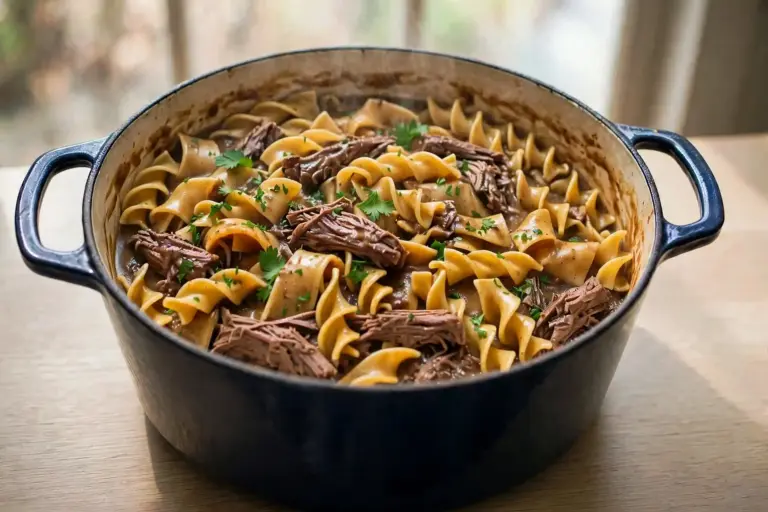
Chicken and noodles isn’t chicken noodle soup, and the two get mixed up constantly. This is thicker, heartier, built around wide egg noodles that soak up a rich, well-seasoned broth until the whole dish turns closer to a stew than something you’d sip from a mug. Skip the canned cream-of-soup shortcut most versions lean on, and build the broth from the chicken itself, and the difference in flavor is obvious by the first bite.
Why This Chicken and Noodles Tastes Like the Real Thing
Simmering bone-in chicken thighs in the broth, rather than starting with pre-cooked rotisserie meat, builds a deeper, more savory base than broth alone could ever provide on its own. Shredding the chicken by hand instead of dicing it with a knife gives you ragged edges that catch more of the sauce in every bite. A small amount of flour whisked into butter before the broth goes in thickens the dish just enough to coat a spoon without turning it gluey. Wide egg noodles, rather than thin spaghetti-style noodles, hold their shape and texture even after sitting in hot broth for several minutes, something thinner noodles can’t manage without going mushy. Finishing with a splash of heavy cream right at the end rounds out the broth’s flavor without making the whole dish taste like a cream sauce.
Quick Information
- Prep time: 15 minutes
- Cook time: 45 minutes
- Total time: 1 hour
- Servings: 6
- Difficulty: Easy
- Calories per serving: approximately 390
- Most important ingredient: bone-in, skin-on chicken thighs
- Best for: Sunday dinners, cold weather meals, feeding a crowd on a budget
Ingredients
For the broth and chicken:
- 2 ½ pounds bone-in, skin-on chicken thighs
- 8 cups chicken broth
- 1 medium yellow onion, quartered
- 2 carrots, roughly chopped
- 2 celery stalks, roughly chopped
- 2 bay leaves
- 1 teaspoon dried thyme
- 1 teaspoon salt, plus more to taste
- ½ teaspoon black pepper
Bone-in, skin-on thighs release far more flavor into the broth as they simmer than boneless breast meat does, the bones and connective tissue break down slowly and give the broth real body rather than leaving it thin and watery.
For the noodles and finishing:
- 12 ounces wide egg noodles
- 3 tablespoons unsalted butter
- 3 tablespoons all-purpose flour
- ¼ cup heavy cream
- 2 tablespoons fresh parsley, chopped
Wide egg noodles hold their shape and bite far better than thin noodles once they’ve sat in the hot broth for a few minutes, which matters since this dish is meant to thicken and sit, not be served the instant everything’s cooked.
You may also like: chicken stir fry
Recipe Timing
Prep 15 minutes, cook 45 minutes, no rest time needed, total 1 hour. Serves 6. Easy difficulty. American comfort food, main dish.
Allergen and Dietary Disclosure
This recipe contains dairy (butter, cream), egg (noodles), and gluten (flour, noodles). For a dairy-free version, swap the butter for a plant-based alternative and the cream for full-fat coconut milk, though the flavor shifts slightly. For gluten-free, use a gluten-free egg noodle substitute and swap the flour for an equal amount of cornstarch, added as a slurry near the end instead of cooked into the butter at the start.
Equipment Needed
- Large stockpot or Dutch oven
- Tongs
- Whisk
- Fine mesh strainer (optional, for a clearer broth)
- Two forks (for shredding)
A Dutch oven holds heat evenly enough to simmer the chicken gently without scorching the bottom, which a thin pot can struggle with over the longer simmer time this recipe needs.
Nutrition Information
Per serving (based on 6 servings): 390 calories, 26g protein, 38g carbohydrates, 14g fat, 2g fiber, 4g sugar, 680mg sodium. This is an estimate based on standard USDA nutrition data for the ingredients listed and will vary by brand and exact portion size.
Why Homemade Broth Changes Everything Here
A canned cream-of-chicken shortcut gives you something that tastes like one specific flavor note repeated throughout the whole dish, where a broth built from actual bone-in chicken develops layers, savory from the bones, sweet from the aromatics, rounded out by the herbs simmering alongside everything else. That complexity is what separates a dish that tastes like a weeknight shortcut from one that tastes like it’s been simmering all afternoon, even though this version comes together in about an hour.

Preparation
Pat the chicken thighs dry before they go into the pot, this helps them brown slightly even during a simmer rather than just poaching pale. Roughly chop the onion, carrots, and celery ahead of time so they’re ready to add as soon as the chicken needs them.
Step-by-Step Method
1. Add the chicken thighs, broth, onion, carrots, celery, bay leaves, thyme, salt, and pepper to a large stockpot or Dutch oven. Bring to a boil over high heat, then reduce to a gentle simmer.
2. Simmer uncovered for 30 minutes, until the chicken is fully cooked and starting to fall away from the bone easily when pressed with a fork. Food safety note: chicken thighs need to reach an internal temperature of 165°F, though bone-in thighs simmered this long typically exceed that well before the 30-minute mark.
3. Remove the chicken thighs with tongs and set them on a plate to cool slightly. Leave the broth simmering on the stove, since the vegetables need more time to soften fully.
4. Once the chicken is cool enough to handle, shred the meat off the bones using two forks, discarding the skin, bones, and any cartilage. Shredding by hand gives ragged edges that catch more broth in each bite than cutting the meat with a knife would.
5. Strain the broth through a fine mesh strainer into a separate bowl if you want a clearer final dish, discarding the bay leaves and cooked vegetables, or leave everything in the pot if you prefer a chunkier texture with visible vegetables throughout.
6. In a separate small pot or the same pot if you strained the broth out, melt the butter over medium heat. Whisk in the flour and cook for 1 minute, stirring constantly, until it smells lightly toasted rather than raw.
7. Slowly whisk the warm broth back into the butter and flour mixture, a ladle at a time at first, to avoid lumps forming before more liquid is added. Once fully combined, bring it back to a gentle simmer.
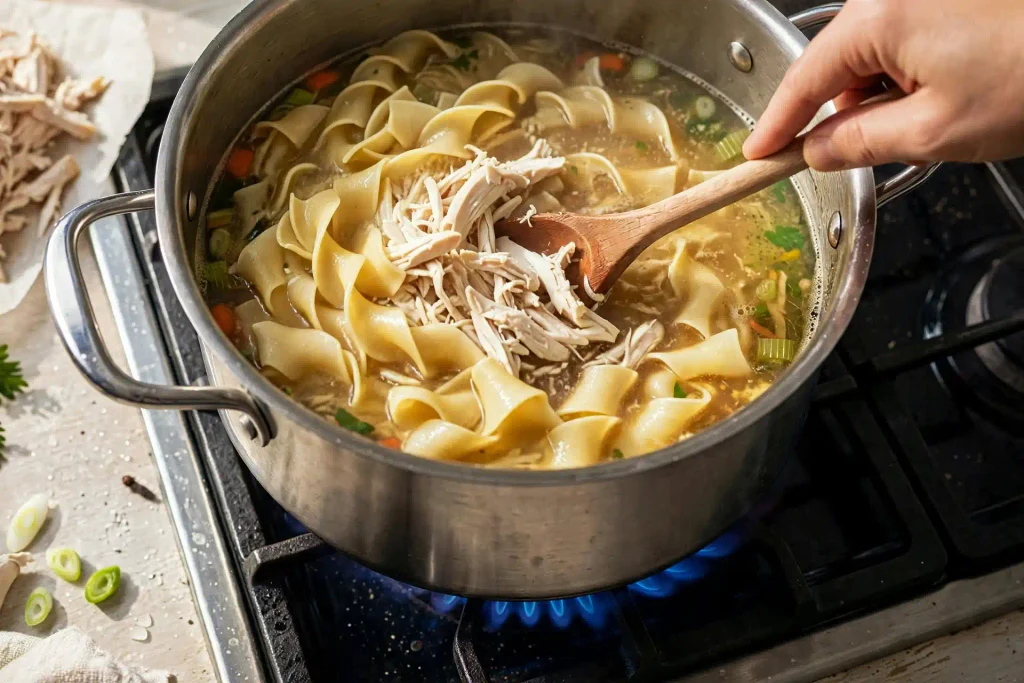
8. Add the egg noodles directly to the simmering broth and cook according to the package time, usually 8 to 10 minutes, stirring occasionally so they don’t stick to the bottom of the pot.
9. Once the noodles are tender, stir the shredded chicken back into the pot along with the heavy cream. Simmer for another 2 to 3 minutes, just until everything is heated through and the broth has thickened slightly further.
10. Taste and adjust the seasoning, broth reduces as it simmers and the balance can shift, so this is the point to fix it before serving. Stir in the fresh parsley right before ladling into bowls.
Chef’s Note: If the broth seems too thin even after adding the flour mixture, let it simmer uncovered for an extra 5 minutes, it’ll continue thickening as some liquid evaporates.
Chef’s Note: Don’t rush the shredding step by using a knife instead of forks, hand-shredded chicken has more surface area to soak up the broth than neatly diced pieces do.
Chef’s Note: If you’re making this ahead, keep the noodles separate from the broth until just before serving, they’ll continue absorbing liquid and can turn mushy if left sitting together too long.
You may also like: million dollar spaghetti
Expert Tips & Tricks
- Make-ahead: The broth and shredded chicken can be made up to 2 days ahead and refrigerated separately, cook the noodles fresh when you’re ready to serve so they don’t go soft from sitting.
- Storage: Keeps in the fridge for up to 4 days in an airtight container, though the noodles will continue absorbing broth over time, so expect a thicker texture by day two or three.
- Use a rotisserie chicken as a shortcut if you’re short on time, though the broth won’t develop quite the same depth as starting with raw bone-in thighs, add a splash more broth if the flavor tastes thin.
- Rinse the egg noodles briefly under cold water if you’re making this ahead and not serving right away, it slows down how much liquid they continue absorbing in storage.
- Double the recipe easily for a larger crowd, just use a pot big enough to hold the increased volume comfortably without crowding the simmer.
- A splash of apple cider vinegar stirred in right at the end brightens the whole dish if it tastes a little flat after simmering for a while.
Common Mistakes & Troubleshooting
Broth tastes thin and watery despite the flour step. The butter and flour mixture likely wasn’t cooked long enough before the broth was whisked in, or not enough time was given for it to simmer and thicken afterward. Let it cook a few extra minutes uncovered if the consistency still feels off.
Noodles turn mushy and fall apart. They cooked too long in the broth, or the dish sat too long before serving with the noodles already mixed in. Cook noodles just until tender and serve relatively soon after, or store them separately if making ahead.
Chicken tastes bland despite the seasoned broth. The chicken wasn’t shredded finely enough to pick up the broth’s flavor, or the broth itself needed more seasoning before the chicken went back in. Taste and adjust the broth before returning the shredded chicken to the pot.
Dish tastes flat overall. This usually means the seasoning wasn’t adjusted after the broth reduced and thickened, flavors that tasted balanced early on can turn muted once the liquid concentrates. Taste again right before serving and add salt gradually if needed.
Cream curdles slightly when added. The broth was likely still at a hard boil rather than a gentle simmer when the cream went in. Reduce the heat before stirring in cream, and avoid letting the pot return to a rolling boil afterward.
Honest Trade-Off
Building the broth from scratch with bone-in chicken thighs adds real time compared to starting with a can of broth and pre-cooked chicken, closer to an hour total instead of 20 minutes. If a weeknight is genuinely tight on time, a shortcut version using rotisserie chicken and store-bought broth is a fair trade, you’ll lose some of the deeper flavor this version builds, but it still gets dinner on the table fast.
Storage & Make-Ahead
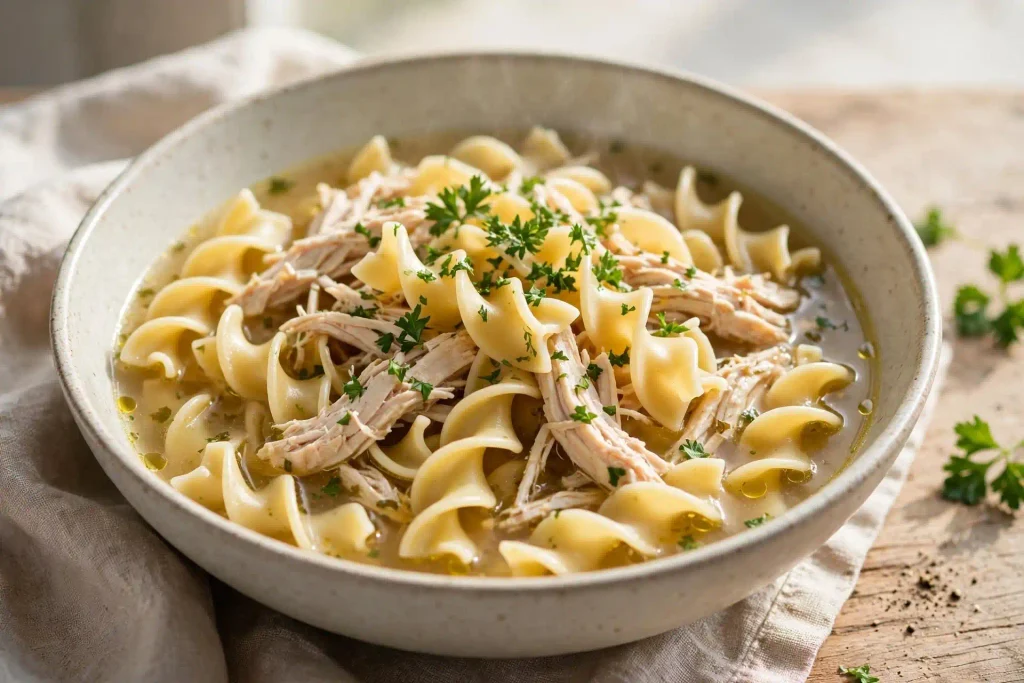
Store in an airtight container in the refrigerator for up to 4 days, though the texture thickens considerably as the noodles continue absorbing broth over time. Reheat gently on the stove over low heat, adding a splash of extra broth or water if it’s turned too thick to stir easily. This dish doesn’t freeze particularly well once the noodles are in it, since they turn soft and mushy upon thawing, though the broth and shredded chicken alone freeze well for up to 3 months if kept separate from the noodles.
Variations & Substitutions
For a lighter version, swap the chicken thighs for boneless, skinless chicken breasts, though the broth won’t develop quite the same richness since breast meat carries less fat and connective tissue.
For a vegetable-forward version, add a cup of frozen peas or corn during the last few minutes of simmering, stirring them in alongside the chicken and cream.
For a dairy-free version, swap the butter for a plant-based alternative and the heavy cream for full-fat coconut milk, the flavor shifts slightly but the texture stays close to the original.
Callout: Save the chicken skin after shredding and crisp it separately in a hot skillet for a few minutes. Crumbled over the finished bowls, it adds a crunchy contrast the soft noodles and broth don’t have on their own.
Serving Suggestions
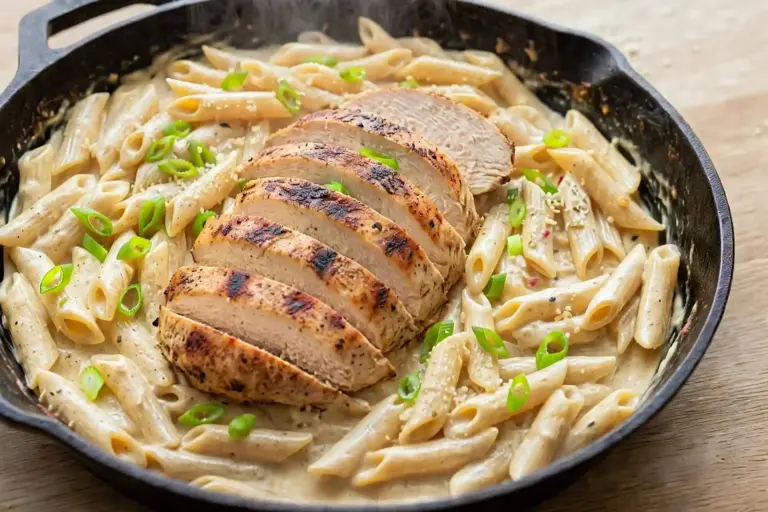
Chicken and noodles pairs naturally with a simple side salad to balance out the richness of the broth. Warm, crusty bread or dinner rolls work well for soaking up any extra sauce left in the bowl. If you’re planning a week of comforting dinners, cajun chicken pasta offers a spicier, differently-seasoned chicken and noodle dish worth rotating in alongside this one. A glass of white wine or sparkling water with lemon rounds out the meal nicely.
Callout: Keep extra broth warming on the stove while serving, a splash added to individual bowls the next day loosens up any noodles that have thickened too much in storage.
FAQ
Can I make chicken and noodles ahead of time?
Yes, but keep the noodles separate from the broth and shredded chicken if you’re making it more than a few hours ahead. Combine them fresh when reheating so the noodles don’t turn mushy from sitting in the liquid too long.
Why did my broth turn out thin instead of thick and rich?
The butter and flour mixture likely needed more time to cook before the broth was added, or the dish needed a longer simmer afterward to thicken fully. Give it a few extra minutes uncovered on the stove if it still feels too thin.
Can I use chicken breast instead of chicken thighs?
Yes, boneless chicken breast works, though the broth won’t develop quite the same depth of flavor since breast meat has less fat and connective tissue than thighs. Add a bit more broth or seasoning to compensate if the flavor tastes thinner than expected.
How do I know when the chicken is fully cooked?
Bone-in thighs simmered for the full 30 minutes typically reach well past the safe internal temperature of 165°F, and the meat should pull away from the bone easily with a fork when it’s ready to shred.
Is this recipe safe for someone with a gluten allergy?
Not as written, since both the noodles and the thickening base use gluten-containing ingredients. Swap in gluten-free egg noodles and replace the flour with an equal amount of cornstarch mixed into a slurry and added near the end instead.
One Last Thing
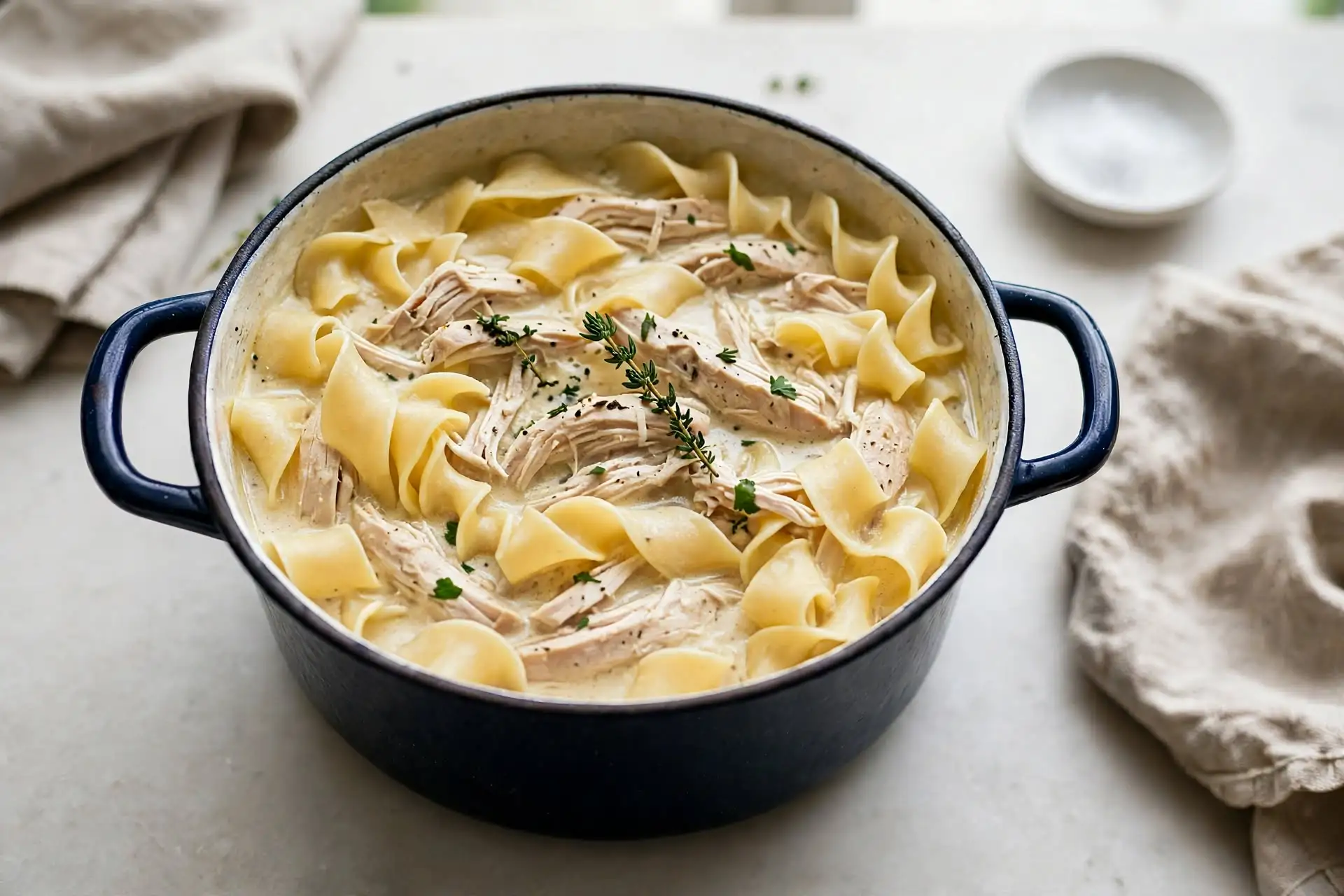
Chicken and noodles doesn’t need a shortcut to come together in under an hour, the bone-in thighs and homemade broth are doing more work in that time than a can of soup ever could. Once the broth’s built and the chicken’s shredded, the rest is really just letting the noodles cook through and tasting your way to the right balance before it hits the table.
Chicken and Noodles
Ingredients
Method
- Simmer chicken thighs with broth, onion, carrots, celery, bay leaves, thyme, salt, and pepper for 30 minutes.
- Remove chicken and shred, discarding skin and bones. Strain broth if desired.
- Melt butter, whisk in flour, cook 1 minute. Slowly whisk in warm broth until smooth.
- Add egg noodles to the simmering broth and cook 8-10 minutes until tender.
- Stir shredded chicken and heavy cream back in. Simmer 2-3 minutes until heated through.
- Adjust seasoning and stir in parsley before serving.




One Comment
Comments are closed.