
Baked Spaghetti Recipe
Baked Spaghetti Recipe With Meat Sauce and Three Cheeses
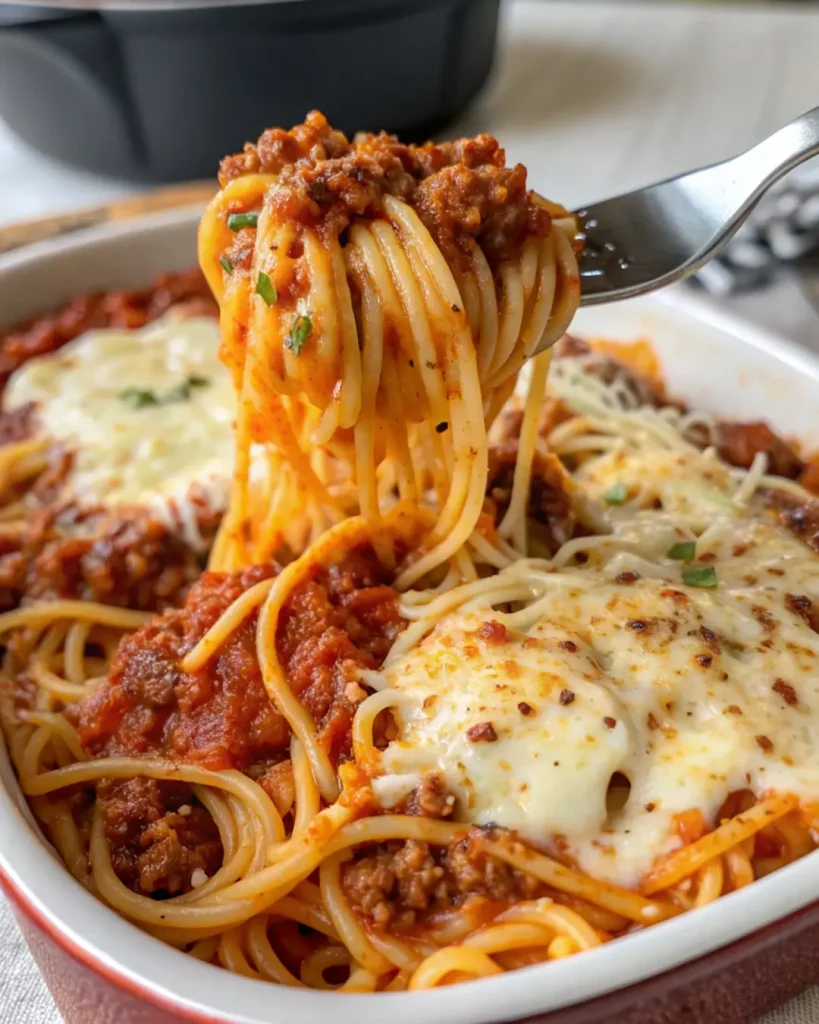
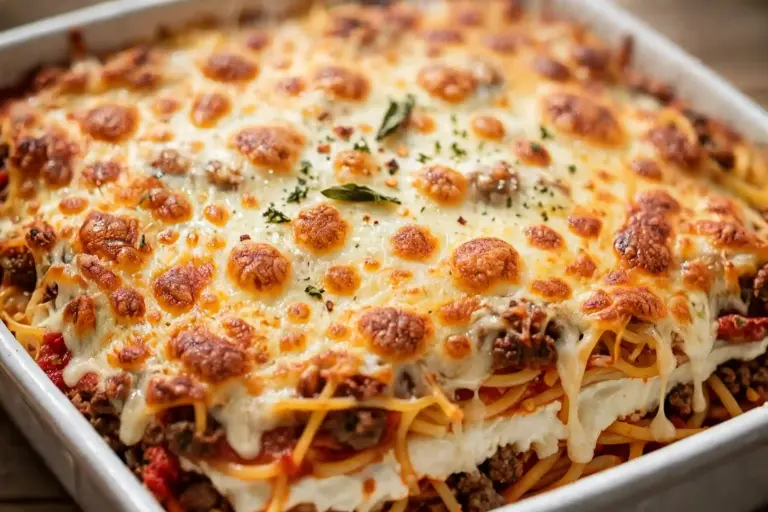
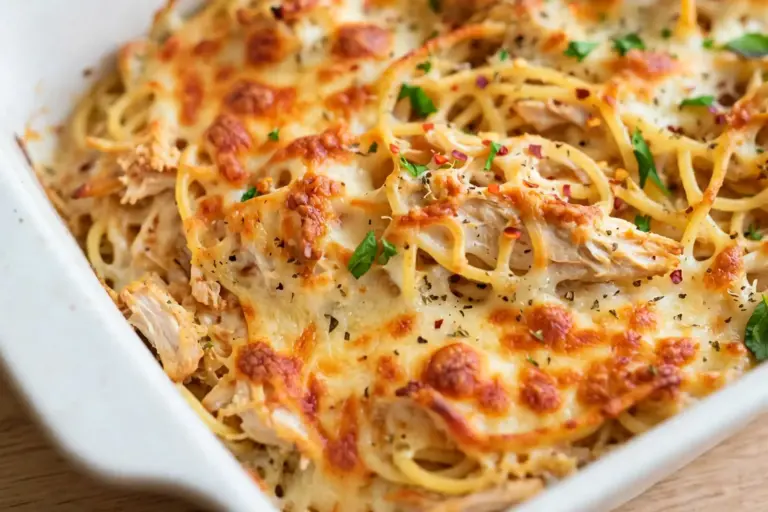
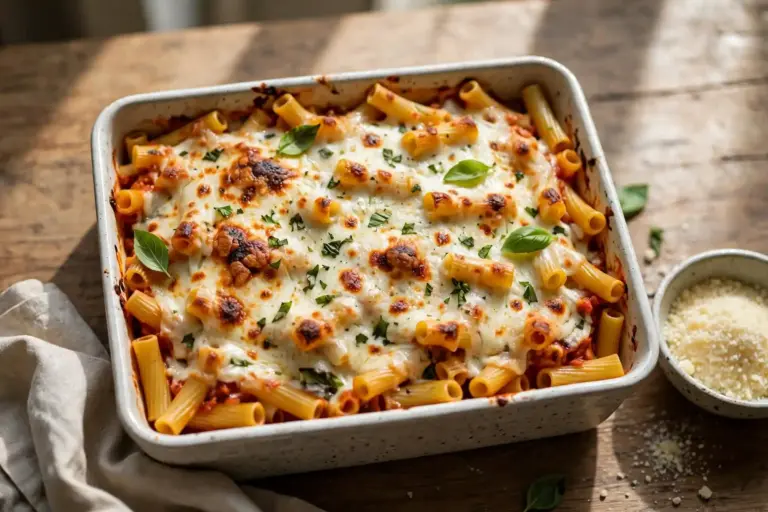
Baked spaghetti takes regular spaghetti and meat sauce and turns it into something that holds its shape on a plate instead of sliding around. Noodles get tossed with sauce and a layer of ricotta, then topped with mozzarella and Parmesan before the whole thing bakes until the top turns golden and the edges bubble. It eats somewhere between a casserole and a lasagna, with all the familiar flavor of a spaghetti dinner but cut into clean squares.
The usual problem with this dish is a dry, clumped together pasta layer that never quite melts into the rest of the bake. That happens when the noodles are overcooked before baking, or when there isn’t enough sauce to carry moisture through the oven time. This version slightly undercooks the pasta on purpose and uses a generous sauce to noodle ratio, so the spaghetti finishes cooking in the oven and stays tender rather than drying out.
The recipe serves eight, takes about 55 minutes, and reheats into leftovers that taste nearly as good as the first night.
Why This Baked Spaghetti Recipe Holds Together on the Plate
- A ricotta layer spread between the pasta and the top cheese acts like a binder, the same role it plays in lasagna, so the dish cuts into clean squares instead of falling apart.
- The pasta cooks just shy of al dente before baking, which leaves enough bite that the oven’s heat finishes it without turning the noodles mushy.
- Three cheeses, ricotta, mozzarella, and Parmesan, each do a different job: ricotta for creaminess, mozzarella for stretch, and Parmesan for a sharp, salty top note.
- A meat sauce built with both ground beef and Italian sausage brings more depth than beef alone, since the sausage carries its own built-in seasoning.
- The dish bakes covered first and uncovered at the end, which keeps the inside from drying out while still letting the top brown properly.
- It makes enough for a full family dinner with leftovers, from one baking dish and one pot of pasta water.
Quick Recipe Snapshot
- Prep time: 20 minutes
- Cook time: 30 minutes
- Rest time: 10 minutes
- Total time: 60 minutes
- Servings: 8
- Difficulty: Easy
- Calories: About 480 per serving
- Most important tool: A 9×13 inch baking dish
- Best for: Family dinners, potlucks, make ahead freezer meals
Ingredients
The Meat Sauce
Browning the sausage and beef together, rather than one after the other, lets their fats render into the same pan and build a single, unified base for the sauce.
- 1 pound ground beef (85/15)
- ½ pound Italian sausage, casings removed
- 1 medium yellow onion, diced
- 4 garlic cloves, minced
- 1 can (28 ounces) crushed tomatoes
- 1 can (15 ounces) tomato sauce
- 2 tablespoons tomato paste
- 1 teaspoon dried oregano
- 1 teaspoon dried basil
- ½ teaspoon red pepper flakes, optional
- Salt and black pepper to taste
The Pasta and Cheese Layers
Pulling the pasta from the water a minute or two before it’s fully tender is what keeps the dish from turning mushy once it finishes cooking in the oven.
- 1 pound spaghetti
- 15 ounces whole milk ricotta
- 1 large egg
- ¼ cup grated Parmesan, plus more for topping
- 2 tablespoons chopped fresh parsley
- 3 cups shredded mozzarella
- 2 tablespoons chopped fresh basil, for serving
Substitutions that hold up: Ground turkey or chicken sausage replace the beef and pork sausage for a lighter version. Cottage cheese, blended smooth, can replace the ricotta in a pinch, though the texture turns slightly looser. A gluten free spaghetti works in place of regular pasta, though it should be pulled from the water a minute earlier than package directions since gluten free noodles soften faster once baked.
Recipe Timing
- Prep: 20 minutes
- Cook: 30 minutes
- Rest: 10 minutes
- Total: 60 minutes
- Servings: 8
- Difficulty: Easy
- Cuisine: Italian American
- Course: Dinner
Looking for another baked pasta dish with a similar cheesy, crowd pleasing style? Million dollar spaghetti uses a comparable cream cheese and meat sauce layering technique.
Allergen and Dietary Disclosure
This dish contains dairy (ricotta, mozzarella, Parmesan), egg, and wheat/gluten (pasta). Italian sausage can sometimes include additional allergens depending on the brand, so check the label if needed.
- Dairy: A dairy free ricotta alternative and dairy free mozzarella shred both work, though neither melts quite as smoothly as the real thing.
- Egg: The egg binds the ricotta mixture but can be left out entirely; the layer will be slightly softer and less set but still works.
- Gluten: A gluten free spaghetti substitutes directly, pulled from the water about a minute earlier than package directions suggest.
Equipment Needed
- 9×13 inch baking dish. The standard size this recipe is built around for even layering and a reasonable bake time.
- Large pot for boiling pasta. Needs enough room for the spaghetti to move freely in rolling water.
- Large skillet or Dutch oven. Browns the meat and builds the full sauce in one pan.
- Mixing bowl. Combines the ricotta, egg, Parmesan, and parsley into one smooth layer before it goes into the dish.
Nutrition Information
Per serving (about 1½ cups, 8 servings per recipe):
- Calories: 480
- Protein: 29 g
- Carbohydrates: 36 g
- Fat: 24 g
- Fiber: 3 g
- Sugar: 7 g
- Sodium: 820 mg
The combination of beef and Italian sausage pushes protein above 29 grams per serving, which is high for a pasta based dinner. These figures are estimates built from USDA FoodData Central data and shift with the exact sausage brand and cheese amounts used.
How Baked Spaghetti Holds Its Shape Through the Bake
Pasta cooked fully tender before baking has nowhere left to go once it hits the oven’s heat, which is why fully cooked noodles often turn soft and mushy by the time a baked pasta dish comes out. Pulling the spaghetti from the water a minute or two before it’s fully done leaves a bit of structure in reserve, so the noodles finish softening in the oven at the same rate the rest of the dish bakes through, rather than overcooking twice.
The ricotta layer works similarly to the way it does in a lasagna: mixed with egg and a little Parmesan, it sets slightly as it bakes, firm enough to hold its place between the pasta and the top cheese rather than melting away into the sauce entirely. That structure is part of why this dish cuts into clean squares instead of collapsing into a loose pile on the plate.
Covering the dish for the first portion of baking traps steam, which keeps the pasta and sauce from drying out while the interior comes up to temperature. Removing the cover for the final stretch lets the surface moisture evaporate and the cheese brown properly, the same two stage approach a covered then uncovered roast uses to stay moist while still developing color.
What is baked spaghetti? Baked spaghetti is a casserole made from cooked spaghetti noodles layered with meat sauce and cheese, usually including a ricotta or cream cheese layer, baked until the top turns golden and the dish holds together enough to cut into squares.
Preparation
Bring a large pot of generously salted water to a boil for the pasta while you start the sauce, since both can progress at the same time. Dice the onion and mince the garlic. Shred the mozzarella if it isn’t already pre-shredded, and whisk the ricotta, egg, Parmesan, and parsley together in a bowl so it’s ready to layer once the pasta is combined with the sauce. Preheat the oven to 375°F.
Step by Step Method
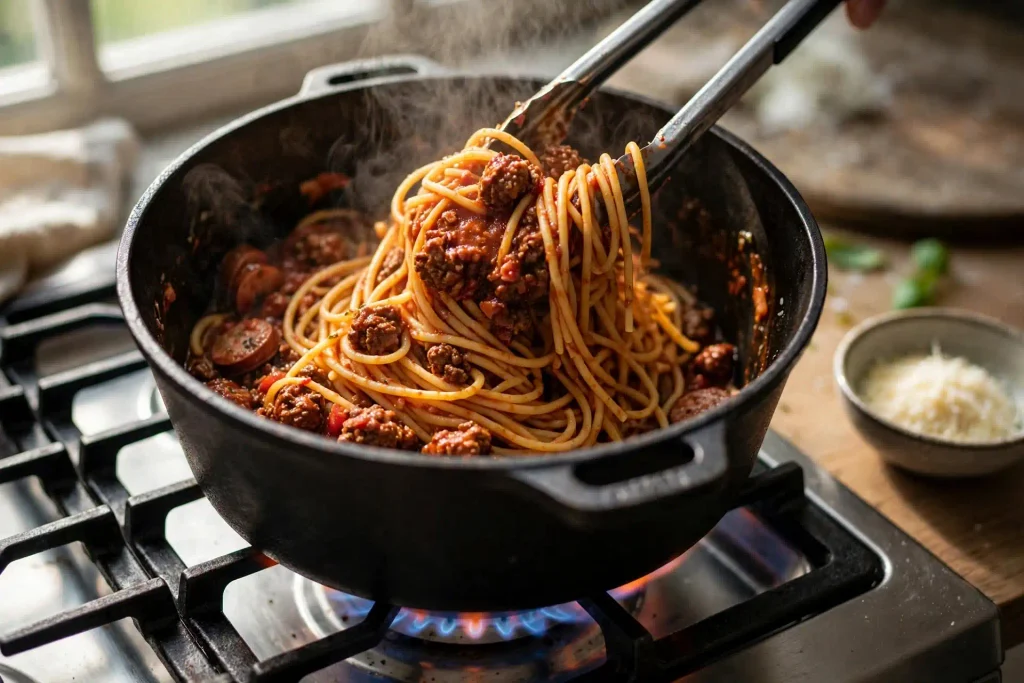
In a large skillet, brown the ground beef and Italian sausage together over medium high heat, breaking both apart as they cook, until no pink remains and the mixture reaches 160°F, about 7 minutes.
Drain excess fat, then add the onion to the pan and cook for 4 minutes, until it turns translucent.
Stir in the garlic and cook for 30 seconds, until fragrant.
Add the tomato paste and stir for 60 seconds, until it darkens slightly and coats the meat evenly.
Chef’s Note: This step is easy to skip, but a minute of cooking the paste directly in the meat and fat builds a deeper flavor than stirring it in with the other liquids later.
Pour in the crushed tomatoes and tomato sauce, then stir in the oregano, basil, and red pepper flakes. Simmer uncovered for 10 minutes, stirring occasionally, until the sauce thickens slightly. Season with salt and pepper.
While the sauce simmers, cook the spaghetti in the boiling salted water for 1 to 2 minutes less than the package instructions, until just shy of al dente. Drain well.
Toss the drained spaghetti with about two thirds of the meat sauce in the large pot, coating the noodles evenly.
Spread half the sauced spaghetti into the prepared baking dish. Dollop and spread the ricotta mixture evenly over the top, then layer the remaining spaghetti over the ricotta.
Chef’s Note: Spreading the ricotta all the way to the edges, rather than leaving it only in the center, keeps every slice from the pan getting some of that creamy layer.
Spoon the remaining meat sauce evenly over the top layer of pasta, then scatter the mozzarella and a bit of extra Parmesan over everything.
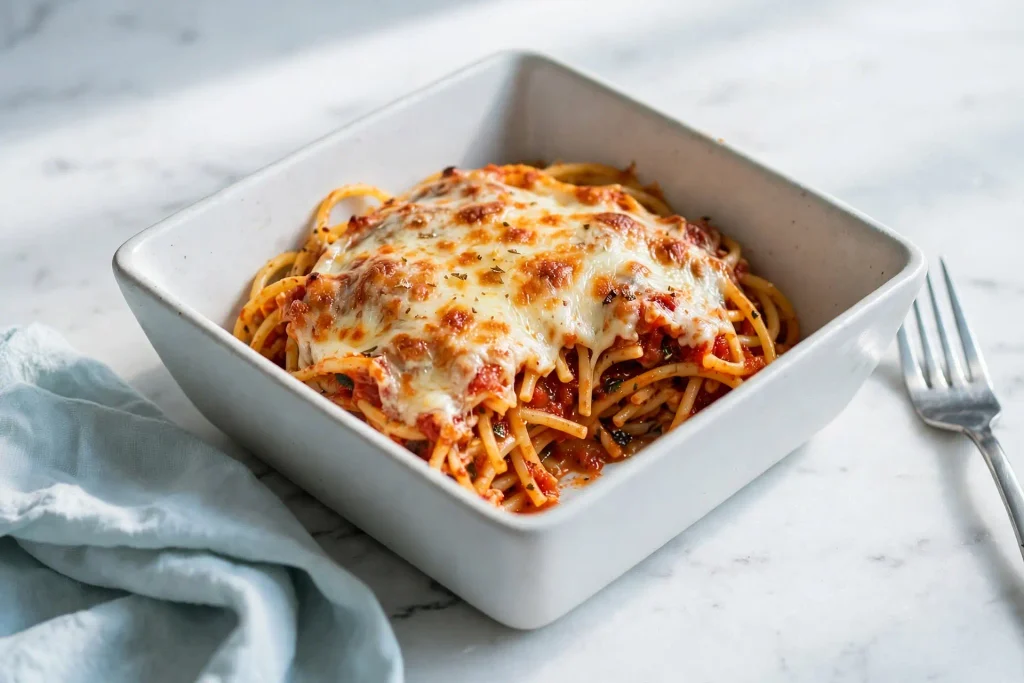
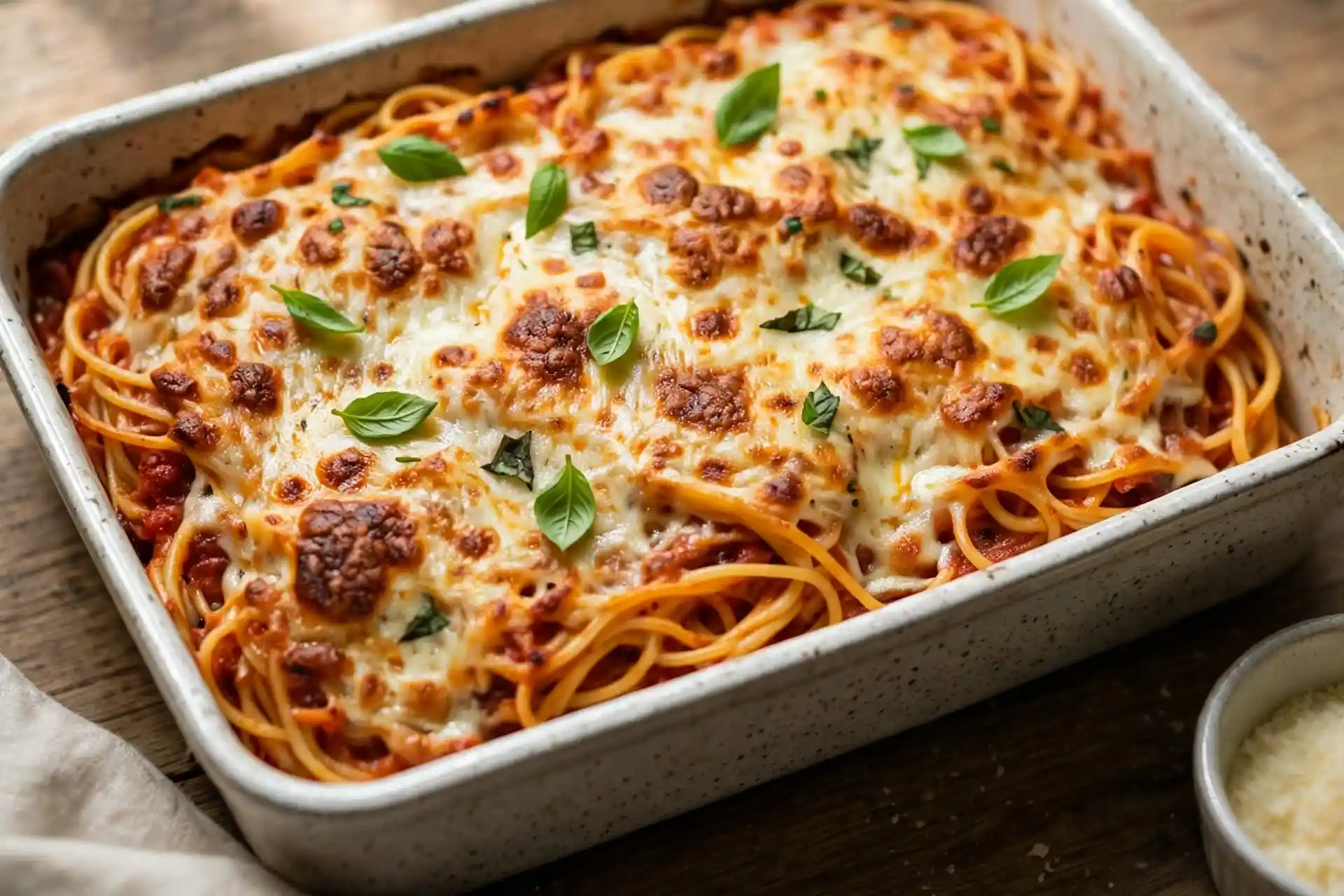
Cover the dish tightly with foil and bake for 20 minutes. Remove the foil and bake uncovered for another 10 minutes, until the cheese is fully melted and turning golden in spots. Let the dish rest for 10 minutes before cutting, then top with fresh basil.
Callout: Save a small handful of mozzarella to scatter on top after the foil comes off rather than putting all of it on before the covered bake. The fresh layer added later browns more distinctly than cheese that’s melted twice.
Expert Tips and Tricks
- Make ahead: Assemble the full dish through the topping step, cover tightly, and refrigerate for up to 1 day. Bake straight from the fridge, adding about 10 extra minutes to the covered stage since it starts cold.
- Storage: Cool leftovers to room temperature within 2 hours before moving them into an airtight container.
- Undercook the pasta slightly: Pulling it a minute or two early keeps the noodles from turning mushy once they finish softening in the oven.
- Spread the ricotta to the edges: An even layer across the whole pan means every square gets some of that creamy middle layer instead of just the center pieces.
- Vent the foil: A small slit or loosely tented cover lets steam escape so the top layer isn’t soggy once the foil comes off.
- Taste the sauce before assembling: It’s much easier to adjust seasoning in a pot of sauce than after the whole dish is layered and baked.
- Let the dish rest the full 10 minutes: Cutting immediately lets the layers slide apart instead of holding together in a clean square.
For another baked pasta with a bold, spiced flavor profile, Cajun chicken pasta is worth keeping in the same weekly rotation for variety.
Common Mistakes and Troubleshooting
The baked spaghetti came out dry. The pasta was likely fully cooked before baking, or there wasn’t enough sauce to carry moisture through the oven time. Pull the pasta early next time and make sure the full sauce quantity goes into the dish.
The layers slid apart when cut. The dish wasn’t rested long enough before slicing. Give it the full 10 minutes to set, since the ricotta layer firms up slightly as it cools.
The top didn’t brown. The foil stayed on too long, or the oven ran cooler than expected. Remove the foil for the final 10 minutes as directed, and check your oven’s actual temperature if browning still lags.
The sauce tasted flat. The tomato paste step was skipped, or the dish needs more salt. Give that minute of cooking the paste in the meat its full time, and taste the sauce before it goes into the dish rather than after baking.
The ricotta layer disappeared into the sauce. It wasn’t spread as a distinct layer, or there wasn’t enough pasta on top to hold it in place. Spread the ricotta evenly and make sure a full layer of spaghetti covers it before the final sauce and cheese go on.
Honest Trade-Off
This baked version trades the loose, saucy texture of a bowl of spaghetti for a firmer, sliceable casserole, which means it won’t have quite the same silky coating on each strand that a freshly tossed plate of spaghetti has straight off the stove. Anyone who specifically wants that loose, saucy texture should serve the sauce over freshly boiled pasta instead. This recipe suits a dinner where make ahead convenience and clean, portioned slices matter more than a traditional plate of spaghetti.
Storage and Make Ahead
Refrigerator: Store in an airtight container for up to 4 days.
Reheating: Cover with foil and warm in a 350°F oven for about 20 minutes, or microwave individual portions in 60 second bursts. The oven method keeps the top from turning soft.
Freezer: Freezes well for up to 3 months, either fully assembled and unbaked or already baked. Thaw overnight in the fridge before reheating, and add about 10 extra minutes in the oven if reheating from frozen.
Variations and Substitutions
- Vegetarian: Replace the beef and sausage with 2 cups of chopped mushrooms and a can of drained lentils, cooked until the mushroom liquid evaporates.
- Spicy: Use hot Italian sausage in place of mild, and increase the red pepper flakes to a full teaspoon.
- Extra vegetables: Stir a cup of chopped spinach or diced bell pepper into the sauce during the last few minutes of simmering.
- Different cheese: Swap the mozzarella for a blend of mozzarella and provolone for a slightly sharper finish.
- Smaller batch: Halve all ingredients and use an 8×8 inch dish for a smaller gathering, keeping the bake time roughly the same.
Serving Suggestions
Baked spaghetti pairs naturally with a simple green salad dressed in a light vinaigrette to balance the richness of the cheese and sauce. Garlic bread on the side works well for scooping up any extra sauce left on the plate. A glass of red wine suits the Italian flavors of the dish for anyone serving it as part of a bigger dinner. For a different chicken based pasta bake to add to the same rotation, chicken spaghetti offers a creamier, lighter alternative worth keeping in the mix.
Callout: Set out extra Parmesan and red pepper flakes at the table rather than mixing all of it into the dish beforehand. It lets everyone adjust their own plate without changing the base recipe for the whole pan.
Frequently Asked Questions
Can I make baked spaghetti ahead of time?
Yes. Assemble the full dish through the topping step, cover tightly, and refrigerate for up to 1 day before baking. Bake straight from the fridge, adding about 10 extra minutes to the covered stage since the dish starts out cold.
Why did my baked spaghetti turn out dry?
The pasta likely cooked fully before baking instead of being pulled a minute or two early, or the sauce quantity was too light for the amount of pasta. Undercook the noodles slightly next time and make sure the full sauce recipe goes into the dish rather than holding some back.
Can I use a different pasta shape instead of spaghetti?
Yes, though thinner noodles like spaghetti or angel hair layer more evenly than thick shapes like rigatoni. If using a different shape, keep the same undercooking principle and pull it a minute or two before the package time.
How do I know when the dish is fully baked?
The cheese should look fully melted and golden in spots, usually after the final 10 minutes uncovered, and the sauce should be visibly bubbling around the edges of the dish. Since the meat and pasta are already mostly cooked going in, this stage is mainly about melting the cheese and heating everything through evenly.
Is baked spaghetti safe for someone with a dairy, egg, or gluten allergy?
The standard recipe contains dairy in the ricotta, mozzarella, and Parmesan, egg in the ricotta mixture, and gluten in the pasta. Dairy free cheese alternatives handle the dairy, the egg can be left out of the ricotta layer entirely, and a gluten free spaghetti handles the gluten, though each substitution changes the texture somewhat.
Conclusion
Pulling the pasta from the water a minute or two early is the single habit that separates a baked spaghetti dish that holds its texture from one that turns mushy by the time it’s served. Give the ricotta layer room to spread to the edges, and let the pan rest the full 10 minutes before cutting. Keep a double batch of sauce on hand if you want a saucier result than the standard ratio gives, since it freezes well on its own for the next time you make this.
Baked Spaghetti
Ingredients
Method
- Brown the beef and sausage together until they reach 160°F. Drain excess fat.
- Cook the onion 4 minutes, then the garlic 30 seconds.
- Stir in the tomato paste for 60 seconds.
- Add the crushed tomatoes and tomato sauce, season with herbs, and simmer 10 minutes.
- Cook the spaghetti 1 to 2 minutes short of al dente. Drain.
- Toss the spaghetti with two thirds of the sauce.
- Layer half the sauced spaghetti in a baking dish, spread with the ricotta mixture, then top with the remaining spaghetti.
- Spoon the remaining sauce over the top and scatter with mozzarella and Parmesan.
- Cover and bake at 375°F for 20 minutes, then uncover and bake 10 more minutes.
- Rest 10 minutes, then top with fresh basil.
One Comment
Comments are closed.