Chicken Spaghetti
Chicken Spaghetti That Doesn’t Turn Into a Mushy Casserole
Most chicken spaghetti recipes tell you to boil the pasta fully, then bake the whole dish for 30 minutes, and that’s exactly why the noodles turn soft and gluey by the time it hits the table. The fix is simple once you see it: cook the pasta to firm, undercooked texture before it ever goes in the oven, since it keeps absorbing liquid the entire bake. This version also skips canned soup as a shortcut and builds a real roux-based sauce instead, which holds together better and doesn’t taste like a can.
Why This Version Holds Its Texture Through Baking
Undercooking the pasta by about 2 minutes before baking means it finishes at the right texture instead of going past it, since baked dishes keep cooking the noodles the whole time they’re in the oven.
A roux-based sauce thickens on its own without relying on canned cream soups, so you control the salt level and the sauce doesn’t break or separate under heat the way some canned versions do.
Shredding rotisserie chicken instead of dicing it lets the meat blend into the sauce better, so you get chicken in every bite instead of big chunks sitting on top.
Two cheeses melted at different points, one stirred into the sauce and one on top, gives you a creamy interior and an actual browned crust instead of just melted cheese sitting flat.
Reserving a cup of pasta water before draining gives you a way to loosen the sauce later if it tightens up too much in the oven, which canned-soup versions don’t account for at all.
Quick Information
Prep time: 15 minutes. Cook time: 45 minutes. Total time: 1 hour. Servings: 6. Difficulty: Easy. Calories: about 480 per serving. The one thing that matters most here is timing the pasta undercook correctly, since that single step decides whether the final texture holds up. Good for a weeknight dinner or a potluck dish that reheats well.
Ingredients
For the base:
- 12 oz spaghetti, broken in half
- 3 cups cooked chicken, shredded (rotisserie works well)
- 1 tablespoon olive oil
Breaking the spaghetti in half isn’t just for the pot, it makes serving and portioning far easier once the dish is baked and set.
For the sauce:
- 4 tablespoons butter
- 1/4 cup all-purpose flour
- 3 cups chicken broth
- 1 cup whole milk
- 1 medium onion, finely diced
- 1 green bell pepper, finely diced
- 2 cloves garlic, minced
- 1 teaspoon smoked paprika
- 1/2 teaspoon cayenne (optional, adjust to taste)
- Salt and black pepper to taste
The butter and flour cooked together form the base that thickens this sauce without any canned soup, and cooking the flour for a full 2 minutes before adding liquid is what gets rid of the raw flour taste that undercooked roux leaves behind.
For the cheese layer:
- 2 cups sharp cheddar, shredded, divided
- 1 cup Monterey Jack, shredded
Splitting the cheddar means half goes into the sauce for creaminess and half goes on top for the browned, slightly crisp layer that a casserole needs to not taste flat.
You may also like: cheeseburger soup
Recipe Timing
Prep: 15 minutes. Cook: 45 minutes (20 minutes stovetop, 25 minutes baked). Rest: 5 minutes. Total: 1 hour 5 minutes. Servings: 6. Difficulty: Easy. Cuisine: American. Course: Main dish.
Allergen and Dietary Disclosure
This recipe contains dairy (butter, milk, cheese) and gluten (spaghetti, flour). For a dairy-free version, a dairy-free butter substitute and unsweetened oat milk work in the sauce, though the cheese layer is harder to replace without changing the texture significantly. For gluten-free, swap in gluten-free spaghetti and a 1-to-1 gluten-free flour blend for the roux, cooking the roux slightly longer since gluten-free flours can taste gritty if undercooked.
Equipment Needed
A large oven-safe skillet or a 9×13 baking dish, depending on whether you want to finish the whole thing in one pan or transfer it. A large pot for boiling the pasta. A whisk, since lumps in the roux are the most common sauce failure here and a whisk catches them before they set. A box grater, pre-shredded cheese contains anti-caking agents that keep the sauce from melting as smoothly.
Nutrition Information
Calories: 480 per serving. Protein: 29g. Carbs: 38g. Fat: 24g. Fiber: 2g. Sugar: 5g. Sodium: 720mg. Serving size: about 1.5 cups. Servings per recipe: 6. This dish leans higher in sodium mainly from the broth and cheese combined, so using low-sodium broth is worth it if you’re watching that number. These figures are estimates based on standard USDA nutrition data, not a substitute for a nutrition label or lab analysis.
Why the Pasta Texture Actually Falls Apart (And How This Fixes It)
Pasta keeps absorbing liquid as long as it’s surrounded by hot, moist heat, which is exactly the environment inside a covered or heavily sauced baking dish. If you boil spaghetti to fully al dente and then bake it for 25 more minutes, it’s absorbing sauce and softening that entire time, past the point where it holds any bite. Pulling the pasta about 2 minutes before its package time means it’s still slightly firm when it goes into the oven, and the bake finishes the job instead of overshooting it.
Reserving pasta water before draining matters here specifically because the sauce thickens further in the oven, and having starchy water on hand lets you loosen it back to the right consistency without watering down the flavor with plain water.
Preparation
Shred the rotisserie chicken while it’s still slightly warm, it comes apart easier than once it’s fully cooled. Dice the onion and bell pepper finely so they cook through in the time the roux needs, rather than staying crunchy inside the finished dish. Shred both cheeses fresh off the block rather than buying pre-shredded, since pre-shredded cheese resists melting smoothly into a sauce. Preheat the oven to 350°F before you start the stovetop portion, so it’s ready the moment the dish needs to go in.
Step-by-Step Method
- Bring a large pot of salted water to a boil and cook the spaghetti 2 minutes short of the package’s al dente time. Reserve 1 cup of pasta water before draining, then set the pasta aside.
- In a large skillet, melt the butter over medium heat, then add the diced onion and bell pepper. These cook down in about 5 minutes, until the onion turns translucent and the pepper softens without browning.
- Add the garlic and stir constantly for 30 seconds, since garlic left still in a hot pan turns bitter almost immediately once it starts to color.
- Sprinkle the flour over the vegetables and stir it in completely, cooking this mixture for a full 2 minutes. The raw flour smell fades and the mixture turns a light golden color, that’s the signal it’s actually cooked through rather than just combined.
- Slowly pour in the chicken broth while whisking constantly, breaking up any flour clumps as they form. Because the roux is already cooked, the sauce thickens within about 3 minutes of simmering rather than needing a long reduction.
- Whisk in the milk, smoked paprika, and cayenne if using, then simmer for 5 minutes until the sauce coats the back of a spoon. Undercooked at this stage, the sauce will look thin, but it thickens further both here and again in the oven.
- Remove the skillet from heat and stir in half the cheddar until fully melted and smooth. Raw poultry has already been fully cooked in the rotisserie chicken, so there’s no food-safety step needed here beyond making sure the sauce itself reaches a full simmer.
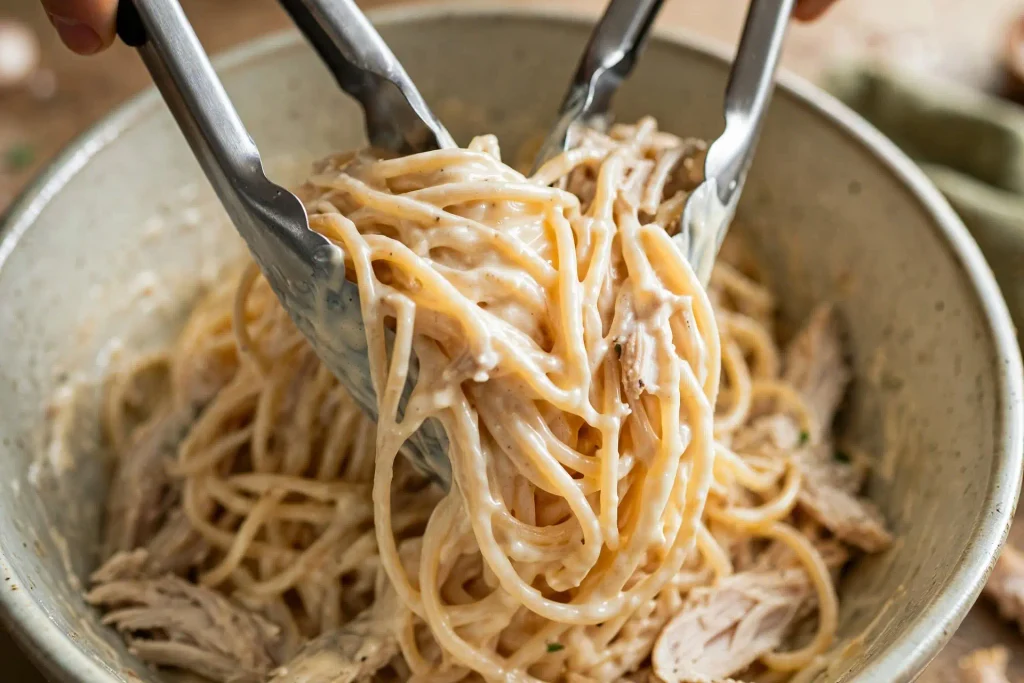
- Fold in the shredded chicken and the undercooked pasta, tossing until every strand is coated. If the mixture looks too thick to coat evenly, this is exactly when the reserved pasta water comes in, added a few tablespoons at a time.
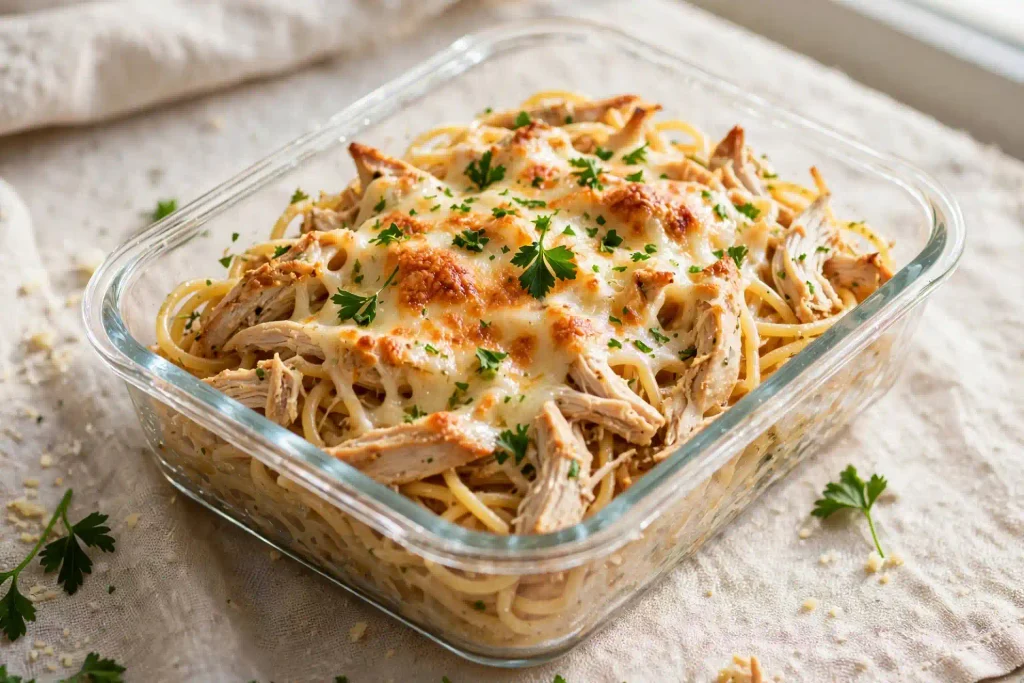
- Transfer everything to a greased 9×13 dish if you used a separate skillet for the sauce, or leave it in an oven-safe skillet. Top with the remaining cheddar and the Monterey Jack in an even layer.
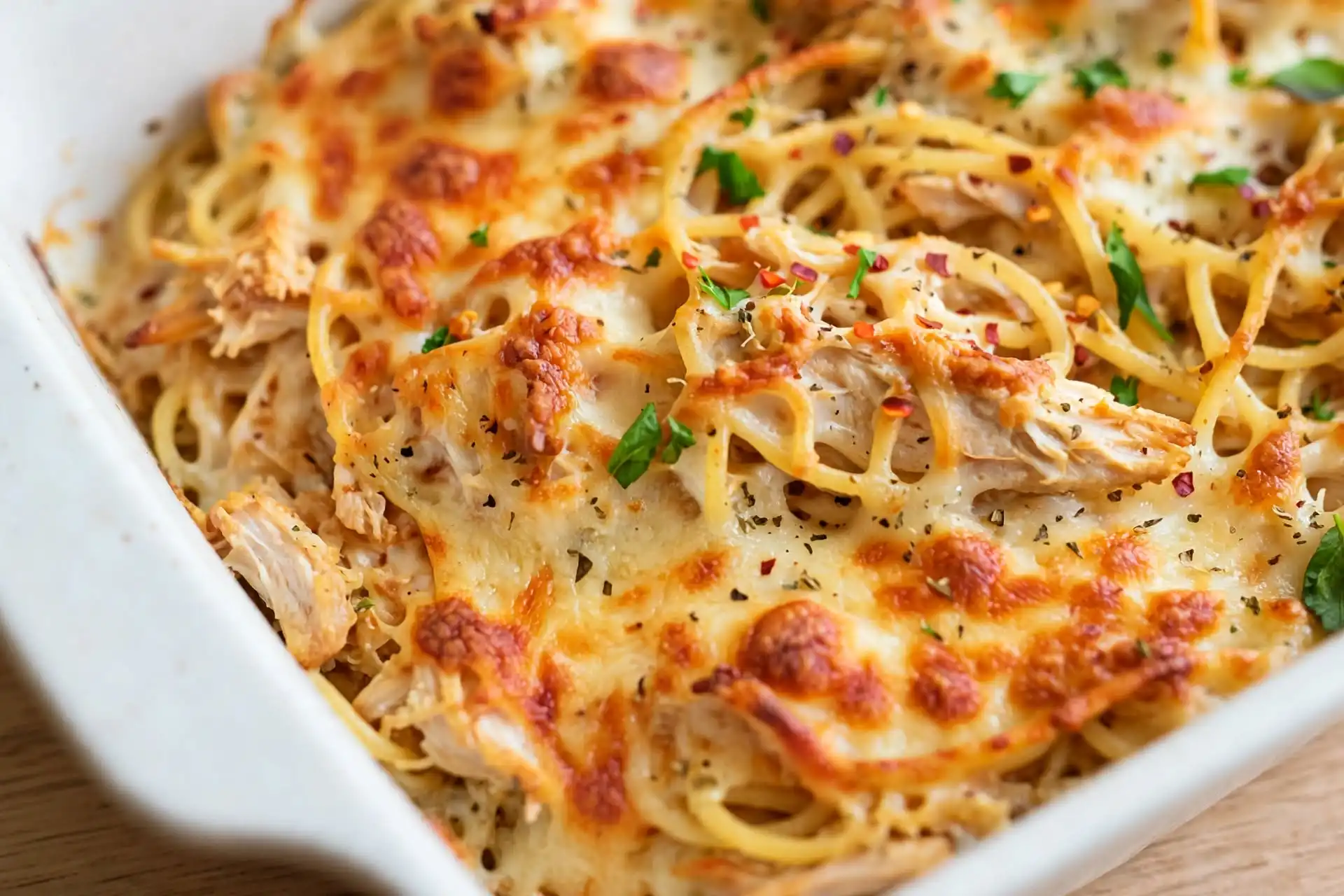
- Bake uncovered at 350°F for 20 to 25 minutes, watching for the top layer to turn golden brown with a few darker spots at the edges, not just melted flat.
- Let the dish rest for 5 minutes before serving. Cutting into it immediately causes the sauce to run thin across the plate instead of holding its shape when scooped.
Chef’s Note: If your roux looks broken or greasy instead of smooth after adding the flour, your heat was probably too high. Pull the pan off the burner for 10 seconds, whisk hard, and it usually comes back together.
Chef’s Note: Rotisserie chicken skin adds real flavor if you chop a small amount and mix it into the shredded meat, most people throw this part away without realizing it.
Chef’s Note: The most commonly skipped step here is undercooking the pasta on purpose. It feels wrong to pull noodles that taste underdone, but that’s exactly the point since the oven finishes them.
You may also like: tuna noodle casserole
Expert Tips & Tricks
You can assemble the entire dish up to a day ahead and refrigerate it unbaked, just add about 10 extra minutes to the bake time since it’s starting cold.
Leftovers keep in an airtight container in the fridge for up to 4 days, and the flavor actually improves slightly by the second day as the spices settle into the sauce.
If you want more heat without changing the cayenne amount, a few dashes of hot sauce stirred in right before serving lets each person adjust their own plate.
Using two cheeses instead of one gives a better melt than an all-cheddar version, since Monterey Jack melts smoother and cheddar brings sharper flavor, together they balance each other.
A cast iron skillet holds oven heat longer than a glass baking dish, so if you’re using cast iron, pull the dish about 3 minutes early to avoid overbaking the top.
Doubling the recipe works fine in a 9×13, but the bake time needs an extra 10 minutes since the dish is deeper and the center takes longer to heat through.
Common Mistakes & Troubleshooting
Pasta turns mushy by the time it’s served. This almost always means the pasta was boiled fully before baking. Pull it 2 minutes short of al dente next time, since the bake finishes cooking it the rest of the way.
Sauce separates or looks greasy after baking. Usually caused by cheese added over too-high heat, which makes the fat separate from the protein. Stir cheese in off the heat, after the sauce has come off the burner completely.
Top layer never browns, just stays melted and flat. This happens when the dish is covered during baking, which traps steam and prevents browning. Bake uncovered, and if it’s still pale after 25 minutes, a quick 2 minutes under the broiler finishes it.
Dish comes out bland despite the seasoning. Salt gets diluted across a large volume of pasta and sauce, so taste the sauce before combining everything, not just at the start of cooking.
Sauce is too thick straight out of the oven. This is expected, not a mistake, since the pasta keeps absorbing liquid the whole bake. A splash of reserved pasta water or warm broth right before serving loosens it back up.
Honest Trade-Off
Building a roux-based sauce from scratch takes about 10 extra minutes compared to just stirring in a can of cream of chicken soup, and it means one more pan to wash. If you’re cooking for a big group on a tight weeknight, the canned version gets dinner on the table faster with less cleanup. Someone who wants the fastest possible version should stick with canned soup; someone who wants more control over salt and a sauce that doesn’t taste processed should take the extra 10 minutes.
Storage & Make-Ahead
Refrigerate leftovers in an airtight container for up to 4 days. Reheat individual portions in the microwave with a splash of milk or broth stirred in first, since the sauce firms up considerably once cold.
Freezing works for up to 2 months, though the texture of the pasta softens further after thawing since it’s already spent time absorbing liquid. If freezing, slightly undercook the pasta even more than usual to account for this.
Variations & Substitutions
For a spicier version, use pepper jack cheese instead of Monterey Jack and double the cayenne.
For a milder, kid-friendly version, skip the cayenne entirely and use mild cheddar in place of sharp.
For a lighter version, swap whole milk for 2% and use half the butter, reducing the flour slightly to match, though the sauce will be noticeably less rich.
For a vegetable-forward version, add a cup of frozen peas or diced mushrooms when you sauté the onion and pepper, giving the dish more bulk without more meat.
Serving Suggestions
A simple green salad with a vinegar-based dressing cuts through the richness of the cheese sauce well. Garlic bread on the side works for soaking up any extra sauce on the plate. Steamed green beans or roasted broccoli add color and a lighter contrast to the dish. For drinks, something with acidity like lemonade balances the heaviness better than a sweeter option would.
You may also like: honey garlic chicken
FAQ
Can I make chicken spaghetti ahead of time?
Yes, you can assemble the full dish a day ahead and refrigerate it unbaked, then add about 10 extra minutes to the bake time since it’s starting cold. This works better than baking and reheating, since the pasta holds its texture longer this way.
Why does my chicken spaghetti come out mushy?
Mushy pasta almost always means it was boiled to full al dente before baking, and the oven kept cooking it past that point. Pull the noodles about 2 minutes short of the package time and let the bake finish the job.
Can I use pre-shredded cheese instead of shredding it myself?
You can, but pre-shredded cheese contains anti-caking agents that keep it from melting as smoothly into the sauce. If you use it anyway, expect a slightly grainier texture rather than the fully creamy result block cheese gives you.
How do I know when the dish is done baking?
Look for the top layer of cheese to turn golden brown with some darker spots at the edges, not just melted flat across the surface. If it’s pale after 25 minutes, a quick 2 minutes under the broiler will finish the browning.
Is this recipe safe for someone with a dairy allergy?
As written, this recipe contains butter, milk, and two types of cheese, so it isn’t dairy-free. A dairy-free butter substitute and oat milk work in the sauce, though replacing the cheese layer without changing the texture is harder to do well.
One Thing Worth Remembering
The one variable that decides whether this turns out right is how far you cook the pasta before it goes in the oven. Pull it too late and you’ve already lost the texture battle, no amount of sauce or cheese fixes noodles that have gone past the point of holding shape. Pull it early, and the oven does exactly what it’s supposed to: finish the pasta without overcooking it, while the cheese browns on top. That’s the whole difference between this and the version that ends up soft and flat by the time it’s served.
Chicken Spaghetti
Ingredients
Method
- Boil spaghetti 2 minutes short of al dente. Reserve 1 cup pasta water, drain.
- Sauté onion and bell pepper in butter, 5 minutes.
- Add garlic, cook 30 seconds.
- Stir in flour, cook 2 minutes until golden.
- Whisk in broth gradually until smooth and thickened, about 3 minutes.
- Add milk, paprika, and cayenne, simmer 5 minutes.
- Off heat, stir in half the cheddar until melted.
- Fold in chicken and pasta, adding reserved pasta water as needed.
- Transfer to baking dish, top with remaining cheeses.
- Bake uncovered at 350°F for 20 to 25 minutes until golden.
- Rest 5 minutes before serving.
2 Comments
Comments are closed.