Alfredo Sauce
Alfredo Sauce That Doesn’t Break or Turn Gluey
Homemade alfredo sauce breaks more often than it comes out right, usually because the cheese goes in over heat that’s too high, causing the fat to separate from the protein and leave a grainy, oily mess instead of a smooth sauce. The fix is almost entirely about temperature control: build the cream base first, pull it off direct heat before the cheese goes in, and add that cheese gradually rather than all at once. This version also skips flour entirely, relying on real reduction and proper cheese ratio instead of a roux, which is closer to how the sauce is actually made in Rome.
Why This Alfredo Sauce Stays Smooth
Pulling the pan off direct heat before adding the cheese means the fat in the Parmesan never gets hot enough to separate from the protein, which is the actual cause of a broken, grainy sauce.
Using freshly grated Parmesan instead of the pre-shredded kind matters more here than in almost any other application, since anti-caking agents in packaged cheese resist melting smoothly into cream.
Reducing the cream by about a third before the cheese goes in concentrates the fat enough that the finished sauce clings to pasta instead of sliding off into a thin puddle.
Reserved pasta water gives you a way to loosen the sauce at the end without diluting the flavor, something plain water or extra cream can’t do as well.
Building the sauce with no flour at all keeps the texture silky rather than pasty, since a roux-thickened version tends to taste starchy underneath the cheese.
Quick Information
Prep time: 5 minutes. Cook time: 15 minutes. Total time: 20 minutes. Servings: 4. Difficulty: Easy. Calories: about 480 per serving. The one thing that matters most here is adding the cheese off direct heat, since that single step is what separates a smooth sauce from a broken one. Good for fettuccine, chicken dishes, or as a base for other cream sauces.
Ingredients
For the sauce:
- 1/2 cup unsalted butter
- 2 cups heavy cream
- 3 cloves garlic, minced
- 2 cups fresh Parmesan, finely grated
- 1/4 teaspoon ground nutmeg
- Salt and white pepper, to taste
- 1/4 cup reserved pasta water, if serving with pasta
Grating the Parmesan yourself, directly before you need it, keeps the cheese from clumping the way pre-shredded versions do once they hit warm cream.
A pinch of nutmeg isn’t traditional in every version, but it rounds out the richness of the cream in a way that’s easy to miss and hard to place once it’s there, most people can’t identify it, they just notice the sauce tastes more complete.
You may also like: cajun chicken pasta
Recipe Timing
Prep: 5 minutes. Cook: 15 minutes. Rest: none required. Total: 20 minutes. Servings: 4. Difficulty: Easy. Cuisine: Italian. Course: Sauce, main dish component.
Allergen and Dietary Disclosure
This recipe contains dairy (butter, cream, Parmesan). There isn’t a dairy-free substitution that genuinely replicates this sauce’s texture and flavor, since the entire method depends on butterfat and real cheese reacting together under controlled heat. Anyone avoiding dairy is better served by a different sauce built around a plant-based base from the start rather than attempting a swap here.
Equipment Needed
A heavy-bottomed saucepan holds heat evenly and prevents the cream from scorching on the bottom while it reduces. A box grater or microplane for the Parmesan, pre-shredded cheese won’t melt the same way. A whisk for working the cheese in gradually without clumping. An instant-read thermometer helps if you want to track the cream’s temperature precisely, though watching for visual cues works fine without one.
Nutrition Information
Calories: 480 per serving. Protein: 14g. Carbs: 4g. Fat: 46g. Fiber: 0g. Sugar: 1g. Sodium: 620mg. Serving size: about 1/2 cup sauce. Servings per recipe: 4. This sauce is calorie-dense given the butter and cream base, so portioning it over a moderate amount of pasta keeps the overall dish from becoming excessive. These figures are estimates based on standard USDA nutrition data and will shift depending on the exact Parmesan and cream brands used, not a substitute for a nutrition label or lab analysis.
Why Alfredo Sauce Breaks (And How Pulling It Off Heat Fixes It)
Parmesan is an emulsion of fat, protein, and a small amount of moisture, and when it’s heated too fast or too high, the proteins seize up and squeeze the fat out, leaving greasy pools floating on top of a grainy base instead of one smooth mixture. Dairy fat behaves the same way, direct high heat causes the butterfat in cream to separate from the water content it’s suspended in. Pulling the pan off the burner before the cheese goes in, so you’re melting it into already-hot cream rather than actively simmering liquid, keeps the temperature low enough that neither the cheese nor the cream fat has a reason to separate.
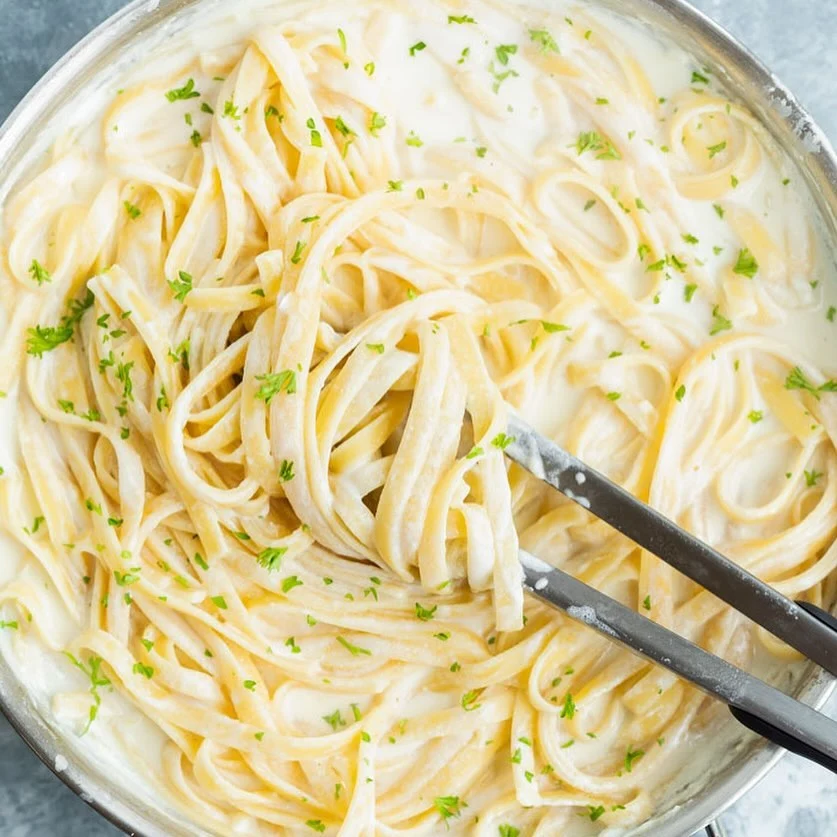
Adding the cheese in small handfuls, whisking each addition in fully before the next, rather than dumping it all in at once, gives the fat and protein time to bind smoothly into the cream instead of clumping together on contact.
Preparation
Grate the Parmesan finely just before you start cooking, rather than ahead of time, since cheese sitting out loses some of its melting quality the longer it’s exposed to air. Mince the garlic. Measure out the cream and have it at room temperature if possible, since cream straight from the fridge takes longer to come up to the right temperature and holds the pan at a lower heat longer than it should.
Step-by-Step Method
- Melt the butter in a heavy-bottomed saucepan over medium heat, swirling the pan occasionally until it’s fully liquid with no solid pieces remaining.
- Add the minced garlic and cook for about 1 minute, just until it turns fragrant and starts to lightly sizzle, pulling it off heat immediately if it starts to take on any color, since browned garlic turns bitter fast in this much fat.
- Pour in the heavy cream, whisking it into the butter until fully combined, then bring the mixture to a gentle simmer, small bubbles breaking at the edges of the pan rather than a rolling boil.
- Let the cream simmer for about 5 minutes, stirring occasionally, until it’s reduced by roughly a third and coats the back of a spoon more thickly than when it started.
- Remove the pan from the heat completely, setting it on a cool burner or trivet, since the residual heat in the cream is enough to melt the cheese without any direct flame underneath.
- Add the grated Parmesan a small handful at a time, whisking constantly and letting each addition melt in fully before adding more. Because the pan is off heat, this takes a bit of patience, but rushing it is exactly what causes the sauce to break.
- Once all the cheese is incorporated and the sauce looks glossy and smooth, stir in the nutmeg and season with salt and white pepper, tasting before adding much salt since Parmesan already carries a fair amount on its own.
- If the sauce has thickened more than you’d like, whisk in the reserved pasta water a tablespoon at a time until it reaches a consistency that coats a spoon without feeling heavy.
- Serve immediately over hot pasta or alongside chicken, since the sauce continues to thicken as it sits and loses some of its silkiness the longer it waits off heat.
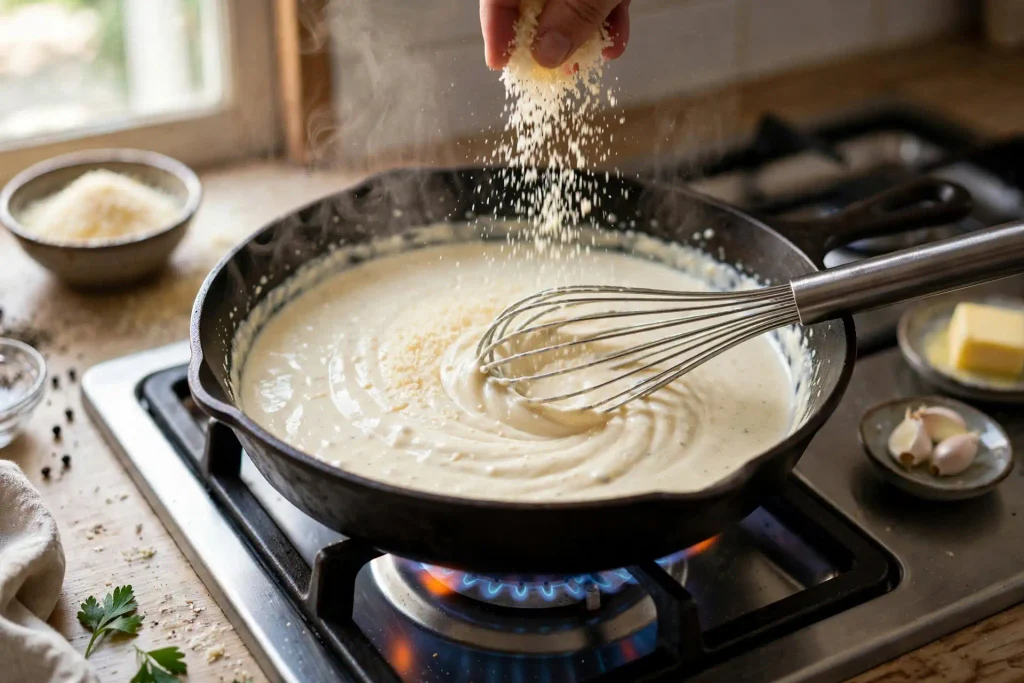
Chef’s Note: If your sauce looks grainy or oily after the cheese goes in, it was likely still over active heat. Pull it fully off the burner next time, the pan’s residual warmth really is enough.
Chef’s Note: Pre-shredded Parmesan might seem like a reasonable shortcut, but the anti-caking starch coating it resists melting evenly, often leaving small undissolved clumps throughout the sauce.
Chef’s Note: The step most people rush is the cream reduction. Skipping ahead to the cheese before the cream has thickened leaves a thinner final sauce no matter how much Parmesan goes in afterward.
You may also like: swedish meatballs
Expert Tips & Tricks
This sauce doesn’t hold well ahead of time, it’s genuinely best made fresh right before serving, since reheating tends to separate it even when it came together perfectly the first time.
Leftovers keep in an airtight container in the fridge for up to 2 days, though expect some separation, a gentle reheat over very low heat with a splash of extra cream whisked in can bring most of it back together.
If you want a sharper flavor, swap a quarter of the Parmesan for Pecorino Romano, which brings a saltier, more pointed taste than Parmesan alone.
Toss hot pasta directly into the sauce in the pan rather than pouring sauce over plated pasta, this coats every strand more evenly and keeps the dish from pooling liquid at the bottom of the bowl.
A few twists of fresh black pepper added right before serving brighten the richness without changing the fundamental flavor of the sauce.
Doubling this recipe works fine in the same pan, just extend the cream reduction time slightly since there’s more volume to thicken.
Common Mistakes & Troubleshooting
Sauce turns grainy and oily instead of smooth. This almost always means the cheese was added while the pan was still over active heat. Pull the pan off the burner completely before adding any Parmesan, relying on residual heat to melt it.
Sauce tastes gluey or pasty. Usually caused by using pre-shredded cheese, whose anti-caking coating doesn’t melt the same way fresh-grated Parmesan does. Grate your own cheese right before cooking for a smoother result.
Sauce is too thin even after the cream reduces. This can mean the reduction didn’t go long enough, or not enough cheese was used relative to the cream. Give the cream its full 5 minutes of simmering, and don’t skimp on the Parmesan amount.
Sauce separates after sitting for a few minutes. Alfredo naturally thickens and can separate slightly as it cools, since the fat and protein aren’t as stable once off heat for a while. Serve it as close to immediately as possible, and reheat leftovers gently with extra cream if needed.
Garlic tastes bitter in the finished sauce. This happens when the garlic browns too much before the cream goes in. Keep the heat moderate and pull the butter and garlic off as soon as it turns fragrant, well before any real color develops.
Honest Trade-Off
Skipping flour and relying on reduction and real cheese ratio instead means this sauce is less forgiving of temperature mistakes than a roux-based version, which holds together more easily even when things go slightly wrong. A flour-thickened alfredo is more stable for a beginner cook or for holding over low heat during a dinner party, it just tastes noticeably starchier underneath the cheese. Someone newer to sauce-making who wants more margin for error might prefer the roux version; someone chasing the real, silkier texture should stick with this method and pay attention to the temperature steps.
Storage & Make-Ahead
This sauce is genuinely best made fresh and doesn’t hold up well ahead of time, since the emulsion that makes it smooth tends to break down once it cools and reheats.
If you do have leftovers, refrigerate them in an airtight container for up to 2 days. Reheat very gently over low heat, whisking in a splash of extra cream to help bring the texture back together, expect it to be slightly less silky than when it was first made.
Variations & Substitutions
For a lighter version, swap half the heavy cream for whole milk, though the sauce won’t reduce to the same thickness and may need a bit more Parmesan to compensate.
For a garlic-forward version, double the garlic and let it cook slightly longer before the cream goes in, without letting it brown.
For a protein-boosted version, stir in shredded rotisserie chicken or cooked shrimp right before serving, folding it in gently so it doesn’t cool the sauce down too much.
For a lemon-brightened version, add a teaspoon of fresh lemon zest along with the nutmeg, which cuts through the richness without needing to add acid that could affect the sauce’s stability.
Serving Suggestions
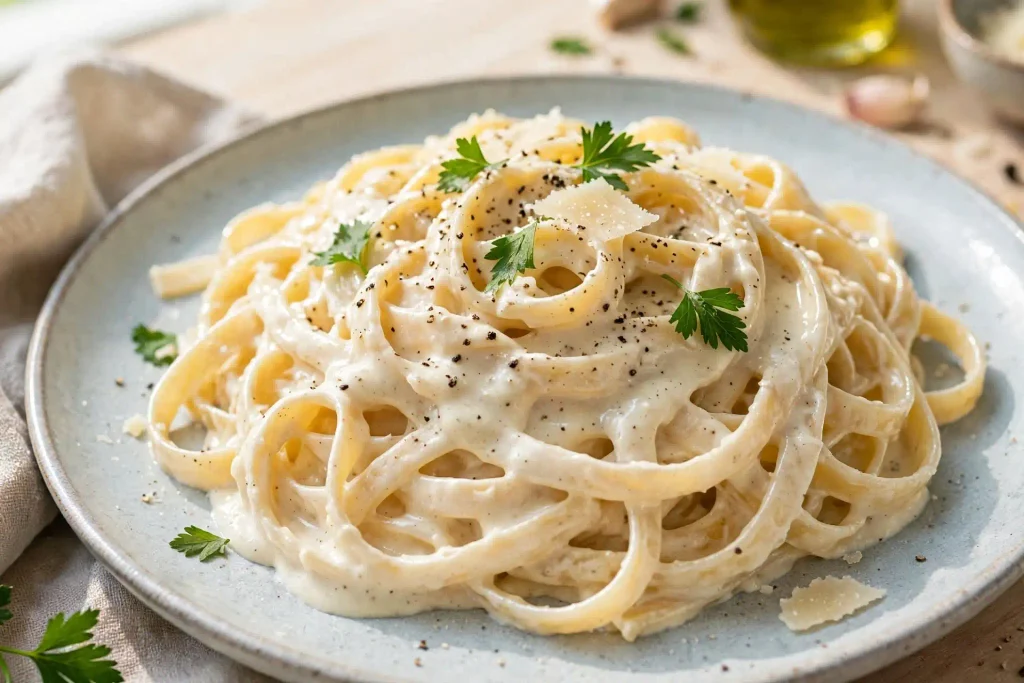
Fettuccine is the traditional pairing, its wide, flat shape holds onto the thick sauce better than thinner pasta shapes do. Grilled chicken breast, sliced and laid over the pasta, adds protein without competing with the sauce’s richness. Steamed broccoli or sautéed spinach on the side brings some color and lightness against the heavy cream base. For drinks, a crisp white wine like Pinot Grigio cuts through the richness better than something sweeter would.
You may also like: butter chicken
FAQ
Can I make alfredo sauce ahead of time?
Not really, this sauce holds together best when served fresh, since the emulsion of butter, cream, and cheese tends to separate once it cools and sits. If you need to reheat leftovers, do it gently over low heat with a splash of extra cream whisked in to help bring it back together.
Why does my alfredo sauce always turn grainy?
This almost always means the Parmesan went into the pan while it was still over active heat instead of off the burner entirely. Pull the pan away from direct heat before adding any cheese, letting the residual warmth in the cream melt it gradually.
Can I use pre-shredded Parmesan instead of grating my own?
You can, but the anti-caking starch coating pre-shredded cheese resists melting smoothly, often leaving small undissolved clumps throughout the finished sauce. Freshly grated Parmesan melts far more evenly and gives a noticeably smoother result.
How do I know when the cream has reduced enough?
Look for the cream to coat the back of a spoon more thickly than it did at the start, usually after about 5 minutes of a gentle simmer. If you run a finger through the coating on the spoon and it holds a clear line, it’s reduced enough to move on to the cheese.
Is this recipe safe for someone with a dairy allergy?
No, this sauce is built entirely around butter, cream, and real Parmesan, and there isn’t a substitution here that genuinely replicates the texture or flavor. Anyone avoiding dairy is better off looking at a sauce built around a plant-based base from the start.
One Thing Worth Remembering
Temperature control, not ingredient quality alone, is what decides whether this sauce turns out smooth or breaks into a greasy mess. Pull the pan off heat before the cheese goes in, add it slowly, and even a basic Parmesan holds together better than an expensive wheel added too fast over a hot burner. That one habit, patience with the heat, matters more here than almost any other variable in the recipe.
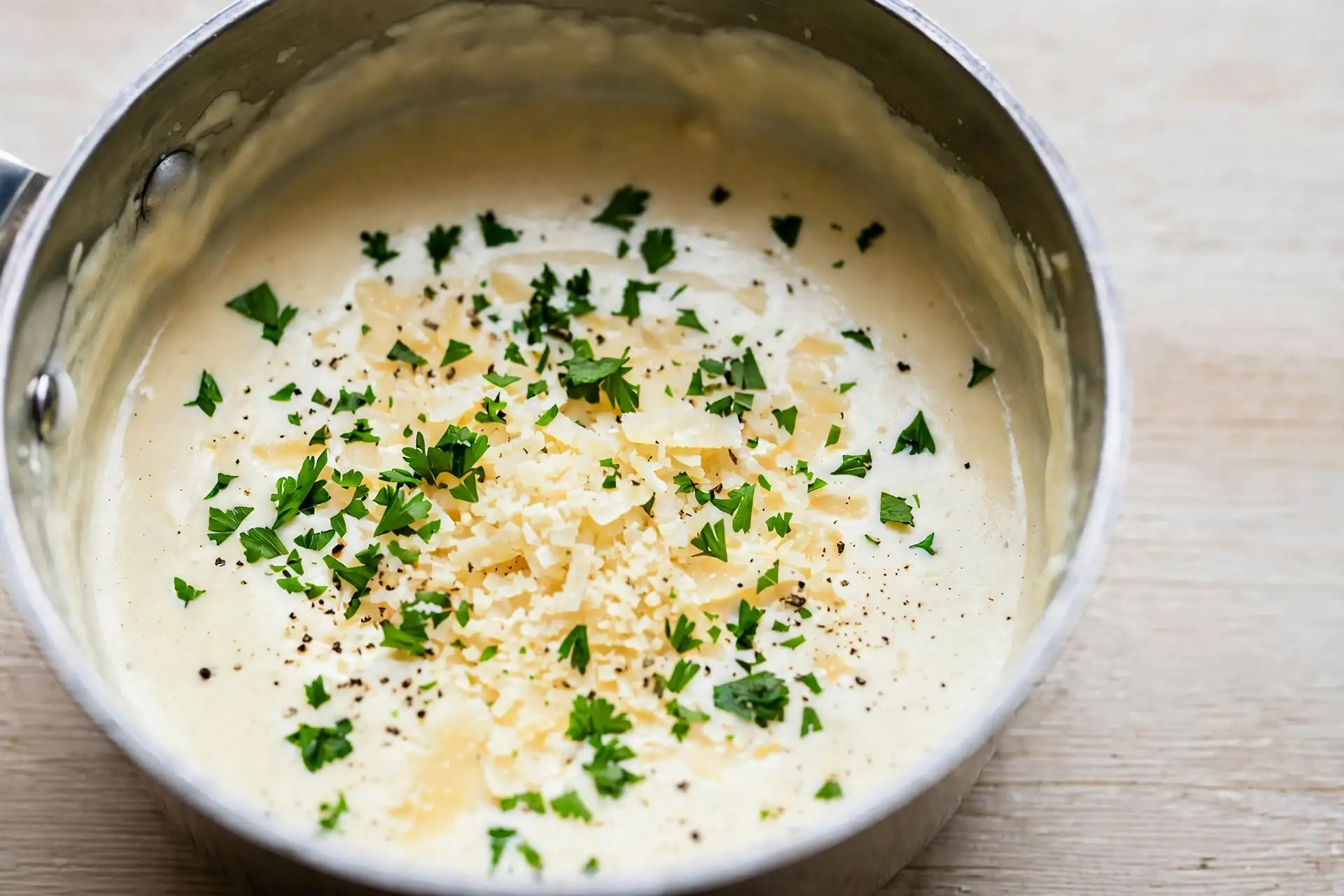
Alfredo Sauce
Ingredients
Method
- Melt butter in a heavy-bottomed saucepan over medium heat.
- Add garlic, cook about 1 minute until fragrant, avoid browning.
- Whisk in cream, bring to a gentle simmer.
- Simmer 5 minutes until reduced by about a third.
- Remove pan from heat completely.
- Whisk in Parmesan gradually, a handful at a time, until smooth.
- Stir in nutmeg, season with salt and white pepper.
- Loosen with reserved pasta water if needed.
- Serve immediately over hot pasta or alongside chicken.