Million Dollar Spaghetti
Million Dollar Spaghetti That Actually Tastes Like It
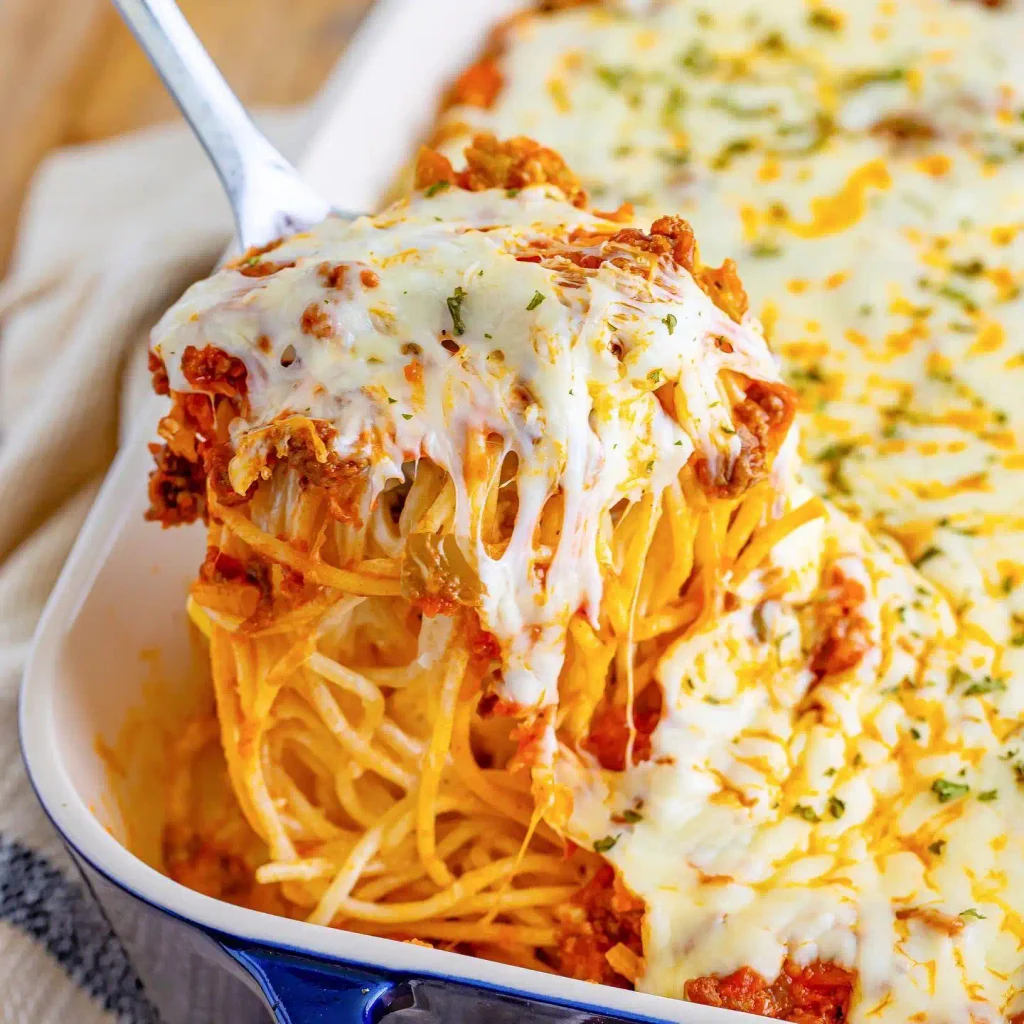
Ground beef simmered in marinara, a scoop of cream cheese and sour cream, three kinds of cheese melted over the top: million dollar spaghetti pulls together five separate components into one casserole dish, and it bakes into something closer to lasagna than a bowl of noodles. The name comes from the layered filling, which turns plain spaghetti into a dish rich enough for a potluck centerpiece. This version keeps the classic cream cheese layer but tightens the bake time so the noodles on top crisp slightly instead of drying out.
Why This Casserole Holds Up So Well
The cream cheese layer sits between the noodles and the meat sauce, so it never gets exposed to direct oven heat, which is why it stays soft instead of curdling. Mixing sour cream into the cream cheese base loosens it enough to spread evenly across the pasta without tearing through it. Cottage cheese works as a substitute here too, and it actually holds moisture better over a 25 minute bake than cream cheese alone. Leftovers reheat cleanly because the layered structure keeps the sauce from soaking straight through to the bottom of the dish. A 9×13 pan feeds eight without needing a side dish, which matters if you’re bringing this to a potluck instead of eating it at home. The dish also freezes assembled and unbaked, so you can build one now and bake it directly from frozen on a busier night.
Quick Information
Prep time: 20 minutes. Cook time: 30 minutes. Total time: 50 minutes. Servings: 8. Difficulty: easy. Calories: approximately 480 per serving. The ingredient that matters most here is full-fat cream cheese, since low-fat versions separate under heat and leave the filling grainy. Best for weeknight dinners that need to stretch into next day’s lunch, or a potluck dish that travels well in its own pan.
Ingredients
For the meat sauce:
Ground beef gives this dish its base, and 85/15 keeps enough fat to carry flavor through the sauce without pooling grease on top once baked.
- 1 pound ground beef
- 1 small yellow onion, diced
- 3 garlic cloves, minced
- 1 jar (24 ounces) marinara sauce
- 1 teaspoon dried oregano
- 1/2 teaspoon salt
- 1/4 teaspoon black pepper
For the pasta:
- 1 pound spaghetti
- 2 tablespoons butter
For the cream cheese layer:
Cottage cheese can stand in for the cream cheese at a 1:1 ratio, and it holds up slightly better under the second bake if you’re reheating leftovers the next day.
- 8 ounces cream cheese, softened
- 1/2 cup sour cream
- 1/4 cup grated parmesan
For the top:
Mozzarella melts the fastest of the three cheeses here, so it goes on last, right before the pan goes into the oven.
- 2 cups shredded mozzarella
- 1/4 cup grated parmesan
- 2 tablespoons chopped fresh parsley, for serving
You may also like: tuna noodle casserole
Recipe Timing
Prep: 20 minutes. Cook: 30 minutes. Rest: none required. Total: 50 minutes. Servings: 8. Difficulty: easy. Course: dinner. Cuisine: Italian-American.
Allergens
This dish contains dairy (cream cheese, sour cream, mozzarella, parmesan, butter) and gluten (spaghetti). For a dairy-free version, swap in cashew-based cream cheese and a dairy-free shredded cheese blend, though the melt and texture on top will be noticeably thinner. For gluten-free, a rice-based spaghetti holds its shape well in this bake; corn-based pasta tends to go mushy once it sits in the sauce.
Equipment Needed
- 9×13 inch baking dish
- Large pot for boiling pasta
- Large skillet for the meat sauce
- Hand mixer or sturdy whisk, for the cream cheese layer (mixing cold cream cheese by hand takes real effort and usually leaves lumps)
- Colander
- Aluminum foil
Nutrition Information (estimated)
Calories: 480. Protein: 26g. Carbs: 38g. Fat: 24g. Fiber: 3g. Sugar: 6g. Sodium: 620mg. Serving size: one 1/8 portion of a 9×13 pan. Servings per recipe: 8. This dish delivers a solid protein count per serving thanks to the combined beef and dairy layers. These figures are estimates based on standard USDA nutrient data for the listed ingredients and will vary by brand and exact measurements.
Why the Layering Actually Matters
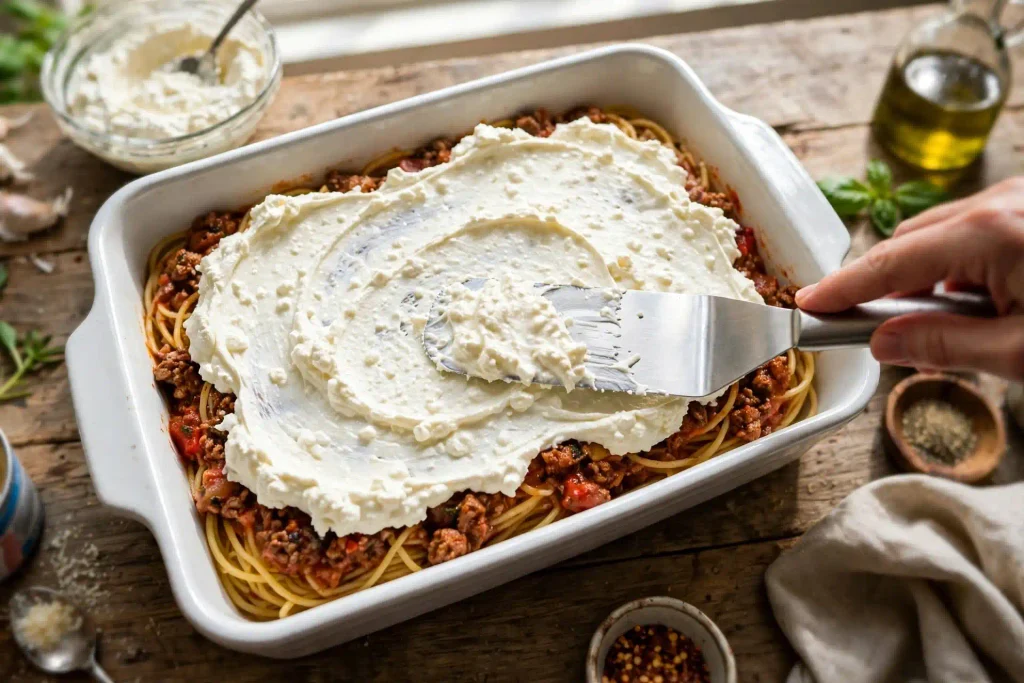
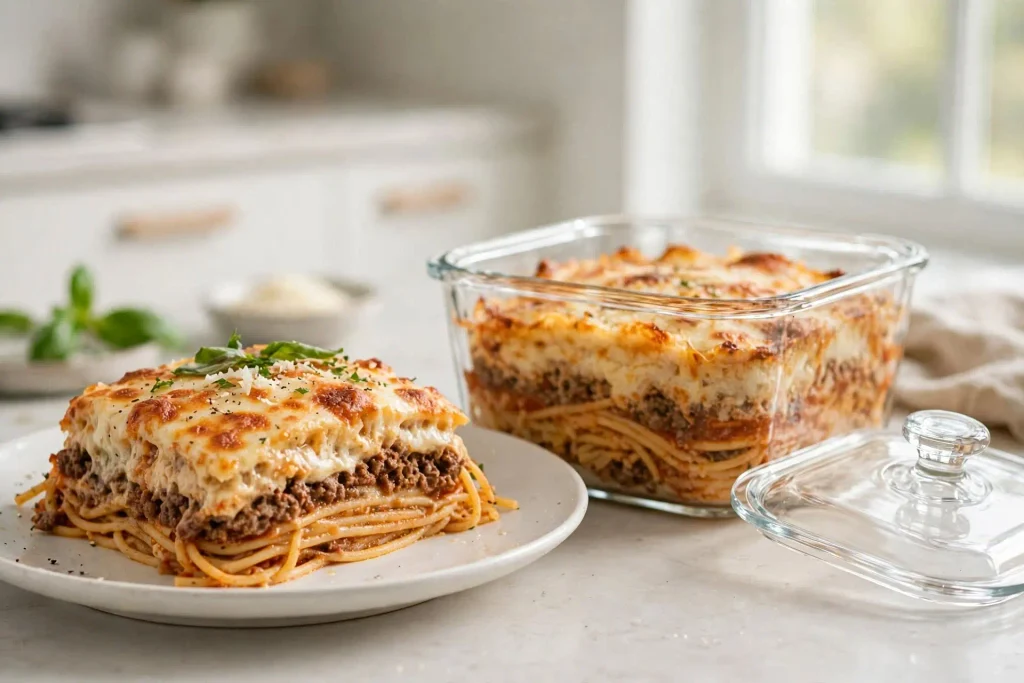
Most spaghetti bakes mix everything into one bowl before it goes in the dish, which means the cheese ends up distributed thin throughout instead of concentrated anywhere. Million dollar spaghetti keeps the layers separate on purpose: noodles on the bottom, cream cheese mixture in the middle, meat sauce next, mozzarella and parmesan last. Because the cream cheese layer sits sandwiched between two other layers, it insulates from direct oven heat and stays smooth instead of breaking. If you spread it directly under the cheese topping with nothing above it, you get a grainy, separated texture by the time the top browns. That’s the one thing that separates a good version of this dish from a mediocre one: keeping that middle layer actually in the middle.
Preparation
Bring a large pot of salted water to a boil for the spaghetti. While the water heats, dice the onion and mince the garlic so they’re ready when the beef starts browning. Preheat the oven to 350°F and lightly grease the 9×13 dish with butter or a thin layer of oil so the bottom layer of noodles doesn’t stick.
Step-by-Step Method
Cook the spaghetti until just short of al dente, about 2 minutes less than the package suggests, since it will finish softening in the oven. Drain and toss with the 2 tablespoons of butter to keep the strands from clumping while you build the rest of the dish.
In a large skillet over medium-high heat, cook the ground beef with the diced onion until the beef is no longer pink and the onion has gone translucent, roughly 7 to 8 minutes. Since this involves raw ground beef, use a meat thermometer to confirm it reaches 160°F before moving on.
Add the garlic and cook for 30 seconds, just until it smells fragrant, then stir in the marinara, oregano, salt, and pepper. Let the sauce simmer for 5 minutes so the flavors settle together before it goes into the dish.
While the sauce simmers, beat the cream cheese, sour cream, and 1/4 cup parmesan together until completely smooth, with no visible streaks of cream cheese left in the mixture.
Chef’s note: if the cream cheese is still cold from the fridge, microwave it for 15 seconds first, since trying to whip cold cream cheese smooth by hand is the most commonly skipped step people regret skipping.
Spread the buttered spaghetti in an even layer across the bottom of the prepared baking dish. Dollop the cream cheese mixture over the noodles and spread it gently with a spatula, working from the center outward so you don’t drag noodles up into it.
Pour the meat sauce evenly over the cream cheese layer, covering it completely so no white patches show through.
Chef’s note: covering it fully here matters more than it looks like it should, since any exposed cream cheese will dry out and toughen under direct oven heat.
Top with the mozzarella and remaining parmesan, then cover the dish tightly with foil. Bake covered for 20 minutes, until the cheese underneath has fully melted and the sauce is bubbling at the edges of the pan.
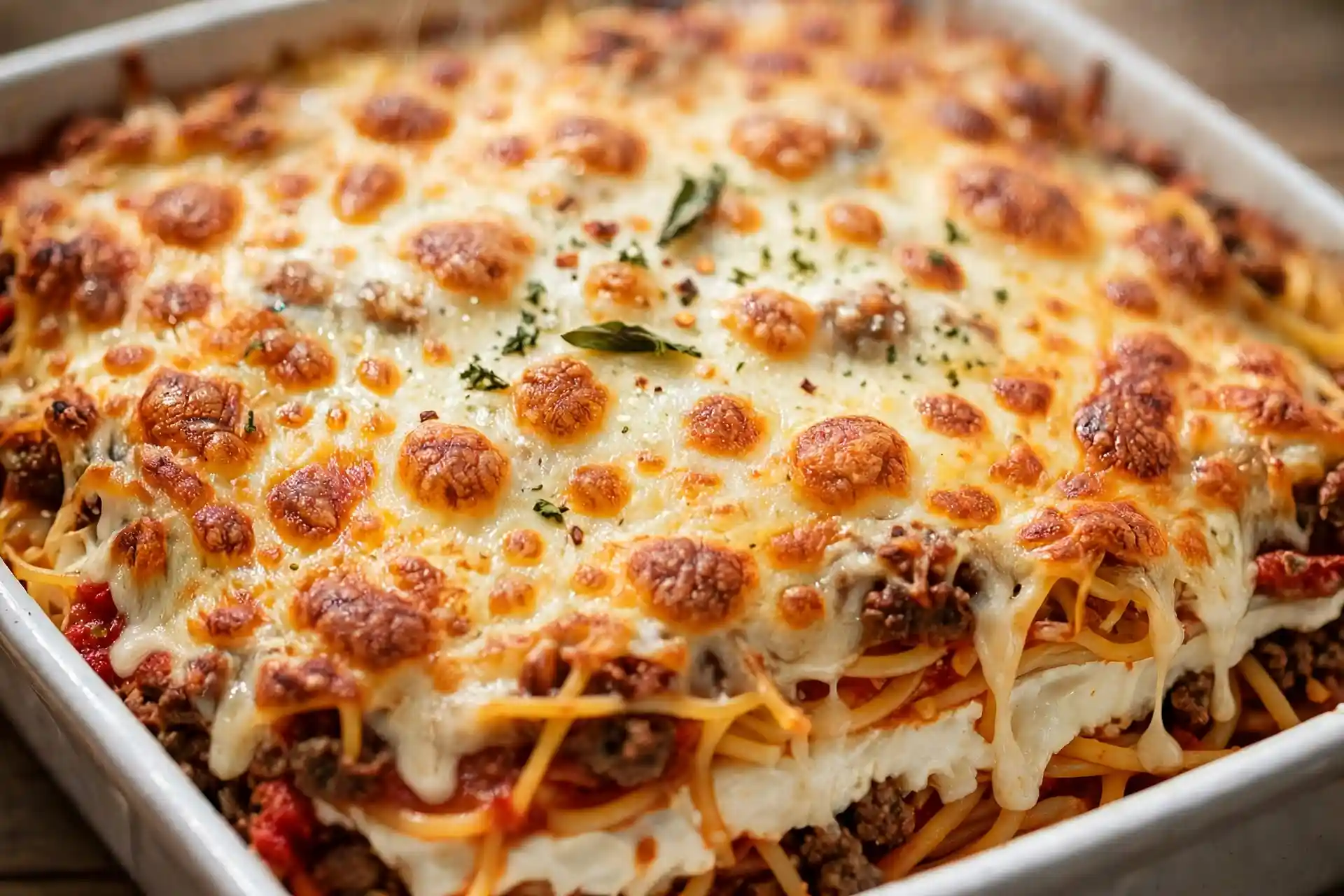
Remove the foil and bake uncovered for another 8 to 10 minutes, until the top cheese turns golden in spots and the edges of the pasta poking through start to crisp slightly.
Chef’s note: pulling the foil off for this last stretch is what gives the top texture; skipping it leaves the cheese melted but pale.
Let the dish rest for 5 minutes before serving, which gives the layers time to set so a slice holds together on the plate instead of sliding apart.
Expert Tips
- Make-ahead: assemble the full dish up to a day ahead, cover, and refrigerate unbaked. Add 5 to 8 minutes to the covered bake time since it’s starting cold.
- Storage: leftovers keep for 4 days refrigerated in an airtight container.
- Undercooking the pasta slightly before baking keeps it from turning mushy once it absorbs sauce in the oven.
- Draining the beef of excess fat before adding the sauce keeps the finished dish from pooling grease along the edges of the pan.
- Grating your own parmesan instead of using pre-shredded melts smoother, since pre-shredded cheese is coated in anti-caking starch that resists melting evenly.
- Letting the cream cheese and sour cream sit at room temperature for 20 minutes before mixing cuts your prep time almost in half.
You may also like: swedish meatballs
Common Mistakes
The cream cheese layer turns grainy. This happens when cold cream cheese gets whipped without softening first, so it never fully smooths out before hitting the oven. Bring it closer to room temperature or microwave it briefly before mixing.
The bottom layer of noodles sticks to the pan. Skipping the butter or oil on the baking dish is the usual cause. A thin coat on the bottom and sides solves it every time.
The top never browns. Leaving the foil on for the entire bake keeps the cheese soft but pale. Pull the foil for the last 8 to 10 minutes specifically to let it brown.
The dish turns watery after baking. Marinara with a thin, watery consistency straight from the jar carries that moisture into the bake. Simmering the sauce for the full 5 minutes before layering reduces it enough to avoid this.
Reheated leftovers dry out. Microwaving without any added moisture pulls water out of the sauce layer. Add a splash of water or extra marinara before reheating, covered, to keep it from drying.
One Trade-Off Worth Knowing
Compared to a traditional baked ziti or straight meat sauce spaghetti, this version takes noticeably longer to assemble because of the extra cream cheese layer and mixing step. If you’re feeding a crowd on a tight 30 minute window on a weeknight, a simpler one-pot spaghetti bake will get you there faster. This dish is better suited to weekends, potlucks, or any night where the extra 15 minutes of prep is worth the payoff in texture.
Storage and Make-Ahead
Refrigerate leftovers in an airtight container for up to 4 days. For freezing, assemble the dish completely but skip the bake, wrap tightly in plastic and then foil, and freeze for up to 3 months. Bake from frozen at 350°F for about 55 to 60 minutes covered, then 10 minutes uncovered, since starting cold adds roughly 25 extra minutes to the covered portion. This dish freezes well specifically because the layered structure keeps the noodles from turning to mush the way a fully mixed casserole would after thawing.
Variations
For a spicier version, swap half the marinara for arrabbiata sauce or stir in a diced jalapeño with the onion. For kids or milder palates, cut the oregano in half and skip any added red pepper entirely. A vegetarian version swaps the ground beef for a plant-based crumble or sautéed mushrooms and lentils, browned the same way for 7 to 8 minutes. Whole wheat or chickpea pasta both hold their shape well here if you want more fiber without changing the texture much.
What to Serve With It
A simple green salad with a sharp vinaigrette cuts through the richness of the cream cheese layer better than a creamy dressing would. Garlic bread on the side leans into the Italian-American flavor profile without competing with the pasta itself. For a lighter pairing, roasted broccoli or green beans add texture contrast against the soft baked noodles.
You may also like: shrimp tacos
Frequently Asked Questions
Can I make million dollar spaghetti ahead of time?
Yes, assemble the full dish up to 24 hours ahead and refrigerate it unbaked, covered tightly. Add 5 to 8 minutes to the covered bake time to account for starting from cold. This is the easiest way to get ahead on a busy week.
Why did my cream cheese layer turn out grainy?
Cold cream cheese doesn’t whip smooth, so it separates once it hits oven heat. Let it sit at room temperature for 20 minutes or microwave it for 15 seconds before mixing with the sour cream and parmesan.
Can I use a different pasta shape?
Penne or rotini both work if you don’t have spaghetti on hand, though they won’t layer quite as flat on the bottom of the dish. Cook them the same amount under al dente to account for the oven finish.
How do I know the beef is fully cooked?
Use a meat thermometer and check for 160°F, or look for no remaining pink and a slightly firm texture when you press a piece with a spoon. Don’t rely on color alone since ground beef can look done before it’s actually safe.
Is this dish safe for someone with a dairy allergy?
No, this recipe relies on cream cheese, sour cream, mozzarella, and parmesan throughout, so it’s not suitable as written for a dairy allergy. A dairy-free cream cheese and shredded cheese blend can substitute, though the texture on top will melt thinner than the original.
The Bottom Line
Million dollar spaghetti earns its name from the layering, not from any single expensive ingredient. Getting the cream cheese fully smooth before it goes in the dish and pulling the foil for that last stretch of baking are the two steps that decide whether it turns out right. Once you’ve made it once, the timing becomes second nature, and it’s one of the few baked pasta dishes that reheats just as well as it bakes the first time.
Million Dollar Spaghetti
Ingredients
Method
- Cook spaghetti 2 minutes under package al dente time; drain and toss with butter.
- Brown ground beef with onion over medium-high heat, 7-8 minutes, until beef reaches 160°F.
- Add garlic, cook 30 seconds; stir in marinara, oregano, salt, and pepper; simmer 5 minutes.
- Beat cream cheese, sour cream, and 1/4 cup parmesan until smooth.
- Layer buttered spaghetti in a greased 9×13 dish, spread cream cheese mixture over top.
- Pour meat sauce evenly over cream cheese layer, covering completely.
- Top with mozzarella and remaining parmesan; cover with foil, bake at 350°F for 20 minutes.
- Uncover and bake 8-10 more minutes until golden and bubbling.
- Rest 5 minutes before serving.
Notes
Allergen note: contains dairy and gluten.
Notes: cottage cheese can replace cream cheese 1:1; use room temperature dairy for the smoothest filling.