Butter Chicken
Butter Chicken Recipe: Restaurant-Style Results at Home
Butter chicken sauce fails in most home kitchens for one reason: the tomatoes get sour and thin instead of sweet and silky. That happens when the sauce doesn’t cook long enough to break down properly, or when there’s nothing to round out the acidity besides a splash of cream at the end. This version fixes that by building the sauce in layers, starting with a real marinade for the chicken and finishing with a butter and cream base that actually tastes like the dish you’d order at a good Indian restaurant. If you’ve made butter chicken before and ended up with something closer to spiced tomato soup with chicken in it, the steps below explain exactly where that goes wrong and how to avoid it.
Why This Butter Chicken Tastes Like the Restaurant Version
The marinade uses yogurt and lemon juice together, which tenderizes the chicken through two different mechanisms instead of relying on yogurt alone. Cashews get blended straight into the sauce instead of using extra cream, giving you that thick, slightly nutty body without an overly heavy dairy taste. Kashmiri chili powder goes in for color rather than the standard hot chili powder, so the sauce turns that deep orange-red without turning your mouth into a fire hazard. A pinch of sugar at the end isn’t there to make it sweet, it’s there to cut the acidity of the tomatoes so nothing tastes sharp. And because the chicken is broiled separately before it hits the sauce, you get real char flavor on the edges that a plain simmer never produces.
Quick Info Snapshot
- Prep time: 20 minutes (plus 2 hour marinade)
- Cook time: 40 minutes
- Total time: 3 hours (mostly hands-off marinating)
- Servings: 4
- Difficulty: Moderate
- Calories: 485 per serving
- Key ingredient: Kashmiri chili powder for color and mild heat
- Best for: Weekend dinners, meal prep, entertaining guests
Ingredients
For the Chicken Marinade
The yogurt breaks down muscle fibers while the lemon juice adds a light acidic tang that balances the richness coming later in the sauce.
- 2 lbs boneless, skinless chicken thighs, cut into 1.5 inch pieces
- 1/2 cup plain full-fat yogurt
- 1 tablespoon lemon juice
- 1 tablespoon ginger-garlic paste
- 1 teaspoon Kashmiri chili powder
- 1/2 teaspoon ground turmeric
- 1 teaspoon garam masala
- 1 teaspoon salt
For the Sauce Base
Raw cashews go in whole here because they’ll be blended smooth later, giving the sauce its body without a separate cream reduction step.
- 3 tablespoons ghee or unsalted butter (halal-safe, no substitutions needed)
- 1 medium yellow onion, roughly chopped
- 1 tablespoon ginger-garlic paste
- 2 cups canned crushed tomatoes
- 1/4 cup raw cashews
- 1 cup water
- 1 teaspoon Kashmiri chili powder
- 1 teaspoon garam masala
- 1/2 teaspoon ground cumin
- Salt to taste
To Finish
- 3 tablespoons unsalted butter
- 1/3 cup heavy cream
- 1/2 teaspoon sugar
- 1 teaspoon dried fenugreek leaves (kasuri methi), crushed between your fingers
- Fresh cilantro, chopped, for topping
If you can’t find kasuri methi, leave it out rather than substituting a different dried herb. It has a distinct bitter-sweet flavor nothing else really replicates, and the dish still works fine without it, just slightly less complex.
Recipe Timing
- Prep time: 20 minutes
- Marinate time: 2 hours (minimum), up to overnight
- Cook time: 40 minutes
- Total time: 3 hours
- Servings: 4
- Difficulty: Moderate
- Cuisine: North Indian
- Course: Main dish
You may also like: egg roll in a bowl
Allergen and Dietary Disclosure
This recipe contains dairy (yogurt, butter, cream) and tree nuts (cashews). For a dairy-free version, coconut cream can replace the heavy cream, though the flavor shifts toward slightly sweeter and more tropical. For a nut-free version, soak 2 tablespoons of raw sunflower seeds instead of cashews for thickening, the texture won’t be quite as smooth but it gets close.
Equipment Needed
- Blender or immersion blender, for pureeing the sauce base smooth
- Large heavy-bottomed pot or Dutch oven, prevents scorching during the long simmer
- Broiler-safe baking sheet, for charring the marinated chicken
- Fine mesh strainer, optional but useful if you want an ultra-smooth sauce with no tomato seeds or cashew bits
The heavy-bottomed pot matters more than people think. A thin pot will scorch the tomato paste and onions before they’ve had time to actually cook down, and burnt bits at the bottom will make the whole sauce taste bitter no matter how much cream you add afterward.
Nutrition Information
Estimated per serving (based on 4 servings): 485 calories, 32g protein, 14g carbohydrates, 34g fat, 3g fiber, 7g sugar, 720mg sodium. This is a good source of protein from the chicken thighs. These figures are estimates only, calculated using standard USDA nutritional databases for similar ingredients, and will vary based on exact brands and portion sizes used.
Why Butter Chicken Sauce Comes Out Thin (And How to Fix It)
Most home versions of this dish go wrong at the tomato stage. Canned crushed tomatoes carry a lot of water, and if you don’t give them enough time on the heat before adding cream, that water never fully cooks off. The result is a sauce that looks orange and tastes like watered-down marinara with spices dumped in. Simmering the tomato-onion base for a full 15 to 20 minutes before blending solves this, because that’s roughly how long it takes for the water content to reduce and the raw tomato taste to mellow into something sweeter and rounder.
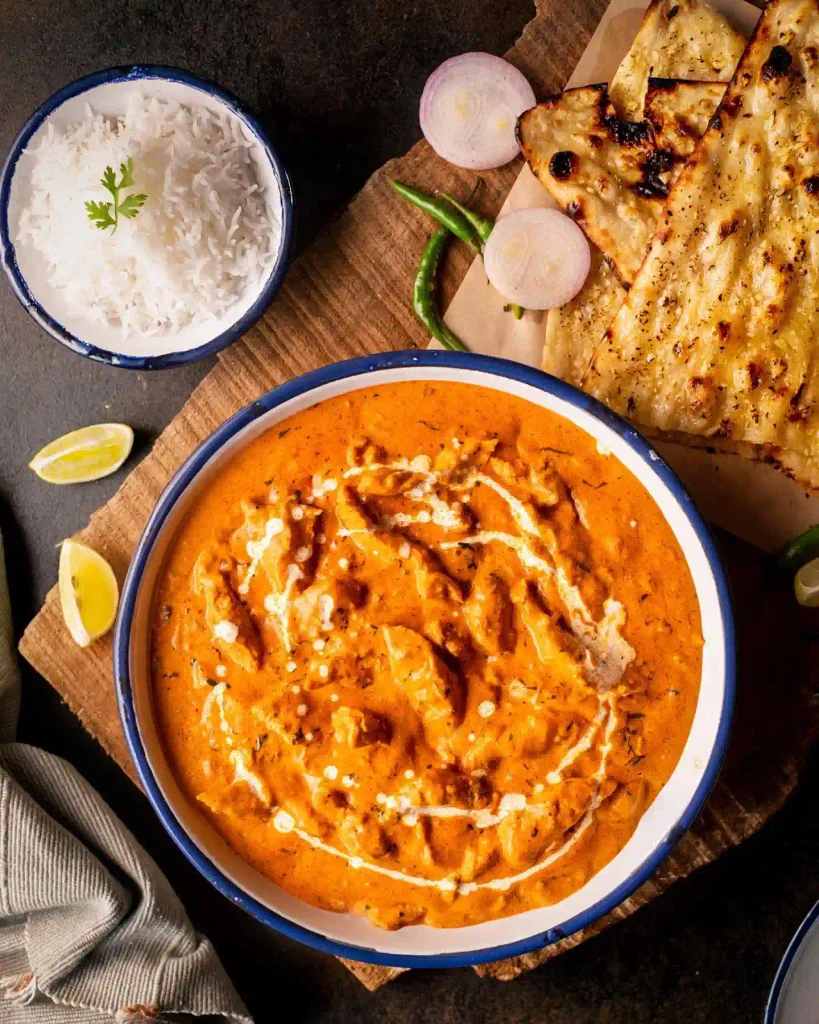
The cashews do double duty here. Blended into the simmered tomato-onion mixture, they thicken the sauce naturally so you’re not relying on cornstarch or extra cream to get that velvety texture. This is also why restaurant butter chicken tastes richer than most homemade attempts even when the cream amount is similar, the nuts are carrying a lot of that body.
Preparation
Cut the chicken into even 1.5 inch pieces so everything cooks at the same rate under the broiler. Mix the marinade ingredients in a bowl large enough to toss the chicken without spilling, then combine chicken and marinade together and refrigerate. Pull the chicken out about 20 minutes before broiling so it’s not ice cold when it hits the heat, which helps it char instead of steam.
Step-by-Step Method
- Combine the chicken with all marinade ingredients in a bowl, cover, and refrigerate for at least 2 hours or up to overnight. Longer marinating produces noticeably more tender chicken, since the acid and enzymes have more time to work through the meat.
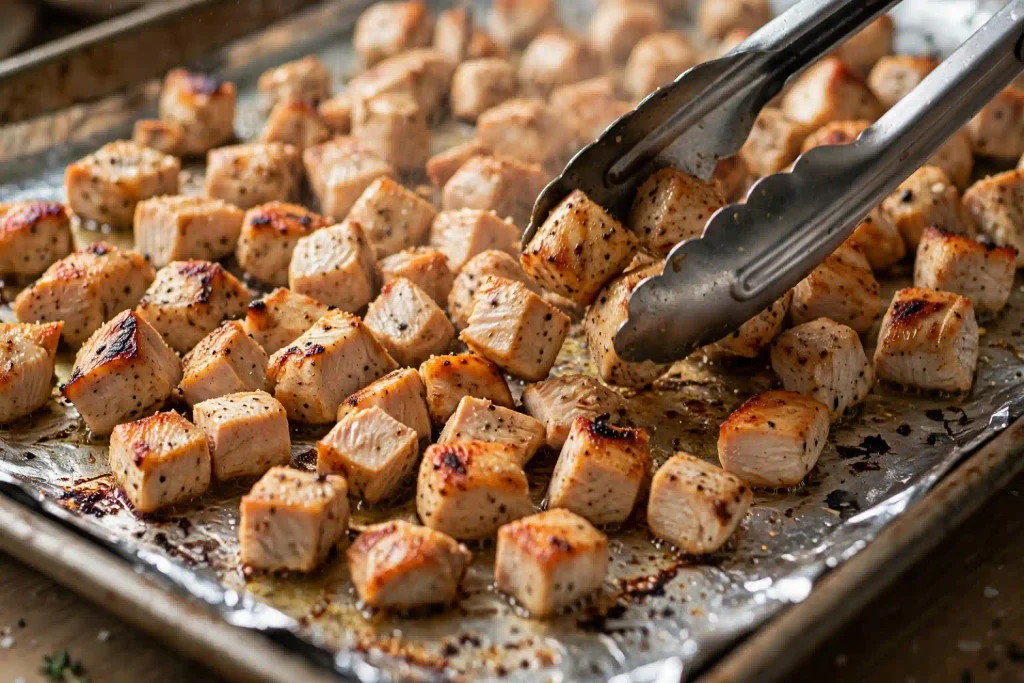
- Preheat your broiler to high and arrange the marinated chicken pieces on a baking sheet in a single layer, leaving space between pieces so they char rather than steam. Broil for 8 to 10 minutes, until the edges are deeply browned and slightly blackened in spots, flipping once halfway through. Because raw chicken is involved here, check that internal temperature hits 165°F before pulling it, using a meat thermometer inserted into the thickest piece.
- While the chicken broils, melt the ghee in your heavy-bottomed pot over medium heat and add the chopped onion. Stirring occasionally, cook the onion until it turns soft and translucent with light golden edges, roughly 6 to 7 minutes.
- Stir in the ginger-garlic paste and cook for 30 seconds, just until the raw garlic smell fades and turns fragrant and slightly nutty. Add the crushed tomatoes, cashews, water, chili powder, garam masala, and cumin, then bring everything to a gentle simmer.
- Let the mixture simmer uncovered for 15 to 20 minutes, stirring every few minutes to prevent sticking at the bottom. You’ll know it’s ready when the sauce has visibly thickened and the oil starts separating slightly at the edges, a sign the tomatoes have fully cooked down.
- Remove the pot from heat and let the mixture cool for 5 minutes before blending, since blending very hot liquid can cause dangerous splatter. Blend until completely smooth, then return the sauce to the pot.
- Add the broiled chicken pieces along with any juices left on the baking sheet, stirring them into the sauce. Simmer for 8 to 10 minutes so the chicken absorbs the sauce flavor and finishes cooking through fully.
- Stir in the butter, heavy cream, sugar, and crushed kasuri methi. Cook for another 2 to 3 minutes on low heat, just enough to warm everything through without letting the cream separate from prolonged boiling.
Chef’s Note: Don’t skip broiling the chicken separately, even though it adds a step. Chicken simmered directly in the sauce from raw never develops the charred flavor that makes butter chicken taste like butter chicken instead of just chicken curry.
Chef’s Note: Crush the kasuri methi between your palms right before adding it. This releases the oils inside the dried leaves, and skipping this step means you lose most of its flavor.
Chef’s Note: If your sauce still tastes flat after adding the finishing butter and cream, it usually needs more salt, not more spice. Salt is what makes the other flavors register properly on your tongue.
The most commonly skipped step is letting the tomato base actually simmer the full 15 to 20 minutes before blending. Rushing this step is the single biggest reason homemade butter chicken tastes thin and acidic instead of rich.
Expert Tips and Tricks
- Make ahead: The sauce base (before adding chicken, butter, and cream) can be made up to 3 days in advance and stored separately in the fridge. Reheat gently, then add the broiled chicken and finishing ingredients fresh.
- Storage: Leftovers keep in an airtight container in the fridge for up to 4 days.
- Use chicken thighs instead of breast meat. Thighs have more fat and connective tissue, so they stay tender through the double cooking process (broiling, then simmering) instead of drying out.
- Toast the raw cashews lightly in a dry pan for 2 minutes before adding them to the sauce. This deepens their flavor and makes the finished sauce taste less flat.
- Taste the sauce before adding the sugar. Some canned tomato brands are already sweeter than others, and adding a full teaspoon of sugar to an already sweet tomato can throw off the balance.
- If you’re short on time, marinating for even 30 minutes still helps, though 2 hours or longer gives noticeably better results in terms of tenderness.
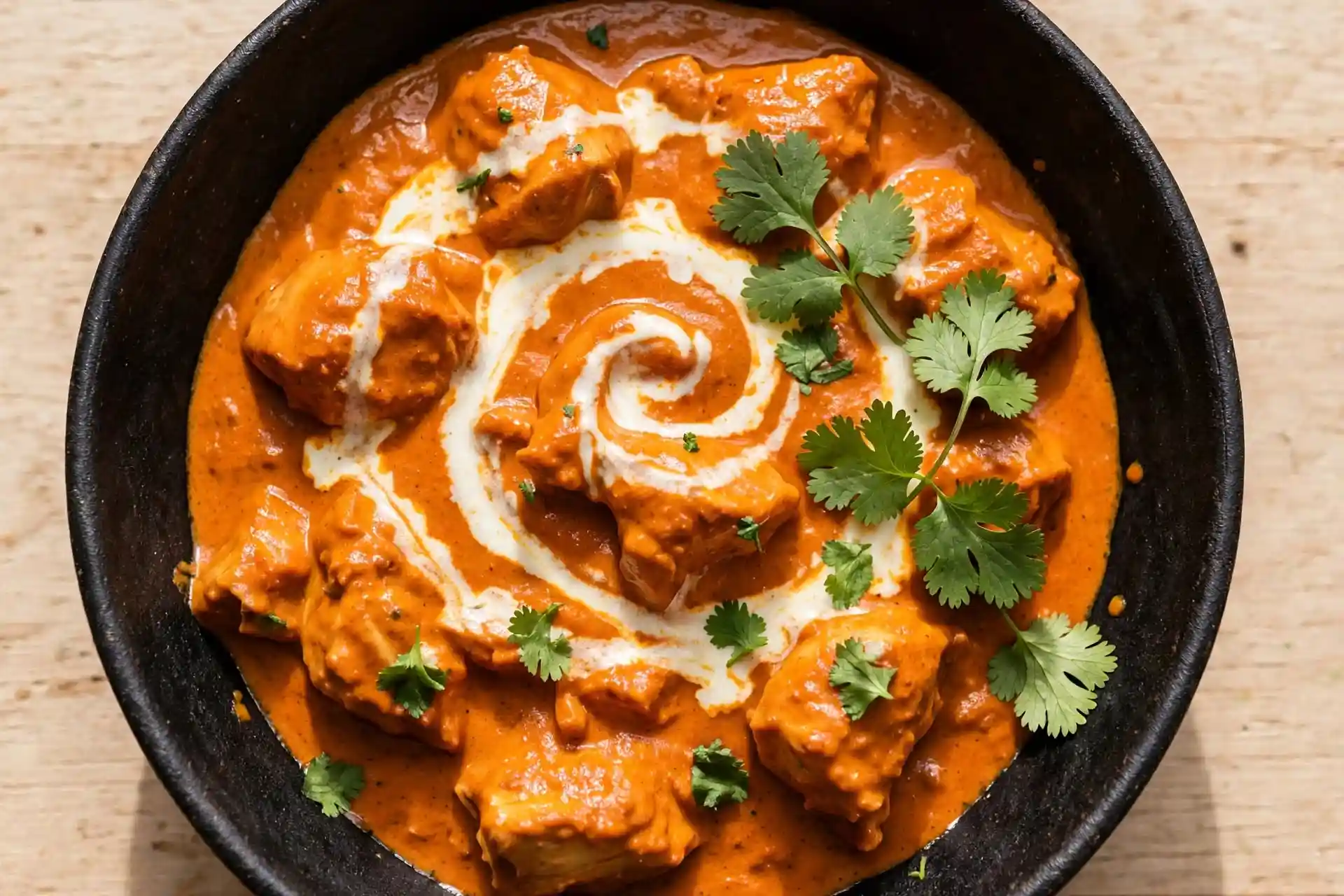
- Reserve a spoonful of heavy cream to swirl on top right before serving for that classic restaurant presentation.
You may also like: Marry Me Chicken
Common Mistakes and Troubleshooting
Sauce tastes too acidic or sharp. This happens when the tomatoes haven’t simmered long enough before blending. Fix it by simmering the finished sauce an extra 5 to 10 minutes, or stir in an extra pinch of sugar to balance the acid.
Chicken turns out dry. Usually caused by overcooking during the broiling stage, or using chicken breast instead of thighs. Pull the chicken the moment it hits 165°F and don’t leave it under the broiler longer than needed for color.
Sauce breaks or looks curdled after adding cream. This happens when cream is added to a sauce that’s still at a rolling boil. Lower the heat to a bare simmer before stirring in the cream, and don’t let it boil again afterward.
Sauce is too thin even after simmering. If your canned tomatoes were particularly watery, you may need more cashews to compensate for their creaming and thickening effect, or simmer 5 to 10 minutes longer uncovered.
Sauce tastes bland despite following the recipe exactly. Almost always a salt issue. Add salt in small increments after the final simmer and taste as you go, since the right amount varies with which brand of canned tomatoes you used.
Honest Trade-Off
This version leans on blended cashews and a longer simmer instead of the professional-kitchen method of reducing a stock-based gravy over several hours. It gets you 90 percent of the way there in under an hour of active cooking, but if you’ve had butter chicken at a restaurant that makes its own tandoori tikka gravy from scratch over a full day, this won’t taste quite as deep or smoky. Anyone chasing that exact restaurant-kitchen depth of flavor would be better off finding a recipe built around a proper tandoor or charcoal grill for the chicken instead of a home broiler.
Storage and Make-Ahead
Store leftover butter chicken in an airtight container in the fridge for up to 4 days. Reheat gently on the stovetop over low heat, adding a splash of water or cream if the sauce has thickened too much overnight. This freezes reasonably well for up to 2 months, though the texture of the cream can separate slightly upon thawing, a quick whisk while reheating usually brings it back together.
Variations and Substitutions
For a spicier version, add an extra 1/2 teaspoon of Kashmiri chili powder along with a small pinch of cayenne, since Kashmiri chili alone won’t add much heat on its own. For a milder, kid-friendly version, cut the chili powder in half and skip the cayenne entirely. A vegetarian version works well with paneer cubes lightly pan-fried before adding to the sauce instead of chicken. For gluten-free needs, this recipe is already naturally gluten-free as written, just double check your garam masala blend doesn’t contain any additives with gluten.
Serving Suggestions
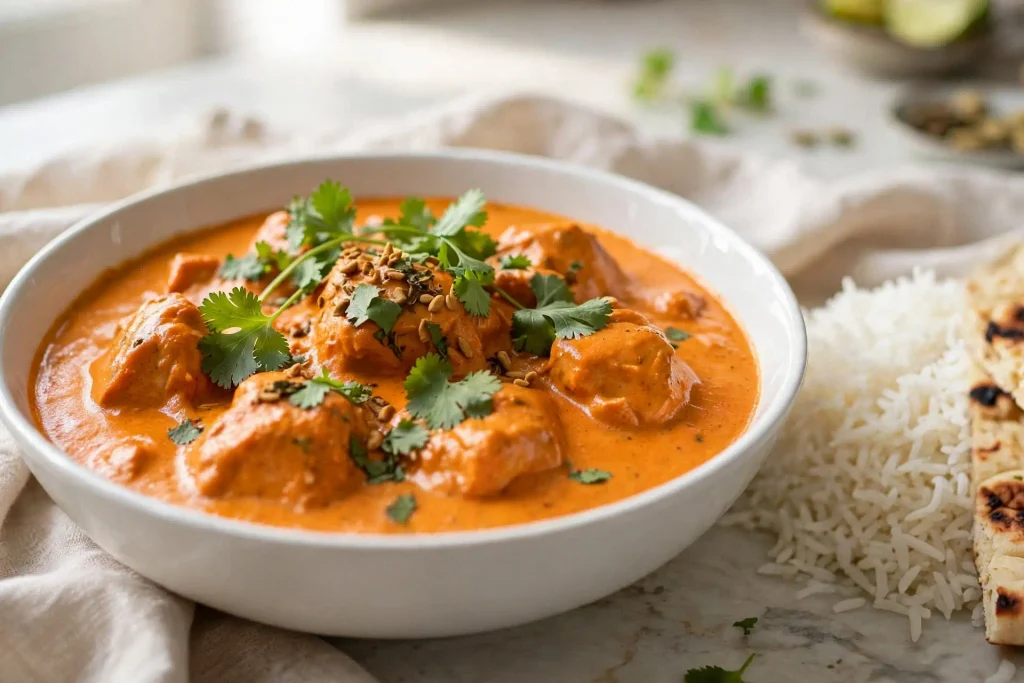
Butter chicken pairs naturally with steamed basmati rice or warm naan for scooping up the sauce. A simple cucumber raita on the side helps cool down the richness of the dish. For a full meal, consider pairing it with a lighter side dish that doesn’t compete with the sauce’s richness, something like [internal link: mississippi pot roast] style comfort food works for an entirely different night, but for this meal, a simple side salad or roasted vegetables keeps things balanced.
Callout: If you want extra-smooth sauce with zero texture from cashew bits or tomato skins, pass it through a fine mesh strainer after blending, before adding the chicken back in. This step is optional but makes a noticeable difference for anyone particular about texture.
You may also like: Mississippi Pot Roast
Frequently Asked Questions
Can I make butter chicken ahead of time?
Yes, and it actually tastes better the next day once the flavors have had time to meld. Make the full recipe, cool it completely, and store in the fridge for up to 4 days. Reheat gently on the stove rather than in the microwave for the best texture.
Why did my butter chicken sauce turn out watery?
This almost always comes down to not simmering the tomato base long enough before blending it smooth. Give it a full 15 to 20 minutes uncovered so the water content has time to cook off properly.
Can I use chicken breast instead of thighs for butter chicken?
You can, but expect a drier result since breast meat has less fat to keep it moist through both the broiling and simmering stages. If using breast, reduce the broiling time by 2 to 3 minutes and watch it closely.
Is heavy cream necessary, or can I substitute something lighter?
You can use half-and-half or coconut cream, though the sauce will be thinner and less rich with either swap. Coconut cream also adds a subtle sweetness that changes the overall flavor slightly.
What’s a good side dish for a full butter chicken dinner?
Basmati rice and garlic naan are the classic pairing since they’re built for soaking up sauce. A cooling side like cucumber raita or a simple green salad rounds out the richness nicely.
Final Thoughts
The difference between forgettable butter chicken and the version you keep making on repeat comes down to patience at two specific points: letting the sauce actually reduce before blending, and not skipping the broiling step for the chicken. Both take extra time you might be tempted to cut, but they’re the parts doing the real work. Once you’ve made it this way a couple of times, you’ll notice exactly how the sauce should look and smell when it’s ready, and from there it stops being a recipe you follow and starts being one you just know.
Butter Chicken
Ingredients
Method
- Marinate the chicken with all marinade ingredients for at least 2 hours, up to overnight.
- Broil the chicken on a baking sheet for 8 to 10 minutes, flipping once, until charred at the edges and cooked through to 165°F.
- Sauté the onion in ghee over medium heat for 6 to 7 minutes until soft and golden at the edges.
- Add ginger-garlic paste and cook 30 seconds, then stir in tomatoes, cashews, water, chili powder, garam masala, and cumin. Bring to a simmer.
- Simmer uncovered for 15 to 20 minutes, until thickened and the oil separates slightly at the edges.
- Cool 5 minutes, then blend until smooth and return to the pot.
- Add the broiled chicken and its juices. Simmer 8 to 10 minutes.
- Stir in butter, cream, sugar, and crushed kasuri methi. Warm through 2 to 3 minutes on low heat.

2 Comments
Comments are closed.