
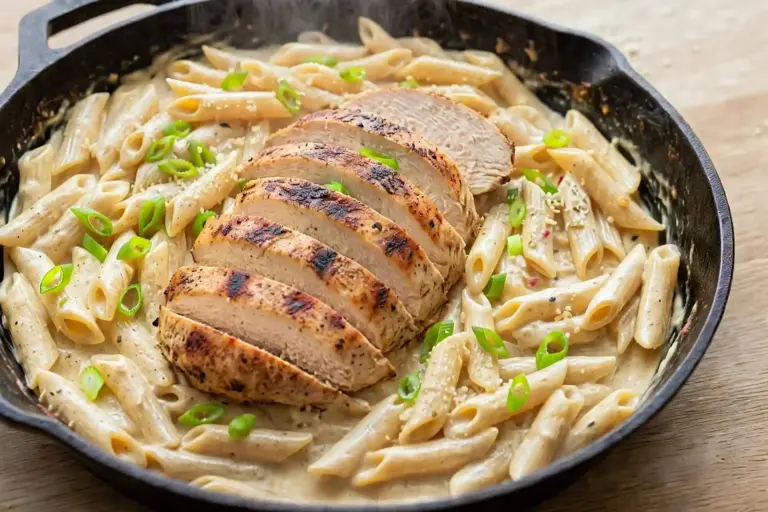
Buffalo Chicken Pasta
Buffalo Chicken Pasta That Doesn’t Break the Sauce
The thing that ruins most buffalo chicken pasta is a sauce that breaks, hot sauce and butter separate from the cream the second they hit too much heat, leaving an oily layer on top instead of a smooth coating on the noodles. Keeping the sauce together comes down to temperature control and the order you add things in, not a different brand of hot sauce. Get that right, and this comes together faster than most weeknight pasta dishes anyway.
Why This Buffalo Chicken Pasta Holds Its Sauce So Well
Melting the butter into the hot sauce off direct heat, rather than boiling them together, keeps the fat from separating out before the cream even gets added. Using full-fat cream cheese instead of just heavy cream gives the sauce a stability that cream alone can’t match, cream cheese emulsifies and holds fat and liquid together far better under heat. Reserving pasta water and adding it gradually lets you control the sauce’s final thickness without diluting the buffalo flavor by just dumping in plain water. Tossing the cooked pasta directly in the sauce off the heat, rather than pouring sauce over plated noodles, coats every piece evenly instead of leaving some strands bare. A final drizzle of ranch or blue cheese dressing right before serving cools the dish slightly and keeps the heat from overwhelming every single bite.
Quick Information
- Prep time: 10 minutes
- Cook time: 20 minutes
- Total time: 30 minutes
- Servings: 5
- Difficulty: Easy
- Calories per serving: approximately 540
- Most important ingredient: full-fat cream cheese, for sauce stability
- Best for: game day, weeknight dinners, anyone craving buffalo wings in pasta form
Ingredients
For the chicken and sauce:
- 1 ½ pounds boneless, skinless chicken breasts, diced into bite-sized pieces
- 2 tablespoons olive oil
- 1 teaspoon garlic powder
- 1 teaspoon salt, plus more to taste
- ½ teaspoon black pepper
- 4 tablespoons unsalted butter
- ⅔ cup buffalo hot sauce (such as Frank’s RedHot)
- 8 ounces full-fat cream cheese, softened and cubed
- 1 cup chicken broth
- ½ cup heavy cream
Full-fat cream cheese is doing more structural work here than flavor work, its proteins and fat emulsify the sauce in a way heavy cream alone simply can’t manage once hot sauce and butter are added to the mix.
For the pasta and topping:
- 1 pound penne or rotini pasta
- 1 cup shredded cheddar or Monterey Jack cheese
- ¼ cup crumbled blue cheese, optional
- 2 tablespoons chopped green onion
- Extra buffalo sauce and ranch or blue cheese dressing, for serving
Penne or rotini hold sauce in their ridges and curves far better than a smooth noodle like spaghetti, which matters here since this sauce is thick enough to cling rather than just coat thinly.
You may also like: taco pasta
Recipe Timing
Prep 10 minutes, cook 20 minutes, no rest time needed, total 30 minutes. Serves 5. Easy difficulty. American comfort food, main dish.
Allergen and Dietary Disclosure
This recipe contains dairy (butter, cream cheese, heavy cream, shredded cheese) and gluten (pasta). For a dairy-free version, swap the cream cheese and heavy cream for dairy-free equivalents and the cheese for a dairy-free shredded blend, though the sauce will be noticeably less rich and may not hold together quite as well. For gluten-free, swap in a gluten-free pasta shape of similar size.
Equipment Needed
- Large pot (for boiling pasta)
- Large skillet
- Whisk
- Tongs
- Colander
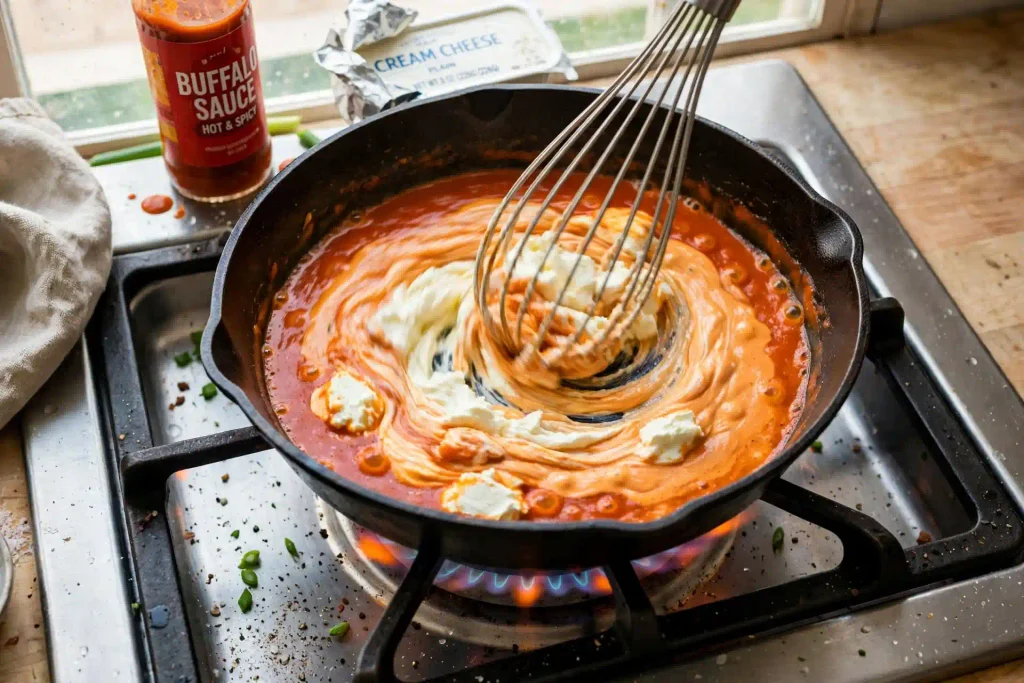
A whisk matters more here than it sounds, whisking the cream cheese into the hot sauce mixture gradually is what keeps the sauce smooth instead of lumpy, stirring with a spoon alone often leaves small unmelted bits behind.
Nutrition Information
Per serving (based on 5 servings, not including dressing): 540 calories, 32g protein, 42g carbohydrates, 28g fat, 2g fiber, 4g sugar, 980mg sodium. This is an estimate based on standard USDA nutrition data for the ingredients listed and will vary by brand and exact portion size.
Why Buffalo Sauce Breaks So Easily in Cream-Based Dishes
Hot sauce is mostly vinegar and water, which doesn’t naturally want to combine with fat like butter or cream, the two tend to separate the moment the mixture gets too hot or sits too long without enough emulsifying power to hold them together. Cream cheese acts as that emulsifier here, its proteins physically bind the fat and liquid molecules together in a way plain cream or butter alone can’t replicate, which is the real reason this version stays smooth instead of splitting into an oily, watery mess.
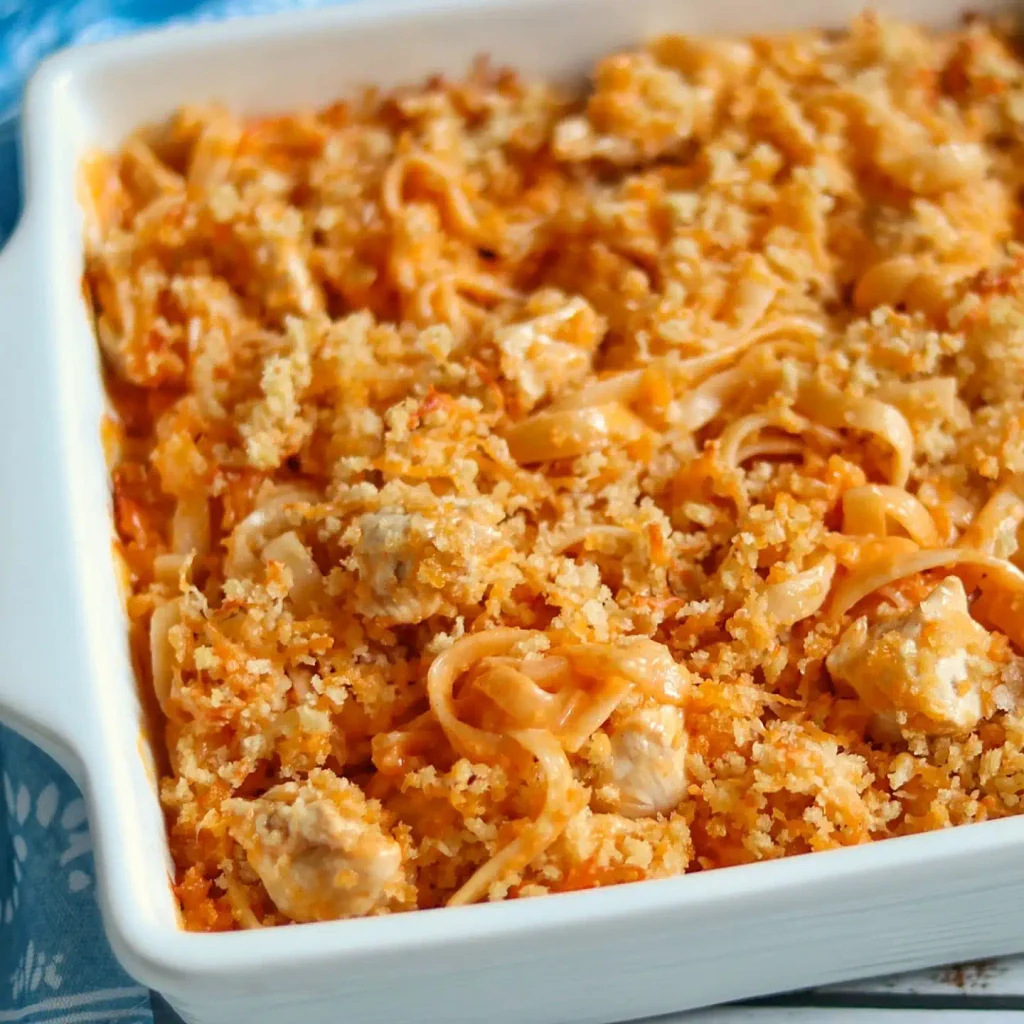
Preparation
Bring a large pot of salted water to a boil for the pasta while you prep the chicken, so both components move forward at the same time. Dice the chicken into even, bite-sized pieces so it cooks through at the same rate, and season it with the garlic powder, salt, and pepper ahead of time.
Step-by-Step Method
1. Cook the pasta according to package directions until al dente. Before draining, reserve 1 cup of the starchy pasta water, you’ll need it later to loosen the sauce. Drain the pasta and set aside.
2. While the pasta cooks, heat the olive oil in a large skillet over medium-high heat. Add the seasoned chicken pieces in a single layer and cook, stirring occasionally, until golden brown and cooked through, about 6 to 7 minutes. Food safety note: chicken needs to reach an internal temperature of 165°F to be safe to eat.
3. Remove the cooked chicken from the skillet and set aside on a plate, leaving any browned bits in the pan, those bits carry flavor that’ll work into the sauce in the next step.
4. Lower the heat to medium and melt the butter directly in the same skillet. Once melted, pour in the buffalo hot sauce and stir to combine, letting it warm through gently rather than letting it come to a hard boil.
5. Reduce the heat to low and add the cubed cream cheese a few pieces at a time, whisking continuously as each addition melts in before adding more. Rushing this step by dumping all the cream cheese in at once is the most common reason the sauce turns out lumpy instead of smooth.
6. Once the cream cheese is fully incorporated, slowly whisk in the chicken broth and heavy cream. Keep the heat low throughout this step, since too much heat here is exactly what causes the fat to separate back out after all that whisking.
7. Let the sauce simmer gently for 3 to 4 minutes, until it thickens slightly and coats the back of a spoon. It should look glossy and uniform, not greasy or separated.
8. Return the cooked chicken to the skillet along with the drained pasta, tossing everything together directly in the sauce so every piece gets coated evenly, rather than pouring sauce over plated noodles afterward.
9. Add the reserved pasta water a few tablespoons at a time if the sauce feels too thick to coat the pasta smoothly, stirring between additions until you reach a consistency that clings without pooling at the bottom of the pan.
10. Remove from heat and stir in the shredded cheese until melted. Top with blue cheese crumbles if using, chopped green onion, and an extra drizzle of buffalo sauce or ranch dressing right before serving.
Chef’s Note: If your sauce does start to separate despite the low heat, whisk in a splash of the reserved pasta water off the heat, the starch in the water can sometimes help pull it back together.
Chef’s Note: Don’t skip reserving the pasta water before draining. It’s easy to forget in the moment, but without it there’s no good way to adjust the sauce’s thickness later without watering down the flavor.
Chef’s Note: Taste the sauce before adding the chicken and pasta back in, this is the point to adjust how much buffalo heat you want, since once everything’s mixed together it’s harder to fix the balance evenly.
You may also like: cajun chicken pasta
Expert Tips & Tricks
- Make-ahead: The buffalo sauce base can be made up to 2 days ahead and reheated gently over low heat before tossing with freshly cooked pasta and chicken. Making the full dish fully ahead isn’t recommended since the pasta absorbs sauce and texture suffers over time.
- Storage: Keeps in the fridge for up to 3 days in an airtight container, the sauce thickens considerably as it sits, so plan on adding a splash of broth or water when reheating.
- Use rotisserie chicken as a shortcut if you’re short on time, shred it and stir it directly into the finished sauce instead of cooking raw chicken separately.
- Keep the heat low through the entire sauce-building process, it’s tempting to rush by turning up the burner, but that’s exactly what causes the butter and hot sauce to separate from the cream.
- If you like it spicier, add an extra splash of buffalo sauce at the very end, after tasting, rather than increasing the amount in the base recipe, since the sauce intensifies slightly as it sits with the pasta.
- A squeeze of fresh lemon juice at the end brightens the richness of the sauce in a way that’s easy to overlook but makes a real difference.
Common Mistakes & Troubleshooting
Sauce separates into an oily, broken mess. The heat was too high at some point during cooking, usually right after the hot sauce and butter were combined or while the cream cheese was melting in. Keep the burner on low through the entire sauce-building process and add ingredients gradually.
Sauce turns out lumpy instead of smooth. The cream cheese was added all at once instead of in small pieces, or it wasn’t softened enough before going into the pan. Cube it and let it come closer to room temperature first, then whisk in a few pieces at a time.
Pasta tastes bland despite the spicy sauce. The pasta water wasn’t salted enough during boiling, so the noodles themselves carry no seasoning underneath the sauce. Salt the pasta water generously, it should taste noticeably salty on its own before the pasta even goes in.
Dish turns out too thick and gluey. Not enough reserved pasta water was added back in to loosen the sauce. Add it gradually, a few tablespoons at a time, until the sauce clings to the pasta without feeling stiff or dry.
Chicken turns out dry. It was likely overcooked, either from being cut too small or left in the pan too long before being set aside. Pull it from the heat as soon as it’s cooked through and no longer pink, it’ll finish warming through again once it’s stirred back into the hot sauce.
Honest Trade-Off
This version trades some of the sharp, vinegar-forward punch of classic buffalo wings for a richer, creamier overall dish, since the cream cheese and heavy cream mellow the hot sauce’s intensity. If you want that sharper, more aggressive buffalo flavor without the creamy richness, tossing plain cooked chicken and pasta in straight buffalo sauce and butter will get you there, though you’ll lose the smooth, clinging texture this version builds.
Storage & Make-Ahead
Store in an airtight container in the refrigerator for up to 3 days. Reheat gently on the stove over low heat, adding a splash of broth or milk to loosen the sauce back up since it thickens considerably once chilled. This dish isn’t a great candidate for freezing, the cream cheese-based sauce tends to separate and turn grainy once thawed, so it’s best enjoyed fresh or as a short-term leftover.
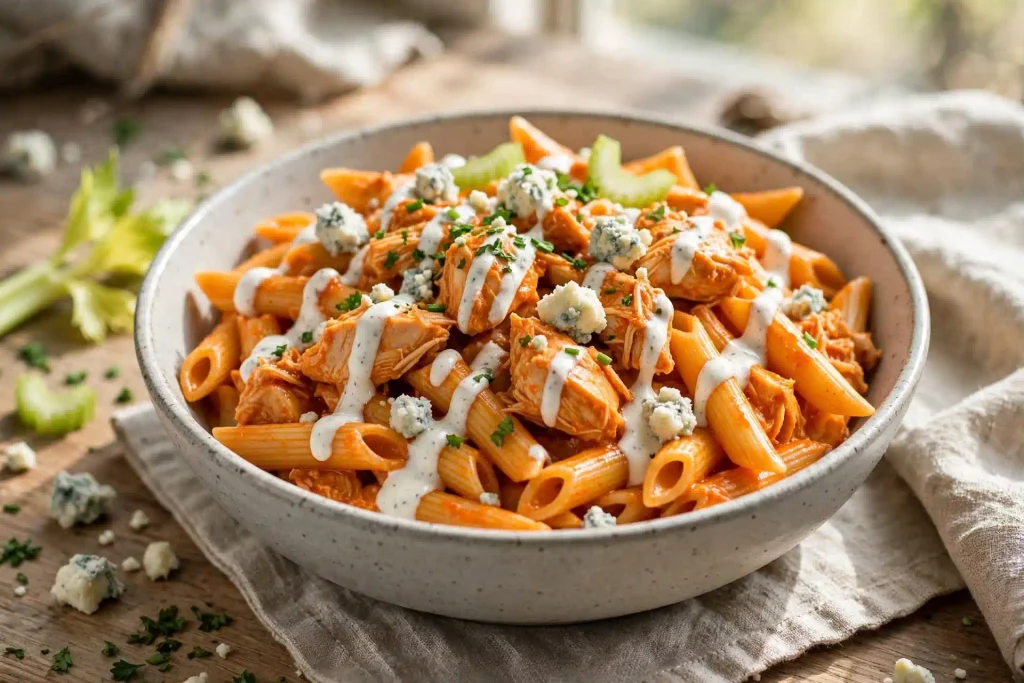
Variations & Substitutions
For a milder version, cut the buffalo hot sauce in half and make up the difference with extra chicken broth, keeping the overall sauce volume the same while dialing back the heat.
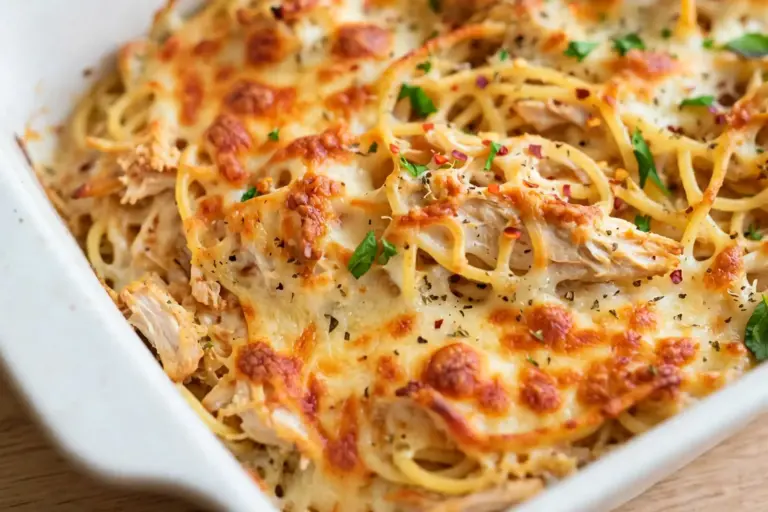
For a baked version, transfer the finished pasta to a baking dish, top with extra shredded cheese, and broil for 2 to 3 minutes until bubbly and golden, turning this into more of a casserole-style dish.
For a lighter version, swap the heavy cream for additional chicken broth and use reduced-fat cream cheese, the sauce will be slightly less rich but still holds together reasonably well.
Callout: Toast the dry pasta briefly in a dry pot for a minute before boiling it. It’s a small step that adds a subtle nutty background note that plain boiled pasta doesn’t have on its own.
Serving Suggestions
Buffalo chicken pasta pairs naturally with a simple celery and carrot stick platter on the side, a direct nod to classic buffalo wings. A side salad with ranch dressing works well too, echoing the cooling element already drizzled over the pasta itself. If you’re planning a game day spread with more than one pasta dish, chicken spaghetti offers a milder, kid-friendly option to serve alongside this spicier one. A cold beer or lemonade helps balance the heat well.
Callout: Keep a small bowl of extra shredded cheese at the table for anyone who wants to stir in more once their bowl starts cooling slightly, it melts back in easily and refreshes the texture.
FAQ
Can I make buffalo chicken pasta ahead of time?
The sauce base can be made up to 2 days ahead and reheated gently before tossing with freshly cooked pasta and chicken. Making the fully assembled dish ahead isn’t ideal, since the pasta continues absorbing sauce and the texture suffers the longer it sits.
Why did my sauce separate into an oily mess?
This almost always comes down to heat that was too high at some point, usually right when the butter and hot sauce combined or while melting in the cream cheese. Keep the burner on low throughout and add the cream cheese gradually in small pieces.
Can I use a different hot sauce besides Frank’s RedHot?
Yes, any classic buffalo-style hot sauce works, just keep in mind that different brands vary in heat level and vinegar intensity, so taste and adjust the amount to your preference rather than following the measurement exactly.
How do I know when the chicken is fully cooked?
An instant-read thermometer inserted into the thickest piece should read 165°F. If you don’t have a thermometer, cut into the largest piece, it should look opaque all the way through with no pink remaining.
Is this recipe safe for someone with a dairy allergy?
Not as written, since the sauce relies heavily on cream cheese, heavy cream, and shredded cheese for both flavor and structure. Dairy-free substitutes can work for each component, though the sauce won’t hold together quite as reliably as the dairy version does.
One Last Thing
Buffalo chicken pasta comes down to patience with the heat more than any specific ingredient brand. Keep the burner low while the sauce comes together, add the cream cheese gradually, and the dish holds its texture all the way to the table instead of breaking into something oily and separated halfway through dinner.
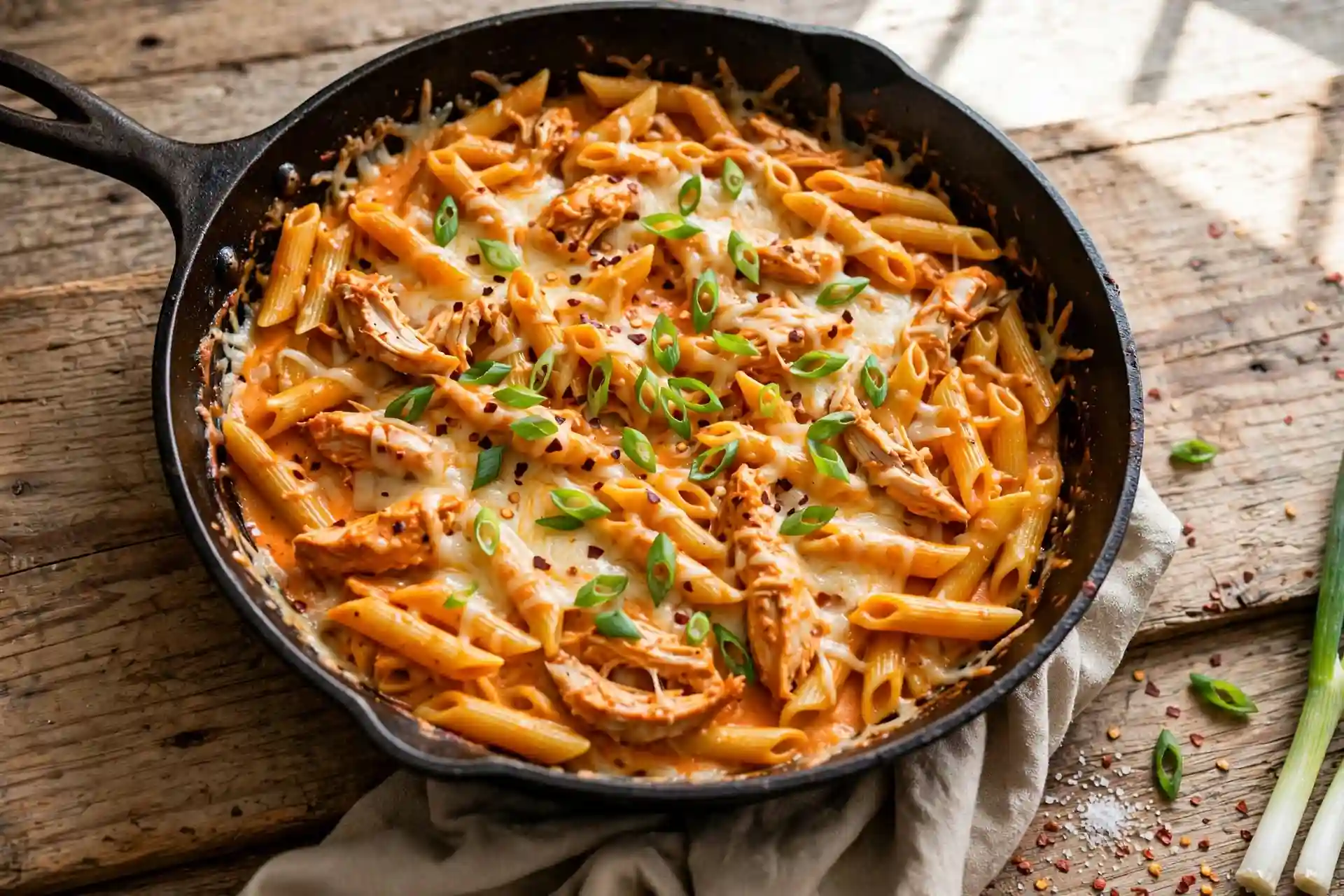
Buffalo Chicken Pasta
Ingredients
Method
- Cook pasta until al dente, reserving 1 cup pasta water before draining.
- Season and cook diced chicken in olive oil until golden and cooked through, 6-7 minutes. Set aside.
- Melt butter in the same skillet, stir in buffalo sauce over medium-low heat.
- Reduce heat to low. Whisk in cream cheese a few pieces at a time until smooth.
- Whisk in chicken broth and heavy cream. Simmer 3-4 minutes until thickened.
- Return chicken and pasta to the skillet, tossing to coat. Add reserved pasta water as needed.
- Stir in shredded cheese. Top with blue cheese, green onion, and extra sauce or dressing.
One Comment
Comments are closed.