Balsamic Chicken
Balsamic Chicken With a Glaze That Actually Sticks
A thin, watery balsamic glaze that slides right off the chicken instead of clinging to it is the most common letdown with this dish. Getting a glaze that actually sticks comes down to reducing it properly, letting the vinegar and a touch of sugar cook down until it’s syrupy before it ever meets the chicken again. Skip that reduction step, and you end up with a pan of sauce that tastes fine but never really coats anything.
Why This Balsamic Chicken Glaze Actually Clings
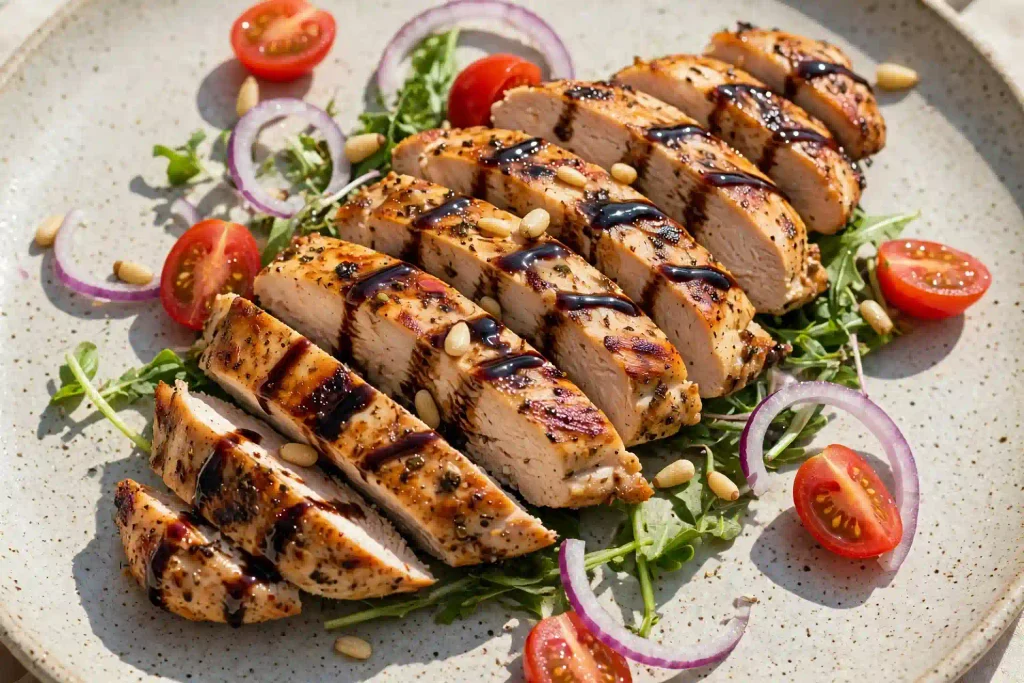
Searing the chicken first and building the sauce in the same pan picks up all the browned bits left behind, which dissolve into the glaze and add a savory depth that a sauce made separately never gets. Reducing the balsamic vinegar and broth together until the mixture visibly thickens and coats a spoon is the single step that turns a thin liquid into an actual glaze, rushing this step is the main reason homemade versions turn out watery. A touch of honey balances the vinegar’s sharpness without making the glaze taste like straight syrup, keeping it savory-forward rather than dessert-sweet. Returning the chicken to the pan at the very end, just long enough to coat it in the reduced glaze, keeps the exterior from going soft the way it would if simmered in liquid the whole time. Letting the chicken rest for a few minutes after plating allows the glaze to set slightly, clinging rather than pooling off onto the plate.
Quick Information
- Prep time: 10 minutes
- Cook time: 20 minutes
- Total time: 30 minutes
- Servings: 4
- Difficulty: Easy
- Calories per serving: approximately 320
- Most important step: reducing the balsamic sauce until it coats a spoon
- Best for: weeknight dinners, a dinner party main that looks fancier than it is
Ingredients
- 4 boneless, skinless chicken breasts (or thighs)
- 1 teaspoon salt, plus more to taste
- ½ teaspoon black pepper
- 2 tablespoons olive oil
- 3 cloves garlic, minced
- ¾ cup balsamic vinegar
- ½ cup chicken broth
- 2 tablespoons honey
- 1 teaspoon dried Italian herbs (or a mix of oregano and basil)
- 2 tablespoons fresh basil, chopped, for serving
A good quality balsamic vinegar matters more here than in dishes where it’s diluted with a lot of other ingredients, since it’s reducing down to become the entire sauce, a cheap, thin vinegar won’t develop the same depth no matter how long it simmers.
You may also like: smothered chicken
Recipe Timing
Prep 10 minutes, cook 20 minutes, no rest time needed, total 30 minutes. Serves 4. Easy difficulty. Italian-inspired, main dish.
Equipment Needed
- Large skillet
- Tongs
- Instant-read thermometer
- Small whisk or spoon
A thermometer matters more than it might seem, chicken breasts vary in thickness enough that judging doneness by time alone can leave thicker pieces undercooked or thinner ones dried out.
Nutrition Information
Per serving (based on 4 servings): 320 calories, 32g protein, 18g carbohydrates, 11g fat, 0g fiber, 16g sugar, 680mg sodium. This is an estimate based on standard USDA nutrition data for the ingredients listed and will vary by brand and exact portion size.
Why Reducing the Sauce Is the Whole Trick
Balsamic vinegar on its own is thin and sharp, almost entirely acid and water by composition, with very little body to cling to anything. Simmering it down concentrates its natural sugars while evaporating off much of that water content, which is what transforms it from a thin, sharp liquid into a syrupy glaze that coats the back of a spoon. Skipping or rushing that reduction leaves the sauce essentially unchanged from straight vinegar, thin, sharp, and unable to cling to the chicken the way a proper glaze should.
Preparation
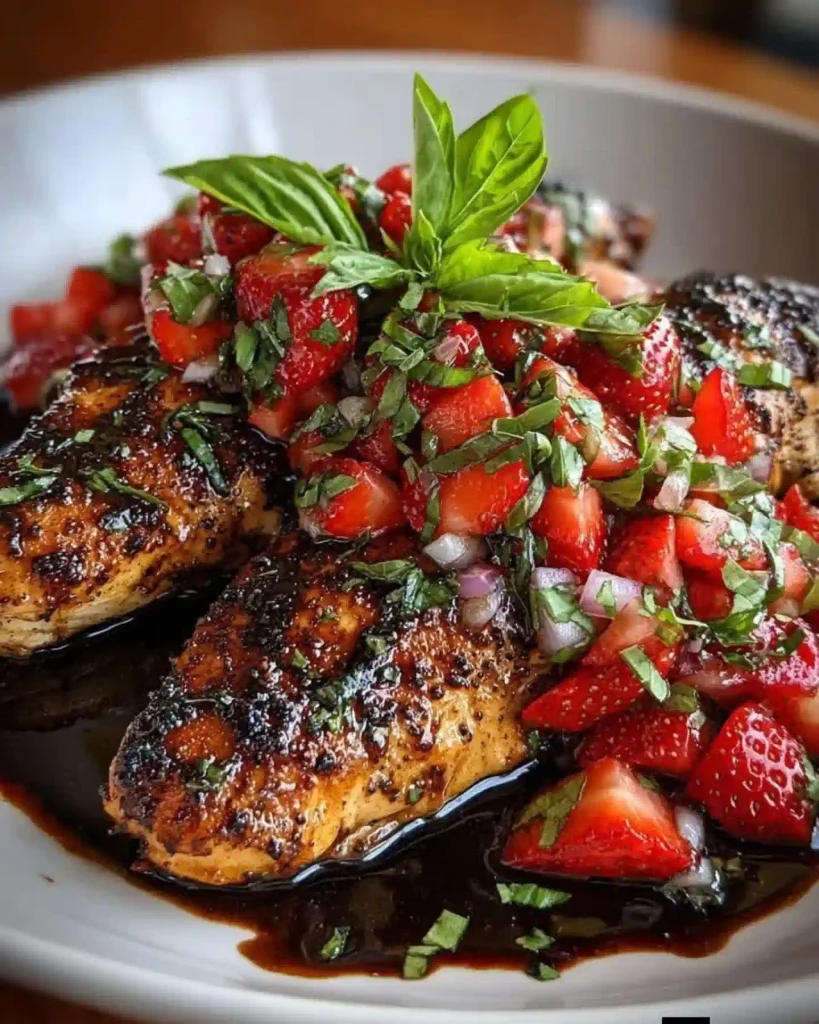
Pat the chicken breasts dry with paper towels and season both sides with salt and pepper. If the breasts are uneven in thickness, consider pounding the thicker end slightly so they cook more evenly in the pan.
Step-by-Step Method
1. Heat the olive oil in a large skillet over medium-high heat until it shimmers. Add the chicken and sear for 5 to 6 minutes per side, until deeply golden brown and cooked through. Food safety note: chicken needs to reach an internal temperature of 165°F, check the thickest piece with a thermometer if you’re unsure.
2. Remove the chicken from the skillet and set it aside on a plate, leaving the fond, those browned bits stuck to the pan, behind for the sauce.
3. Lower the heat to medium and add the garlic directly to the same skillet, stirring for 30 seconds, just until fragrant, garlic burns quickly in a pan that’s still fairly hot from searing.
4. Pour in the balsamic vinegar and chicken broth, scraping up the browned bits from the bottom of the pan as the liquid comes to a simmer, those bits carry real flavor that would otherwise just sit there.
5. Stir in the honey and dried Italian herbs, then let the mixture simmer steadily, uncovered, for 8 to 10 minutes. You’re watching for the sauce to visibly reduce and thicken, it should coat the back of a spoon rather than running right off.
6. Taste the sauce around the 8-minute mark, if it still tastes sharp and thin rather than rounded and syrupy, give it another 2 to 3 minutes, every stovetop and pan size reduces liquid at a slightly different rate.
7. Once the sauce has thickened properly, return the chicken to the skillet, along with any juices that collected on the plate while it rested.
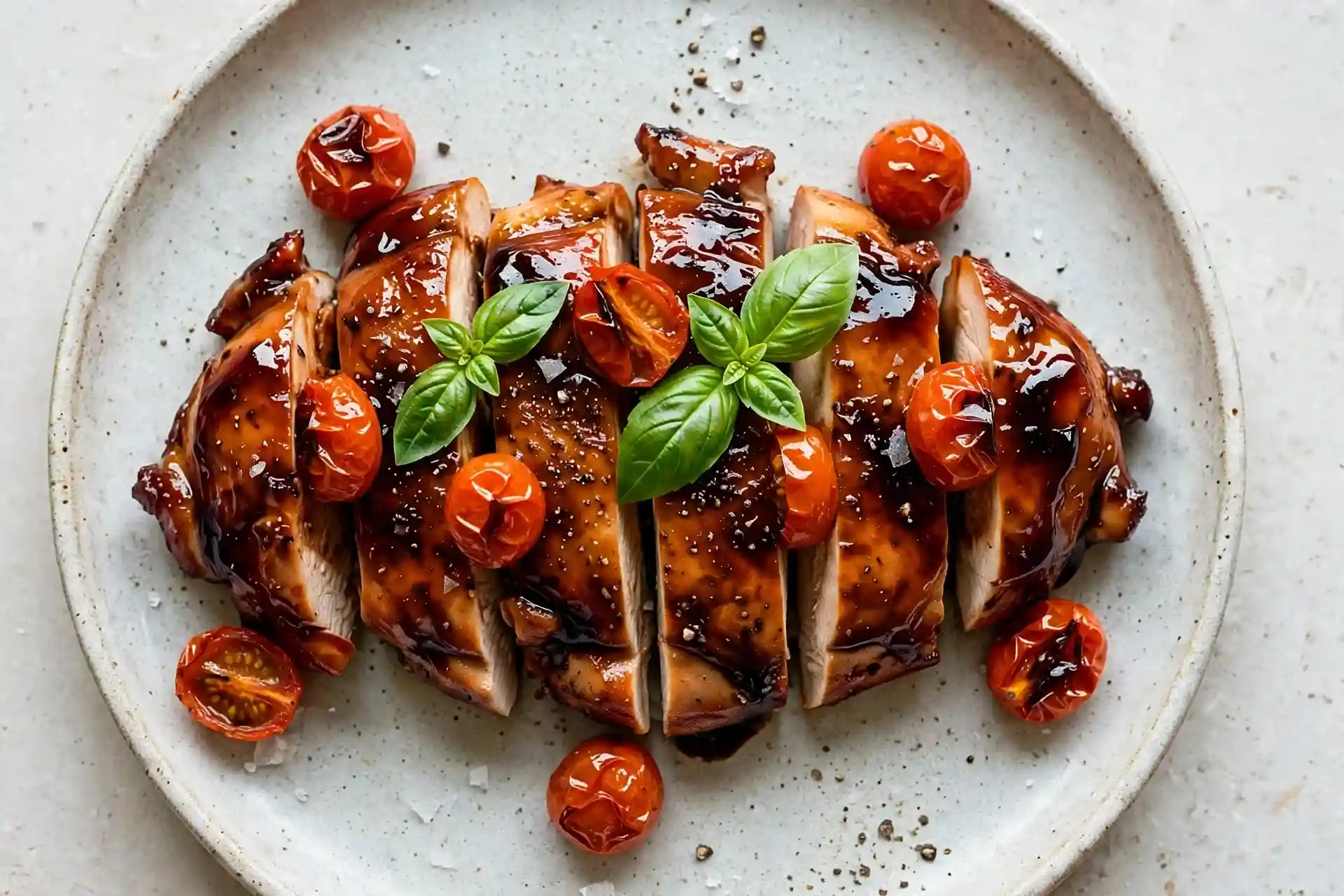
8. Spoon the glaze over the chicken repeatedly for about 1 to 2 minutes, just long enough to coat it evenly and warm it back through, don’t let it sit in the sauce much longer than that or the exterior will start to soften.
9. Remove from heat and let the chicken rest in the pan for 2 to 3 minutes before plating, this short rest lets the glaze set slightly so it clings rather than pooling off immediately onto the plate.
10. Plate the chicken, spooning any remaining glaze from the pan over the top, and scatter the fresh basil over everything right before serving.
Chef’s Note: If your sauce reduces too far and turns thick and sticky before the chicken goes back in, whisk in a splash of extra broth off the heat to loosen it back to a pourable glaze consistency.
Chef’s Note: Don’t skip tasting the sauce partway through reducing. The line between “needs a bit more time” and “reduced too far and turned bitter” is narrower than it seems, tasting along the way catches it before it’s a problem.
Chef’s Note: Use a splatter guard if you have one during the initial sear, balsamic vinegar can pop a bit once it hits the hot pan during the reduction step.
You may also like: honey garlic chicken
Expert Tips & Tricks
- Make-ahead: The balsamic glaze can be made up to 3 days ahead and reheated gently before tossing freshly seared chicken in it. Reheat slowly, since the sugar content can scorch if heated too fast.
- Storage: Keeps in the fridge for up to 4 days in an airtight container, and reheats well as long as it’s done gently over low heat rather than high heat that can separate the glaze.
- Pound chicken breasts to an even thickness before cooking if they vary a lot in size, this keeps the whole batch finishing at the same time instead of some pieces drying out while thicker ones catch up.
- Use chicken thighs instead of breasts if you prefer a juicier cut, they’re more forgiving of a slightly longer sear and pair just as well with the glaze.
- Double the sauce if you want extra for drizzling over a side dish like roasted vegetables or mashed potatoes, it’s versatile enough to use beyond just the chicken itself.
- A pinch of red pepper flakes added along with the garlic gives the glaze a subtle background heat that plays well against the sweetness of the honey.
Common Mistakes & Troubleshooting
Glaze stays thin and watery. It wasn’t reduced long enough. Keep it at a steady simmer, uncovered, until it visibly coats the back of a spoon, this usually takes the full 8 to 10 minutes and sometimes a bit longer depending on your pan and stovetop.
Sauce tastes bitter instead of rounded. It likely reduced too far and started to scorch slightly. Keep the heat at a steady simmer rather than a hard boil, and taste it periodically so you can pull it off right when it’s ready.
Chicken comes out dry. It was probably overcooked during the initial sear, or left in the glaze too long at the end. Check for doneness with a thermometer rather than guessing by time, and limit the final glazing step to just 1 to 2 minutes.
Glaze separates or looks oily instead of glossy. The heat was likely too high during the final step when the chicken went back in. Keep the heat at medium rather than high once the chicken returns to the pan.
Sauce tastes too sharp and acidic. The honey may have been skipped or reduced in amount, or a particularly sharp, lower-quality balsamic vinegar was used. Taste the sauce as it reduces and add a touch more honey if the acidity feels unbalanced.
Honest Trade-Off
This recipe uses honey rather than the sugar some traditional balsamic reduction recipes call for, which gives a slightly different, more rounded sweetness than straight granulated sugar provides. If you’re looking for an exact traditional balsamic reduction flavor, swapping in sugar instead of honey will get you closer to that classic profile, though honey’s flavor pairs nicely with the chicken and herbs here either way.
Storage & Make-Ahead
Store in an airtight container in the refrigerator for up to 4 days. Reheat gently in a skillet over low heat, adding a splash of broth if the glaze has thickened too much in storage, a microwave can work in a pinch but tends to heat unevenly and risks drying out the chicken. This dish freezes reasonably well for up to 2 months, though the glaze’s texture is best enjoyed fresh rather than after freezing and thawing.
Variations & Substitutions
For a caprese-style version, top the glazed chicken with a few slices of fresh mozzarella and a halved cherry tomato or two right before serving, letting the residual heat soften the cheese slightly.
For a spicier version, add a pinch of red pepper flakes to the glaze while it reduces for a subtle background heat.
For a lower-sugar version, reduce the honey to 1 tablespoon instead of 2, the glaze will be slightly more tart but still develops good body from the reduction.
Callout: Deglaze the pan with a small splash of balsamic vinegar right after searing the chicken, before the full amount of vinegar and broth go in. It lifts the browned bits immediately rather than waiting for the full liquid addition, giving the final sauce an extra layer of depth.
Serving Suggestions
Balsamic chicken pairs naturally with roasted vegetables like asparagus or Brussels sprouts, which stand up well against the glaze’s sweetness. A simple arugula salad with shaved parmesan works nicely as a lighter side if you want to keep the meal from feeling too heavy. If you’re planning a week of easy chicken dinners, chicken stir fry offers a completely different flavor direction worth rotating in alongside this one. A glass of dry red wine complements the balsamic’s richness well.
Callout: Drizzle a tiny bit of extra honey over the finished dish right before serving if you want a touch more sweetness without affecting the reduction’s overall balance.
FAQ
Can I make balsamic chicken ahead of time?
The glaze can be made up to 3 days ahead and reheated gently before tossing with freshly seared chicken. Cooking the chicken itself ahead of time isn’t ideal, since reheating it in the glaze a second time risks drying it out.
Why did my glaze turn out thin instead of thick?
This almost always means it wasn’t reduced long enough on the stove. Keep it at a steady simmer, uncovered, checking that it coats the back of a spoon before moving on, this usually takes a full 8 to 10 minutes.
Can I use a different vinegar instead of balsamic?
Balsamic’s specific sweetness and depth are hard to replicate exactly, but a mix of red wine vinegar and a bit of extra honey can work in a pinch, though the flavor will taste noticeably different from true balsamic.
How do I know when the chicken is fully cooked?
An instant-read thermometer inserted into the thickest part should read 165°F. If you don’t have a thermometer, cut into the thickest piece, it should look opaque all the way through with no pink remaining.
Can I make this dish less sweet?
Yes, reduce the honey to 1 tablespoon instead of 2, or omit it entirely for a sharper, more traditional balsamic flavor. The reduction will still develop good body even without the added sweetness.
One Last Thing
Balsamic chicken comes down to patience with the reduction more than any other single step, letting that sauce simmer until it actually coats a spoon is what separates a glaze that clings to every bite from one that just pools thin on the plate. Once the reduction’s right, the rest of the dish comes together in a couple of quick minutes.
Balsamic Chicken
Ingredients
Method
- Season chicken and sear in olive oil, 5-6 minutes per side, until internal temp reaches 165°F. Set aside.
- Cook garlic in the same skillet for 30 seconds.
- Add balsamic vinegar and broth, scraping up browned bits. Stir in honey and herbs.
- Simmer uncovered 8-10 minutes until the sauce coats the back of a spoon.
- Return chicken to the skillet and spoon glaze over it for 1-2 minutes.
- Rest 2-3 minutes, then plate and top with fresh basil.