
Pumpkin Pancakes
Pumpkin Pancakes With Warm Spices and a Fluffy Crumb
Pumpkin pancakes take a basic pancake batter and fold in pumpkin puree and warm spices, turning an ordinary breakfast into something that tastes like fall without needing a fork and a slice of pie. Done right, they stay light and fluffy rather than dense and gummy, which is the main risk whenever a wet ingredient like pumpkin gets added to a batter built for a thinner, more delicate texture.
The usual mistake is treating pumpkin puree like any other liquid and pouring it in without adjusting anything else. Pumpkin carries far more moisture and body than milk or buttermilk, so a batter that doesn’t account for that extra weight turns out heavy and undercooked in the center. This version adjusts the liquid ratio and leans on an extra pinch of baking powder to keep the pancakes rising properly despite the added density.
The recipe makes about twelve pancakes, serves four, and comes together in 25 minutes with ingredients most kitchens already have during pumpkin season.
Why These Pumpkin Pancakes Stay Light and Fluffy
- The liquid ratio is adjusted specifically for pumpkin’s moisture content, rather than treating it as a one to one swap for milk, which keeps the batter from turning dense.
- An extra half teaspoon of baking powder compensates for the added weight of the pumpkin, giving the batter enough lift to rise properly despite the extra density.
- Cinnamon, nutmeg, ginger, and a pinch of cloves are measured generously, since pumpkin itself has a mild flavor and the spice blend does most of the work.
- Letting the batter rest for 5 minutes before cooking gives the baking powder time to activate and the flour time to hydrate fully, both of which improve the final texture.
- A moderate heat setting cooks these through evenly, since pumpkin batter browns faster on the outside than a plain batter and can scorch if the pan runs too hot.
- The whole batch comes together in one bowl with a whisk, no mixer required.
Quick Recipe Snapshot
- Prep time: 10 minutes
- Cook time: 15 minutes
- Rest time: 5 minutes
- Total time: 30 minutes
- Servings: 4 (about 12 pancakes)
- Difficulty: Easy
- Calories: About 220 per serving (3 pancakes)
- Most important ingredient: Pure pumpkin puree, not pie filling
- Best for: Fall breakfasts, weekend brunch, make ahead freezer breakfasts
Ingredients
The Dry Ingredients
Spices are measured heavier here than in most pancake recipes, since pumpkin’s flavor on its own is mild and easily lost in a buttery, syrup topped stack.
- 1½ cups all purpose flour
- 2 tablespoons brown sugar
- 2½ teaspoons baking powder
- ½ teaspoon baking soda
- ½ teaspoon fine salt
- 1½ teaspoons ground cinnamon
- ½ teaspoon ground ginger
- ¼ teaspoon ground nutmeg
- ⅛ teaspoon ground cloves
The Wet Ingredients
Whisking the pumpkin and eggs together before adding the milk helps break up the puree’s thickness, so it blends into the batter more evenly than it would if poured in all at once.
- 1 cup pure pumpkin puree (not pumpkin pie filling)
- 1¼ cups whole milk
- 2 large eggs
- 3 tablespoons unsalted butter, melted and cooled
- 1 teaspoon vanilla extract
To Serve
- Maple syrup
- Additional butter
- Toasted pecans, optional
Substitutions that hold up: Buttermilk can replace the whole milk for a slightly tangier flavor and a touch more tenderness, though it should be thinned with 2 tablespoons of water since buttermilk is thicker. A gluten free 1:1 flour blend substitutes for the all purpose flour, though the batter should rest the full 5 minutes without skipping ahead. Coconut oil, melted and cooled, replaces the butter for a dairy free fat option.
Recipe Timing
- Prep: 10 minutes
- Cook: 15 minutes
- Rest: 5 minutes
- Total: 30 minutes
- Servings: 4
- Difficulty: Easy
- Cuisine: American
- Course: Breakfast
Craving another fall breakfast or snack with the same warm spice blend? Fall cookies use a nearly identical cinnamon and nutmeg combination in a chewy, brown butter base.
Allergen and Dietary Disclosure
These pancakes contain egg, dairy (milk, butter), and wheat/gluten (flour).
- Egg: A flax egg (1 tablespoon ground flaxseed mixed with 3 tablespoons water per egg, rested 5 minutes) replaces each egg, though the pancakes turn slightly denser.
- Dairy: Any unsweetened plant based milk replaces the whole milk, and a neutral oil or melted coconut oil replaces the butter.
- Gluten: A gluten free 1:1 baking flour blend substitutes for the all purpose flour at the same amount.
Equipment Needed
- Large nonstick skillet or griddle. A flat, even surface cooks pancakes more consistently than a pan with curved sides.
- Whisk. Breaks up the pumpkin puree and combines it smoothly with the eggs and milk without lumps.
- Measuring cups. Precision matters more here than in a lot of cooking, since too much liquid or flour throws off the texture quickly.
- Thin spatula. A wide, thin edge slides cleanly under pancakes without tearing them, which matters more with a denser batter like this one.
Nutrition Information
Per serving (3 pancakes, 4 servings per recipe, syrup not included):
- Calories: 220
- Protein: 7 g
- Carbohydrates: 32 g
- Fat: 7 g
- Fiber: 2 g
- Sugar: 7 g
- Sodium: 420 mg
Pumpkin puree adds a notable amount of vitamin A per serving, largely from the beta carotene responsible for its color, without adding much in the way of calories compared to other mix-ins. These figures are estimates built from USDA FoodData Central data and shift with the exact brand of pumpkin puree and how much butter is used for cooking.
How Pumpkin Changes a Basic Pancake Batter
Pumpkin puree is roughly 90 percent water, but that water is bound up in fiber and cell structure rather than sitting as a free flowing liquid the way milk does. That difference means pumpkin adds weight and density to a batter without behaving exactly like an equivalent volume of milk, which is why simply dumping a cup of puree into a standard pancake recipe without adjusting anything else usually results in a heavier, slightly gummy pancake.
Extra baking powder compensates for that added weight. Leavening agents work by releasing gas that gets trapped in the batter’s gluten network as it cooks, and a denser batter needs more of that lift to rise to the same height a lighter batter would reach with less leavening.
Resting the batter for 5 minutes serves two purposes. It gives the baking powder time to begin its initial reaction, which some brands trigger on contact with liquid before heat is ever involved, and it gives the flour time to fully absorb the liquid around it, which reduces the chance of a raw, floury pocket surviving into the finished pancake.
What makes pumpkin pancakes different from regular pancakes? Pumpkin pancakes use the same basic batter structure as a classic pancake but replace part of the liquid with pumpkin puree and add warm spices like cinnamon and nutmeg, which requires extra leavening to offset the puree’s added density.
Preparation
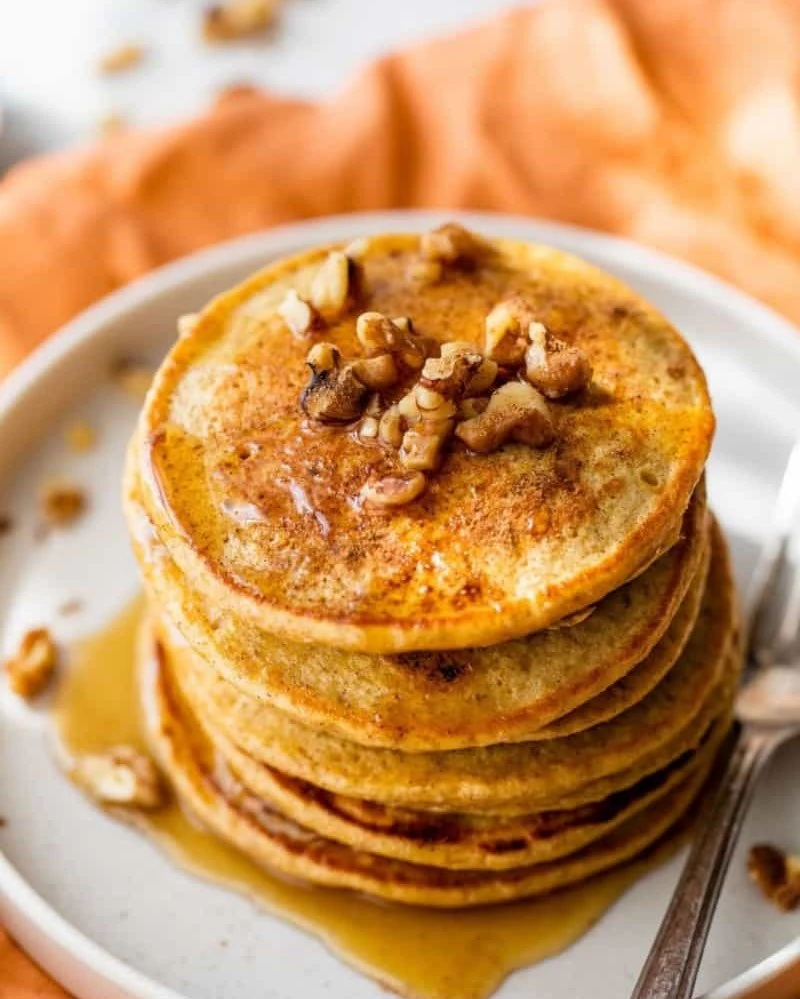
Whisk the dry ingredients together in one bowl, breaking up any clumps of brown sugar as you go. In a separate bowl, whisk the pumpkin puree and eggs together until smooth before adding the milk, butter, and vanilla, since mixing the thicker pumpkin with eggs first helps it loosen before more liquid joins it. Warm the skillet or griddle over medium low heat while the batter rests.
Step by Step Method
Whisk the flour, brown sugar, baking powder, baking soda, salt, cinnamon, ginger, nutmeg, and cloves together in a large bowl until evenly combined.
In a separate bowl, whisk the pumpkin puree and eggs together until smooth, then whisk in the milk, melted butter, and vanilla.
Pour the wet ingredients into the dry ingredients and whisk just until no streaks of flour remain. A few small lumps are fine, and overmixing at this stage is what makes pancakes tough instead of tender.
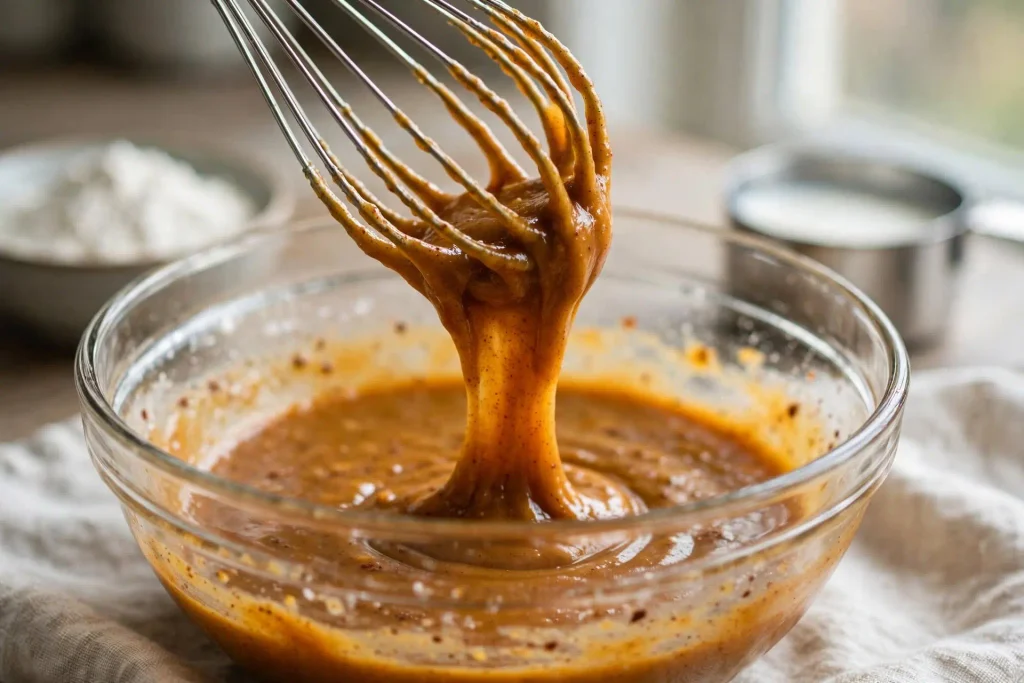
Chef’s Note: Overworked batter develops gluten the same way bread dough does, and that gluten turns a fluffy pancake chewy. Stop as soon as the flour disappears.
Let the batter rest for 5 minutes. This gives the baking powder a head start and lets the flour fully hydrate, both of which improve the final rise and texture.
Lightly grease the skillet or griddle with butter or oil and set it over medium low heat. The batter is thicker than a standard pancake batter, and too high a heat browns the outside before the center finishes cooking.
Pour about ¼ cup of batter per pancake onto the hot surface, spreading it gently with the back of the measuring cup if it doesn’t settle on its own, since this batter is thicker and spreads less than a thinner one.
Chef’s Note: This is the step most people get wrong with pumpkin pancakes, cranking the heat up because the batter looks thick and expecting it to cook faster. A moderate, patient heat is what gets the center cooked through before the outside burns.
Cook for 3 to 4 minutes, until bubbles form across the surface and the edges look set and slightly matte rather than glossy.
Flip and cook for another 2 to 3 minutes, until the second side turns golden brown and a toothpick inserted into the center comes out clean.
Transfer the cooked pancakes to a plate and tent loosely with foil to keep them warm while the remaining batter cooks in batches.
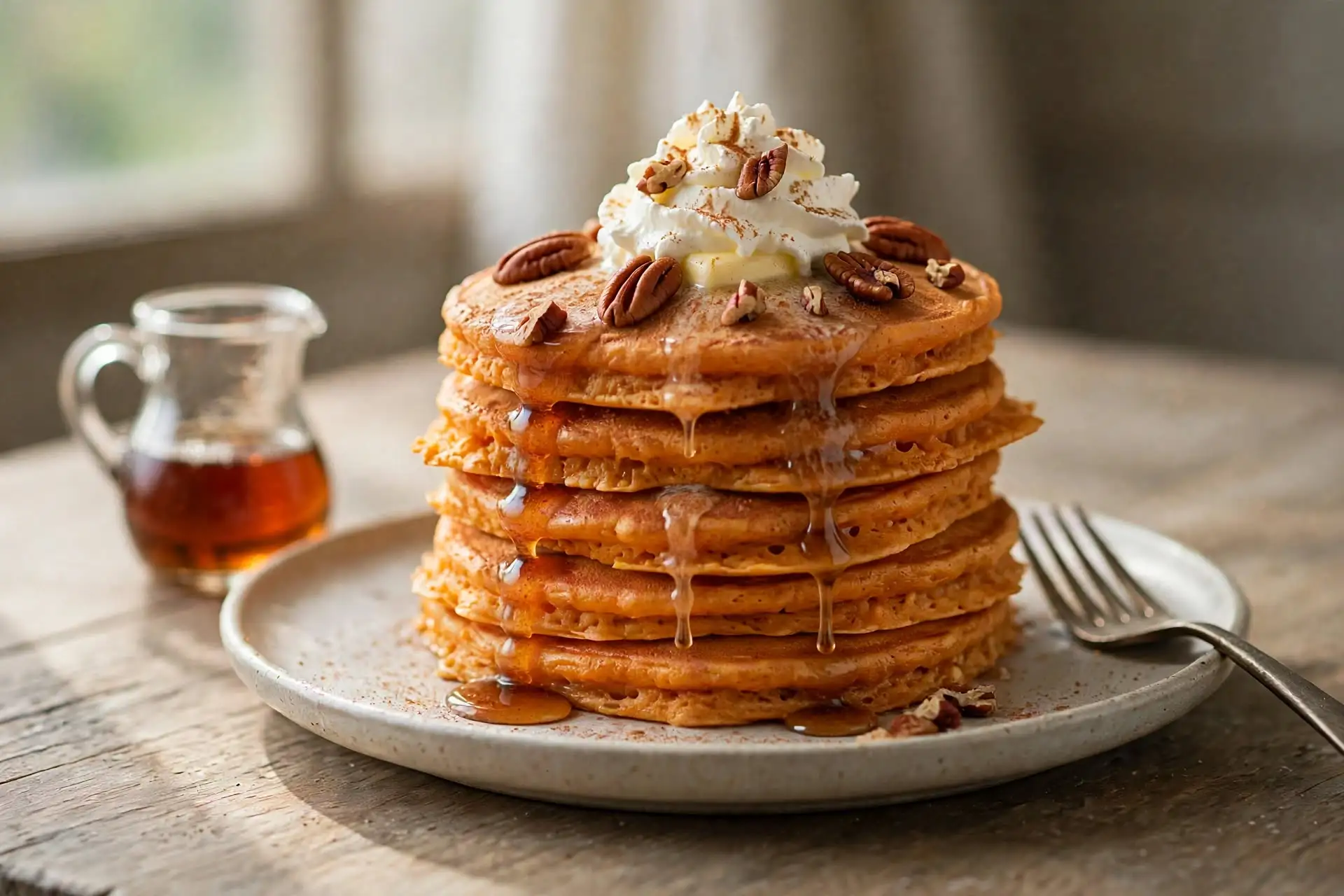
Serve warm with butter, maple syrup, and toasted pecans if using.
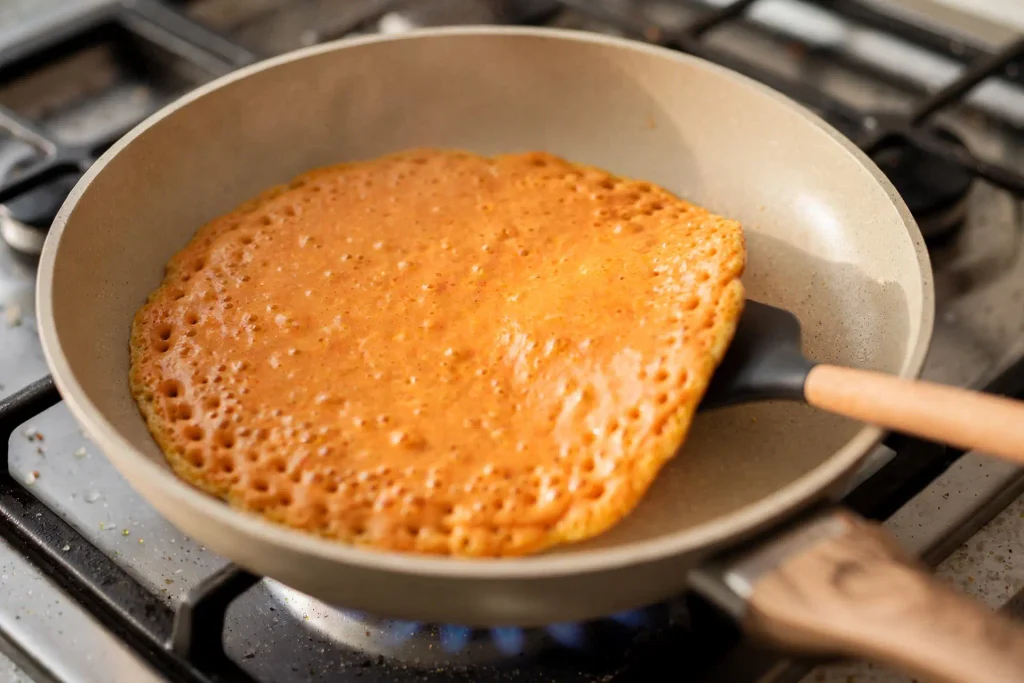
Callout: Wipe the griddle clean between batches if it starts to look dark or sticky. Residue left from earlier pancakes can scorch and leave dark flecks on the next batch, since pumpkin batter’s sugar content browns faster than a plain batter’s.
Expert Tips and Tricks
- Make ahead: The dry and wet ingredients can be prepped separately and refrigerated overnight; combine them in the morning and let the batter rest its full 5 minutes before cooking.
- Storage: Cool cooked pancakes completely on a wire rack before stacking or storing, since stacking warm pancakes traps steam and makes them soggy.
- Don’t skip the rest: Batter cooked immediately after mixing doesn’t rise quite as well as batter given its full 5 minutes.
- Keep the heat moderate: A hot pan browns this batter’s sugar content quickly, so medium low heat gives the thicker center time to cook through.
- Measure the pumpkin by weight if precision matters: Canned pumpkin varies slightly by brand, and weighing 8 ounces rather than scooping a loose cup keeps the ratio more consistent.
- Toast the pecans first: A quick 3 minute toast in a dry pan deepens their flavor before scattering them over the finished stack.
- Double the batch for the freezer: Extra pancakes freeze and reheat well, making this an easy make ahead breakfast for busier mornings.
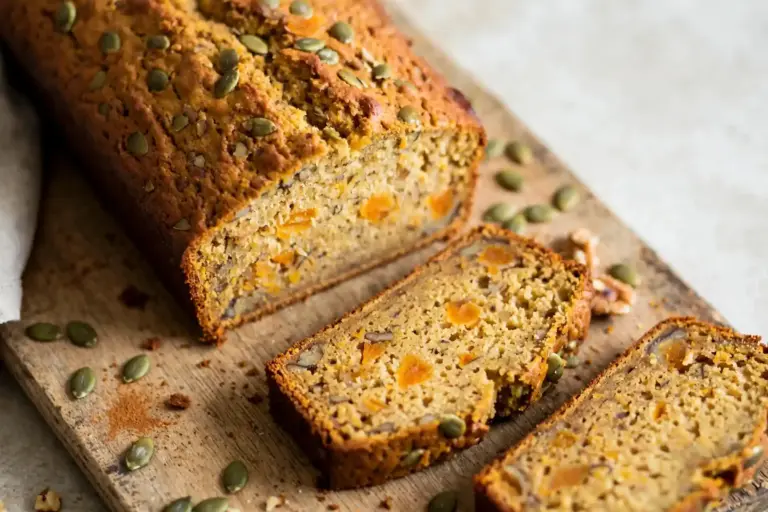
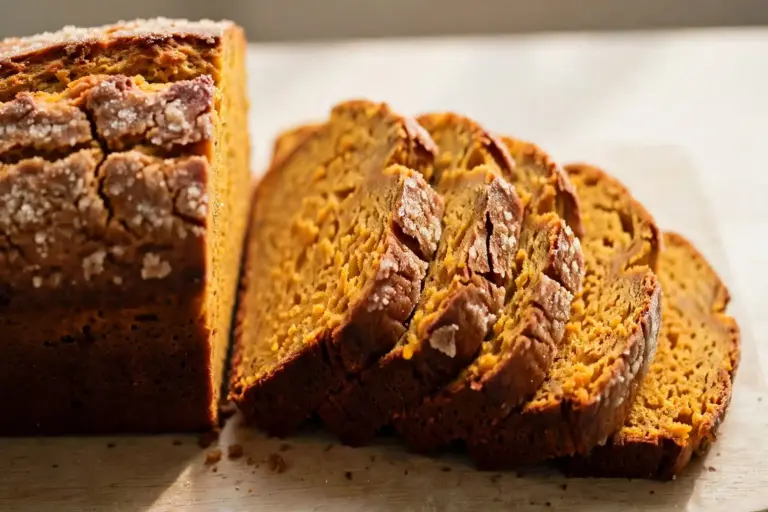
For another pumpkin forward recipe that uses many of the same spices in a different format, pumpkin bread recipe turns the same flavor profile into a sliceable loaf.
Common Mistakes and Troubleshooting
The pancakes came out dense and gummy. The batter likely had too much pumpkin relative to the other liquid, or it wasn’t given its rest time. Stick to the measured ratio in the recipe, and let the batter sit the full 5 minutes before cooking.
The outside burned before the inside finished cooking. The heat was too high for this thicker, sugar heavier batter. Drop to medium low and give the pancakes a little more time rather than rushing them at a hotter setting.
The pancakes didn’t rise much. The baking powder might be old, or the batter was overmixed, which can knock out some of the air the leavening creates. Check that your baking powder is still active, and mix only until the flour disappears.
The batter looked too thick to pour. Canned pumpkin varies in thickness by brand. Add an extra tablespoon or two of milk if the batter seems stiffer than a thick, scoopable consistency.
The pancakes tasted bland despite the spices. Ground spices lose potency sitting in the pantry for months. Check that yours are less than a year old, and don’t be shy about measuring slightly heavier if the jars have been open a while.
Honest Trade-Off
This batter is noticeably thicker and takes a bit more patience at a lower heat than a standard pancake recipe, which means a slightly longer cook time per batch. Anyone who wants the fastest possible pancake with no extra consideration for heat or timing should make a classic plain pancake instead. This recipe suits a weekend morning where the extra few minutes of attention are worth the payoff of a genuinely fall flavored stack.
Storage and Make Ahead
Refrigerator: Store cooled pancakes in an airtight container for up to 4 days.
Reheating: Warm in a toaster or toaster oven for the best texture, or microwave individual pancakes for 20 to 30 seconds. The toaster method keeps the edges from turning soggy.
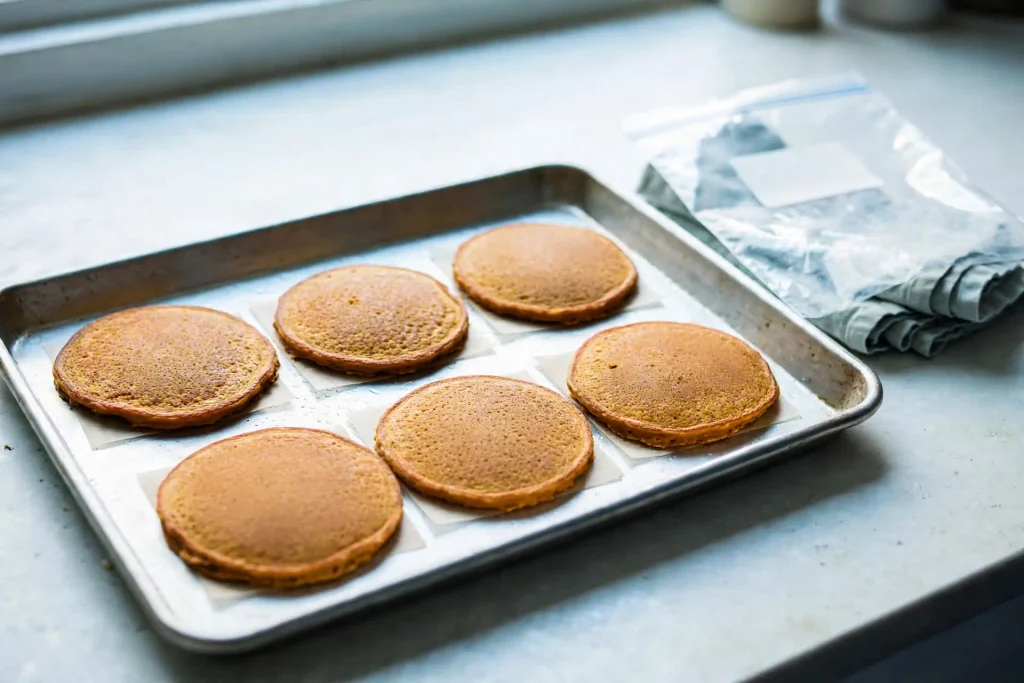
Freezer: Freezes well for up to 2 months. Lay pancakes flat on a baking sheet to freeze individually first, then transfer to a freezer bag so they don’t stick together, and reheat straight from frozen in a toaster.
Variations and Substitutions
- Chocolate chip: Fold ½ cup of mini chocolate chips into the batter just before cooking.
- Nutty: Stir ⅓ cup of chopped pecans or walnuts into the batter along with the dry ingredients.
- Extra spiced: Add ¼ teaspoon ground allspice alongside the other spices for a fuller pumpkin spice blend.
- Buttermilk version: Swap the whole milk for buttermilk thinned with 2 tablespoons of water for a slightly tangier, more tender pancake.
- Waffle version: Cook the same batter in a preheated waffle iron for a crisper, deeper pocketed version of the same flavor.
Serving Suggestions
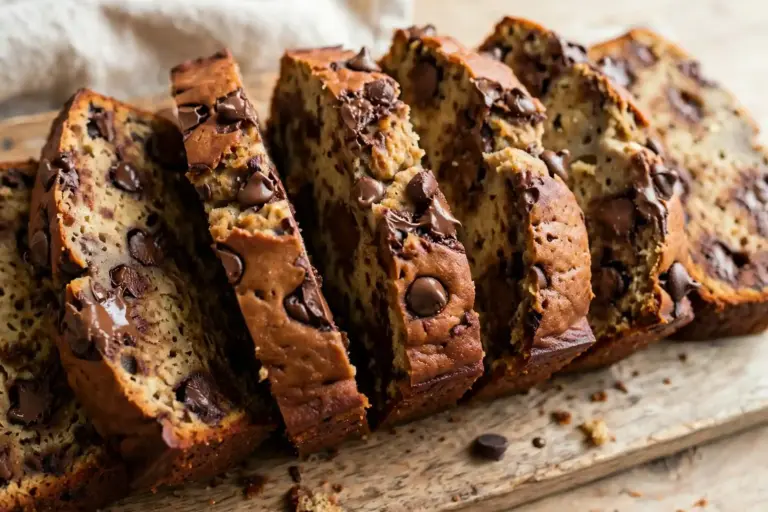
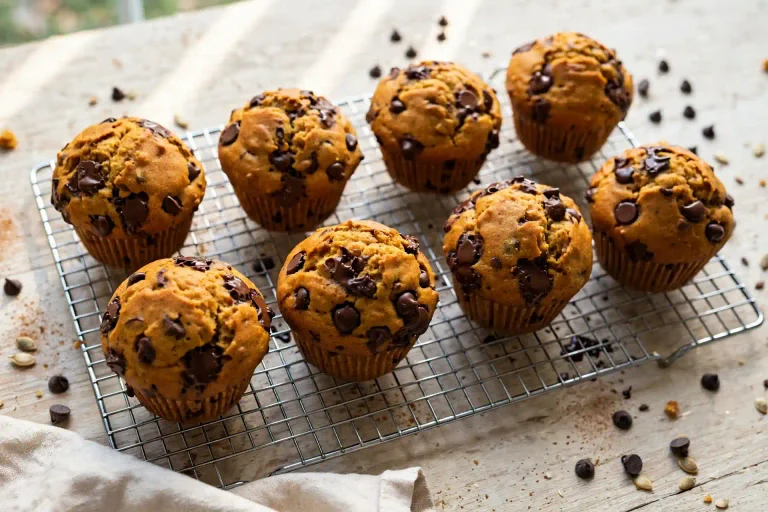
Pumpkin pancakes pair naturally with warm maple syrup, a pat of butter, and a dusting of extra cinnamon for anyone who wants more spice on top. Toasted pecans or a dollop of whipped cream turn a simple stack into something closer to dessert for breakfast. A mug of coffee or spiced chai rounds out the flavors already baked into the pancakes themselves. For a heavier baked good to round out a fall brunch spread, chocolate chip banana bread offers a different texture and flavor to serve alongside the pancakes.
Callout: Warm the syrup gently before pouring it over the stack. Cold syrup poured over hot pancakes cools the top layer fast, while warm syrup soaks in evenly and keeps the whole stack at a more consistent temperature.
Frequently Asked Questions
Can I make pumpkin pancake batter ahead of time?
Partially. The dry and wet ingredients can each be prepped and stored separately in the fridge overnight, then combined and rested for 5 minutes right before cooking. Fully mixed batter left to sit overnight loses some of its rise, since the baking powder’s reaction weakens over time.
Why did my pumpkin pancakes turn out dense?
The most common cause is too much pumpkin relative to the other liquid in the batter, or skipping the 5 minute rest before cooking. Stick to the measured ratios in the recipe, and give the batter its full rest time so the baking powder and flour can both do their job.
Can I use fresh pumpkin instead of canned?
Yes, but roast and puree it first, then drain it in a fine mesh strainer for about 20 minutes to remove excess water, since fresh puree holds more moisture than canned. Measure out 1 cup of the drained puree and proceed with the recipe as written.
How do I know when to flip the pancakes?
Watch for bubbles forming steadily across the surface and the edges turning matte rather than glossy, usually after 3 to 4 minutes on the first side. A pancake that’s ready to flip releases easily from the pan without sticking or tearing.
Are these pumpkin pancakes safe for someone with an egg or dairy allergy?
The standard recipe contains egg and dairy from the milk and butter. A flax egg replaces each egg, and an unsweetened plant based milk with a neutral oil in place of butter handles the dairy, though the texture turns slightly denser with the flax egg substitution.
Conclusion
The ratio between pumpkin and the other liquid is what separates a fluffy pancake from a dense, gummy one, more than any other single factor in this recipe. Stick to the measurements as written, give the batter its 5 minute rest, and keep the heat moderate rather than cranking it up because the batter looks thick. A double batch freezes well, so there’s little reason not to make the full amount even on a morning when only a few pancakes are needed right away.
Pumpkin Pancakes
Ingredients
Method
- Whisk the dry ingredients together.
- Whisk the pumpkin and eggs together, then add the milk, butter, and vanilla.
- Combine wet and dry ingredients just until no flour streaks remain.
- Rest the batter 5 minutes.
- Heat a greased skillet or griddle over medium low heat.
- Pour ¼ cup portions of batter and spread gently if needed.
- Cook 3 to 4 minutes until bubbles form and edges look set.
- Flip and cook 2 to 3 minutes until golden and cooked through.
- Keep warm under foil while finishing remaining batches.
- Serve with butter, maple syrup, and toasted pecans if using.
3 Comments
Comments are closed.