Creamy Chicken Noodle Soup
Creamy Chicken Noodle Soup With Egg Noodles and Fresh Herbs
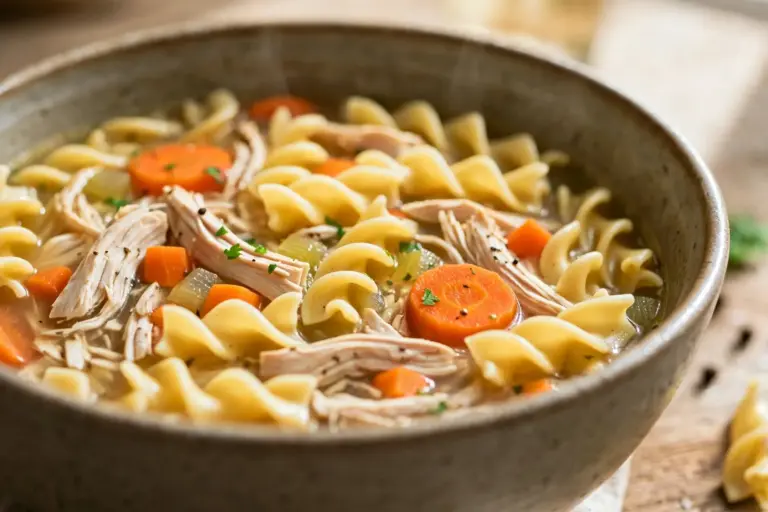
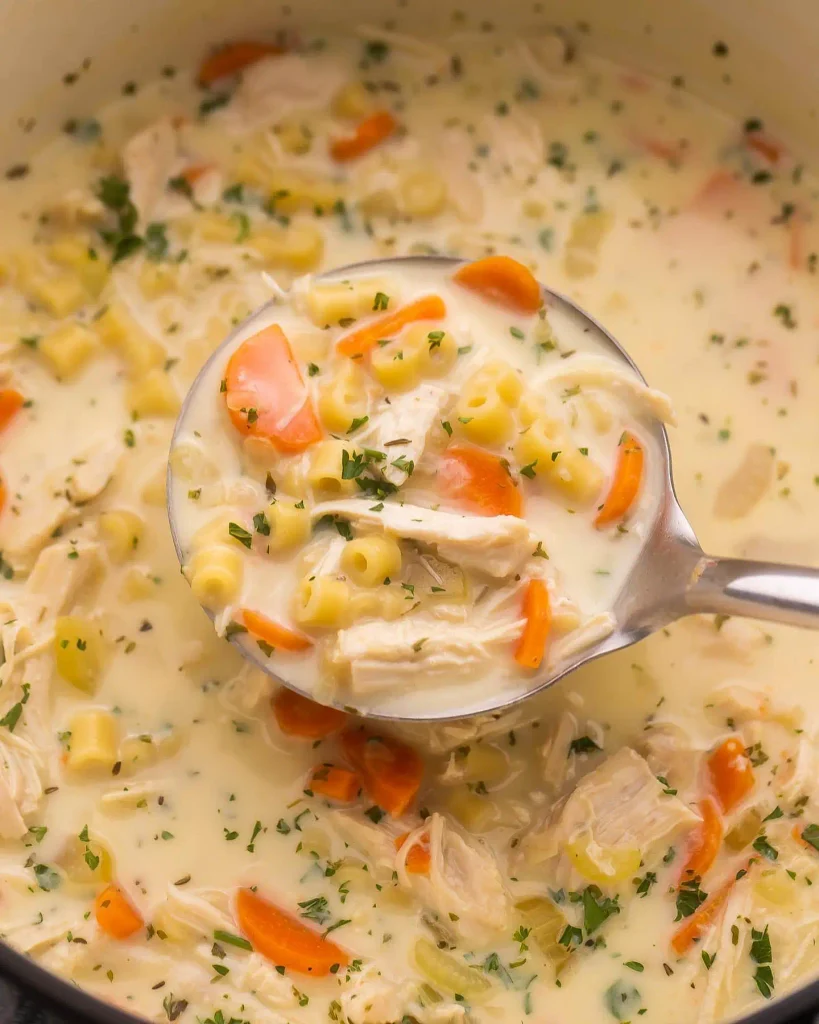
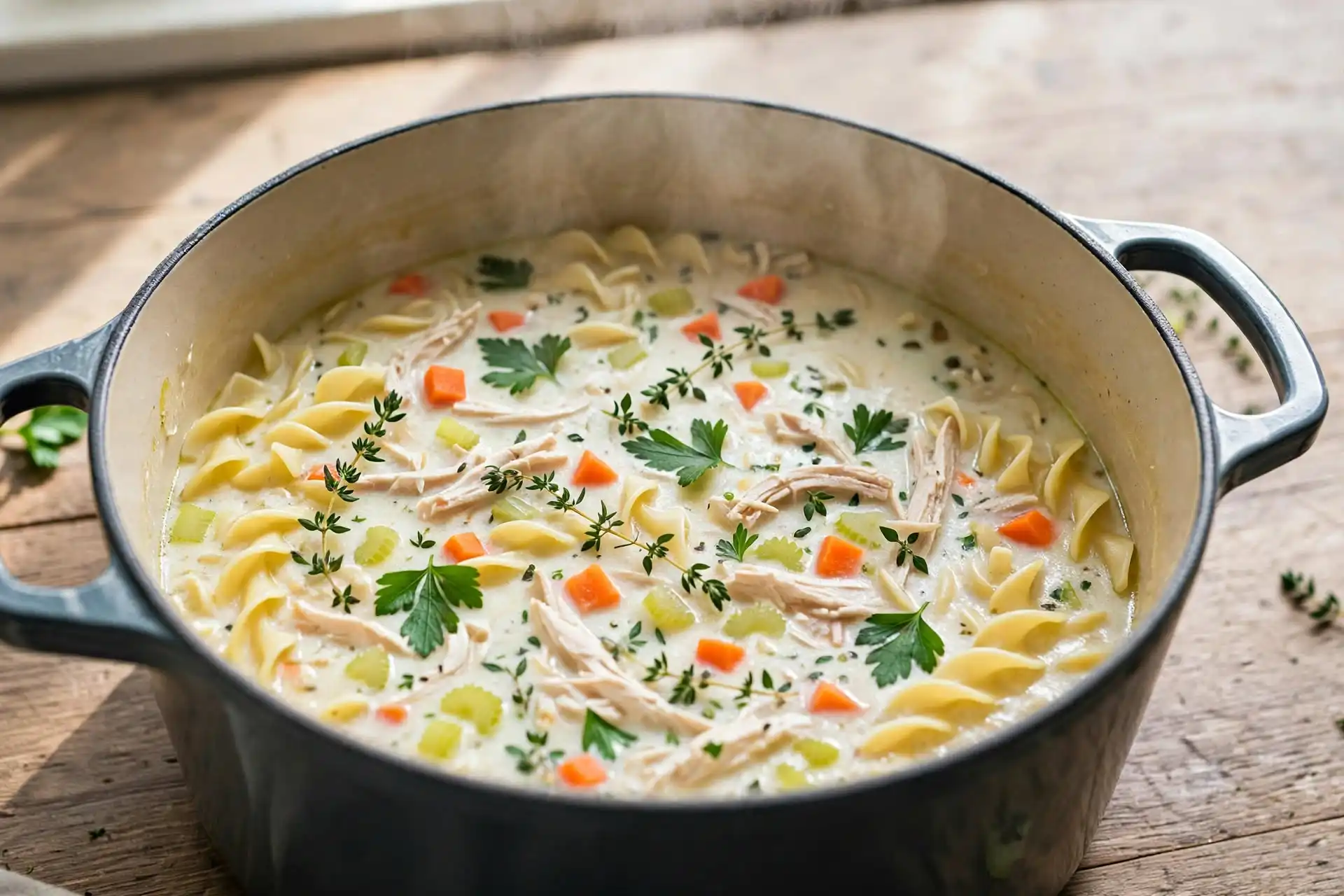
Creamy chicken noodle soup takes the classic broth based version everyone grew up with and finishes it with cream, turning a thin, brothy bowl into something that coats the spoon. Carrots, celery, and onion soften in butter first, chicken simmers in the broth until it shreds easily, and egg noodles cook directly in the pot so they pick up flavor as they soften.
The common failure point with this style of soup is a broth that turns thin and separated once cream is added too early or over heat that’s too aggressive. The fix is simple: build the soup fully on broth first, let it reduce slightly, and stir the cream in only at the very end over low heat. Egg noodles also need careful timing, since noodles cooked too far in advance keep absorbing liquid and turn bloated by the time the pot reaches the table.
The recipe serves six, takes about 45 minutes, and tastes like the kind of soup people ask for again the following week.
Why This Creamy Chicken Noodle Soup Stays Rich, Not Thin
- Butter cooking the vegetables first, rather than oil, carries a richer base flavor straight into the broth from the very first step.
- Chicken thighs simmered whole hold onto more moisture than pieces added in small chunks from the start, so the shredded meat stays tender rather than stringy.
- Cream goes in only at the end, off a hard simmer, which keeps the dairy from breaking into an oily layer on top of the broth.
- Egg noodles cooked directly in the pot absorb the broth’s flavor as they soften, the same way pasta cooked in sauce tastes more seasoned than pasta boiled separately.
- A small amount of flour stirred into the butter before the broth goes in gives the soup body without needing to lean entirely on cream for thickness.
- Fresh herbs added at the very end stay bright and fragrant instead of cooking down into a muted, bitter note.
Quick Recipe Snapshot
- Prep time: 15 minutes
- Cook time: 30 minutes
- Rest time: 5 minutes
- Total time: 50 minutes
- Servings: 6
- Difficulty: Easy
- Calories: About 410 per serving
- Most important tool: A 5 to 6 quart Dutch oven
- Best for: Cold weather dinners, sick day meals, Sunday comfort food
Ingredients
The Base
Cooking the vegetables and flour together before the broth goes in is what gives this soup body without relying on cream alone to thicken it.
- 4 tablespoons unsalted butter
- 1 medium yellow onion, diced
- 3 medium carrots, sliced into coins
- 3 celery stalks, diced
- 3 garlic cloves, minced
- 3 tablespoons all purpose flour
The Chicken and Broth
Simmering the chicken whole, rather than diced from the start, is what keeps the shredded meat from turning stringy by the time the soup is finished.
- 1½ pounds boneless skinless chicken thighs
- 6 cups chicken broth
- 2 bay leaves
- 1 teaspoon dried thyme, or 1 tablespoon fresh
- Salt and black pepper to taste
The Noodles and Cream Finish
A bare simmer, not a rolling boil, is the single detail that keeps the cream from separating once it hits the pot.
- 2½ cups wide egg noodles
- 1 cup heavy cream
- ¼ cup chopped fresh parsley
- 1 tablespoon fresh lemon juice, optional
Substitutions that hold up: Boneless skinless chicken breasts work in place of thighs, though they can dry out a touch faster, so check for doneness a few minutes early. Half and half replaces the heavy cream for a lighter soup, though it won’t thicken as much on its own. Rotisserie chicken can skip the simmering step entirely; shred 3 cups of meat and add it along with the noodles instead.
Recipe Timing
- Prep: 15 minutes
- Cook: 30 minutes
- Rest: 5 minutes
- Total: 50 minutes
- Servings: 6
- Difficulty: Easy
- Cuisine: American
- Course: Dinner
Looking for another rich, Parmesan forward chicken soup for a different night? Marry Me chicken soup builds a similarly creamy base with sun-dried tomatoes instead of classic vegetables.
Allergen and Dietary Disclosure
This soup contains dairy (butter, cream), egg (noodles), and wheat/gluten (flour, noodles). Check broth labels for hidden wheat or soy as well.
- Dairy: A dairy free butter and a plant based cream alternative both work, though the broth will taste noticeably less rich.
- Egg: A certified egg free pasta shape can replace the egg noodles, though the texture will be slightly different.
- Gluten: A gluten free flour blend replaces the all purpose flour at the same amount, and a gluten free noodle or rice substitutes for the egg noodles.
Equipment Needed
- 5 to 6 quart Dutch oven. Large enough to hold the broth, noodles, and vegetables with room to stir without spilling.
- Two forks or a stand mixer. Either shreds the cooked chicken quickly once it’s cool enough to handle.
- Whisk. Smooths the flour into the butter and broth so no lumps form as the soup thickens.
- Ladle. Makes portioning the soup into bowls far less messy than pouring straight from the pot.
Nutrition Information
Per serving (about 1½ cups, 6 servings per recipe):
- Calories: 410
- Protein: 26 g
- Carbohydrates: 26 g
- Fat: 22 g
- Fiber: 2 g
- Sugar: 4 g
- Sodium: 720 mg
Carrots in this soup contribute a meaningful amount of vitamin A per serving, largely from the beta carotene that gives them their color, which holds up well through a brief simmer. These figures are estimates built from USDA FoodData Central data and shift with the cream’s fat percentage and the broth’s sodium content.
How Creamy Chicken Noodle Soup Builds Body Without Turning Thin
A broth thickened only with cream tends to taste rich in the first few spoonfuls and thin again by the time it cools slightly in the bowl, since cream alone doesn’t bind much water on its own. Cooking a small amount of flour into the butter before the broth goes in works the same way a roux does in a gravy: the flour coats in fat first, which lets it disperse evenly into the liquid rather than clumping, and that structure holds the broth’s body even after the cream is stirred in later.
Dairy proteins tighten and can separate under sustained high heat, which is why this soup calls for a bare simmer rather than a rolling boil once the cream goes in. Pulling the pot down to low heat first gives the cream a gentle introduction instead of shocking it into breaking.
Egg noodles cooked directly in the broth season themselves from the inside as they soften, picking up salt and flavor from the surrounding liquid the way pasta cooked in a sauce tastes more integrated than pasta boiled separately and tossed in afterward. The tradeoff is that the noodles keep absorbing broth even after cooking, which is why this soup is best eaten within a couple of days before the noodles bloat too far.
What makes chicken noodle soup “creamy” instead of classic? Creamy chicken noodle soup follows the same base as classic chicken noodle soup, chicken, vegetables, broth, and noodles, but finishes with heavy cream and often a flour based thickener, giving the broth a richer body and lighter color than the clear, brothy classic version.
Preparation
Dice the onion and celery, and slice the carrots into coins of a similar size so they cook evenly. Mince the garlic and set it aside separately from the other vegetables, since it goes in a step later. Measure the broth and have the egg noodles ready to add directly to the pot once the chicken has finished simmering and been shredded.
Step by Step Method
Melt the butter in the Dutch oven over medium heat. Add the onion, carrots, and celery, and cook for 6 minutes, stirring occasionally, until the onion turns translucent and the vegetables begin to soften at the edges.
Stir in the garlic and cook for 30 seconds, until fragrant but before it takes on any color.
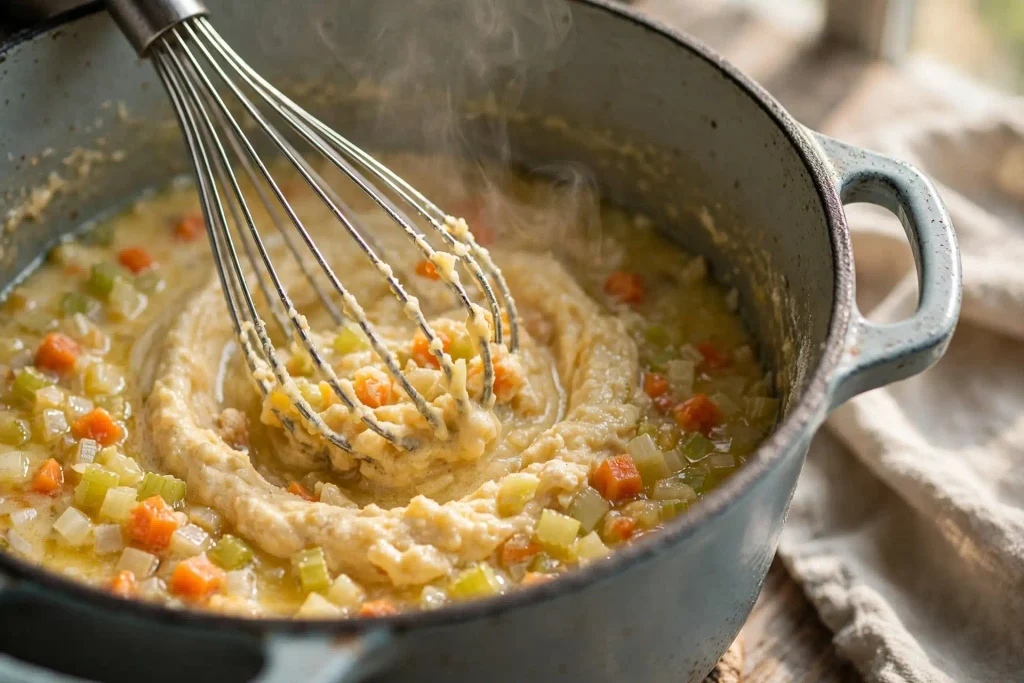
Sprinkle the flour over the vegetables and stir constantly for about 90 seconds, until the mixture turns a pale golden color and smells toasted rather than raw.
Chef’s Note: This step is easy to rush, but an undercooked roux leaves a starchy taste that the cream can’t fully cover later.
Pour in the broth gradually, whisking as you go to work out any lumps. Add the bay leaves, thyme, and the whole chicken thighs.
Bring the soup to a boil, then reduce to a steady simmer, cover, and cook for 15 to 18 minutes, until the chicken reaches 165°F at its thickest point.
Lift the chicken out onto a cutting board and let it rest for a few minutes before shredding it into bite sized pieces with two forks.
Chef’s Note: Shredding the chicken too soon after it comes out of the pot releases more juice than letting it rest first, which keeps the meat drier than it needs to be.
While the chicken rests, stir the egg noodles into the simmering broth and cook according to the package time, usually 7 to 9 minutes, until just tender.
Reduce the heat to low so the broth is barely simmering rather than actively boiling, then return the shredded chicken to the pot.
Chef’s Note: This is the step most people rush past, and a broth still at a rolling boil when the cream goes in is the most common reason this soup breaks.
Stir in the heavy cream and simmer gently for 2 minutes, until the broth looks glossy and slightly thickened. Remove the bay leaves.
Taste and season with salt and pepper, then stir in the parsley and a squeeze of lemon juice if using. Let the soup rest for 5 minutes before serving.
Callout: Hold back about a third of the noodles and cook them separately if you know the soup will sit for leftovers. Adding freshly cooked noodles to each reheated bowl keeps them from turning mushy the way noodles left soaking in broth for days will.
Expert Tips and Tricks
- Make ahead: Cook the broth and chicken through step 6 up to 2 days ahead, storing them separately in the fridge. Add the noodles and cream fresh when ready to serve.
- Storage: Cool leftovers to room temperature within 2 hours before moving them into an airtight container.
- Lower the heat before adding cream: A hard simmer is the single biggest risk to a broken, oily looking soup.
- Don’t skip the roux: The full 90 seconds of cooking the flour removes a raw, starchy taste the cream alone can’t mask.
- Cook noodles to the low end of done: They keep softening in the hot broth even after the pot is off the heat.
- Add herbs at the very end: Fresh parsley and a squeeze of lemon stirred in right before serving stay bright instead of cooking down and turning flat.
- Keep extra broth on hand: Leftover soup thickens as the noodles absorb liquid, so a splash of broth when reheating brings it back to the right consistency.
For another creamy, hearty soup with a completely different flavor direction, loaded baked potato soup is worth adding to the same week’s rotation.
Common Mistakes and Troubleshooting
The soup turned grainy or broke. The cream went in over too high a heat. Lower the heat to a bare simmer before stirring in the cream next time, and avoid bringing the pot back to a boil afterward.
The broth tastes thin despite the cream. The roux step was skipped or rushed. Give the flour its full 90 seconds in the butter before the broth goes in, since that step builds most of the soup’s underlying body.
The noodles turned mushy. They cooked too long, or leftovers sat with the noodles still in the broth for several days. Cook noodles to the low end of al dente, and consider cooking a portion separately for any soup headed into the fridge for later in the week.
The chicken came out dry or stringy. It simmered past 165°F internal, or was shredded immediately after coming out of the pot while still piping hot. Pull the chicken the moment it hits temperature and let it rest a few minutes before shredding.
The soup tastes flat. It likely needs more salt, or the herbs went in too early and cooked down. Taste right before serving and add fresh parsley at the very end rather than during the simmer.
Honest Trade-Off
This version leans richer and heavier than a classic, clear broth based chicken noodle soup, trading some of that light, brothy simplicity for a thicker, more filling bowl. Anyone who grew up on the thin, clear classic version might find this one a touch heavy by comparison. This recipe suits anyone who wants a dinner that eats more like a meal than a starter, especially on a cold night.
Storage and Make Ahead
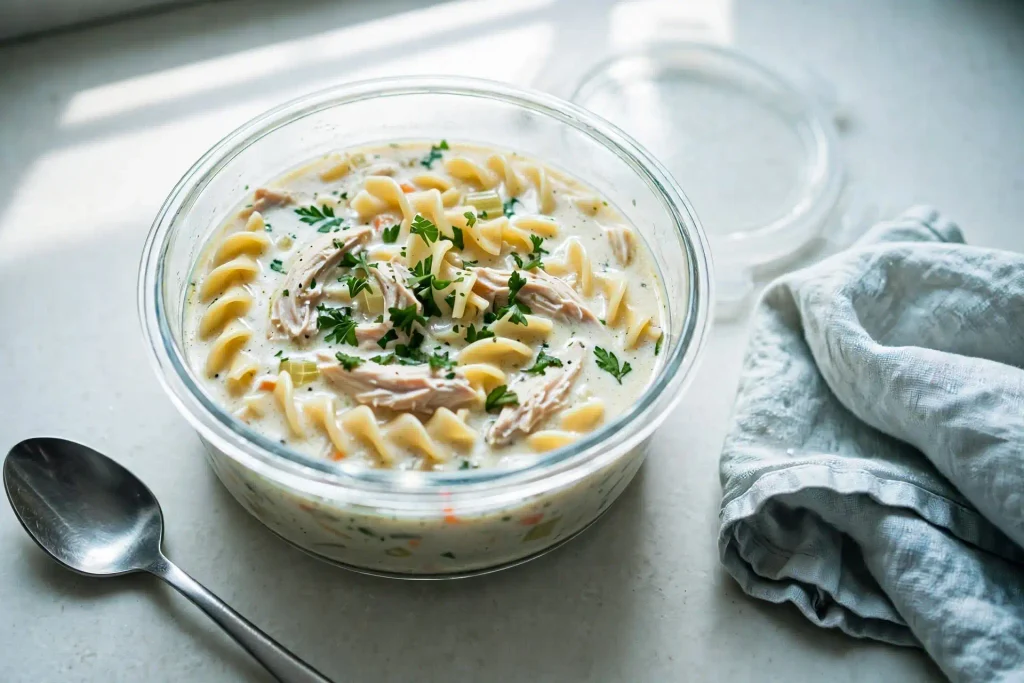
Refrigerator: Store in an airtight container for up to 4 days. The noodles continue absorbing broth, so the soup thickens daily.
Reheating: Warm gently over low heat on the stovetop, stirring often and adding a splash of broth or milk to loosen it back to a pourable consistency. Microwaving works for single portions in short bursts with stirring between each.
Freezer: Not ideal with the noodles included, since both cream based soups and cooked egg noodles can turn unpleasant after thawing. If freezing, leave the noodles out entirely and add freshly cooked ones when reheating.
Variations and Substitutions
- Extra vegetables: Stir in a cup of frozen peas or corn during the last few minutes of simmering for more color and sweetness.
- Lighter version: Use half and half in place of heavy cream, and reduce the butter slightly, adjusting salt to taste.
- Herb forward: Add a tablespoon of fresh dill along with the parsley for a brighter, more herbal finish.
- Different protein: Rotisserie chicken skips the simmering step entirely; shred 3 cups of meat and add it along with the noodles instead of cooking it from raw.
- Lemon chicken style: Increase the lemon juice to 2 tablespoons and add a teaspoon of lemon zest for a sharper, brighter version of the soup.
Serving Suggestions
Creamy chicken noodle soup pairs naturally with a thick slice of crusty bread or a warm dinner roll for dipping into the broth. A simple green salad with a light vinaigrette balances the richness of the cream. Saltine crackers crumbled on top add a familiar, nostalgic crunch for anyone who grew up with the classic version. For a different soup with its own creamy, savory depth to round out the week, chicken pot pie soup makes a natural next pot to try.
Callout: Warm the serving bowls briefly in a low oven before ladling the soup in. A cold bowl pulls heat out of a creamy soup fast, and a warm one keeps it at the right temperature through the whole meal.
Frequently Asked Questions
Can I make creamy chicken noodle soup ahead of time?
Yes, partially. Cook the broth and chicken through the shredding step up to 2 days ahead and store them separately in the fridge. Add the noodles and cream fresh when you’re ready to serve, since both hold up better made close to mealtime than reheated from a fully finished pot.
Why did my soup turn grainy or oily?
The most common cause is adding the cream over a hard simmer or boil, which can cause the dairy to separate. Lower the heat to a bare simmer before stirring in the cream, and avoid bringing the pot back up to a rolling boil afterward.
Can I use rotisserie chicken instead of cooking it from raw?
Yes. Skip the chicken simmering step entirely, use broth alone for that stage, and stir in about 3 cups of shredded rotisserie chicken along with the noodles near the end. This cuts the overall cooking time by several minutes.
How do I know when the chicken is fully cooked?
An instant read thermometer inserted into the thickest part of the thigh should read 165°F, which the USDA lists as the safe temperature for poultry. The chicken should also pull apart easily with two forks once it’s rested for a few minutes after cooking.
Is creamy chicken noodle soup safe for someone with a dairy, egg, or gluten allergy?
The standard recipe contains dairy in the butter and cream, egg in the noodles, and gluten in both the flour and the noodles. Dairy free butter and cream alternatives handle the dairy, an egg free pasta shape handles the egg, and a gluten free flour blend plus gluten free noodles handle the gluten, though each substitution shifts the richness or texture somewhat.
Conclusion
The roux built at the start and the low heat used at the end do more for this soup’s texture than the cream amount itself. Cook the flour fully before the broth goes in, and drop the heat before the cream joins the pot, and the bowl comes out glossy and thick rather than thin or broken. Keep a bit of broth in reserve for leftovers, since the noodles will keep drinking up liquid well after the pot first comes off the stove.
Creamy Chicken Noodle Soup
Ingredients
Method
- Cook the onion, carrots, and celery in butter for 6 minutes.
- Stir in the garlic for 30 seconds.
- Sprinkle in the flour and cook 90 seconds.
- Whisk in the broth, add bay leaves, thyme, and chicken thighs.
- Simmer covered 15 to 18 minutes until the chicken reaches 165°F.
- Remove and shred the chicken.
- Cook the noodles in the simmering broth until tender.
- Lower the heat to a bare simmer and return the chicken to the pot.
- Stir in the cream and simmer gently 2 minutes. Remove bay leaves.
- Season to taste, stir in parsley and lemon juice, and rest 5 minutes before serving.