Marry Me Chicken
Marry Me Chicken (Creamy Sun-Dried Tomato Sauce That Doesn’t Break)
Marry me chicken earns its name from the sauce, not the chicken, and most versions fall apart right there: the parmesan seizes into clumps, the cream splits under too much heat, or the chicken dries out while everyone waits for the sauce to come together. This version sears the chicken first, builds the sauce in stages so the dairy never hits direct high heat, and folds the parmesan in off the stove instead of over it. The result is a sauce that stays glossy and smooth even after sitting on the table for twenty minutes.
Why This Version Holds Together Better
Pounding the chicken breasts to an even thickness before searing means both pieces finish cooking at the same time, instead of one drying out while the thicker one catches up.
Sun-dried tomatoes packed in oil, rather than the dry-packed kind, add both flavor and a small amount of fat to the sauce base without needing extra butter.
Parmesan goes in last, off direct heat, grated finely rather than shredded, since finer shreds melt into the sauce instead of clumping at the bottom of the pan.
A splash of pasta water or reserved chicken broth loosens the sauce back up if it thickens too much while the chicken rests, without diluting the flavor the way plain water would.
This recipe uses chicken broth in place of the white wine most versions call for, keeping the dish alcohol-free without losing the acidity that balances the cream, since the sun-dried tomatoes already carry a natural tang.
Quick Snapshot
- Prep time: 15 minutes
- Cook time: 25 minutes
- Total time: 40 minutes
- Servings: 4
- Difficulty: Easy
- Calories per serving: 520
- Ingredient that matters most: Sun-dried tomatoes packed in oil, chopped small
- Best for: A dinner that looks more impressive than the effort it actually takes
Ingredients
For the chicken
Pounding the breasts to an even ¾-inch thickness is what keeps them from drying out on one side while the other finishes cooking.
- 4 boneless, skinless chicken breasts (about 2 pounds), pounded to even thickness
- 1 teaspoon salt
- ½ teaspoon black pepper
- ½ teaspoon garlic powder
- ½ teaspoon dried oregano
- 3 tablespoons all-purpose flour
- 2 tablespoons olive oil
For the sauce
- 2 tablespoons butter
- 3 cloves garlic, minced
- ½ cup sun-dried tomatoes in oil, drained and chopped
- 1 cup chicken broth
- 1 cup heavy cream
- 1 teaspoon Italian seasoning
- ¼ teaspoon red pepper flakes (optional)
- ¾ cup finely grated parmesan
- Fresh basil, torn, for garnish
If heavy cream feels too rich, half-and-half works as a substitute, though the sauce will be noticeably thinner and slightly more prone to separating if the pan gets too hot. Dry-packed sun-dried tomatoes can replace the oil-packed kind, but rehydrate them in warm water for 10 minutes first, since they’re much tougher and drier straight from the bag.
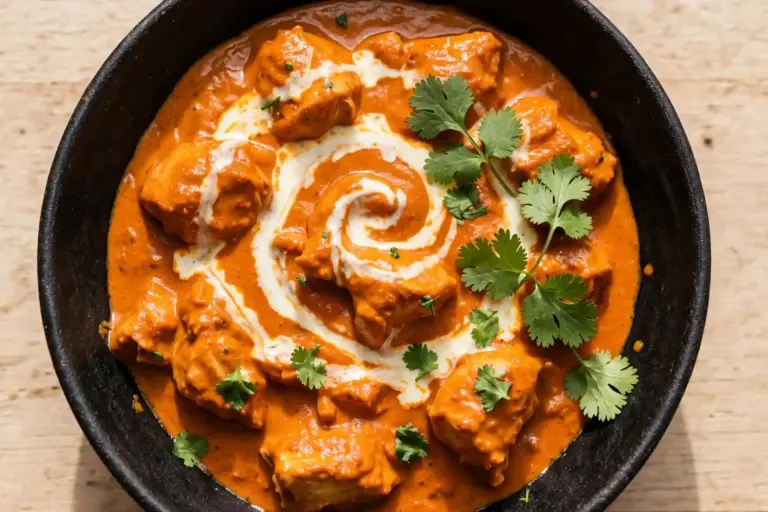
You may also like: butter chicken
Recipe Timing
- Prep time: 15 minutes
- Cook time: 25 minutes
- Rest time: 5 minutes
- Total time: 40 minutes
- Servings: 4
- Difficulty: Easy
- Cuisine: Italian-American
- Course: Main dish
Allergen Disclosure
This recipe contains dairy (butter, cream, parmesan) and gluten (flour). For a dairy-free version, this dish doesn’t have a workable substitute without significantly changing the sauce’s texture and flavor, since the cream and parmesan are central to the dish. For a gluten-free version, swap the flour for cornstarch and use the same amount when coating the chicken.
Equipment Needed
- A large, heavy skillet, ideally stainless steel or cast iron for a proper sear
- A meat mallet or rolling pin for pounding the chicken to even thickness
- A microplane or fine grater for the parmesan, since pre-shredded cheese doesn’t melt as smoothly
- Tongs for turning the chicken without piercing it
Pre-shredded parmesan from a bag is coated with an anti-caking agent that keeps it from melting smoothly into sauce, so grating a block yourself makes a real difference here.
Nutrition Information
Per serving: 520 calories, 42g protein, 12g carbohydrates, 34g fat, 1g fiber, 4g sugar, 780mg sodium. These are estimates based on standard USDA nutrient data for chicken breast and the listed dairy ingredients, and will shift depending on your exact brands and portion sizes.
Why Building the Sauce in Stages Keeps It From Breaking
Cream sauces separate when fat and liquid are pushed to too high a temperature too quickly, causing the proteins in the dairy to seize up instead of staying suspended evenly. Adding the cream after the pan has cooled slightly from a hard sear, then keeping the heat at a gentle simmer rather than a boil, gives the sauce room to come together smoothly instead of breaking under sudden heat.

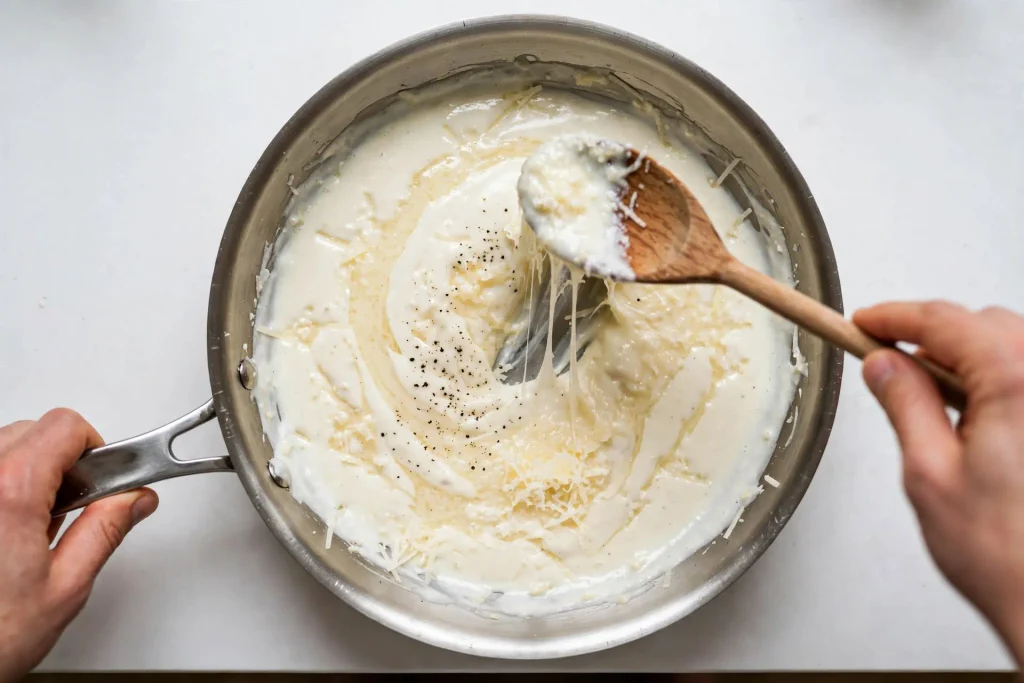
Parmesan behaves the same way. Stirred in off direct heat and in small handfuls rather than all at once, it melts smoothly into the cream instead of clumping into stringy bits at the bottom of the pan.
Preparation
Pound the chicken breasts between two sheets of plastic wrap until they’re an even ¾ inch thick throughout, checking the thickest part rather than the edges. Pat the pieces dry with paper towels before seasoning, since a dry surface is what actually produces a good sear instead of a pale, steamed one.
Step-by-Step Method
1. Season both sides of the chicken with salt, pepper, garlic powder, and oregano, then dust lightly with flour on all sides, shaking off the excess. The flour helps the chicken develop a light crust and gives the sauce a little extra body once it’s added later.
2. Heat the olive oil in the skillet over medium-high heat until it shimmers, then add the chicken in a single layer, leaving space between each piece. Sear for 5 to 6 minutes per side until deep golden brown and the internal temperature reads 165°F.
Chef’s Note: If your skillet isn’t wide enough to fit all four pieces without crowding, sear in two batches rather than forcing them in together, since crowded chicken steams instead of browning.
3. Transfer the chicken to a plate and tent loosely with foil to keep warm. Don’t skip resting it here; cutting into chicken straight off the heat pushes out juices that should stay locked in the meat.
4. Lower the heat to medium and melt the butter in the same skillet, scraping up the browned bits left from the chicken as it melts. Those bits carry most of the savory depth that makes this sauce taste built-up rather than flat.
5. Add the garlic and cook for about 30 seconds, just until fragrant, watching closely since garlic turns bitter fast once it starts to brown. Stir in the chopped sun-dried tomatoes and cook for another minute to let their oil release into the butter.
6. Pour in the chicken broth, scraping the pan bottom to release any remaining browned bits, and let it bubble for about 2 minutes to reduce slightly. This short reduction concentrates the broth’s flavor before the cream goes in, so the finished sauce doesn’t taste watered down.
7. Reduce the heat to low and pour in the heavy cream along with the Italian seasoning and red pepper flakes if using. Stir gently and let the sauce come to a bare simmer, just a few small bubbles at the edges rather than an active bubble across the whole surface.
Food safety note: Chicken breasts should reach an internal temperature of 165°F before being considered done; check with a meat thermometer at the thickest part if you’re unsure.
8. Remove the pan from the heat entirely, then add the parmesan in small handfuls, stirring constantly until each addition melts fully before adding the next. Adding all the cheese at once is the most common reason this sauce turns clumpy instead of silky.
Chef’s Note: If the sauce looks slightly grainy after all the parmesan is in, a low, gentle heat for another minute while stirring usually smooths it back out; just don’t let it return to a hard simmer.
9. Return the chicken and any juices from the plate to the skillet, spooning sauce over the top, and let everything warm together over low heat for 2 to 3 minutes. This final step brings the chicken back to serving temperature without pushing the sauce toward another round of high heat.
10. Taste the sauce and adjust salt if needed, keeping in mind the parmesan and broth both carry some salt already. Scatter torn basil over the top just before serving.
Expert Tips
- Make-ahead: Sear the chicken and build the sauce base through the broth reduction up to a day ahead, then refrigerate separately. Finish with cream and parmesan fresh, right before serving, since reheated cream sauce is more prone to breaking.
- Storage: Keeps in the fridge for up to 3 days, though the sauce firms up considerably when cold and needs gentle reheating to loosen back up.
- Grate the parmesan finely rather than using pre-shredded cheese; the texture difference in how smoothly it melts is significant.
- If the sauce ever looks like it’s starting to separate, pull it off the heat immediately and whisk in a spoonful of cold cream, which often brings it back together.
- Let the chicken rest on the plate for the full 5 minutes while you build the sauce; rushing this step is the main reason the chicken ends up drier than it should.
- A squeeze of lemon juice at the very end brightens the whole dish if the sauce tastes a little heavy after the parmesan goes in.
Callout box: Save the oil from the sun-dried tomato jar instead of tossing it. It’s already infused with tomato flavor and works well brushed on bread or used in place of plain olive oil the next time you sear chicken.
You may also like: mississippi pot roast
Common Mistakes and How to Fix Them
Sauce turns grainy or clumpy. This almost always means the parmesan went in over direct heat or all at once. Pull the pan off the burner first, then add cheese gradually in small handfuls.
Sauce breaks and looks oily or separated. Too much heat too fast is the usual cause. Keep the cream at a bare simmer, never a rolling boil, and whisk in a splash of cold cream if it starts to split.
Chicken comes out dry despite a short sear time. Uneven thickness is often the reason, since thinner parts overcook while thicker parts catch up. Pound the breasts to an even ¾ inch before searing.
Sauce tastes flat despite all the ingredients. Under-seasoning the chicken itself, not just the sauce, is a common cause, since the chicken’s seasoning is what carries through the whole dish. Season generously before searing, not just at the table.
Sun-dried tomatoes clump together instead of distributing evenly. This happens when they’re added straight from the jar without chopping small enough. Chop them into small, roughly ¼-inch pieces before adding to the pan.
Callout box: If you’re doubling this recipe for a crowd, sear the chicken in batches rather than a bigger single batch in one pan. A crowded pan drops the temperature too far and the chicken ends up steamed instead of browned.
Honest Trade-Off
This method takes a bit more attention during the sauce stage than a version where everything simmers together in one continuous step. If you’re short on time and don’t mind a slightly higher risk of a grainy sauce, adding the parmesan directly into the simmering broth without pulling the pan off heat saves a couple of minutes. Anyone who’s had a properly silky version of this sauce will notice the texture difference immediately, but for a fast weeknight attempt, the shortcut is forgivable.
Storage and Make-Ahead
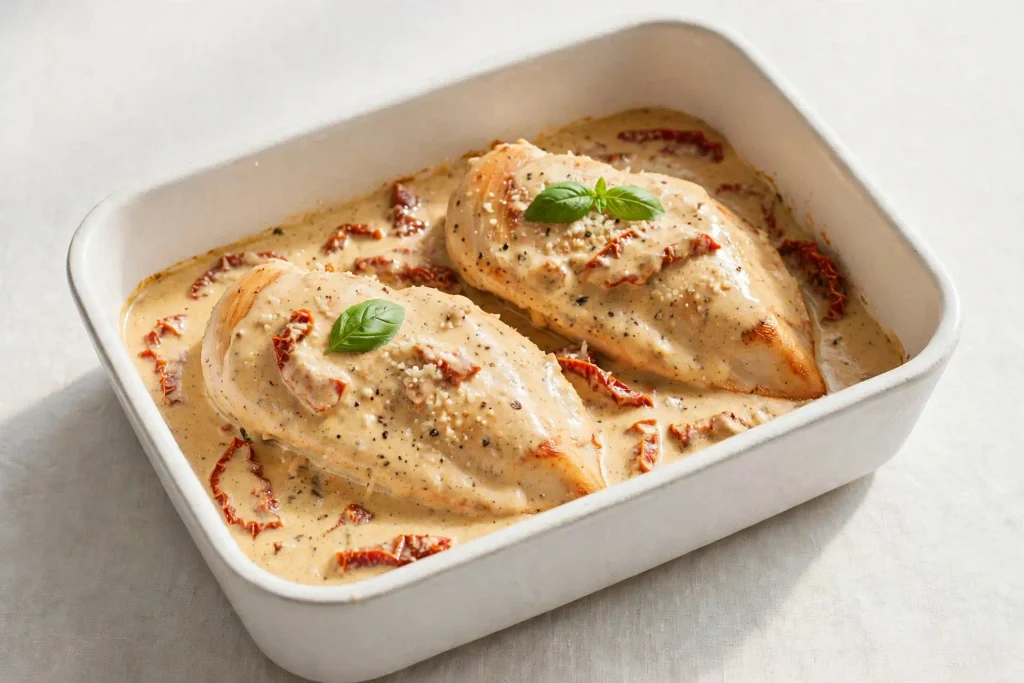
Store leftover chicken and sauce together in an airtight container in the fridge for up to 3 days. Reheat gently over low heat on the stovetop, stirring frequently and adding a splash of cream or broth if the sauce has thickened too much. Freezing isn’t recommended, since cream-based sauces tend to separate once thawed and don’t smooth back out no matter how much stirring or reheating you try.
Variations
Pasta version: Slice the cooked chicken and toss it with the sauce over cooked penne or rigatoni for a heartier, one-bowl meal that stretches the recipe to feed more people.
Spicy version: Double the red pepper flakes and add a small spoonful of Calabrian chili paste to the sauce for a sharper, more noticeable heat throughout.
Sun-dried tomato-forward version: Increase the sun-dried tomatoes to a full ¾ cup and blend a few of them into the sauce with an immersion blender for a deeper red color and more concentrated tomato flavor.
Lighter version: Replace half the heavy cream with additional chicken broth for a thinner, less rich sauce that still carries the same core flavor.
Serving Suggestions
Marry me chicken pairs naturally with a bed of mashed potatoes or buttered rice to soak up the extra sauce in the pan. A simple arugula salad with lemon vinaigrette cuts through the richness nicely if you want something bright on the side. Garlic bread is almost essential here too, since there’s rarely a version of this sauce that doesn’t end with someone reaching for something to mop up the last bit.
You may also like: shrimp tacos
Frequently Asked Questions
Can I make marry me chicken ahead of time for guests?
Sear the chicken and build the sauce base through the broth stage up to a day ahead, storing them separately in the fridge. Finish the sauce with cream and parmesan right before serving, since a fully finished cream sauce is more likely to separate after reheating.
Why did my marry me chicken sauce turn grainy?
Adding the parmesan while the pan was still over direct heat, or dumping it all in at once, is almost always the cause. Pull the skillet off the burner first, then stir in the cheese gradually in small handfuls until each one melts before adding more.
What can I use instead of heavy cream in this recipe?
Half-and-half works as a lighter substitute, though the finished sauce will be noticeably thinner and slightly more prone to breaking if it gets too hot. Whole milk mixed with a tablespoon of flour can also work in a pinch, though the texture won’t be quite as luxurious.
How do I know when the chicken is fully cooked without cutting into it?
A meat thermometer inserted into the thickest part should read 165°F, which is the most reliable way to check without guessing. If you don’t have a thermometer, the juices should run clear rather than pink when the thickest part is pierced with a knife.
Is it okay to reheat marry me chicken the next day?
Yes, as long as it was refrigerated within two hours of cooking, based on standard USDA guidance for reheating cooked poultry dishes. Reheat gently over low heat on the stovetop rather than the microwave if possible, since low, gradual heat is far less likely to break the cream sauce than a quick blast of high heat.
The sauce is really the only part of this dish that asks for real attention, and once you’ve pulled it off the heat before adding the cheese a couple of times, it becomes second nature. Everything else, the searing, the resting, the final warm-through, is mostly just waiting. Get the parmesan stage right, and this turns into one of those dishes that looks far more difficult than it actually is.
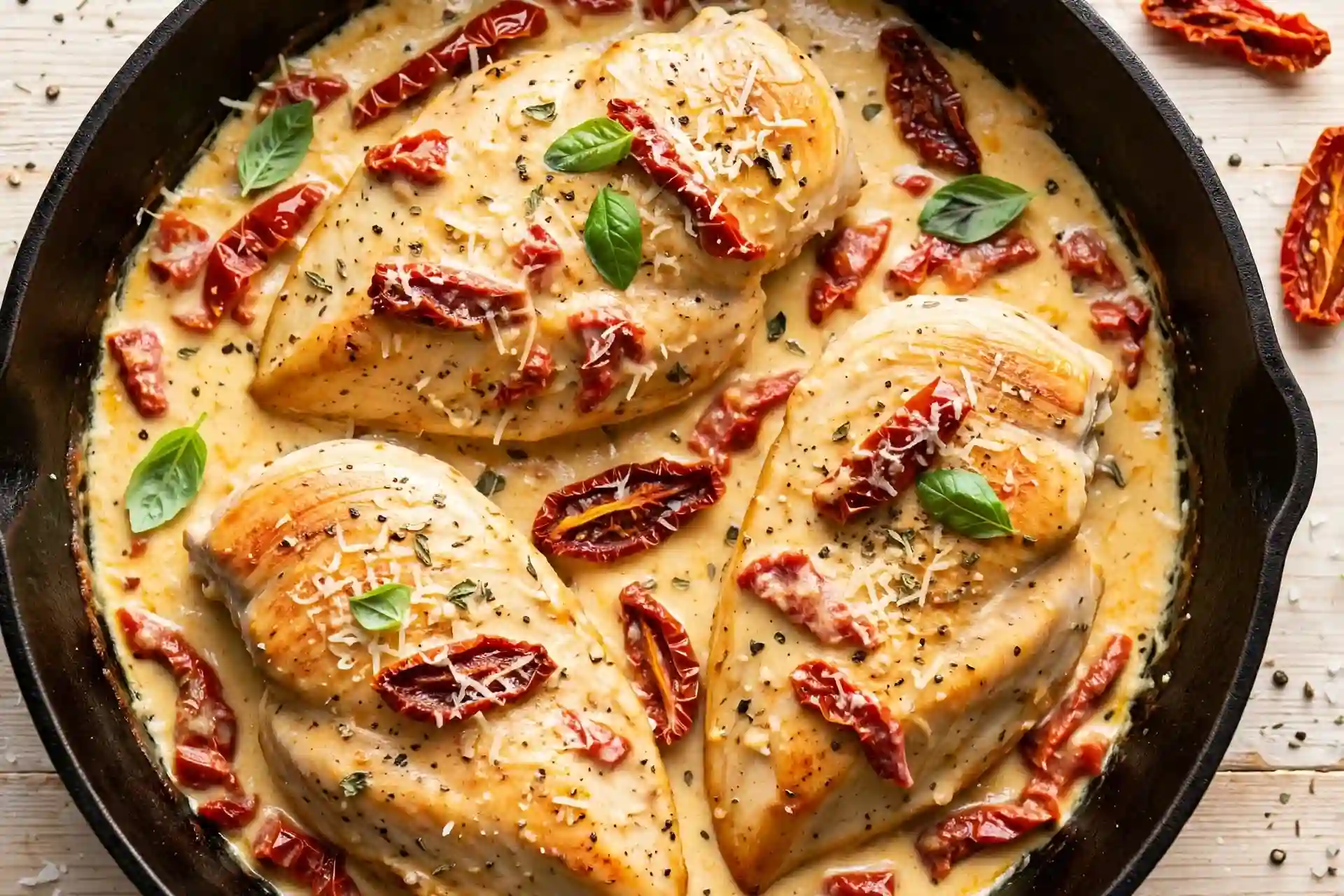
Marry Me Chicken
Ingredients
Method
- Instructions:
- Season and flour the chicken; sear 5-6 minutes per side until 165°F. Rest on a plate.
- Melt butter in the same skillet; scrape up browned bits.
- Cook garlic 30 seconds, then add sun-dried tomatoes; cook 1 minute.
- Add broth; simmer 2 minutes to reduce.
- Lower heat, stir in cream, Italian seasoning, and red pepper flakes; bring to a bare simmer.
- Remove from heat; stir in parmesan gradually until melted and smooth.
- Return chicken to the pan; warm through 2-3 minutes over low heat.
- Top with basil and serve.
4 Comments
Comments are closed.