Beef Barley Soup
Beef Barley Soup With Beef That Actually Falls Apart Tender
Beef barley soup goes wrong in one of two ways: the beef stays tough because it never got enough time to break down, or the barley turns to mush because it sat in the pot too long after it was already done. The fix for both is the same principle, give the beef the long, slow simmer it needs to turn tender, and add the barley with enough time left to cook through without overshooting into mush. It takes about two hours total, but most of that is hands-off simmering.
Why This Beef Barley Soup Comes Out Right Every Time
Browning the beef chunks in batches before they ever hit the broth builds a deep, savory base through the Maillard reaction, something a pot of simmering raw beef and broth can’t replicate on its own. Using chuck roast instead of a leaner cut matters here, its marbling and connective tissue break down slowly over the simmer, turning genuinely fork-tender rather than staying chewy the way a leaner cut would. Deglazing the pot with a splash of broth after browning lifts up every bit of flavorful fond stuck to the bottom, instead of leaving it behind to burn later. Adding the barley partway through the simmer, rather than at the very start, keeps it tender and distinct instead of swollen and starchy by the time the beef’s finally done. A splash of balsamic vinegar stirred in near the end brightens the whole pot in a way salt alone never quite manages.
Quick Information
- Prep time: 20 minutes
- Cook time: 1 hour 40 minutes
- Total time: 2 hours
- Servings: 6
- Difficulty: Easy
- Calories per serving: approximately 340
- Most important ingredient: chuck roast, for tenderness
- Best for: cold weather dinners, meal prep, feeding a hungry family
Ingredients
- 2 pounds beef chuck roast, trimmed and cut into 1-inch cubes
- 2 tablespoons olive oil, divided
- 1 teaspoon salt, plus more to taste
- ½ teaspoon black pepper
- 1 medium yellow onion, diced
- 3 carrots, sliced into rounds
- 3 celery stalks, sliced
- 3 cloves garlic, minced
- 2 tablespoons tomato paste
- 8 cups beef broth
- 2 bay leaves
- 1 teaspoon dried thyme
- ¾ cup pearl barley
- 1 tablespoon balsamic vinegar
- 2 tablespoons fresh parsley, chopped
Chuck roast is the right cut here specifically because of its marbling and connective tissue, a leaner cut like sirloin would stay tough even after the same long simmer, since it doesn’t have the same collagen to slowly break down into tenderness.
Pearl barley holds its shape and bite far better than hulled barley over a long simmer, and it cooks noticeably faster, which matters since timing it right against the beef is the trickiest part of this whole recipe.
You may also like: crockpot chicken noodle soup
Recipe Timing
Prep 20 minutes, cook 1 hour 40 minutes, no rest time needed, total 2 hours. Serves 6. Easy difficulty. American comfort food, soup course.
Equipment Needed
- Large pot or Dutch oven
- Tongs
- Wooden spoon
- Ladle
A Dutch oven holds heat steadily enough to properly brown the beef in batches without the pan cooling down too much between additions, a thinner pot struggles to maintain that same sear.
Nutrition Information
Per serving (based on 6 servings): 340 calories, 28g protein, 26g carbohydrates, 13g fat, 5g fiber, 4g sugar, 780mg sodium. This is an estimate based on standard USDA nutrition data for the ingredients listed and will vary by brand and exact portion size.
Why Chuck Roast Turns Tender While Other Cuts Don’t
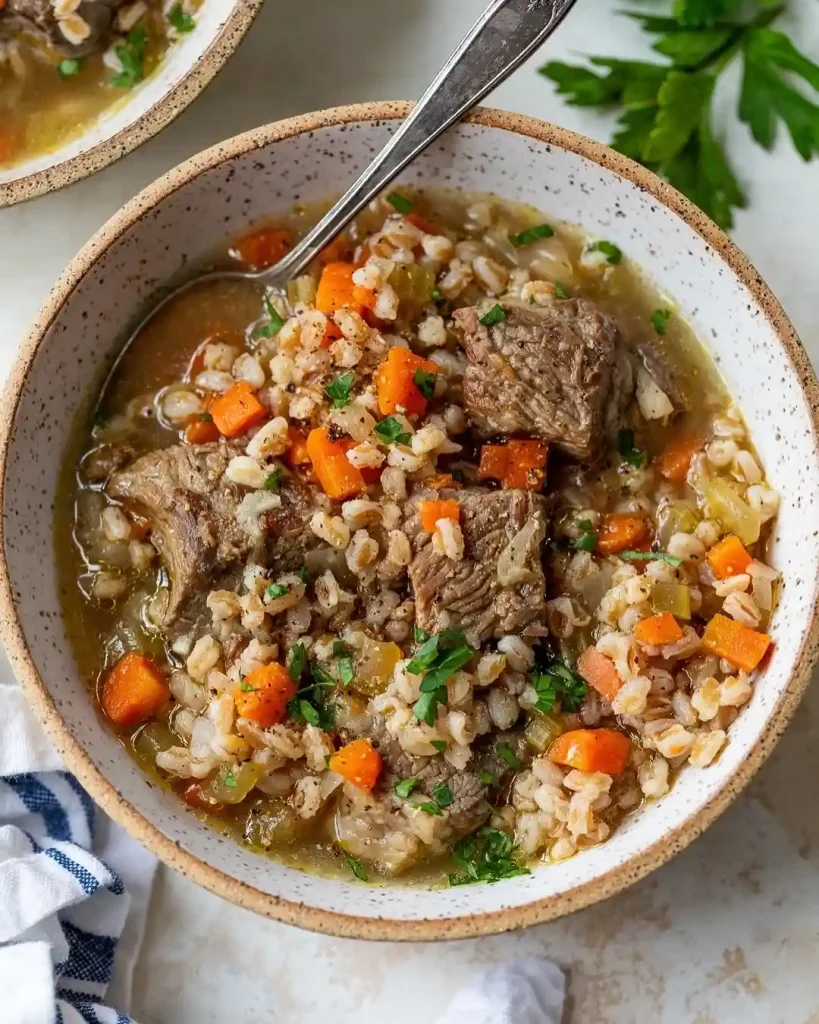
Chuck roast is full of collagen, a connective tissue that’s tough when raw but slowly breaks down into gelatin over a long, low simmer, which is exactly what gives this soup its rich, almost silky broth texture along with genuinely tender beef. A leaner cut like sirloin or round doesn’t carry nearly as much of that connective tissue, so the same hour-plus simmer that transforms chuck into something fork-tender would just leave a leaner cut dry and stringy instead.
Preparation
Pat the beef cubes dry with paper towels before seasoning, surface moisture is the main reason beef steams instead of browns in a hot pan. Dice the onion, slice the carrots and celery, and mince the garlic ahead of time so everything’s ready once the browning step starts moving.
Step-by-Step Method
1. Season the beef cubes with the salt and pepper. Heat 1 tablespoon of the olive oil in a large pot or Dutch oven over medium-high heat until it shimmers.
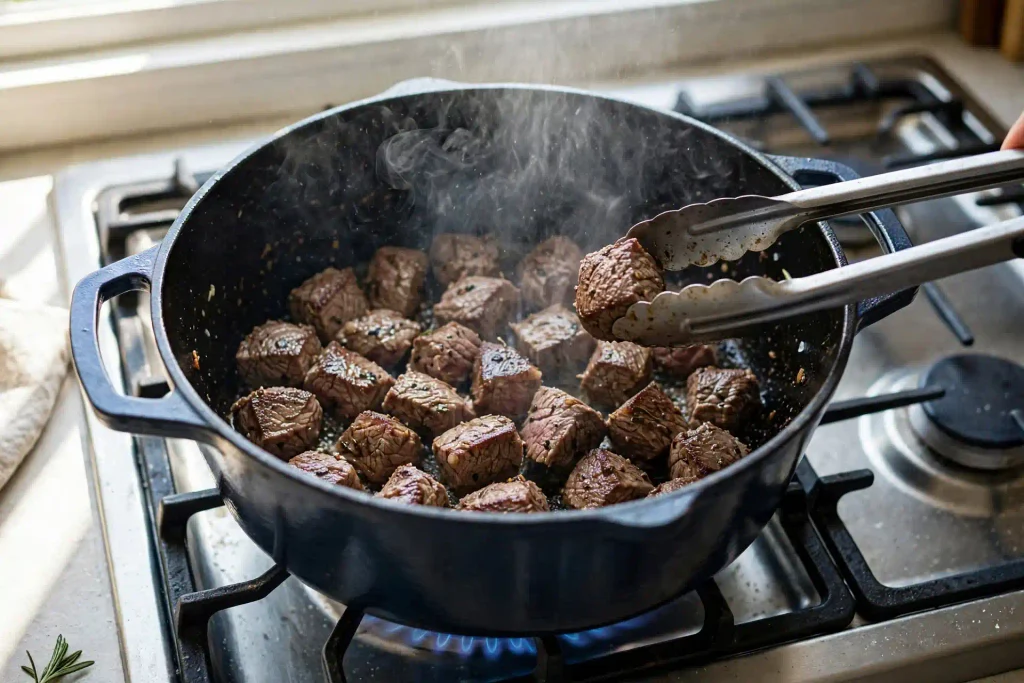
2. Add the beef in a single layer, working in two batches to avoid crowding the pot. Sear undisturbed for 3 to 4 minutes per side, until deeply browned. A crowded pot drops the temperature too fast for a real sear, so don’t rush this by adding it all at once.
3. Remove the browned beef with tongs and set it aside on a plate, leaving the fond, those browned bits stuck to the bottom of the pot, behind for the next step.
4. Add the remaining tablespoon of olive oil to the pot along with the diced onion, carrots, and celery. Cook until softened, about 6 to 7 minutes, scraping up the browned bits from the bottom as the vegetables release their own moisture.
5. Stir in the garlic and tomato paste, cooking for about 1 minute until fragrant and the tomato paste has darkened slightly in color, this deepens its flavor before the liquid goes in.
6. Return the browned beef to the pot along with any juices that collected on the plate. Pour in the beef broth, add the bay leaves and thyme, and stir to combine everything evenly.
7. Bring the pot to a boil, then reduce to a gentle simmer. Cover and cook for 1 hour, until the beef is starting to turn tender but still has a bit more time needed to fully break down.
8. Stir in the pearl barley and continue simmering, uncovered this time, for another 35 to 40 minutes, until both the beef is fork-tender and the barley is fully cooked through but still holds its shape.
9. Remove the bay leaves and stir in the balsamic vinegar. Taste and adjust the seasoning, the broth concentrates as it simmers, so the balance may need a small adjustment at this point.
10. Ladle into bowls and top with the chopped fresh parsley right before serving.
Chef’s Note: If the beef still feels tough after the full hour of covered simmering, give it another 15 to 20 minutes, chuck roast can vary in how long it takes to fully break down depending on the exact cut and size of the cubes.
Chef’s Note: Don’t skip deglazing the pot after browning the beef. Those stuck-on bits carry a lot of concentrated flavor that would otherwise just sit there and eventually burn.
Chef’s Note: If your barley absorbs more liquid than expected and the soup turns thicker than you’d like, thin it with a splash of extra beef broth when reheating leftovers.
You may also like: stuffed pepper soup
Expert Tips & Tricks
- Make-ahead: This soup can be made up to 3 days ahead and reheated gently on the stove, the flavor actually deepens significantly after a day or two in the fridge.
- Storage: Keeps in the fridge for up to 5 days in an airtight container, though the barley continues absorbing liquid over time, so expect a thicker texture by day three.
- Cut the beef cubes roughly the same size so they all finish tenderizing around the same time, uneven pieces mean some are perfectly tender while others are still a bit tough.
- If you’re short on time, a pressure cooker or Instant Pot cuts the beef tenderizing step down significantly, pressure cook the beef and broth for about 35 minutes before adding the barley and finishing on the sauté setting.
- Toast the pearl barley briefly in a dry pan for a minute or two before adding it to the pot, it brings out a subtle nuttiness that plain simmered barley doesn’t have on its own.
- Double the recipe easily for a larger crowd, just make sure your pot is large enough to hold the increased volume comfortably without crowding the simmer.
Common Mistakes & Troubleshooting
Beef stays tough even after a long simmer. It likely needed more time, chuck roast can vary in how quickly it breaks down depending on the exact piece and cube size. Give it another 15 to 20 minutes covered before moving on to the barley step.
Barley turns to mush. It was probably added too early, at the same time as the beef, rather than partway through the simmer. Stick to adding it only after the beef’s had its full hour of cooking, giving the barley just enough time to cook through without overcooking.
Broth tastes flat despite all the ingredients. The beef likely wasn’t browned deeply enough before the broth was added, pale, barely-seared beef doesn’t build the same depth of flavor as a properly browned batch. Make sure each piece gets real color before moving to the next step.
Soup turns out too thick and gluey. Too much barley absorbed too much liquid over time, which happens naturally the longer the soup sits. Thin it with extra broth when reheating rather than adding more liquid during the initial cook.
Vegetables turn to mush by the time everything’s done. This is mostly unavoidable given the long simmer time needed for the beef, if you prefer firmer vegetables, add half the carrots and celery partway through instead of all of it at the start.
Honest Trade-Off
This soup takes close to 2 hours from start to finish because of how long the beef needs to properly tenderize, compared to a quicker ground beef soup that could be ready in half that time. If you’re short on time, swapping in ground beef cuts the cook time significantly, though you’ll lose the deep, fall-apart tenderness and richer broth that slowly simmered chuck roast provides.
Storage & Make-Ahead
Store in an airtight container in the refrigerator for up to 5 days, though the texture thickens as the barley continues absorbing broth over time. Reheat gently on the stove over low heat, adding a splash of extra broth if it’s turned too thick to stir easily. This soup freezes reasonably well for up to 3 months, though the barley’s texture softens somewhat once thawed, for the best texture on reheat, consider adding fresh barley if freezing without it already mixed in.
Variations & Substitutions
For a heartier version, add a diced potato along with the barley, it softens at roughly the same rate and adds extra substance to the soup.
For a lighter version, swap half the beef broth for low-sodium vegetable broth, reducing the overall richness slightly while still keeping real depth from the browned beef.
For a gluten-free version, swap the pearl barley for a gluten-free grain like brown rice, added at the same point in the cooking process, though check it a bit earlier since rice can cook faster than barley depending on the variety.
Callout: Save a small handful of the raw diced vegetables to stir in during the last 10 minutes of cooking, alongside the cooked vegetables that have simmered the whole time. It adds a bit of fresh texture contrast against the softer, longer-cooked vegetables already in the pot.
Serving Suggestions
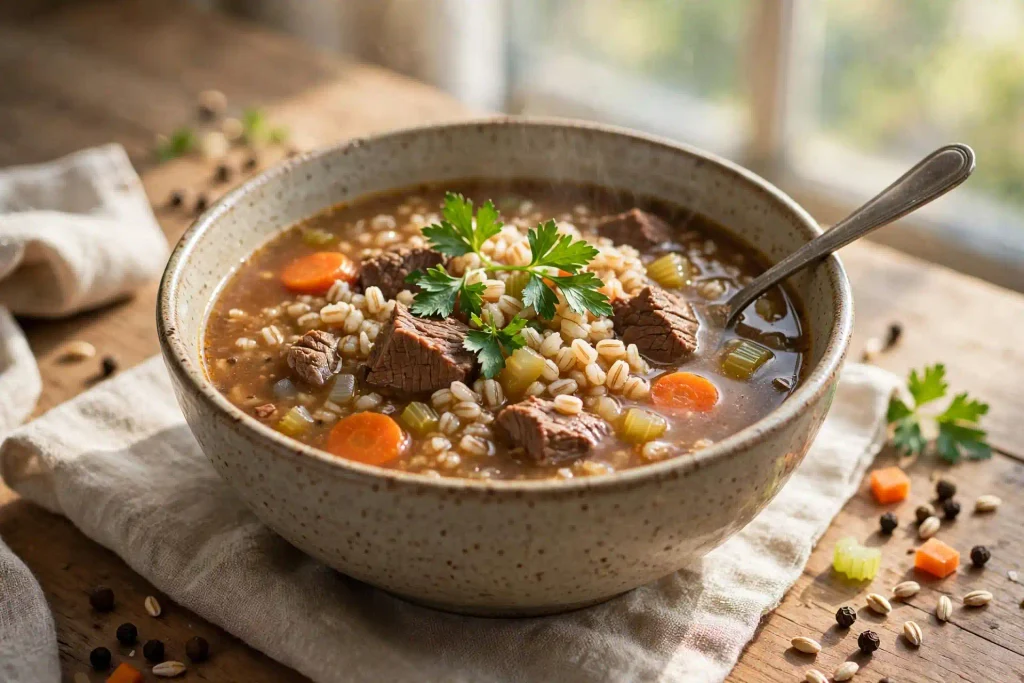
Beef barley soup pairs naturally with warm, crusty bread for soaking up the rich broth. A simple green salad with a light vinaigrette balances out the heartiness of the beef and barley. If you’re planning a week of comforting soups, marry me chicken soup offers a completely different, creamier direction worth rotating in alongside this one. A glass of red wine complements the deep, savory flavor of the broth well.
Callout: Grate a bit of fresh parmesan over each bowl right before serving, it’s not traditional, but the saltiness and umami pair surprisingly well with the beef and barley base.
FAQ
Can I make beef barley soup ahead of time?
Yes, it keeps well in the fridge for up to 5 days and the flavor actually deepens significantly after a day or two. Reheat gently on the stove, adding a splash of broth if the barley has thickened the soup more than you’d like.
Why is my beef still tough after simmering for over an hour?
This usually just means it needs more time, chuck roast varies in how long it takes to fully break down depending on the exact cut and how large the cubes were. Give it another 15 to 20 minutes covered before adding the barley.
Can I use a different cut of beef instead of chuck roast?
Chuck roast is specifically recommended because of its marbling and connective tissue, which breaks down into tender, gelatin-rich meat over the long simmer. A leaner cut like sirloin will stay tougher even with the same cook time, so chuck or a similar well-marbled cut is worth seeking out.
How do I know when the barley is fully cooked?
It should be tender with a slight chew, not hard in the center and not mushy or falling apart. Taste a spoonful a few minutes before the suggested 35 to 40 minute mark to check, since cook time can vary slightly by brand.
Can I make this soup in a slow cooker instead?
Yes, brown the beef and sauté the vegetables on the stove first for the best flavor, then transfer everything except the barley to a slow cooker on low for about 6 hours. Add the barley during the last 45 minutes to keep it from turning mushy.
One Last Thing
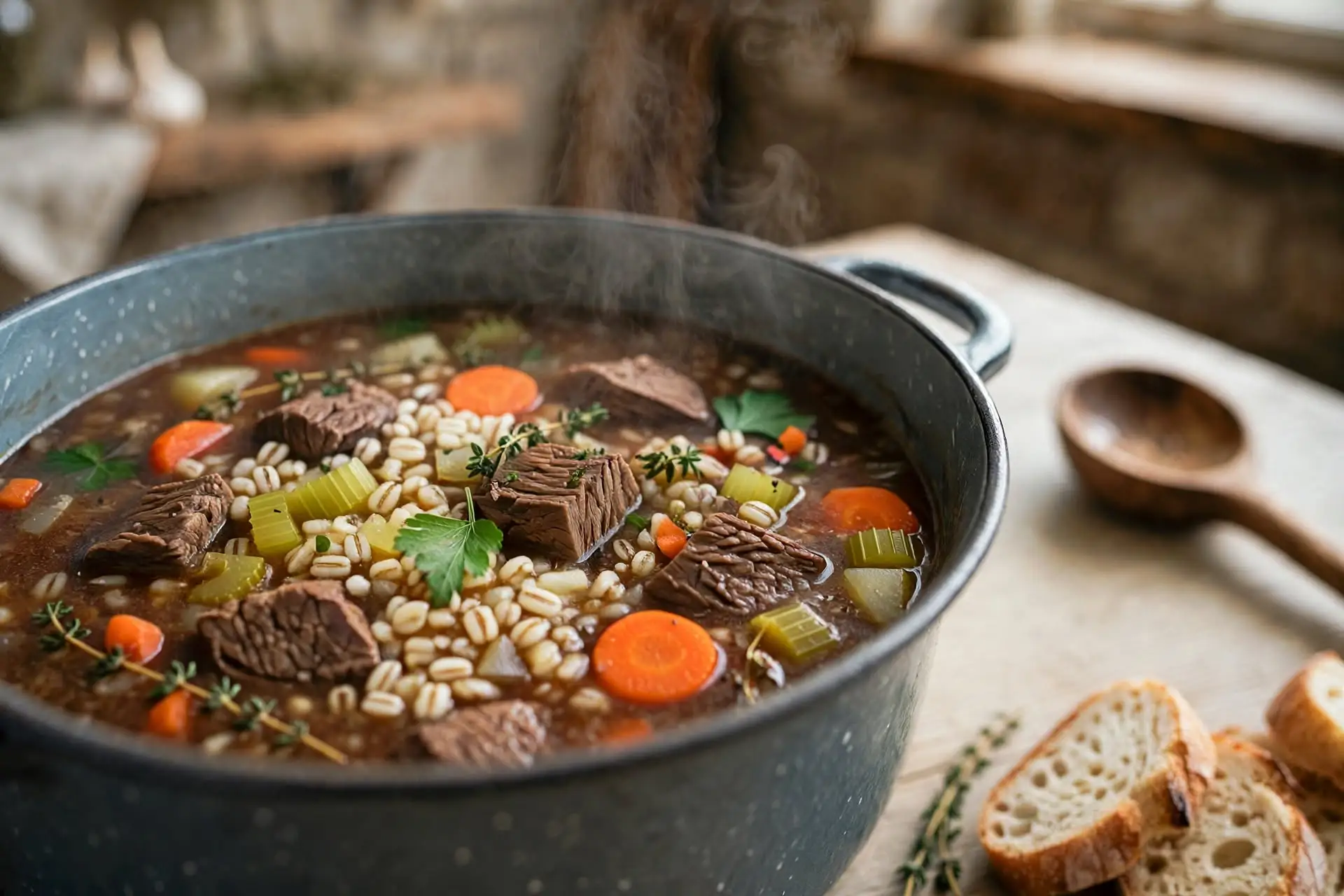
Beef barley soup rewards patience with the beef more than any other single step, giving the chuck roast its full time to break down is what separates a genuinely tender bowl from one with tough, chewy bites scattered throughout. Once that beef is right, the barley and vegetables mostly take care of themselves in the time that’s left.
Beef Barley Soup
Ingredients
Method
- Season beef and sear in batches in olive oil until deeply browned, 3-4 minutes per side. Set aside.
- Cook onion, carrots, and celery in the same pot, scraping up browned bits, about 6-7 minutes.
- Stir in garlic and tomato paste, cook 1 minute.
- Return beef to the pot with broth, bay leaves, and thyme. Simmer covered 1 hour.
- Stir in barley, simmer uncovered another 35-40 minutes until beef is tender and barley is cooked.
- Remove bay leaves, stir in balsamic vinegar, adjust seasoning, and top with parsley before serving.