Roasted Tomato Soup
Roasted Tomato Soup With a Depth Canned Tomatoes Can’t Match
Most tomato soup recipes skip the one step that actually builds flavor: roasting. Simmering raw canned tomatoes gets you something edible, but roasting fresh tomatoes until their edges char and their sugars caramelize is what turns a flat, acidic soup into something with real depth. The oven does most of the work here, and the blender does the rest.
Why Roasting the Tomatoes First Makes All the Difference
High heat caramelizes the natural sugars in the tomatoes, breaking down some of the sharp acidity that raw or lightly simmered tomatoes carry. Roasting the garlic cloves whole in their skins alongside the tomatoes mellows their sharpness into something sweeter and rounder than raw minced garlic ever achieves. A small amount of tomato paste added during roasting deepens the color and concentrates the flavor further, almost like a shortcut to hours of slow simmering. Blending in a splash of heavy cream at the very end, off the heat, keeps the soup from curdling while still giving it a silky, rounded finish. Finishing with a drizzle of good olive oil right before serving adds a layer of richness that gets lost if it’s stirred in earlier and cooked down.
Quick Information
- Prep time: 15 minutes
- Cook time: 40 minutes
- Total time: 55 minutes
- Servings: 4
- Difficulty: Easy
- Calories per serving: approximately 210
- Most important ingredient: ripe, in-season tomatoes
- Best for: cool-weather dinners, pairing with grilled cheese, make-ahead lunches
Ingredients
- 3 pounds ripe Roma or vine tomatoes, halved
- 1 whole head garlic, top sliced off
- 1 medium yellow onion, quartered
- ¼ cup olive oil, divided, plus more for serving
- 2 tablespoons tomato paste
- 1 teaspoon dried oregano
- 3 cups vegetable or chicken broth
- ¼ cup heavy cream
- 1 teaspoon salt, plus more to taste
- ½ teaspoon black pepper
- ¼ cup fresh basil leaves, torn
Roma tomatoes hold up well to roasting since they carry less water than beefsteak varieties, which means more concentrated flavor and less time spent reducing excess liquid later in the pot.
Roasting the whole garlic head, rather than mincing raw cloves into the pot, turns its flavor sweet and nutty instead of sharp, and it blends in completely smooth once pureed with the rest of the soup.
You may also like: marry me chicken soup
Recipe Timing
Prep 15 minutes, cook 40 minutes, no rest time needed, total 55 minutes. Serves 4. Easy difficulty. Italian-inspired cuisine, soup course.
Allergen and Dietary Disclosure
This recipe contains dairy (heavy cream). For a dairy-free version, swap the heavy cream for full-fat coconut milk or a dairy-free cream alternative, both work well and keep the soup’s silky texture intact without a strong coconut flavor coming through if used in this small amount.
Equipment Needed
- Large rimmed sheet pan
- Blender or immersion blender
- Large pot or Dutch oven
- Aluminum foil (for the garlic)
An immersion blender saves a step here, letting you puree the soup directly in the pot instead of working in batches with a standing blender and risking hot liquid splashing during transfer.
Nutrition Information
Per serving (based on 4 servings): 210 calories, 4g protein, 18g carbohydrates, 15g fat, 4g fiber, 10g sugar, 620mg sodium. This is an estimate based on standard USDA nutrition data for the ingredients listed and will vary by brand and exact portion size.
Why Roasting Beats Simmering for Tomato Soup
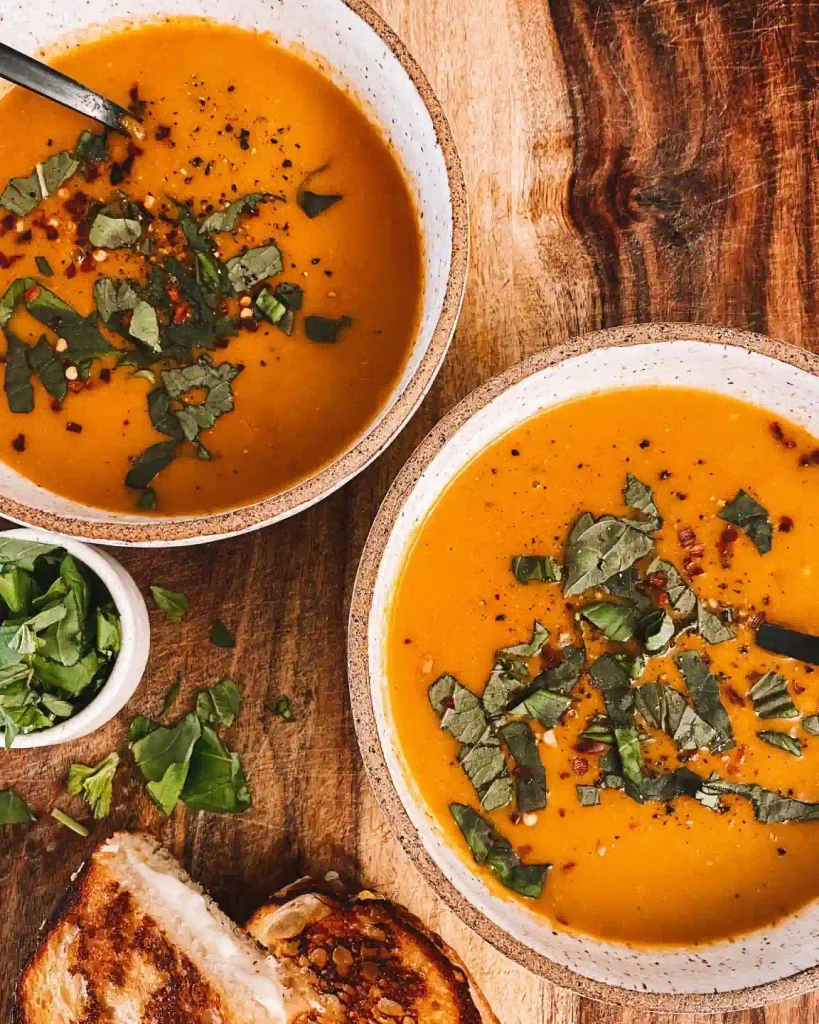
Dry heat in the oven concentrates flavor by evaporating water while simultaneously triggering browning reactions that a wet simmer on the stovetop simply can’t produce. That browning is where the deeper, slightly sweet, almost smoky notes in a good roasted tomato soup come from, flavor compounds that only form above a certain temperature threshold a pot of simmering liquid never reaches.
Preparation
Preheat the oven to 425°F. Line a large rimmed sheet pan with foil for easier cleanup, since the roasted tomatoes release a fair amount of juice as they cook. Slice the top off the garlic head so the cloves are exposed for roasting, and wrap it loosely in a small piece of foil before it goes on the pan.
Step-by-Step Method
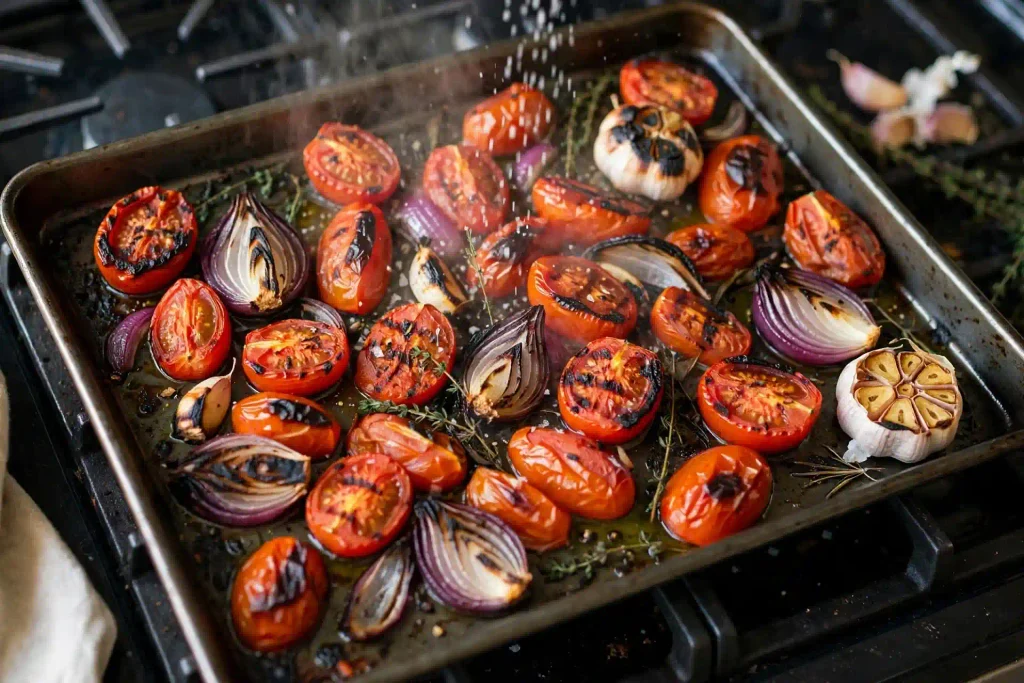
1. Arrange the halved tomatoes cut-side up on the prepared sheet pan, along with the quartered onion and the foil-wrapped garlic head. Drizzle 3 tablespoons of the olive oil evenly over the tomatoes and onion.
2. Dot small spoonfuls of the tomato paste over the tomatoes before roasting. Spreading it thinly across a few spots rather than clumping it in one place helps it caramelize evenly instead of burning in a concentrated patch.
3. Roast for 35 to 40 minutes, until the tomatoes have visibly shrunk and their edges have started to char slightly, and the onion pieces have softened with golden brown edges.
4. Remove the pan from the oven and let it cool for about 5 minutes. Unwrap the garlic carefully, it’ll be very hot, and let it cool enough to handle before squeezing the softened cloves out of their skins.
5. Heat the remaining tablespoon of olive oil in a large pot over medium heat. Transfer the roasted tomatoes, onion, and squeezed garlic cloves into the pot, along with any juices left behind on the sheet pan, those juices carry a lot of the concentrated flavor from roasting.
6. Add the dried oregano and pour in the broth. Bring the mixture to a gentle simmer and let it cook for 10 minutes, giving the flavors time to come together fully before blending.
7. Remove the pot from heat and blend the soup until completely smooth, either using an immersion blender directly in the pot or working in batches with a standing blender, venting the lid slightly to let steam escape safely.
8. Stir in the heavy cream, salt, and pepper once the soup is fully blended and off the heat. Adding the cream after blending, rather than before, keeps the texture silky without any risk of it separating under high blender speed.
9. Taste and adjust the seasoning, tomato acidity varies quite a bit batch to batch depending on ripeness, so this is the point to fix the balance rather than guessing at measurements beforehand.
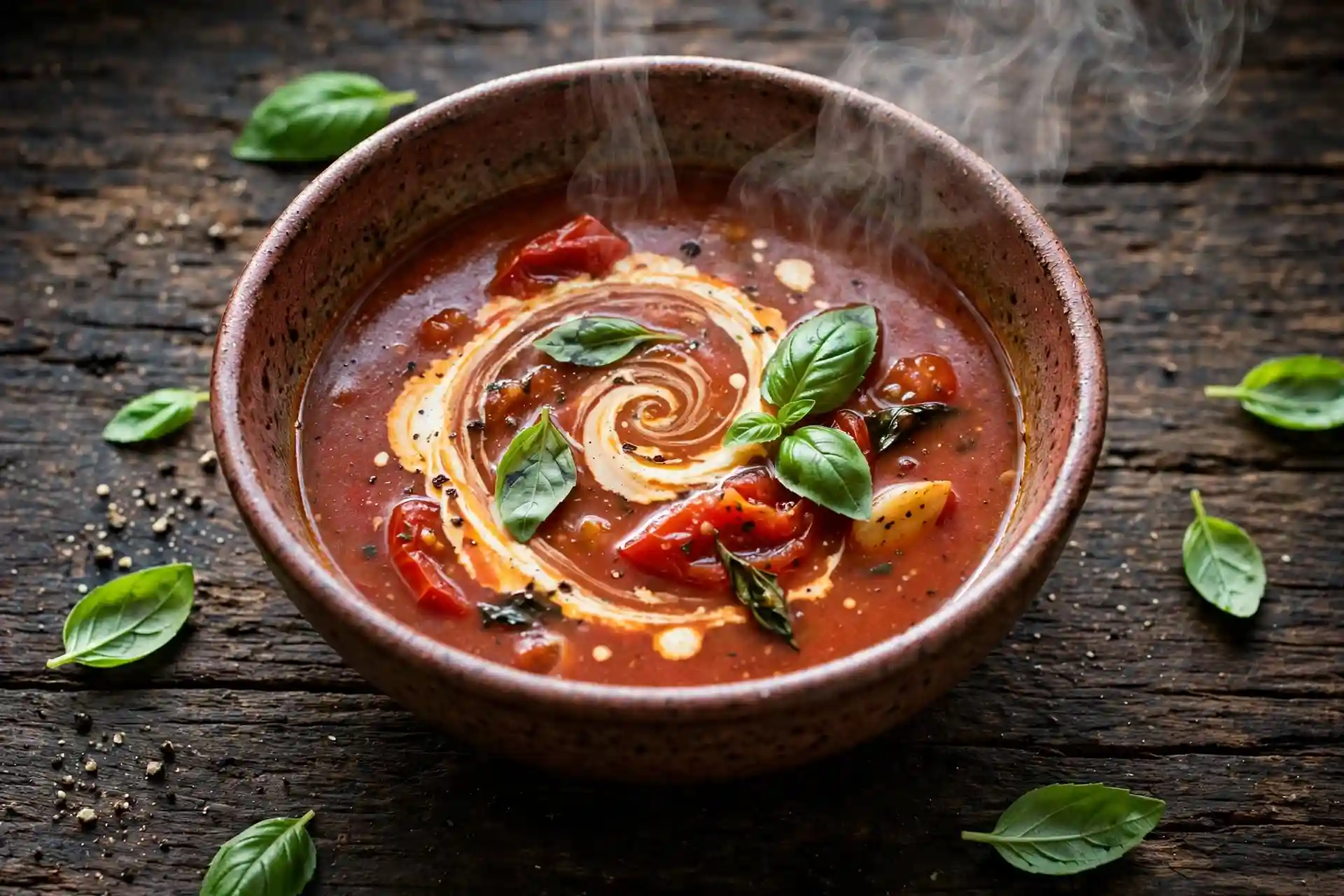
10. Ladle into bowls, top with torn basil leaves, and finish each bowl with a drizzle of good olive oil right before serving.
Chef’s Note: If the soup tastes too acidic even after adjusting salt, a small pinch of sugar, about half a teaspoon, balances it out without making the soup taste sweet.
Chef’s Note: Don’t skip venting the blender lid if working in batches. Hot liquid builds pressure fast in a sealed blender and can force the lid off unexpectedly.
Chef’s Note: Save a few roasted tomato halves before blending if you want a chunkier finish, stir them back in after pureeing the rest for texture contrast.
You may also like: stuffed pepper soup
Expert Tips & Tricks
- Make-ahead: This soup can be made up to 3 days ahead and reheated gently on the stove, the flavor actually deepens slightly after a day in the fridge.
- Storage: Keeps in the fridge for up to 5 days in an airtight container, and reheats well without separating as long as it’s warmed gently over low heat.
- Use the ripest tomatoes you can find, even slightly overripe ones work beautifully here since roasting concentrates their natural sweetness rather than relying on them being perfect to start.
- Roast an extra tray of tomatoes when they’re in season and freeze them flat on a sheet before transferring to a bag, giving you a shortcut start for this soup any time of year.
- If your soup turns out thinner than you’d like, simmer it uncovered for an extra 5 to 10 minutes after blending to reduce slightly, rather than adding more cream.
- A parmesan rind added to the broth while it simmers, then removed before blending, adds a subtle savory depth that’s easy to miss but noticeable once it’s gone.
Common Mistakes & Troubleshooting
Soup tastes flat despite roasting the tomatoes. The tomatoes likely weren’t roasted long enough to develop real caramelization, pale, unbrowned edges mean the flavor-building reactions never fully kicked in. Give them the full 35 to 40 minutes, checking for visible charring at the edges, not just softness.
Soup turns out too thin and watery. This usually means the tomatoes used were especially juicy, or the soup wasn’t simmered long enough after blending. Let it reduce uncovered for a few extra minutes on the stove if the consistency feels off.
Cream curdles or separates in the finished soup. The cream was likely added while the soup was still actively boiling rather than off the heat. Always pull the pot from heat before stirring in cream, and let the soup cool slightly if it’s at a rolling boil.
Soup tastes too acidic. Tomato acidity varies a lot depending on ripeness and variety. A small pinch of sugar, around half a teaspoon, balances this out more effectively than adding more salt, which won’t actually cut the sharpness.
Garlic tastes bitter instead of sweet. It was likely roasted at too high a temperature for too long, or it wasn’t wrapped in foil and dried out instead of softening properly. Keep it wrapped and check it a few minutes before the tomatoes are done, garlic can finish roasting faster.
Honest Trade-Off
Roasting the tomatoes adds close to 40 minutes compared to a quick stovetop version made from canned tomatoes, which can be ready in half the time. If you’re short on time on a weeknight, a canned tomato version is a reasonable shortcut, though it won’t carry the same caramelized depth this roasted version builds from scratch.
Storage & Make-Ahead
Store in an airtight container in the refrigerator for up to 5 days. Reheat gently on the stove over low heat, stirring occasionally, since the cream can separate slightly if reheated too fast or at too high a temperature. This soup freezes well for up to 3 months if made without the cream, stir the cream in fresh after thawing and reheating for the best texture.
Variations & Substitutions
For a spicier version, add a pinch of red pepper flakes to the tomatoes before roasting, or stir in a small spoonful of harissa paste near the end.
For a dairy-free version, swap the heavy cream for full-fat coconut milk in the same amount, the flavor stays balanced without a strong coconut taste coming through.
For a heartier version, stir in a cup of cooked small pasta like ditalini just before serving, turning the soup into more of a light meal than a starter.
Callout: Save the roasting pan juices separately before transferring everything to the pot, and taste them on their own, they’re concentrated enough that a spoonful stirred back in at the end can boost the whole pot’s flavor if it tastes like it needs more depth.
Serving Suggestions
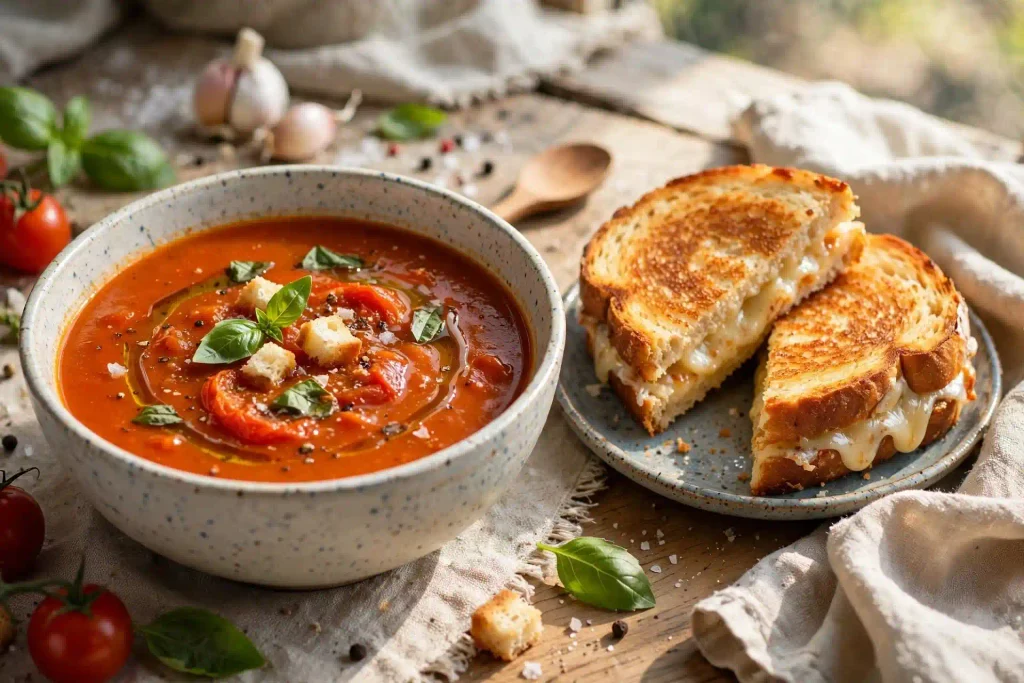
Roasted tomato soup pairs naturally with a classic grilled cheese sandwich for dunking, the combination works for a reason. A simple side salad with a light vinaigrette balances the richness of the cream if you’re serving this as a full meal. For another cozy, tomato-forward option to add to your soup rotation, loaded baked potato soup offers a completely different direction worth trying on a different night. Crusty bread for dipping rounds the meal out well either way.
Callout: Toast a few extra garlic cloves separately and rub them directly onto slices of crusty bread before serving, it echoes the roasted garlic flavor already in the soup without adding more to the pot itself.
FAQ
Can I make roasted tomato soup ahead of time?
Yes, it keeps well in the fridge for up to 5 days and the flavor actually deepens a bit after the first day. Reheat gently on the stove over low heat rather than microwaving the full batch at once.
Why does my soup taste bland even though I roasted the tomatoes?
This usually means the tomatoes didn’t roast long enough to properly caramelize, pale edges without any charring mean the flavor-building reactions never fully developed. Give them the full roasting time and look for visible browning, not just softened texture.
Can I use canned tomatoes instead of fresh?
You can in a pinch, though you’ll lose the deeper caramelized flavor roasting fresh tomatoes provides. If using canned, roast them briefly under the broiler for a few minutes to pick up some char before proceeding with the rest of the recipe.
How do I fix soup that tastes too acidic?
A small pinch of sugar, around half a teaspoon, balances out excess acidity more effectively than adding more salt. Tomato acidity varies by ripeness and variety, so this step is worth doing to taste rather than skipping.
Is this recipe safe for someone with a dairy allergy?
Not as written, since it finishes with heavy cream. Swapping in full-fat coconut milk at the same measurement keeps the silky texture intact without a strong coconut flavor coming through in this small amount.
One Last Thing
Roasted tomato soup rewards the extra 40 minutes the oven takes with a depth that no amount of simmering canned tomatoes on the stove can replicate. Once the tomatoes have that char at the edges and the garlic’s gone sweet and soft, the rest of the recipe is really just blending and tasting your way to the right balance.
Roasted Tomato Soup
Ingredients
Method
- Arrange tomatoes, onion, and foil-wrapped garlic on a sheet pan. Drizzle with olive oil and dot with tomato paste.
- Roast at 425°F for 35-40 minutes, until tomatoes char slightly and onion softens.
- Squeeze roasted garlic from its skin. Transfer everything to a pot with its juices.
- Add oregano and broth. Simmer 10 minutes.
- Blend until smooth. Off heat, stir in cream, salt, and pepper.
- Taste and adjust seasoning. Serve topped with basil and a drizzle of olive oil.